

Champions League
PSG Vs Flamengo: A Look Ahead To FIFA Intercontinental Cup Final Searching For Meaning
Among the ever-growing list of competitions clogging the modern football calendar, the FIFA Intercontinental Cup final has arrived this December with remarkably little fanfare.
Overshadowed by domestic leagues, continental tournaments, and the looming presence of FIFA’s newly expanded Club World Cup. The showpiece fixture has quietly slipped into view rather than announcing itself as a global occasion.
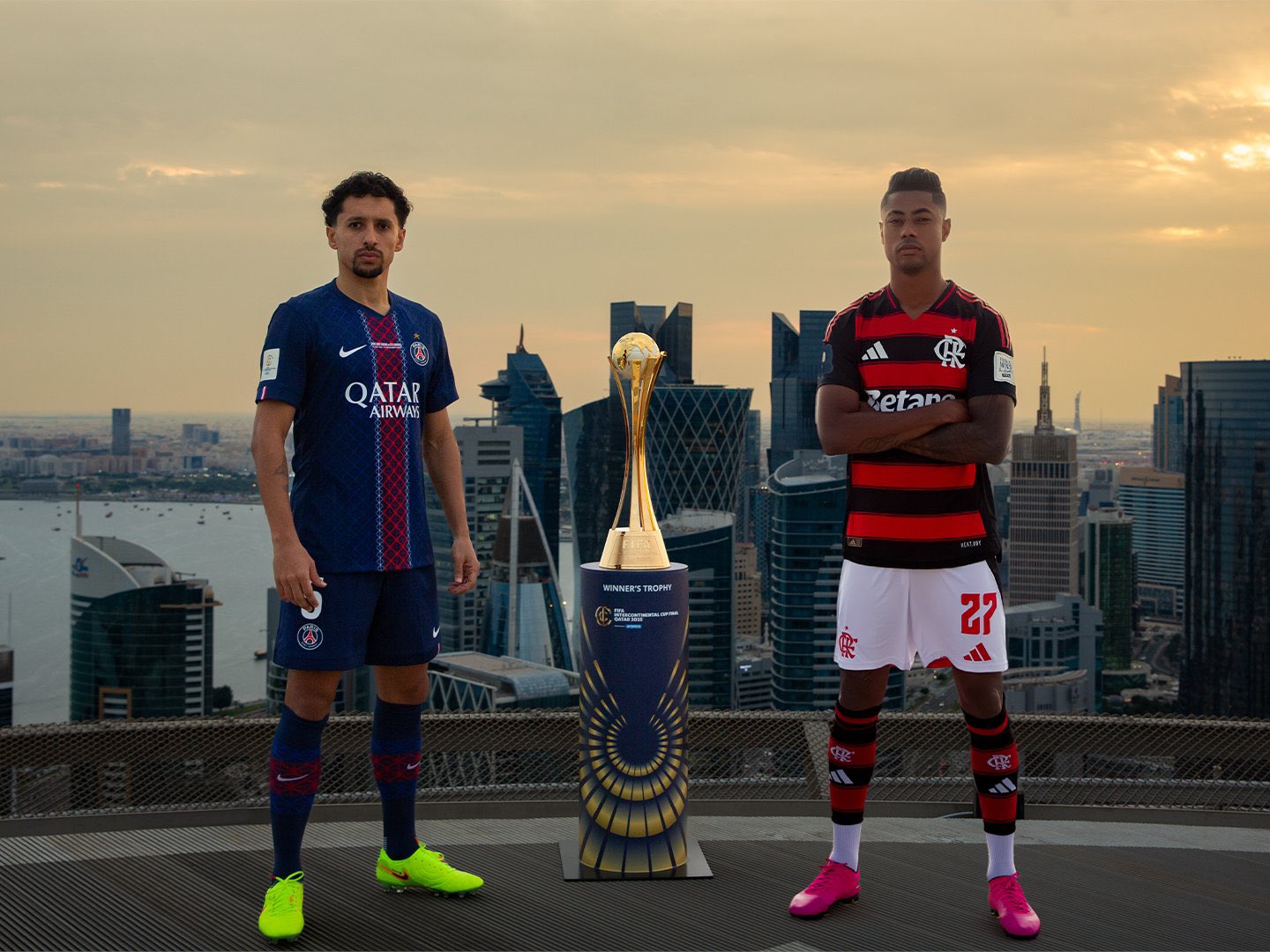
This year’s final pits the winners of the UEFA Champions League, Paris Saint-Germain, against Copa Libertadores holders Flamengo. On paper, it is a meeting worthy of global attention Europe versus South America, continental champions, contrasting styles and footballing cultures.
In reality, the relevance of the competition itself feels increasingly up for debate.
A Tournament Searching for Its Place
With FIFA’s revamped Club World Cup now positioned as the ultimate global club competition, there is a growing argument that the Intercontinental Cup has been left without a clear purpose.
The expanded CWC, featuring multiple elite teams from across the world, carries greater prestige, commercial pull, and sporting weight. By comparison, a single match between two sides, however decorated, feels like a relic of a previous era.
FIFA will insist that this tournament should not be confused with the original Intercontinental Cup, the predecessor to the Club World Cup that ran for decades.
The current version, first staged in Qatar a year ago, still bestows an honorary “world champions” title upon its winner.
Yet symbolism alone may not be enough to justify its existence in an already overcrowded schedule, particularly when the new Club World Cup looms as the definitive global prize.
The confusion surrounding the competition’s identity, coupled with the burden of long-haul travel in the middle of the season, raises legitimate questions about whether the Intercontinental Cup still offers tangible value to clubs or players.
A First Competitive Meeting
Despite those concerns, Wednesday’s final does offer a genuine novelty the first-ever competitive meeting between Paris Saint-Germain and Flamengo.
The two clubs have crossed paths only in friendlies, most notably in the 1970s and early 1990s.
Flamengo claimed a 2–0 victory in Paris in 1975, while PSG responded with a 3–1 win in 1979. Their most recent meeting came in 1991 at the Parc des Princes, ending 1–1 before Flamengo prevailed on penalties.
Those encounters, however, carry little relevance to the modern era, where both clubs are shaped by vastly different structures, expectations, and financial realities.
Contrasting Form and Momentum
Luis Enrique’s PSG arrive in Qatar having lost just two of their last eight matches across all competitions, scoring 20 goals in the process. The French champions remain one of Europe’s most potent attacking sides, even as they continue to evolve tactically following their long-awaited Champions League triumph.
Flamengo, under Filipe Luís, is unbeaten in its last seven matches and arrives with momentum built through constant competition. Yet that continuity comes at a cost.
Unequal Paths to the Final
PSG’s route to the final could not have been more straightforward. As Champions League holders, they received an automatic bye to the showpiece event at the Ahmad bin Ali Stadium in Al Rayyan, a 45,032-seat venue that hosted seven matches during the 2022 World Cup.
Flamengo’s journey, by contrast, has been punishing. After lifting the Libertadores, they were forced into the FIFA Challenger Cup, yet another addition to the calendar, where they defeated Cruz Azul 2–1 and Pyramids AFC 2–0 just to earn the right to face PSG.
The disparity in preparation is stark. While PSG are still relatively fresh, this final will be Flamengo’s 77th match of the season.
Since beating Palmeiras on November 29, the Brazilian side has played two Serie A fixtures and two Challenger Cup matches, making Wednesday’s clash their fifth game in just 18 days.
PSG, by comparison, has played only 22 matches since its 2025/26 campaign began in August.
For a tournament marketed as a glamorous global final, the imbalance feels difficult to ignore.
A Season to Remember for Flamengo
Despite the fatigue, Flamengo arrives in Qatar on the back of a vintage campaign. Alongside their Libertadores success, they secured the Brazilian Serie A title, completing a rare league-continental double achieved by only four Brazilian clubs in history.
That achievement alone shows their pedigree and resilience, traits they will need in abundance against Europe’s elite.
PSG’s Selection Dilemmas
PSG comes into the final with a number of key absences. Captain Marquinhos and Achraf Hakimi will both miss out, depriving Luis Enrique of defensive leadership and width.
However, the Spanish coach was able to rotate heavily at the weekend, resting Joao Neves, Bradley Barcola, and Khvicha Kvaratskhelia during a 3–2 win over Metz.
All three are expected to return to the starting XI as PSG look to add another piece of silverware to a historic year. The biggest uncertainty surrounds Ousmane Dembélé.
The Ballon d’Or winner has been struggling with illness, and his involvement remains touch-and-go. His absence would be a significant blow to PSG’s attacking threat.
Flamengo’s Experience and History
Flamengo, meanwhile, is missing only Allan, with an otherwise fully fit squad at Filipe Luís’ disposal. They will lean heavily on the experience of Jorginho, the creativity and goals of Giorgian de Arrascaeta and Pedro, and their ability to exploit the width of the pitch to limit PSG’s dangerous wide players.
Yet history weighs heavily on the Brazilians. No South American club has won this title in either format since Corinthians defeated Chelsea in 2012.
Flamengo themselves have not lifted the trophy since 1981, when they famously beat a dominant Liverpool side.
Only Santos, Grêmio, São Paulo, Internacional, and Corinthians join Flamengo on the list of Brazilian clubs to have claimed the accolade. Ending that 13-year drought would represent more than just a trophy for Flamengo it would be a symbolic victory for Brazilian and South American football in an era increasingly dominated by Europe.
A Final Worth Winning
Whether the FIFA Intercontinental Cup still holds genuine relevance is open to debate. What is not in question is the pride, history, and prestige that victory would bring particularly for Flamengo.
For PSG, it is another chance to reinforce their status at the top of global club football.
For the competition itself, it may be one last attempt to prove it still belongs on the modern football stage.



