

Premier League
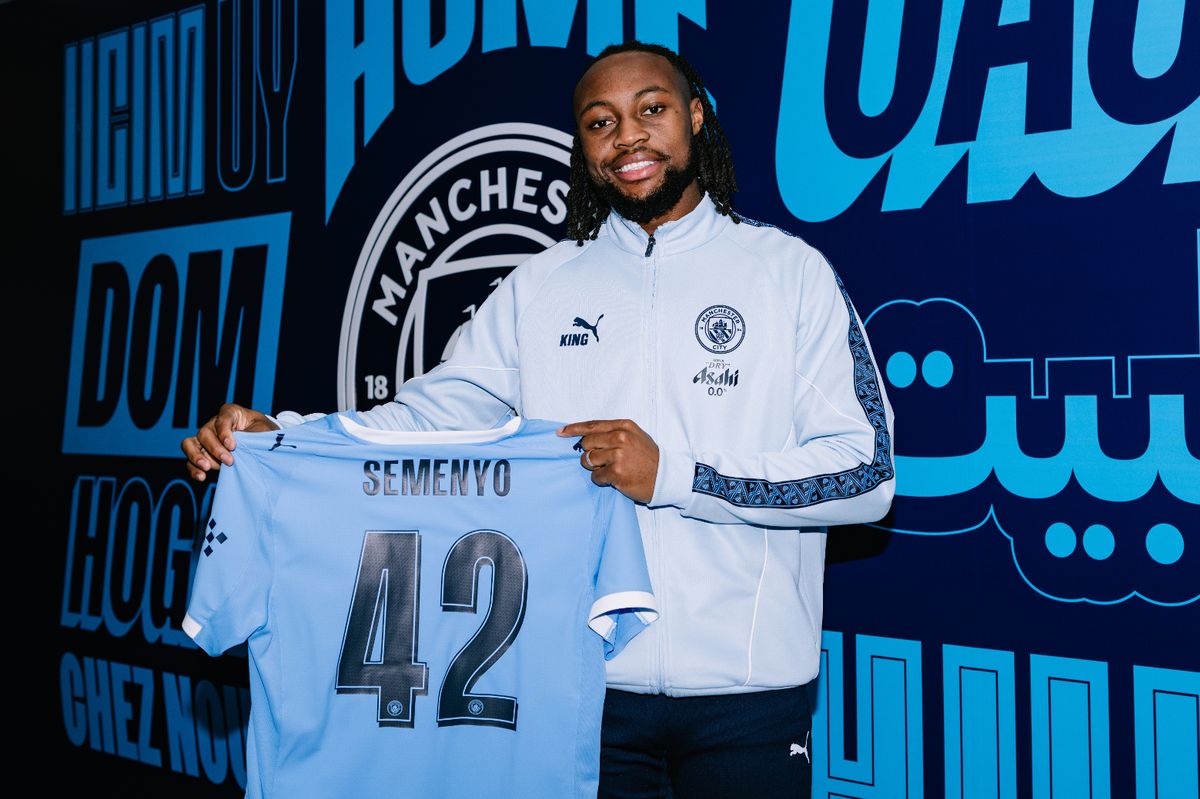
Antoine Semenyo’s Journey: How A Rejected Talent Became Manchester City’s Newest Star
Bournemouth face an enormous challenge replacing Antoine Semenyo, a player arriving at the peak of his powers and polished perfectly for elite football.
His journey is a powerful reminder that even the best scouting systems can overlook late bloomers.
Fulham, Arsenal, Crystal Palace, Millwall, Reading, and Tottenham all passed on him as a teenager. At 15, Semenyo even stepped away from the game entirely.
A decade later, his winding route through non-league pitches and lower-division dressing rooms has now delivered him to Manchester City.
Pep Guardiola’s side beat a long list of suitors to secure a player whose blend of physical dominance and technical finesse is rare at the highest level. City also gains a long-throw specialist, a small but increasingly valuable weapon in modern football, especially for a team sitting near the bottom of the league’s long-throw metrics.
A Transfer Built on Strategy and Opportunity
Semenyo’s £62.5m transfer aligns with Manchester City’s evolving recruitment philosophy.
After mixed returns on their £100m investment in Jack Grealish, City now prefer acquisitions in the £50m–£70m range, where value and upside remain high. Bournemouth’s smart move to extend Semenyo’s contract in the summer ensured the fee reflected his rising value.
This is not the first time the Vitality Stadium has been a stepping stone toward the elite.
Dean Huijsen’s move to Real Madrid last summer followed a similar pattern, talent discovered, developed, and eventually sold at a premium. Though Liverpool and Manchester United showed interest in August, neither acted decisively once Semenyo pushed for a January move.
Now, the prospect of the Ghanaian winger lining up alongside Jeremy Doku on either side of Erling Haaland is enough to intimidate any Premier League defence.
Bournemouth’s Balancing Act
Owner Bill Foley dreams of turning Bournemouth into a regular European contender, but financial sustainability remains a tightrope.
His £71.4m shareholder loan write-off in 2022 prevented the club from breaching Profit and Sustainability rules.
With a wages-to-revenue ratio hovering around 71%, and with the Vitality Stadium capped at just 11,300 seats, the club is forced into a “develop and sell” model until the planned new 30,000-seat home becomes reality.
For now, the scouting system remains Bournemouth’s superpower. It unearthed Semenyo, Alex Scott, Marcus Tavernier, and James Hill from the Championship and lower tiers, proving that the club can outsmart rivals in talent identification.
Yet manager Andoni Iraola made his reluctance to sell Semenyo clear. Only Haaland, Igor Thiago, and Bruno Fernandes boast more goal involvements this season.
Losing a player so pivotal, especially after the departures of Huijsen, Illia Zabarnyi, Milos Kerkez, and Dango Ouattara, dents Bournemouth’s ambitions. Semenyo’s departure hurts the most.
A Career Forged Through Persistence, Not Prestige
Semenyo’s journey is defined by resilience rather than academic privilege. David Hockaday, then running the Wiltshire Academy setup, recalls the teenager’s flashes of brilliance during a trial at Bisham Abbey talent that convinced him to invite Semenyo onto a BTEC sports science programme.
Moving away from London, he rebuilt his footballing life in Swindon, eventually joining Bristol City through the South Gloucestershire and Stroud College connection.
His early senior football came on loan at Bath City in the National League South. It was far from glamorous, but it hardened him. As Lee Johnson, the Bristol City manager who handed him his first real chance, remembers, Semenyo arrived “a couple of stone overweight” and without the polished profile of a typical academy graduate.
But he worked relentlessly, reshaping his lifestyle, physique, and tactical understanding.
Five years later, after evolving into one of the EFL’s most dynamic attacking talents, Bournemouth paid £10m for him and Bristol City will now pocket an additional £10.5m from the 20% sell-on clause they smartly inserted.
The Making of a Modern Winger
Semenyo didn’t instantly look like the player he is today. Under Gary O’Neil, there were glimpses. Under Iraola, he exploded.
When Bournemouth went 11 games unbeaten last season, Semenyo was at the heart of everything pressing relentlessly, carrying the ball through pressure, and creating from either flank. This season, he levelled up again, scoring twice at Anfield on opening night and earning October’s Player of the Month.
His combination of strength, pace, versatility, and creativity made him a potential successor to Mohamed Salah at Liverpool.
Instead, he now joins Guardiola’s growing collection of unpredictable, high-ceiling attackers such as Jeremy Doku, Rayan Cherki, and Rayan Aït-Nouri all tasked with being moulded into the Guardiola system.
Working under Iraola has already prepared him for that transformation.
A Late Bloomer Arrives at His Peak
Semenyo turned 26 on January 7, marking his birthday with a last-minute goal to beat Spurs his final act in a Bournemouth shirt.
He joins Manchester City at the exact moment late developers typically reach their peak, both physically and mentally. For Bournemouth, losing a player they helped revive and refine is painful.
For the City, it is another example of elite recruitment with an eye on both the present and future.



