

Premier League
Manchester United’s Worst Season? Examining The Club’s Ongoing Collapse Before The Manchester Derby
Manchester United enter another Manchester derby surrounded by a familiar fog of confusion, nostalgia, and discontent.
Once the standard of stability, longevity, and excellence under Sir Alex Ferguson, the club has spent nearly 13 years stumbling through short-term fixes, identity crises, and managerial churn.
With no European football, early exits from both domestic cups, and yet another interim head coach in place, the question hangs heavy in the air, have United finally reached the lowest point of the post-Ferguson era?
A Tale of Two Clubs at Old Trafford
Manchester City arrive at Old Trafford in a position that highlights just how far United have fallen. Under Pep Guardiola, City have enjoyed a decade of relentless excellence, collecting 18 major trophies.
In that time, they have evolved into one of the most efficient and admired football projects in the modern game.
United, operating with no long-term plan and no permanent head coach, has handed the responsibility of damage control to Michael Carrick.
For the second time, the former midfielder steps into a temporary role in an environment defined by instability. This will also be United’s shortest season in over a century, with just 40 competitive fixtures a stark reminder of how far the club has fallen from its once continental stature.
Yet even this bleak scenario does not unite supporters in agreement over whether the club has reached its lowest ebb.
Red Devils, Different Rock Bottoms
When asked for the club’s true nadir, United fans produce different answers a reflection of how many painful chapters there have been since Ferguson retired.
For some, the humiliation at Anfield in the 7–0 defeat remains unmatched. Others point to the 15th-place finish or embarrassing European exits.
Still others recall entire managerial tenures that drained hope from the stands.
Rick Redman, a long-time season-ticket holder, captures the sentiment succinctly: “There are too many to choose from.”
This is the essence of United’s dilemma. They have not suffered one devastating collapse. Instead, they have endured a continuous series of stumbles, each chipping away at identity, standards, and belief.
The Nostalgia Loop
United has responded to crises by looking backward rather than forward. As disappointment deepened, the club repeatedly tried to recreate the Ferguson era through emotional appointments.
Ryan Giggs, Ole Gunnar Solskjær, Ruud van Nistelrooy, and Darren Fletcher each received opportunities in the hope that a familiar face might reawaken the club’s spirit.
Carrick’s appointment fits this pattern as well. And throughout these cycles, Ferguson’s influence still looms large both symbolically and literally, with his presence in the directors’ box and the stand bearing his name overlooking the pitch. But nostalgia is not a strategy.
The attempt to revive the past has often prevented the club from moving into the future. Where Ferguson wrote an era, his successors have barely written chapters.
The Failure of Long-Term Vision
United’s managerial carousel only emphasizes the club’s structural instability. No coach since Ferguson has reached the three-year mark.
David Moyes’s unsuccessful nine-month stint set the tone for the instability that followed. Louis van Gaal, José Mourinho, and Erik ten Hag each delivered short periods of control, but all eventually succumbed to internal pressures and short-term expectations.
Ole Gunnar Solskjær, the longest-serving of the post-Ferguson appointments, finished second in the Premier League but left without silverware and on the back of a run that exposed systemic flaws. His decision to bring Cristiano Ronaldo back heightened nostalgia but accelerated the club’s tactical imbalance.
James Starr, a lifelong fan, says, “Strangely, my lowest moment in recent history was either [Ralf] Rangnick’s tenure, which was defined by a dire run of results, or the second half of last season under [Ruben] Amorim.
”I don’t think Amorim should have been sacked; he had gotten rid of the deadwood and was starting to make little progress with this team. Another good summer of signings of the ilk of Bryan Mbeumo and Matheus Cunha and I think we’d have been around the Champions League spots again comfortably next season.”
Leadership Questions Under Ratcliffe
The arrival of Sir Jim Ratcliffe was meant to mark a turning point. Instead, the optimism has waned. The Glazers remain in place. The football structure has become more complicated rather than clearer.
Omar Berrada and Jason Wilcox, key figures in the new hierarchy, have already faced criticism for questionable decisions and the lack of a coherent succession plan following Amorim’s dismissal.
From retaining Erik ten Hag after an FA Cup triumph only to dismiss him months later, to hiring and then parting ways with Dan Ashworth, the club continues to operate in contradictions.
Their failure to strengthen a clearly vulnerable midfield only deepens the sense of confusion.
Despite being removed from the managerial post, Ruben Amorim left the club in a relatively favorable position in the league table.
Seventh place and three points from fourth suggest a realistic chance at Champions League qualification. Without the distraction of European football, United theoretically has a clearer path to the top four than many rivals.
But the reality on the pitch tells another story. Three wins in thirteen matches paint a far more troubling picture, and supporters brace for a difficult derby.
Some fear a heavy defeat to City will only deepen a mood already saturated with frustration and apathy.
The Cost of Mismanagement
United’s transfer dealings over the past decade encapsulate their struggles.
Funds have been spent freely but rarely wisely. High-profile signings such as Paul Pogba, Jadon Sancho, Romelu Lukaku, and Antony arrived for enormous fees without delivering sustained success.
At the same time, promising academy graduates were overlooked or sold, only to thrive elsewhere in calmer environments.
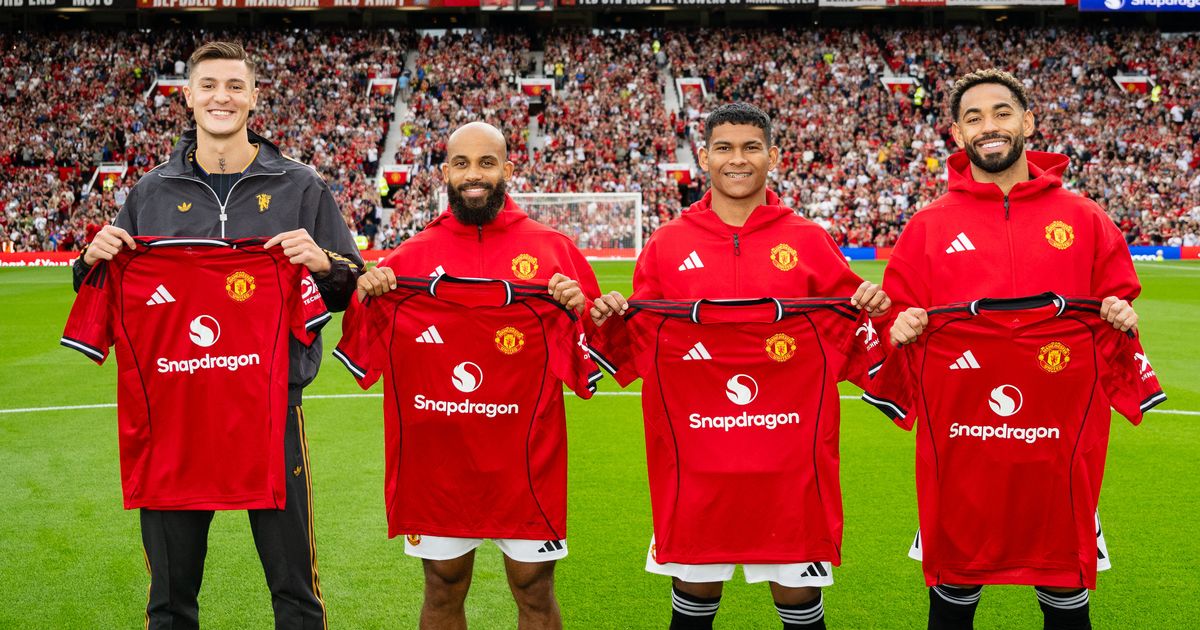
Recent recruits such as Bryan Mbeumo, Matheus Cunha, Benjamin Sesko, and Senne Lammens offer potential, but they are part of a slow evolution rather than the sweeping change the club desperately needs.
Thirteen Years, Twelve Managers, and a Fading Standard
United have cycled through 12 permanent or interim managers since Ferguson. Across that span, they have collected only five major trophies a stark contrast to the relentless success once expected.
The league table reinforces this decline. After never finishing outside the top three under Ferguson, United have now endured eight seasons finishing fourth or lower, including last year’s alarming 15th-place finish.
A club that once feared no opponent now struggles to impose itself consistently on the Premier League.
The Rangnick Warning Still Resonates
Ralf Rangnick’s “open-heart surgery” assessment remains one of the most brutally honest reviews of United’s problems. Four years on, many believe little has changed.
As Redman says, “With the Glazers still in power, it’s more like we’ve had a pacemaker fitted, at best.”
Manchester City will deliver another examination when the teams meet at Old Trafford.
Whether United survives the test or collapses under its weight, one truth remains, the long-promised rebirth still feels a long way off.



