

Premier League
Direction Over Position: How Sean Dyche Is Rebuilding Nottingham Forest
Nottingham Forest’s league position on Sunday night told a story that, at first glance, seemed almost too good to be true.
Fifth in the Premier League since Sean Dyche’s appointment, only to be brought back to reality by the cold fact that they actually sit 16th in the table. Yet football is rarely about the position; it is about direction, momentum, and evidence of change.
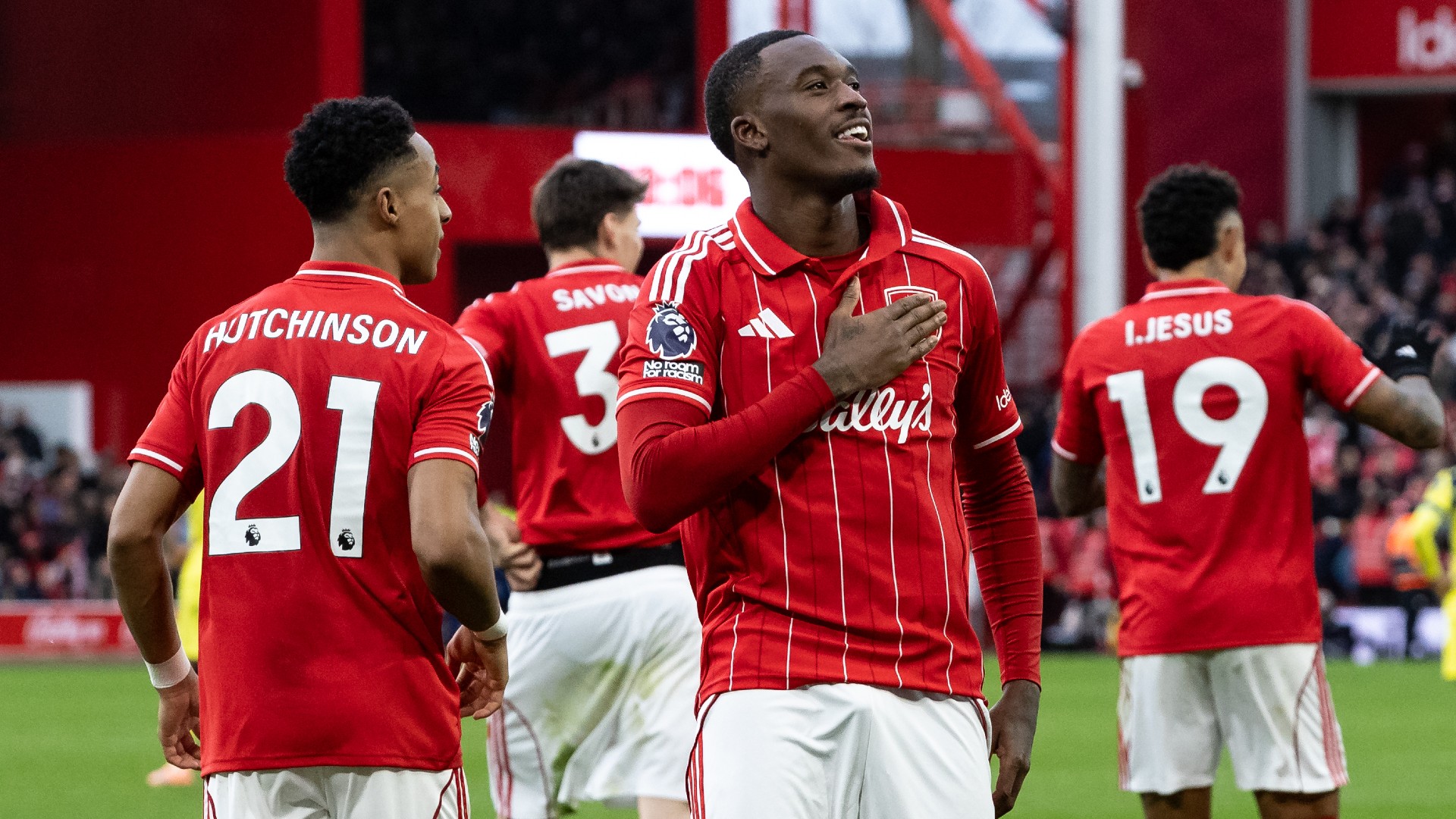
On that front, Forest’s revival under Dyche has been unmistakable, with their comfortable win over Tottenham serving as the clearest signal yet that a genuine reset is underway at the City Ground.
From Freefall to Firm Ground
When Dyche arrived on 21 October, Forest were mired in dysfunction. Five points from nine matches had left them 18th, drifting dangerously close to a season spiralling out of control.
Performances were disjointed, confidence was fragile, and the squad looked like a group of players unsure of both their roles and their identity. The contrast with the current mood could hardly be starker.
Forest are now outside the relegation zone, playing with clarity and conviction, and accumulating points at a rate that places them among the league’s form sides.
Only Aston Villa, Manchester City, Arsenal, and Chelsea have taken more points since Dyche took charge.
Numbers That Reflect Real Progress
That context makes the numbers all the more striking. Thirteen points from eight matches have not removed the threat of relegation, but they have created breathing space and, perhaps more importantly, belief.
Dyche’s average of 1.625 points per game projects to nearly 62 points over a full season, a total that would have been good enough for an eighth-place finish last year.
For a team that was staring down the barrel only weeks ago, that shift in outlook feels transformative.
Expectations That Went Unmet
This revival is especially notable given the expectations that existed before the season even began.
Forest’s summer spending was designed to push the club forward after a successful previous campaign that ended with a seventh-place finish and 65 points. There was optimism that the squad, strengthened for depth, could challenge for Europe again.
Instead, tactical confusion and stylistic extremes left them underperforming badly. Dyche’s task was not just to pick up points, but to restore order, morale, and a sense of purpose.
A Squad Finally Playing to Its Strengths
In many ways, Forest’s squad was always better suited to Dyche’s principles than to the systems that preceded him. Having swung from Nuno Espírito Santo’s conservatism to Ange Postecoglou’s more expansive ideas, the players looked caught between identities.
Dyche, who shares far more in common with Nuno’s pragmatic approach, has simplified the message. He has reminded the players of what they are capable of, of the qualities that allowed them to defy expectations before, and he has done so with a clarity that resonates.
Clear Messages and Stronger Alignment
Communication has been central to this reset. Dyche and his coaching staff have quickly built trust within the squad, delivering clear and honest messages about roles and responsibilities.
Players understand what is expected of them, and that understanding breeds confidence. There is a sense that everyone is pulling in the same direction again, supported by a stronger structure above the manager.
Dyche’s alignment with George Syrianos, now sporting director, has brought cohesion at the executive level, helping Forest move beyond the muddled period that defined the early months of the season.
Restoring Defensive Identity
On the pitch, the changes are just as evident. Dyche’s reputation as a defensive organiser was a major factor in his appointment, and it is an area where Forest had clearly regressed. Basic principles had been abandoned, solidity lost, and confidence drained.
Dyche has taken the team back to fundamentals maintaining shape, defending set pieces with discipline, and competing aggressively to win the ball. The results are tangible.
Three clean sheets in the past five league matches, all of them victories, emphasize the progress being made.
Pragmatism First, Evolution Later
Yet this is not a simple return to old habits. There is evidence that Dyche is evolving, adapting to a squad that offers him more technical quality than he often had at Burnley or Everton.
Forest have been more direct, but there are glimpses of a team capable of playing out from the back and, eventually, embracing a more possession-based approach.
For now, pragmatism rules. The priority is climbing the table, not aesthetic perfection.
Tactical Tweaks That Changed the Game
The tactical shift back to a 4-2-3-1 has been particularly effective. It has revitalised the wide players and unlocked Morgan Gibbs-White, who thrives when allowed to attack space and play on the move.
Where Postecoglou’s 3-5-2 dulled Forest’s threat out wide, Dyche has encouraged it, and the rewards were clear against Tottenham. Callum Hudson-Odoi’s brace highlighted how dangerous Forest can be on the counterattack, especially when injuries have limited their options through the middle.
Gibbs-White, relishing the freedom to create instinctively, has become central to Forest’s attacking threat once more.
Raising the Physical Level
Physical conditioning has also been addressed. Dyche identified fitness as a weakness and responded with longer, more intense training sessions.
The improvement has been evident in Forest’s ability to press and sustain higher intensity for longer periods. The opening goal against Tottenham, forced by aggressive pressing, was a clear example.
Liverpool, too, felt the effects of Forest’s renewed physicality and tempo when they were beaten 3-0 last month.
More Than Just Survival
This is familiar territory for Dyche, a manager forged in relegation battles and accustomed to doing more with less. That experience has given him a clear blueprint for pulling teams away from danger, and it has worked quickly at Forest.
What makes this situation feel different, though, is the sense of potential beyond mere survival. The foundations have been reset, the structure restored, and the identity clarified.
Forest is organised, confident, and increasingly dangerous again.
A Table That Will Soon Catch Up
The table may insist that Forest is still 16th, but form, belief, and direction tell a more hopeful story. Dyche’s imprint is everywhere, from the defensive discipline to the renewed aggression and clarity of purpose.
This is not just a short-term bounce; it feels like the early stages of something more sustainable.
For a club that looked lost not long ago, Nottingham Forest have found their bearings again, and under Sean Dyche, they are finally moving forward.



