African Football
The Tactics Behind Morocco’s Stunning 2022 World Cup Run
Morocco’s extraordinary run at the 2022 FIFA World Cup was not an accident, nor a miracle of passion alone.
It was a tactical masterclass engineered from the moment Walid Regragui took charge in late August just months before the tournament began. What unfolded in Qatar was the story of a team that embraced discipline, intelligence, and unity to shut down Europe’s elite.
And become Africa’s first-ever World Cup semifinalists.
Before arriving in Qatar, the Atlas Lions had won only two of their previous 16 World Cup matches. Expectations were low, the coach was new, and the squad was still recovering from internal tensions.
Yet Morocco topped a group containing world No. 2 Belgium and 2018 finalists Croatia, before eliminating Spain and Portugal in succession. The question hung over the football world how did they do it?
The answer lies in a blend of tactical precision, defensive resilience, and diaspora unity. And a collective belief that transformed an underachieving nation into a global contender.
The Coaching Shift That Changed Everything
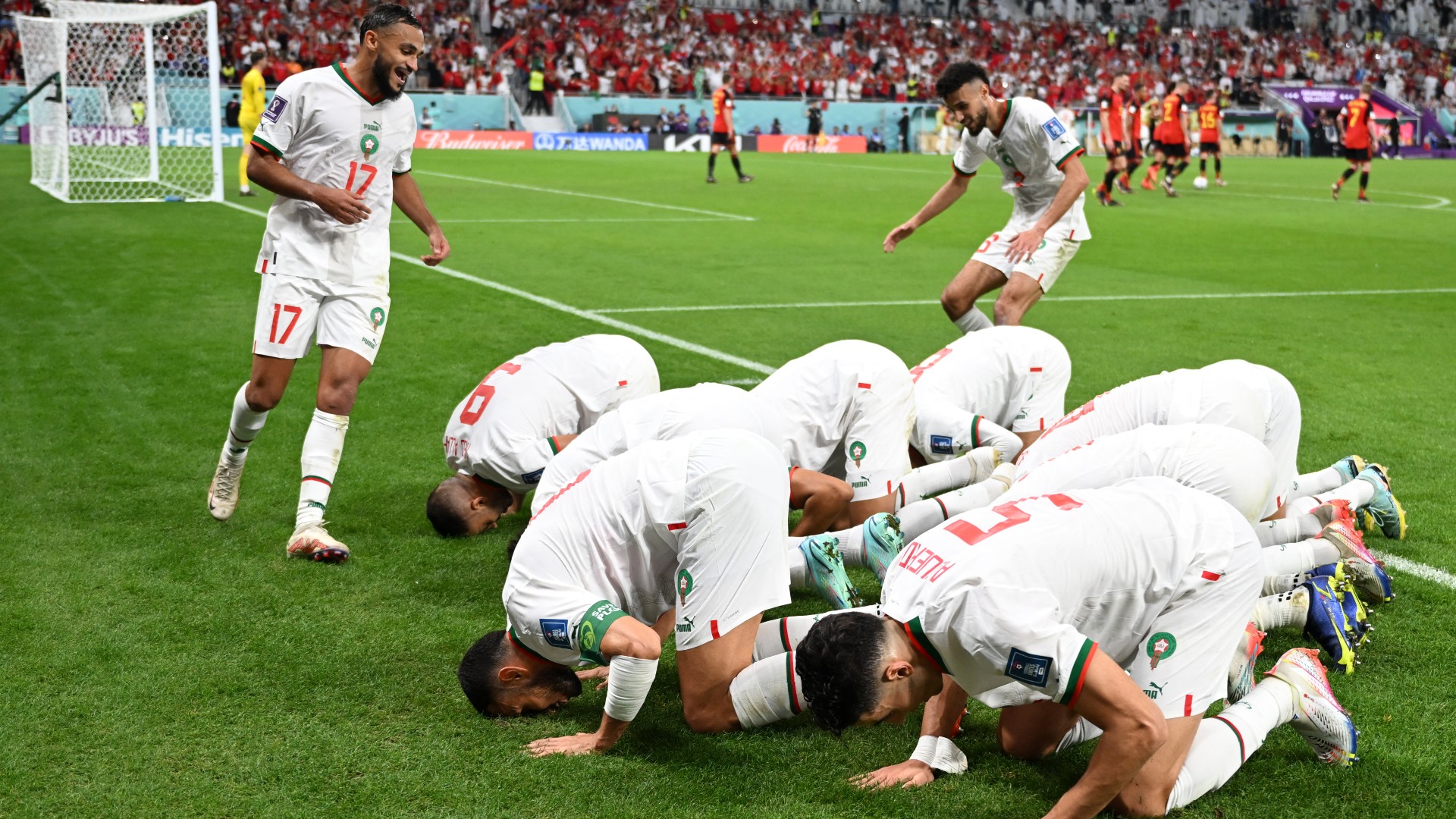
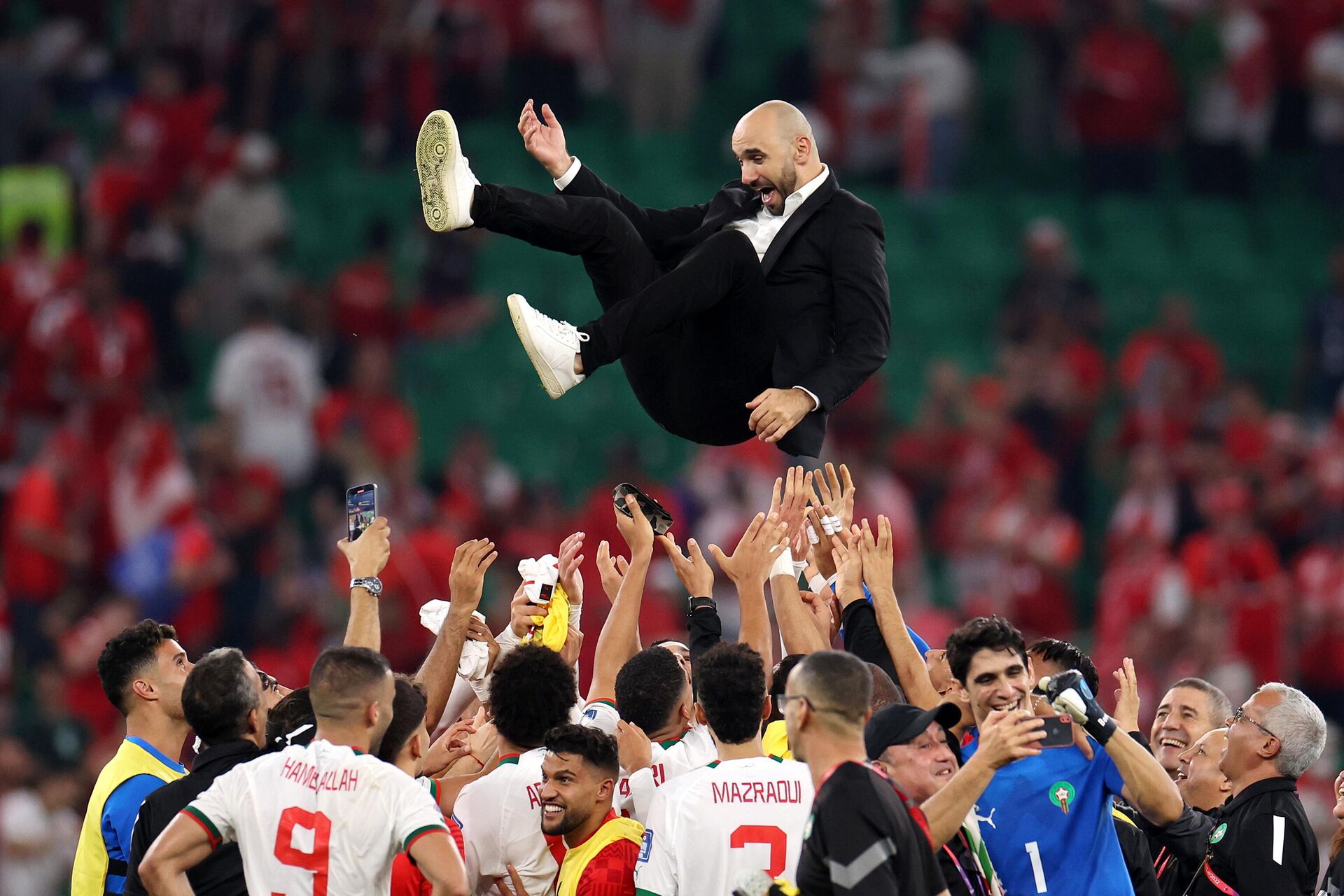
Morocco national football team celebrating a significant victory during the 2022 FIFA World Cup.
The foundation for Morocco’s revolution was laid in August 2022 when the federation dismissed Vahid Halilhodžić. Although he had guided Morocco smoothly through qualifying, his refusal to select key players most notably Hakim Ziyech created friction and fractured the squad.
The federation called the split “divergent visions,” but the reality was simpler. Morocco needed its best talents united.
Enter Walid Regragui, fresh off winning the CAF Champions League with Wydad Casablanca. Charismatic, modern in his methods, and deeply connected to Morocco’s global diaspora. He inherited the most talented Moroccan team in decades.
His first mission was not tactical it was psychological. He had to unify players born in Europe with those born in Morocco and repair the emotional divides of previous years.
Regragui succeeded instantly. He declared one principle, “Every Moroccan is a Moroccan.” His own biography born near Paris to Moroccan parents mirrored the lives of several squad members.
Under him, Ziyech returned, Noussair Mazraoui rejoined, and the dressing room became a single group driven by one purpose.
Building a Defensive Fortress: The 4-1-4-1 Structure
Morocco’s shape was deceptively simple a 4-1-4-1 that morphed into a low block against stronger sides. At its heart was Sofyan Amrabat, the midfield anchor who rarely drifted forward.
He became the axis around which the entire defensive system revolved. They are always screening the back line, always hunting passing lanes, always eliminating space between the lines.
Regragui’s approach was pragmatic. Morocco would concede possession but never concede space.
Against Spain, Belgium, Croatia, and Portugal, the Lions used their back four and midfield line as two suffocating layers that squeezed opponents into harmless areas.
Spain attempted 768 passes in 90 minutes yet created almost nothing. Belgium ran out of ideas. Croatia could not find gaps. Portugal’s creativity vanished.
The system required absolute discipline and enormous mental concentration. There was no room for freelancing. Every player knew their zone.
Every movement was synchronized. Morocco defended not as individuals but as a single living organism.
The Numbers Behind the Wall
The results were astonishing. In the seven matches after Regragui’s appointment, Morocco did not concede a single goal from an opposition player. Not one.
Chile failed to score. Paraguay failed. Georgia failed. Croatia failed. Belgium failed. Spain failed. Portugal failed.
The only ball in their net was an own goal against Canada. Opponents were left circulating the ball around the box like handball teams, unable to penetrate.
This was not luck. It was structured.
Azzedine Ounahi and the Engine Room That Shocked Spain
One of the breakout stars of Morocco’s plan was Azzedine Ounahi. His work rate, tactical awareness, and ball-carrying stunned Luis Enrique, who admitted he was “surprised” at the midfielder’s all-action dominance.
Ounahi’s constant movement disrupted Spain’s control, and his pressing triggered Morocco’s counterattacks.
Alongside Amrabat and Selim Amallah. He turned midfield into a zone opponents could not escape without pressure.
Injuries piled up for Morocco throughout the tournament, yet the intensity never dropped. Desire compensated for exhaustion.
Counterattack at High Speed
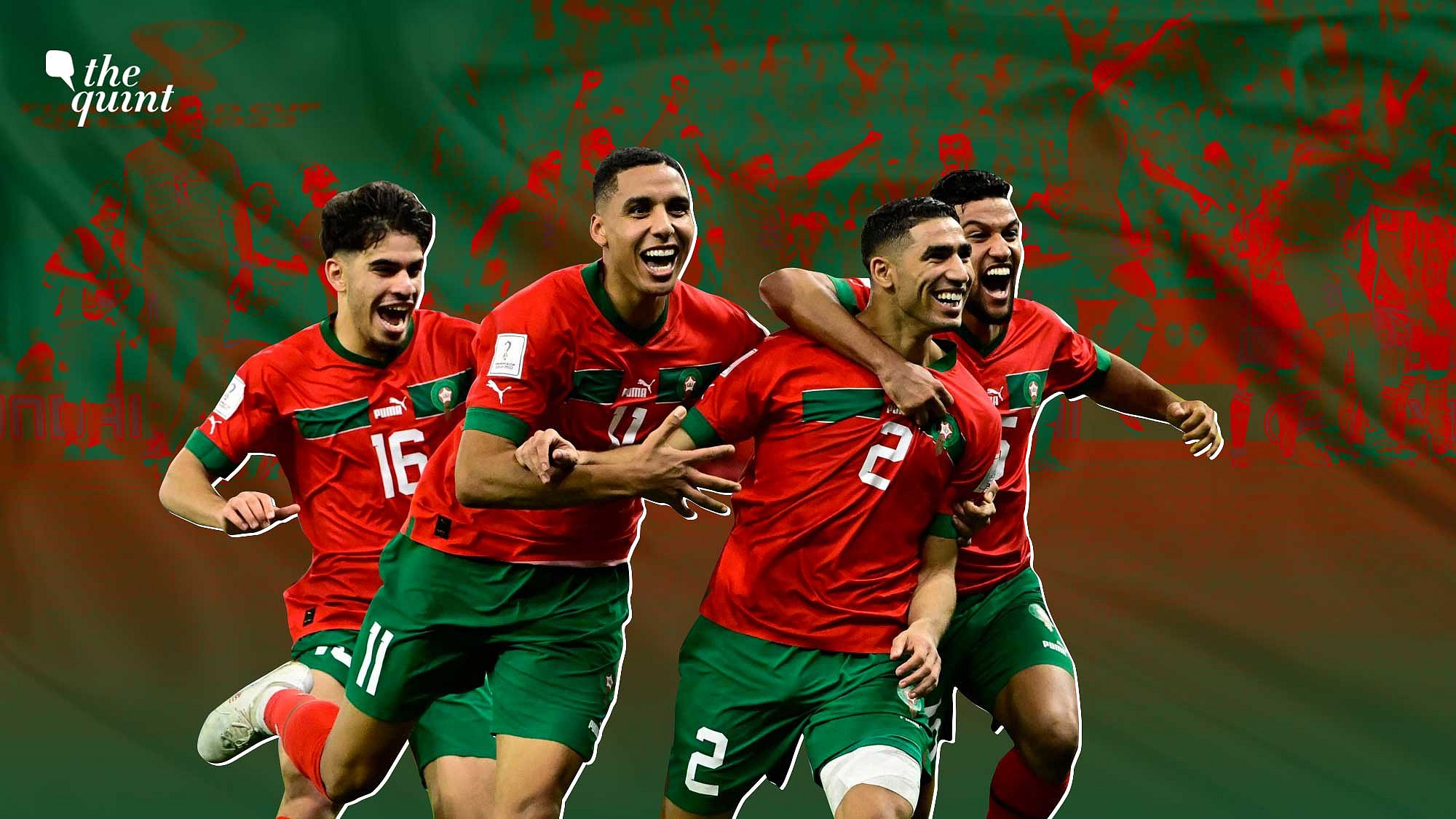
The Moroccan national football team, known as the “Atlas Lions,” is celebrating a victory at the 2022 FIFA World Cup in Qatar.
Morocco’s low-block defense would have been useless without a threat on the break. Regragui built his counterattacks around Achraf Hakimi, arguably the world’s most explosive right-back.
In Qatar, he was more selective with his forward runs. But when he surged, he did so with devastating timing.
Hakim Ziyech provided creativity, Sofiane Boufal added dribbling unpredictability, and Youssef En-Nesyri supplied the vertical threat. When Morocco won the ball, isolated players suddenly found five or six teammates sprinting forward.
This was rehearsed, not improvised.
Regragui admitted the plan openly, “We knew that if we cut out their passes, we would have opportunities.”
Ziyech and En-Nesyri both struggling at the club level rediscovered brilliance when wearing the Moroccan shirt. Their goals against Canada and their pressing against Spain and Portugal showed how a unified system can rejuvenate players.
The Global Moroccan Identity
Perhaps the most underrated factor behind Morocco’s success was the unity between Moroccan-born and European-born players. Regragui resolved long-standing tensions by treating everyone equally and leveraging their experiences in elite European leagues.
Hakimi’s upbringing in Madrid, Ziyech’s roots in the Netherlands, and Mazraoui’s German schooling. Bounou’s Canadian beginnings these were assets, not divisions.
Many players had Champions League backgrounds, bringing a level of experience rarely found in African squads.
Off the pitch, the global Moroccan diaspora amplified this unity. More than 20,000 Moroccans packed stadiums in Qatar.
Thousands more roared in the streets from Frankfurt to London to Montreal. Their presence turned every match into a home game.
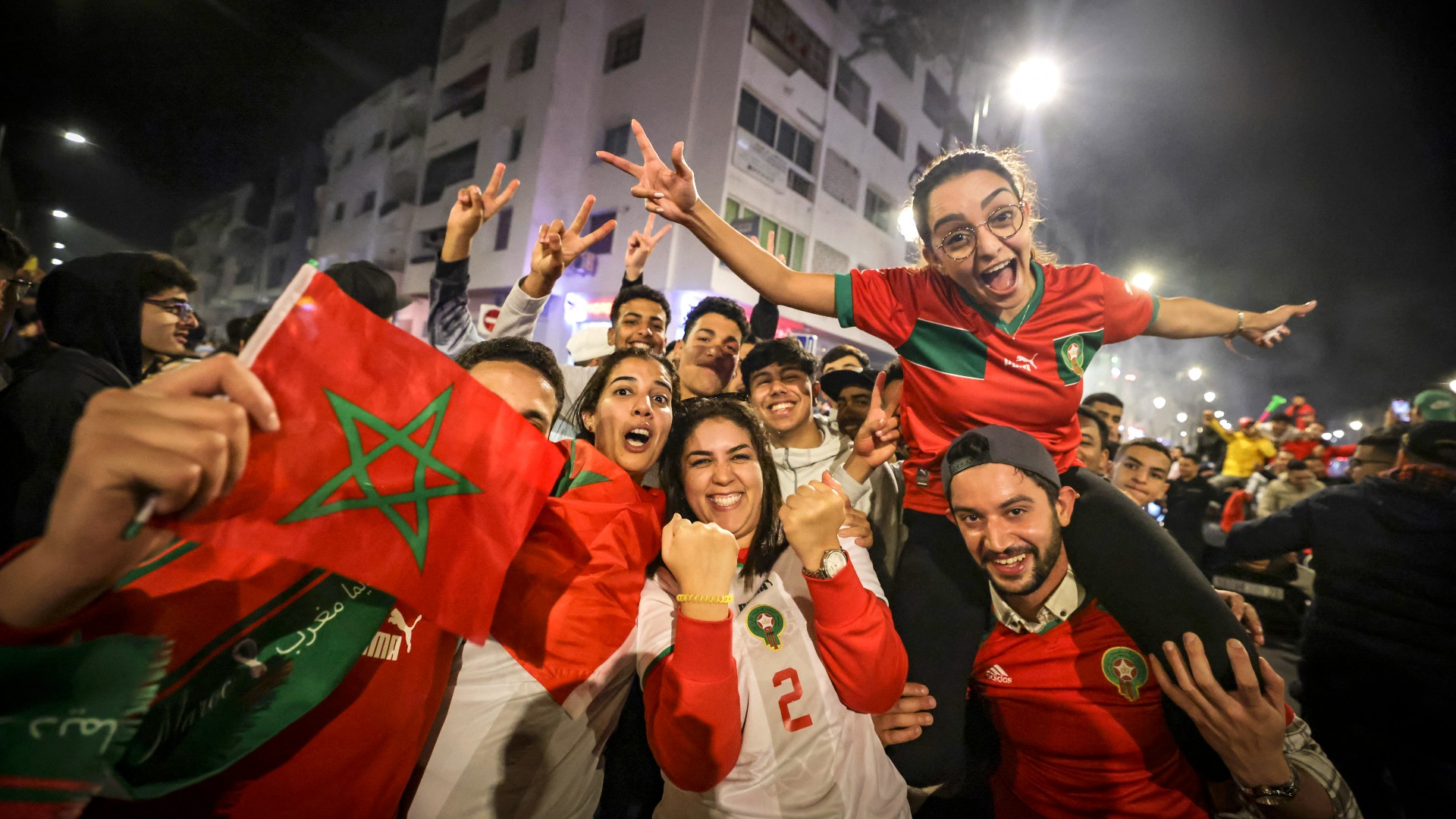
Ecstatic fans celebrating the Moroccan national football team’s historic performance in the 2022 World Cup.
The Belief That They Belonged
Morocco’s tactics were elite, but their mentality was historic. Regragui told his players: “You don’t come to the World Cup only to play three games.”
He instilled belief that they could defeat giants, and they did. Spain fell. Portugal fell. Belgium fell. Croatia could not break through.
Every player fought through injuries, exhaustion, and pressure with unshakeable unity. The semifinal loss to France did not diminish their achievement it underlined it. No African, Arab, or North African team had gone this far before.
Morocco did not just defend well. They defended with purpose. They defended with identity.
They defended with a plan that shocked the world and reshaped football history.