World Cup 2026
The Most Iconic African World Cup Moments Of All Time
Africa’s World Cup story has never been measured by trophies.
It has been measured by moments. Moments that stopped the world. Time that shattered stereotypes. Situations that proved African football belonged on the biggest stage.
For decades, African nations arrived at the FIFA World Cup with fewer qualification places than Europe and South America, less global attention, and often lower expectations.
Yet time and again, they delivered some of the tournament’s most unforgettable memories.
From Egypt becoming Africa’s first World Cup representative in 1934 to Morocco’s historic run to the semi-finals in 2022, African teams have consistently rewritten football history.
As the 2026 FIFA World Cup begins. And with DR Congo returning to the tournament after more than half a century away.
It is the perfect time to revisit the greatest Africa World Cup moments ever witnessed.
Egypt 1934: Africa’s World Cup Pioneer
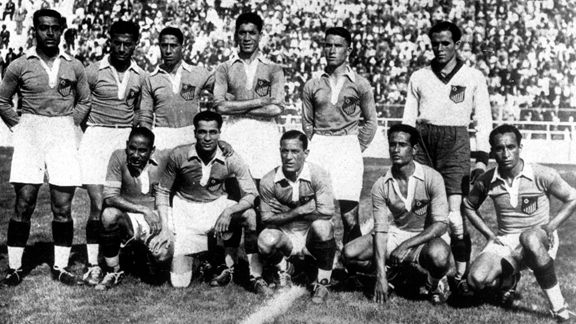
Egypt national football team posing for a team photo before their match against Hungary in the 1934 FIFA World Cup in Italy.
Every great story has a beginning. For African football, that beginning came in Italy in 1934.
Before Egypt arrived at the World Cup, no African nation had ever participated in football’s biggest tournament. The Pharaohs had to overcome British-occupied Palestine in qualification, winning convincingly to secure the continent’s first-ever World Cup appearance.
The tournament format was unforgiving. There was no group stage. One defeat meant elimination.
Egypt were drawn against Hungary and ultimately lost 4-2. But the result did not tell the full story.
Forward Abdelrahman Fawzy scored twice, becoming the first African player ever to score at a FIFA World Cup.
Those goals marked the start of Africa’s World Cup journey.
Another African nation would not appear again until Morocco qualified in 1970. Egypt’s pioneers opened the door for every African footballer who followed.
Algeria Shock West Germany at Spain 1982
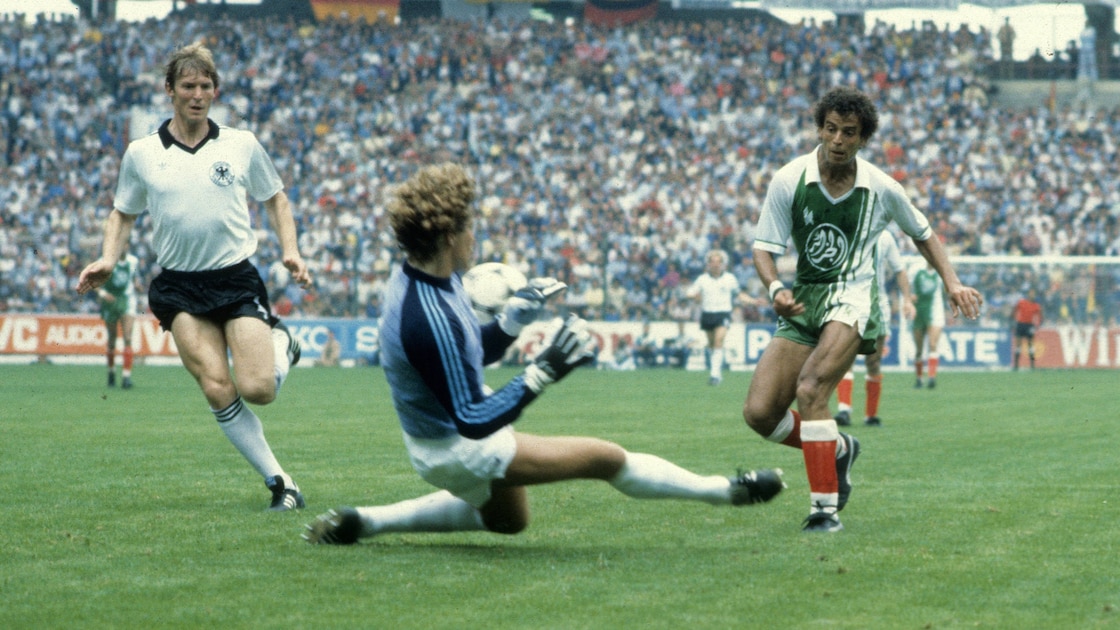
1982 FIFA World Cup match where Algeria shocked the world by defeating West Germany 2–1.
Few results in World Cup history compare to Algeria’s stunning victory over West Germany in 1982.
At the time, West Germany were one of football’s superpowers. They had won the World Cup in 1974 and were among the favourites to lift the trophy again in Spain.
Algeria, meanwhile, were World Cup debutants. Most observers expected a comfortable German victory.
Instead, Africa witnessed one of its greatest sporting triumphs.
Goals from Rabah Madjer and Lakhdar Belloumi secured a famous 2-1 victory that stunned football fans worldwide.
The result proved African teams could not only compete with football’s elite but beat them. Algeria were controversially eliminated following the infamous “Disgrace of Gijón” between West Germany and Austria. Their victory remains one of the biggest upsets in World Cup history.<p>Many historians point to that match as the moment Europe finally began taking African football seriously. It also directly inspired a generation of Nigerian, Senegalese and Ghanaian footballers who grew up believing they too could compete at the highest level.
Morocco 1986: Africa Breaks Into The Knockout Rounds
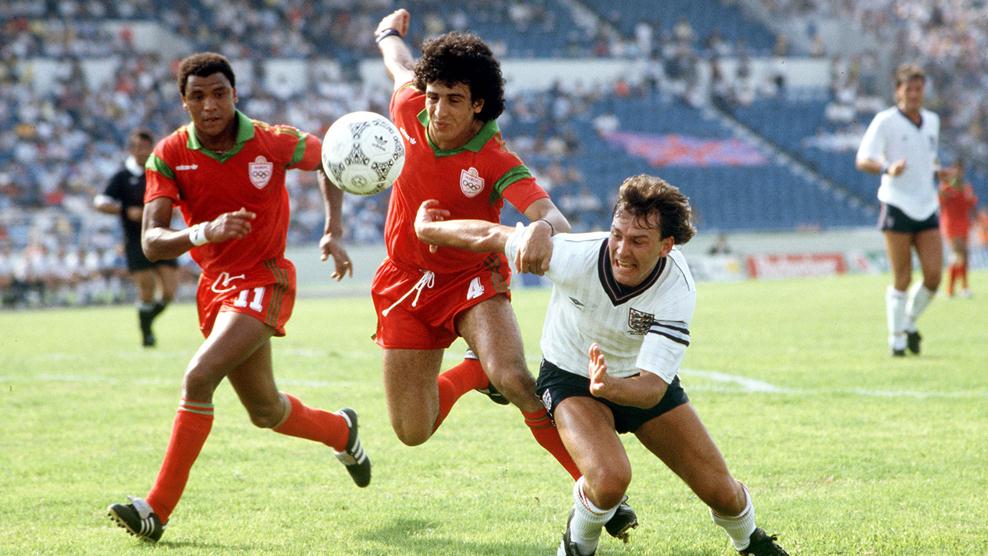
Group F match between England and Morocco at the 1986 FIFA World Cup in Monterrey, Mexico.
If Algeria shocked the world in 1982, Morocco made history four years later. At Mexico 1986, the Atlas Lions achieved something no African nation had ever done before. They reached the knockout stages.
Morocco found themselves in a difficult group alongside England, Portugal and Poland.
Many expected them to struggle. Instead, they remained unbeaten.
After drawing with Poland and England, Morocco defeated Portugal 3-1 to finish top of the group.
It was a groundbreaking achievement. For the first time, an African team had advanced beyond the first round of a World Cup.
Although West Germany eventually ended Morocco’s run with a narrow 1-0 victory in the Round of 16. African football had crossed a psychological barrier.
The knockout stages were no longer an impossible dream.
Roger Milla and Cameroon at Italia ’90
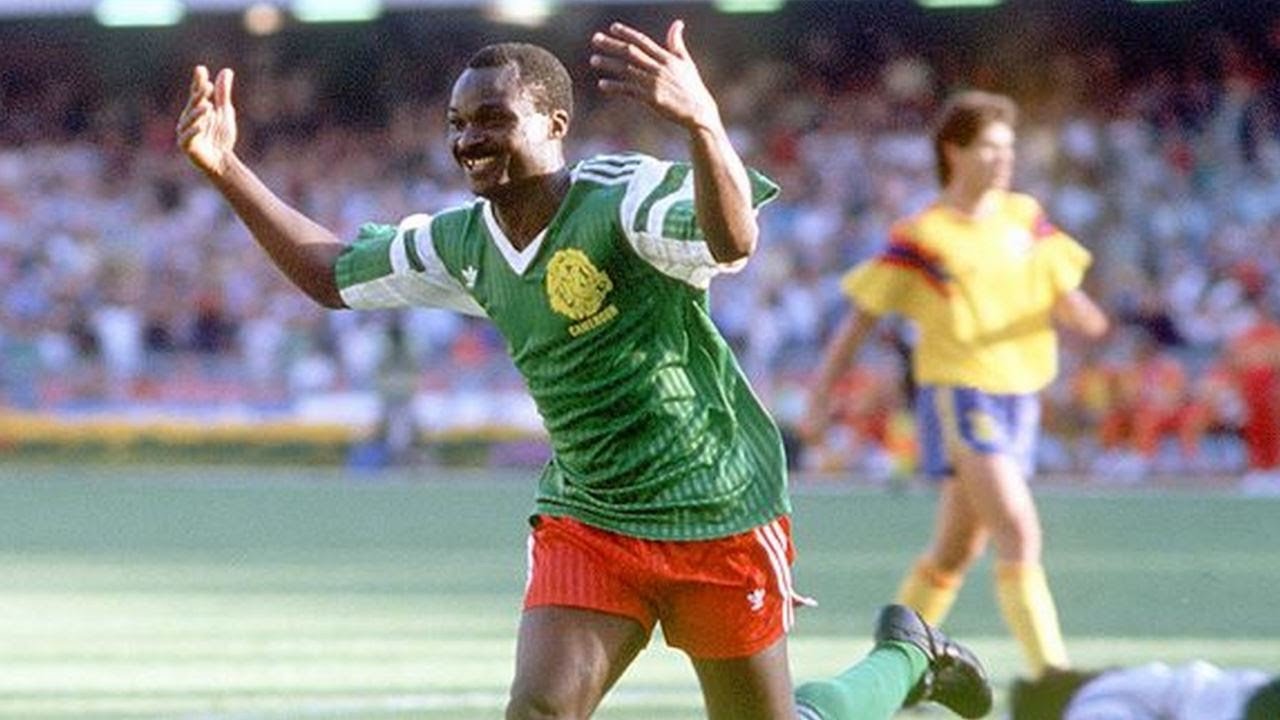
Legendary Cameroonian footballer Roger Milla.
No African World Cup story is more iconic than Cameroon’s incredible run in 1990. And no player symbolizes African football’s rise more than Roger Milla.<p>At 38 years old, Milla was considered past his peak when he travelled to Italy. Instead, he became a global superstar.
Cameroon shocked defending champions Argentina in the opening match, defeating Diego Maradona’s side 1-0.
The Indomitable Lions followed that victory by beating Romania and qualifying for the knockout stages. Then came Roger Milla’s defining moments.
His goals against Romania and Colombia, combined with his famous corner-flag dance celebrations, turned him into one of the stars of the tournament.
The image of Milla dancing near the corner flag remains one of football’s most enduring photographs.
Cameroon eventually reached the quarter-finals, becoming the first African nation ever to do so.
Only an extra-time defeat to England prevented them from reaching the semi-finals.
For many fans, Roger Milla was Africa’s first true global football superstar.
Nigeria’s Golden Generation Announces Itself in 1994
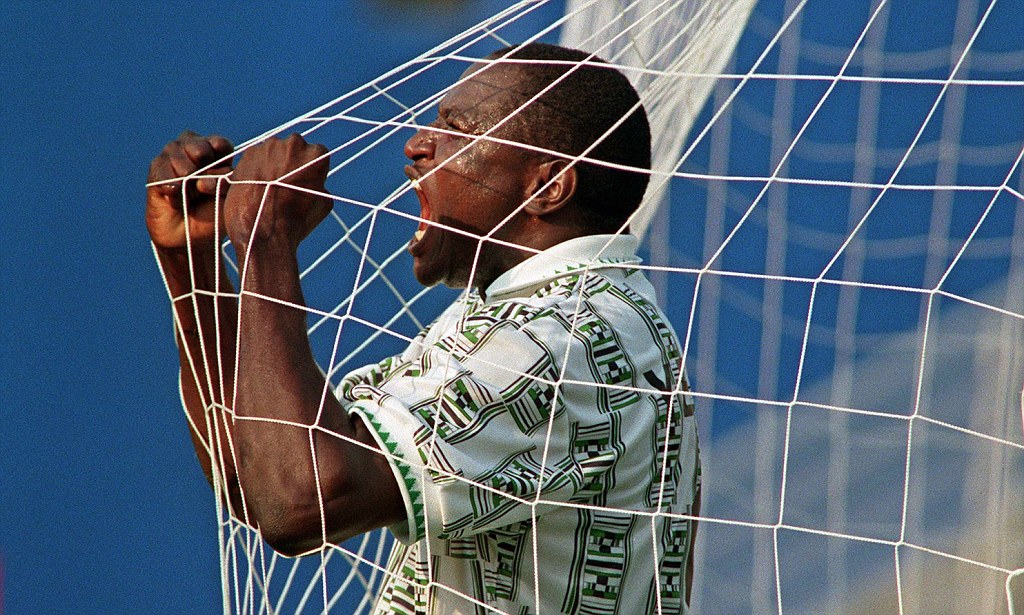
Legendary Nigerian striker Rashidi Yekini celebrating Nigeria’s first-ever FIFA World Cup goal.
When Nigeria arrived at USA ’94, they carried enormous expectations.
The Super Eagles had already won multiple Africa Cup of Nations titles and possessed one of the most talented squads in the continent’s history.
They did not disappoint. Nigeria defeated Bulgaria 3-0 in their first-ever World Cup match, immediately announcing themselves to the world.
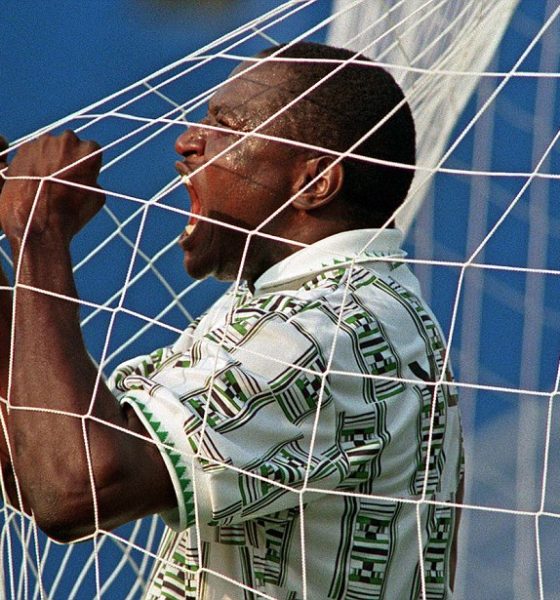
However, the most memorable moment came from Rashidi Yekini. After scoring Nigeria’s first World Cup goal, Yekini grabbed the net and screamed in celebration.
It was pure emotion. Pure joy, pure history.
To this day, it remains one of the most powerful images in African football.
Nigeria advanced to the Round of 16 and established themselves as a major force in international football.
The squad featuring Yekini, Jay-Jay Okocha, Daniel Amokachi, Sunday Oliseh and Finidi George would become known as Nigeria’s “Golden Generation.”
Senegal Shocked the World Against France in 2002
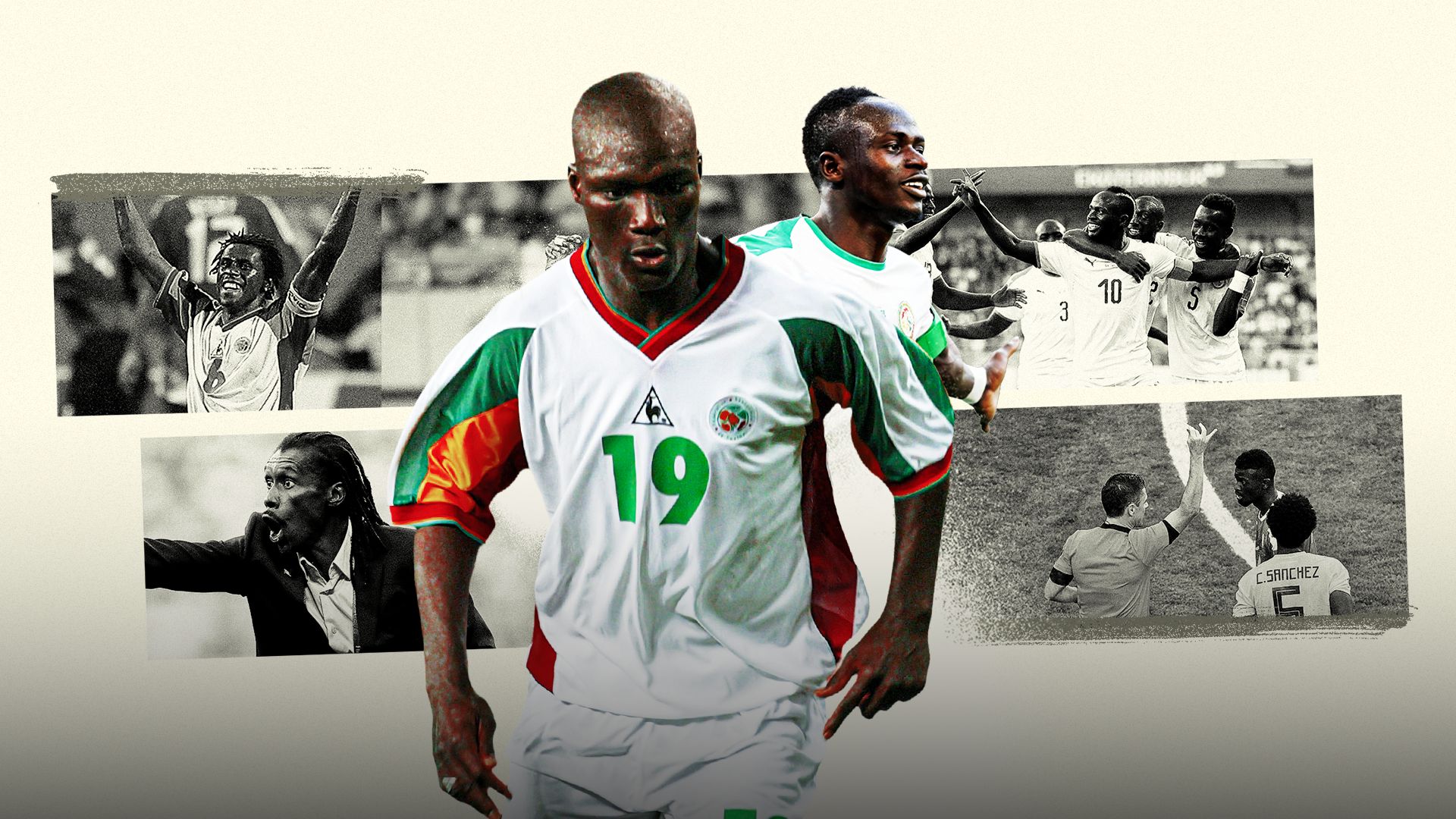
Senegal national football team, highlighting key figures like El Hadji Diouf and Sadio Mané across different eras.
Every World Cup produces a giant-killing story. In 2002, that story belonged to Senegal.
The West Africans were making their tournament debut. Their opening opponents were defending world champions France.
The French squad contained stars such as Thierry Henry, David Trezeguet and Patrick Vieira.
Few expected Senegal to stand a chance. Instead, Papa Bouba Diop scored the only goal as Senegal secured a remarkable 1-0 victory.
The celebrations became one of the iconic images of the tournament. Senegal’s journey did not end there.
The Teranga Lions progressed from the group stage and defeated Sweden in the Round of 16 thanks to Henri Camara’s golden goal.
Like Cameroon before them. Senegal reached the quarter-finals and captured the imagination of football fans worldwide.
Siphiwe Tshabalala’s Goal: Africa’s Greatest World Cup Moment
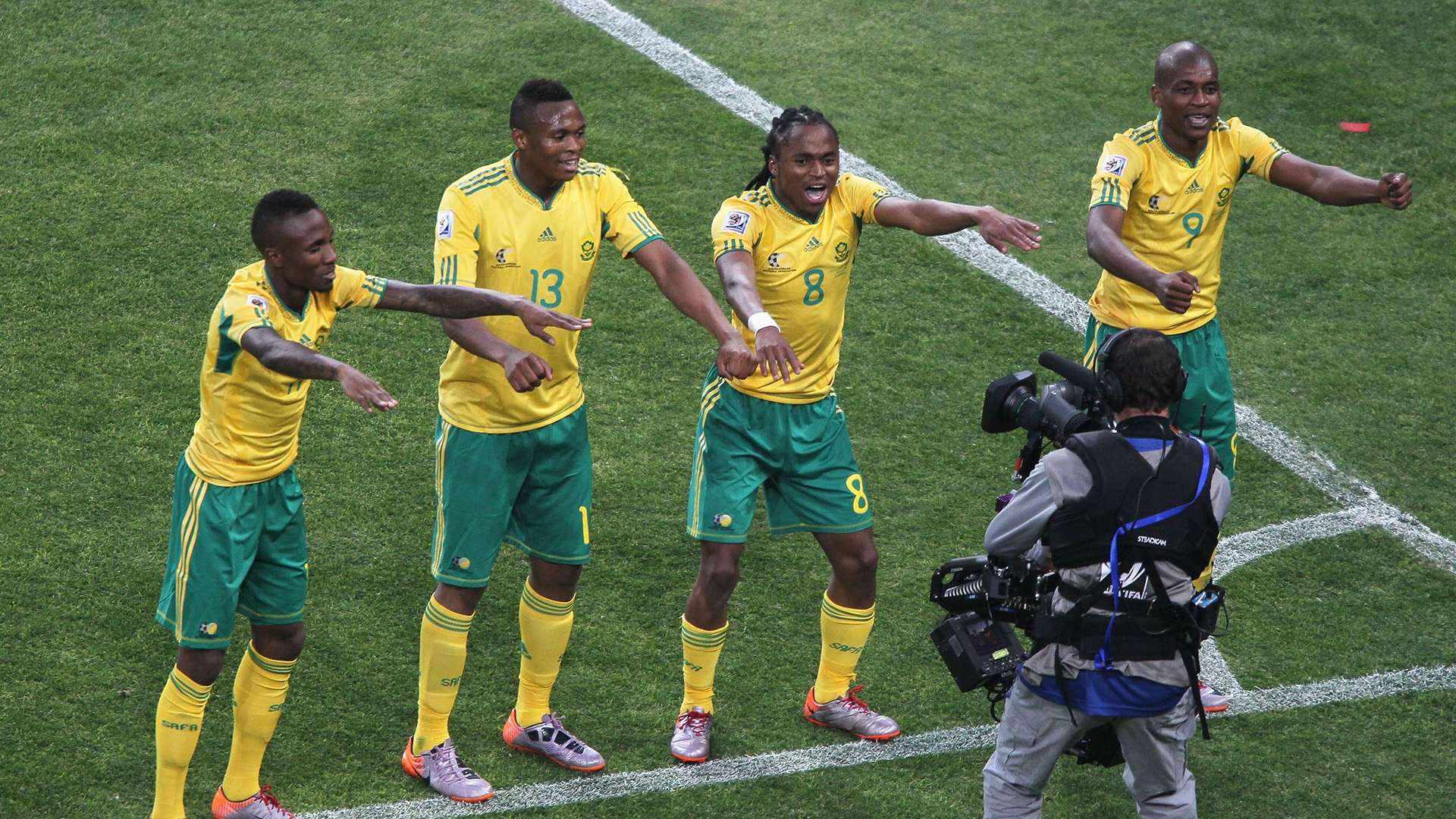
South African national football team celebrating a goal during their opening match against Mexico at the 2010 FIFA World Cup.
If one moment perfectly captures African football’s spirit, it is Siphiwe Tshabalala’s goal against Mexico in 2010.
South Africa became the first African nation to host a FIFA World Cup.
The pressure was immense. The eyes of the world were watching.
Then, in the opening match of the tournament, Tshabalala produced magic.
Receiving the ball on the left side of the penalty area, he unleashed a thunderous shot into the top corner. The goal sparked scenes of celebration across South Africa and the entire continent.
His iconic commentary moment “Goal for South Africa! Goal for all Africa!” remains unforgettable.
Although Bafana Bafana did not progress beyond the group stage. Tshabalala’s strike transcended results.
For millions of Africans, it represented pride, possibility and belonging on football’s biggest stage.
The same fixture returns in 2026 read our South Africa vs Mexico World Cup 2026 preview here.
Ghana vs Uruguay 2010: The Handball That Broke Africa’s Heart
Luis Suarez’s deliberate handball on the goal line is one of football’s most controversial moments.
With Ghana one kick away from becoming the first African nation to reach a World Cup semi-final, Asamoah Gyan stepped up from the penalty spot with the weight of a continent on his shoulders.
He hit the crossbar. Uruguay survived. Ghana were eliminated on penalties.
The heartbreak was felt enormously from Accra to Cape Town.
Suarez became the most hated man in Africa.
Yet the story deserves to be told in full. Ghana’s run to the quarter-finals made them only the second African nation ever to reach that stage.
Their performances throughout the tournament were magnificent.
The missed penalty does not define what Ghana achieved. It defines how cruel football can be.
Algeria Push Germany to the Limit in 2014
Algeria’s Round of 16 clash with Germany at the 2014 World Cup ended in defeat.
Yet many consider it one of the finest performances by an African team at the tournament. Germany eventually won the World Cup.
But before they became champions, they were pushed to the edge by Algeria.
The North Africans created numerous chances and forced Germany into extra time. German goalkeeper Manuel Neuer delivered one of the greatest performances of his career to keep Algeria at bay.
Although Germany eventually prevailed 2-1 after extra time, the match demonstrated how far African football had progressed.
For long periods, Algeria looked every bit the equal of the eventual world champions.
Morocco 2022: Africa Reaches The Semi-Finals
For decades, reaching the semi-finals seemed impossible for an African nation.
Morocco changed that. At Qatar 2022, the Atlas Lions produced the greatest World Cup run in African football history.
They topped a group containing Croatia and Belgium. Then they eliminated Spain. Then Portugal.
With every victory, history was rewritten.
Morocco became the first African nation ever to reach a World Cup semi-final.
The achievement united not only Morocco but the entire continent.
Fans from Lagos to Dakar, Cairo to Johannesburg adopted the Atlas Lions as their team.
Even though France eventually ended their run. Morocco had already changed African football forever. They proved the ceiling was much higher than previously imagined. Morocco carry that same belief into 2026 read our Morocco World Cup 2026 preview here.
DR Congo’s Return in 2026: A New Chapter Begins
The next great African World Cup story may be unfolding right now.
<p>More than 50 years after their only World Cup appearance as Zaire in 1974, DR Congo are back on football’s biggest stage.
Their previous campaign is remembered largely for disappointment and hardship. But this new generation has the chance to create entirely different memories.
<p>With over 110 million people and one of Africa’s largest football talent pools, DR Congo’s return represents more than qualification.
It represents redemption. The Leopards now have an opportunity to replace painful memories from 1974 with moments future generations will celebrate.
Every great African World Cup story starts with belief. DR Congo’s story is only beginning.
They may be waiting for us at the 2026 FIFA World Cup.
DR Congo fans face their own battle just to watch read the full story of how the Ebola travel ban is blocking supporters from attending.
<h3>Verdict: Africa’s Greatest Moments Are Still Ahead
Roger Milla dancing at the corner flag. Yekini holding the net. Senegal shocking France.
Tshabalala igniting an entire continent. Morocco reaching the semi-finals.
Each moment expanded what African teams believed was possible.
And yet the ultimate achievement remains elusive. No African nation has reached a World Cup final.
Not yet.
But if Morocco’s run in 2022 taught us anything, it is that football history is constantly being rewritten.
The greatest Africa World Cup moments may not belong to the past. They may be waiting for us right now at the 2026 FIFA World Cup.