Premier League
Jeff Bezos Liverpool Takeover 2026: Why His £1.35bn Move Comes Just After Mohamed Salah’s Exit
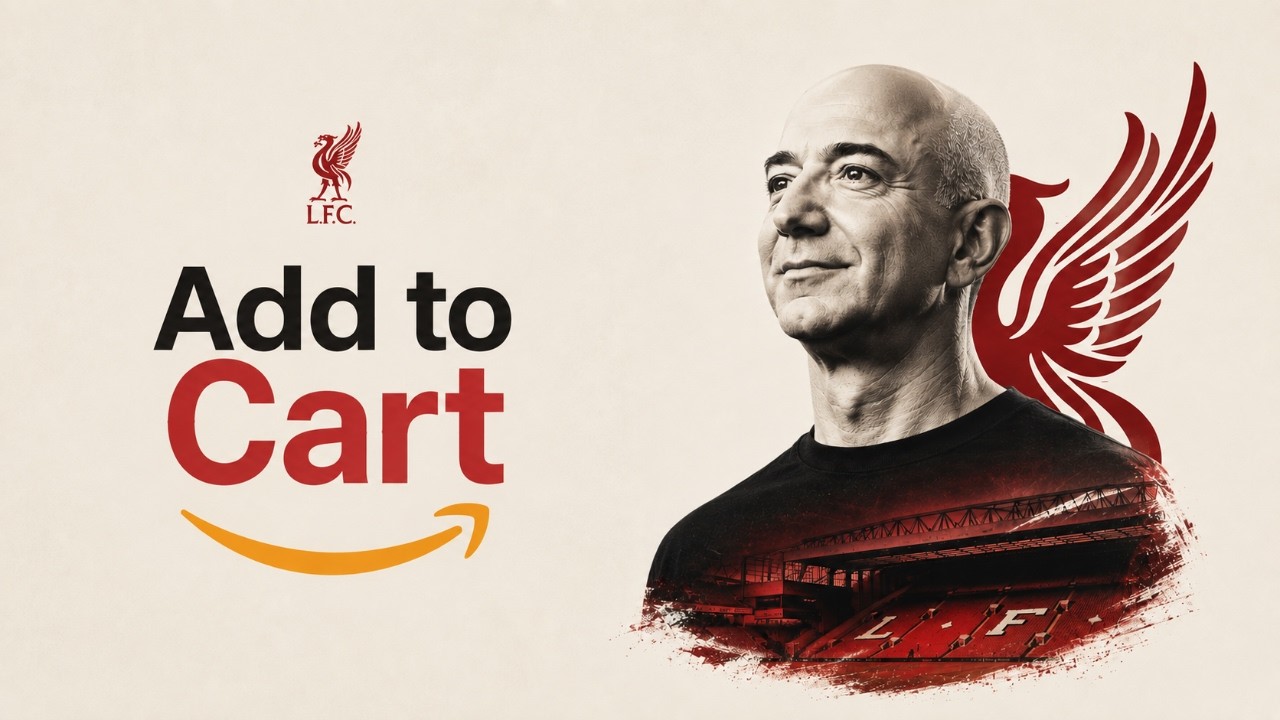
Jeff Bezos is buying into Liverpool, with a consortium including the Amazon founder and Facebook co-founder Eduardo Saverin close to completing a deal for a 30% stake in the Premier League giants.
But for African football, the timing is almost impossible to ignore; Mohamed Salah has just left Anfield after nine extraordinary years.
A consortium led by Amit Bhatia is reportedly preparing to invest around £1.35 billion in Liverpool, valuing the club at roughly $6 billion. The deal would make Bezos a significant minority investor in one of football’s biggest commercial properties. While Fenway Sports Group remains in control.
But there is another story hiding underneath the billionaire numbers.
Salah is gone. The Egyptian forward’s nine-year Liverpool career ended this summer after he became one of the greatest players in the club’s modern history.
Liverpool’s own records credit him with 257 goals in 442 appearances, alongside two Premier League titles, the Champions League, the FIFA Club World Cup and several other major honours.
For millions of African supporters, Liverpool’s global rise became inseparable from Salah’s presence.
Now he has left. And almost immediately, one of the world’s richest men is arriving.
The £1.35 Billion Deal Changing Liverpool’s Ownership Picture
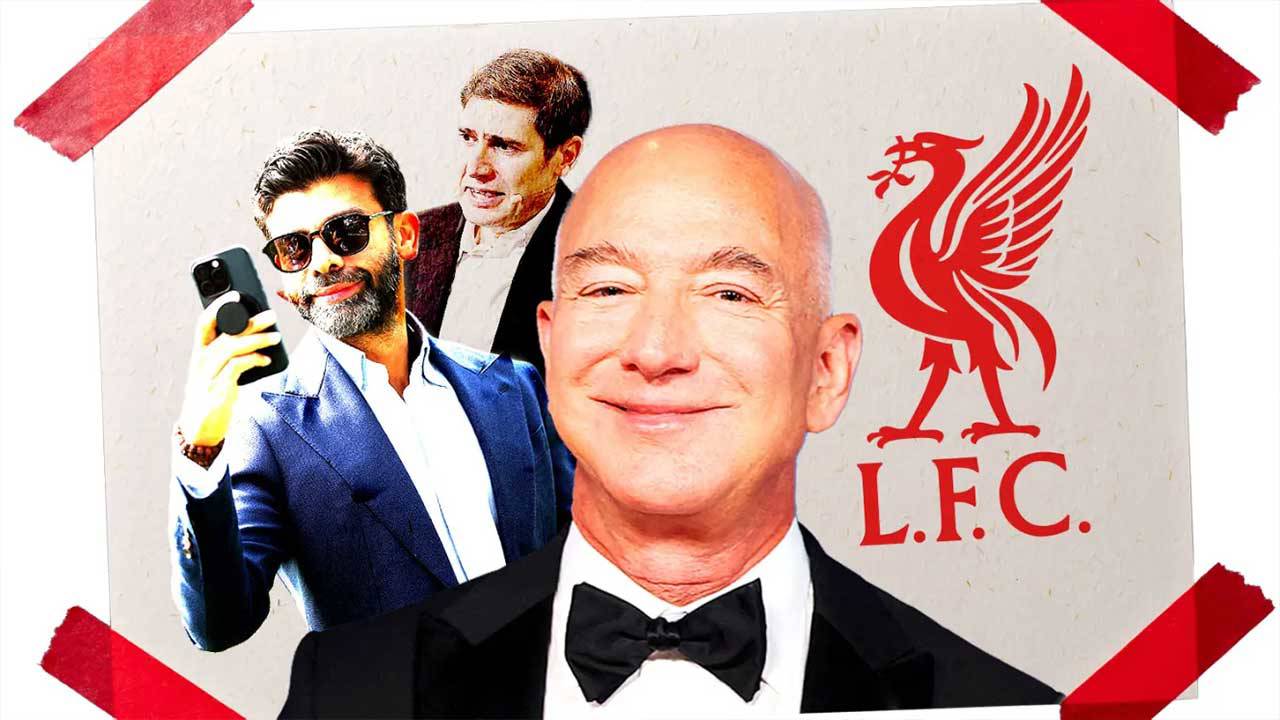
Amazon founder Jeff Bezos and a billionaire consortium led by Amit Bhatia are reportedly advancing in talks to acquire roughly a 30% minority stake in Liverpool F.C. from Fenway Sports Group, in a deal valuing the club at approximately £4.4 billion ($6 billion).
And the headline number is difficult to ignore.
The consortium is close to paying approximately £1.35 billion for a 30% stake in Liverpool, according to current reports. That transaction would place the club’s valuation at around $6 billion.
This is not a conventional takeover. FSG is not disappearing from Liverpool, and Jeff Bezos is not becoming the sole owner.
Instead, Liverpool are bringing in an extraordinarily wealthy group of investors while FSG retains control.
The consortium is led by Amit Bhatia, who has previous experience in English football through Queens Park Rangers. Eduardo Saverin, the Facebook co-founder, is also part of the group.
And then there is Jeff Bezos.
The Amazon founder is one of the richest people on the planet, and his involvement represents something much bigger than another wealthy individual purchasing shares in a football club.
It demonstrates just how valuable elite football has become as a global commercial asset.
Liverpool are no longer simply a football team playing in front of supporters at Anfield.
They are a worldwide entertainment brand. Their matches generate enormous television audiences. Their shirts are sold across continents.
Their history is consumed through documentaries, social media, streaming platforms and digital content.
That is exactly the kind of global ecosystem that someone like Bezos understands.
And that is why his arrival deserves more attention than simply another billionaire entering the Premier League.
Why Jeff Bezos Makes Sense for Liverpool
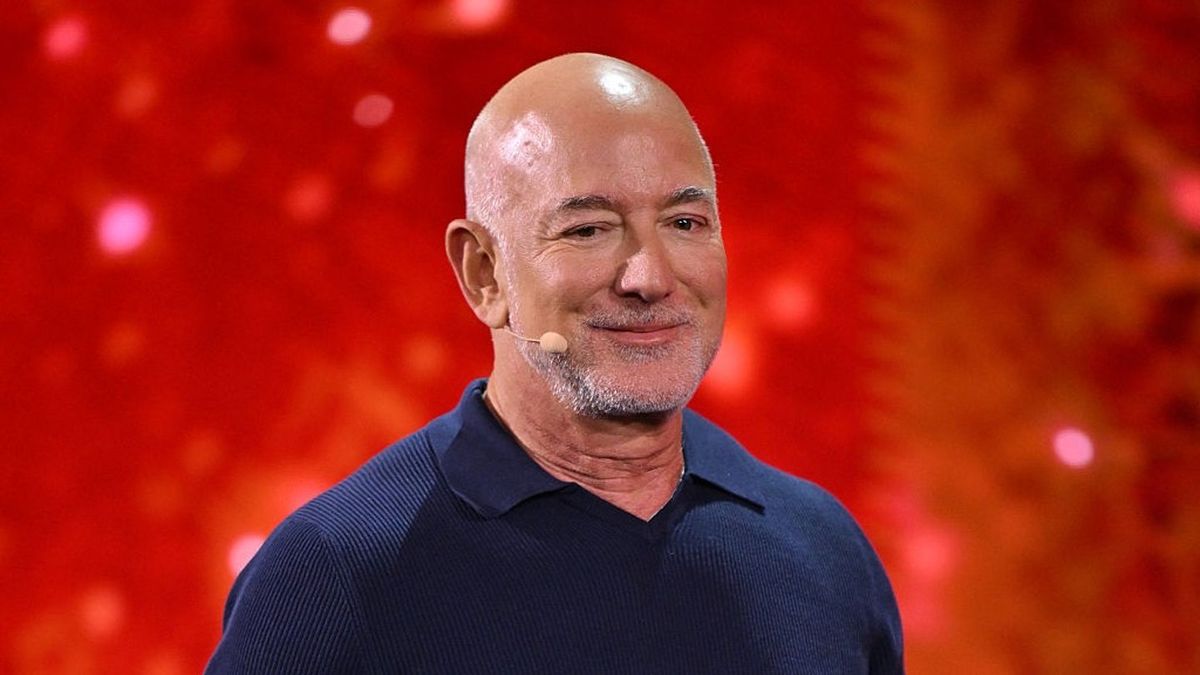
Jeff Bezos smiling in a blue collared shirt on a red background at a public speaking event.
There is a fascinating connection between Bezos and football that goes beyond ownership.
Amazon has already spent years building a relationship with elite sport.
During Bezos’s time leading the company, Amazon became a significant sports broadcaster, including Premier League coverage in the United Kingdom. Amazon has also invested heavily in Champions League and NFL broadcasting.
That experience matters. Liverpool is one of the world’s biggest football content machines.
Every transfer creates millions of searches. Every match generates clips, reactions and analysis. Every major player becomes part of a global storytelling ecosystem.
And Liverpool have something that many other clubs cannot manufacture easily: history.
The club’s European success, rivalry with Manchester United, relationship with the city of Liverpool and enormous international following give it a cultural value that goes beyond its balance sheet.
For Jeff Bezos, therefore, Liverpool can potentially be viewed as more than a football investment.
It can be viewed as a global media and entertainment asset.
That does not mean Amazon will suddenly become Liverpool’s broadcaster or that Jeff Bezos is planning some revolutionary media project. There is no evidence to make that claim.
But the combination is obvious. One of the world’s most powerful technology and entertainment entrepreneurs is becoming a significant shareholder in one of football’s most globally recognised clubs.
That is a combination worth watching.
FSG Has Turned Liverpool Into a Financial Giant
To understand why this deal matters, you have to go back to 2010. Fenway Sports Group bought Liverpool when the club was in a very different financial and sporting position.
Sixteen years later, Liverpool are being valued at approximately $6 billion. That is an extraordinary transformation.
FSG’s ownership has delivered two Premier League titles, Champions League success and significant infrastructure development while also helping turn Liverpool into one of the most commercially powerful clubs in world football.
The ownership model has not been without criticism. Liverpool supporters have disagreed with FSG over spending, ticket prices, the European Super League episode and other decisions.
But financially, the transformation is difficult to ignore. The latest investment effectively allows FSG to crystallise a portion of the value created during its ownership while remaining in control of the club.
That distinction is important. Liverpool are not being handed over to Jeff Bezos.
Instead, FSG are bringing another enormous pool of wealth into the ownership structure. And that could influence Liverpool’s next decade.
Then There Is Mohamed Salah, who left before Jeff Bezos
This is where the story becomes particularly important for Sportxparte.
Because while billionaires are discussing a $6 billion valuation, Liverpool have just lost one of the players who helped make the club what it is today.
Mohamed Salah arrived from Roma in 2017 for a fee of around £36 million. What happened afterwards changed Liverpool.
He became an extraordinary goalscorer, a record-breaker and a central figure in the club’s transformation under Jürgen Klopp.
His goals helped Liverpool win the Champions League. They helped Liverpool end their long wait for another Premier League title.
They helped create some of the most memorable attacking football of the modern Premier League era. And his influence went far beyond England.
In Egypt, Nigeria, Ghana, Kenya, South Africa and across the African diaspora, Liverpool became a club followed intensely because one of Africa’s greatest footballers was wearing the famous red shirt.
That matters commercially. A superstar does not simply score goals.
He creates emotional connections between a club and new audiences.
Salah became one of the most recognisable African footballers in the world while playing for Liverpool. His name became part of Liverpool’s identity during one of the club’s most successful periods.
Liverpool’s own records now list him with 257 goals in 442 appearances, placing him among the greatest goalscorers in the club’s history.
And that makes the timing of Bezos’s investment fascinating.
Liverpool have reached a huge financial valuation after a period in which Salah was one of the club’s defining figures.
Yet Salah is no longer there.
The African Football Irony Is Impossible to Ignore
There is an uncomfortable irony here. For years, African supporters watched Liverpool because of Salah.
The Egyptian superstar was not the only reason people supported the club, obviously. Liverpool had a massive international following long before he arrived.
But Salah gave African fans a different relationship with the club. He was one of their own. Every goal at Anfield became an African football moment.
Every Premier League record became part of a wider conversation about how far an African player could go in European football.
Every Champions League night created another opportunity for an Egyptian footballer to dominate Europe’s biggest stage.
That influence should not be reduced to a simple financial calculation. It would be impossible to say that Salah alone created Liverpool’s $6 billion valuation.
Football clubs become valuable because of dozens of factors: trophies, commercial revenues, stadium capacity, sponsorships, broadcasting income, global reach, brand history and ownership strategy.
But it would be equally wrong to pretend that a player of Salah’s magnitude did not affect Liverpool’s global commercial appeal.
His contribution was sporting first. Its commercial consequences followed. And now, as Bezos arrives, the African superstar who helped define Liverpool’s modern era has already moved on.
That is the story African football fans should pay attention to.
Liverpool Are Changing Everywhere at Once
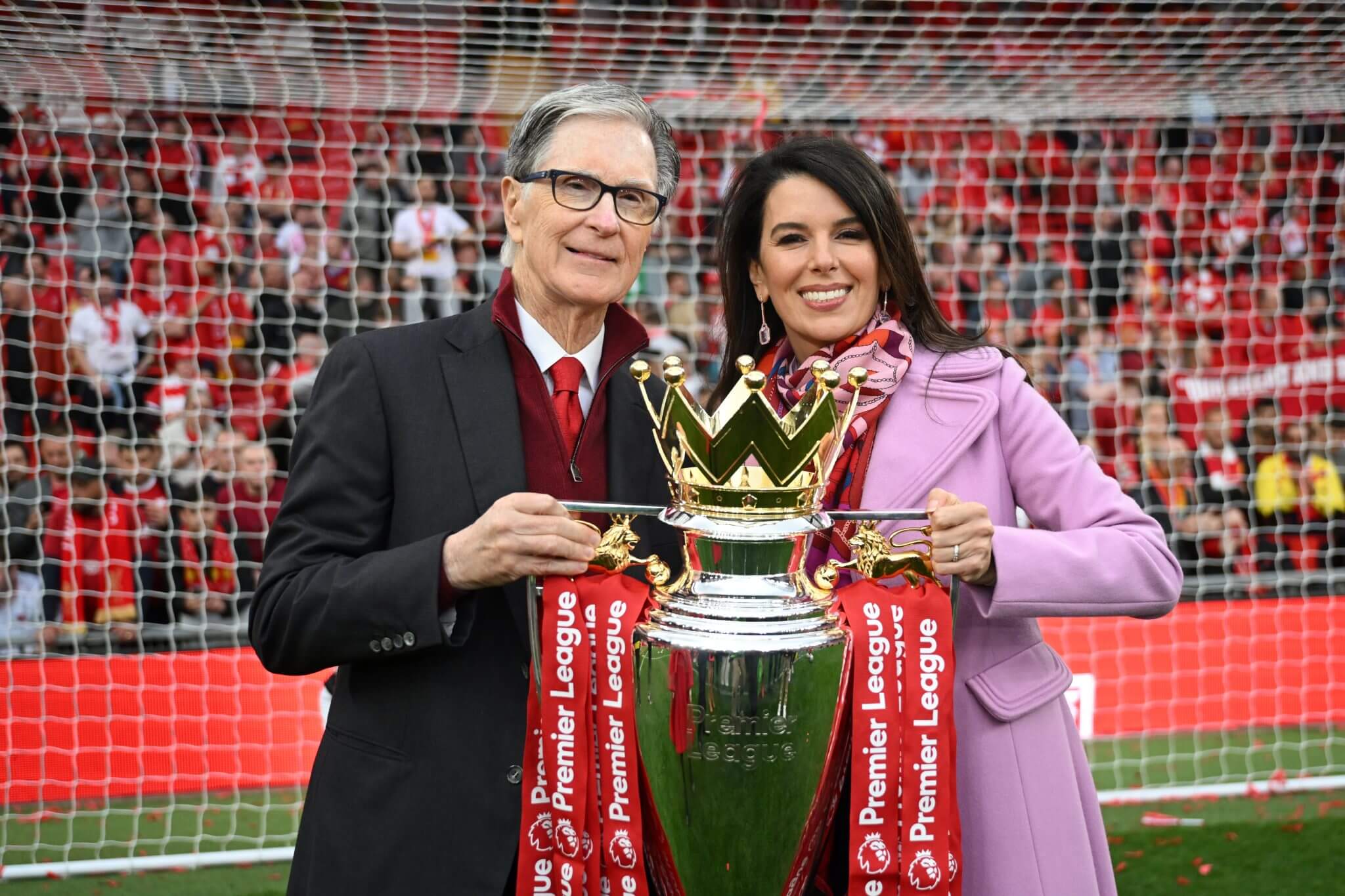
John W. Henry, principal owner of Liverpool FC and Fenway Sports Group, alongside his wife Linda Pizzuti Henry holding the Premier League trophy.
The Jeff Bezos investment is arriving during an extraordinary period of transition at Anfield. Salah has left after nine seasons.
Arne Slot’s era has ended, with Andoni Iraola taking over as head coach according to the information surrounding the current transition.
Michael Edwards has also departed his role at FSG. Those changes matter because Liverpool are losing more than individual employees.
They are losing institutional memory. Salah represented the sporting success of the Klopp era.
Edwards represented much of the recruitment structure behind it. And the coaching change represents another tactical reset.
Now a new investment consortium is entering the ownership structure. Liverpool are therefore changing on several levels simultaneously: ownership, management, recruitment and squad identity.
For supporters, that makes the next two or three seasons particularly important.
The question is no longer whether Liverpool can continue what they built during the Salah era.
It is whether they can create something different that is just as successful.
What Jeff Bezos Could Mean for Liverpool’s Next Chapter
The easiest assumption is that Bezos’s arrival means Liverpool will suddenly spend enormous amounts of money on players.
That is not necessarily how this works. A minority investor does not automatically transform a club’s transfer strategy.
Liverpool’s sporting decisions will continue to be influenced by FSG, the football department and the club’s financial structure.
The more interesting possibility is long-term commercial expansion.
Could Liverpool become even more aggressive in digital content?
And could Amazon’s expertise in streaming and global entertainment influence the club’s media strategy?
Could the investment help Liverpool expand commercially in markets where football is growing rapidly?
And what does this mean for Africa?
That final question is particularly interesting. Liverpool already have a huge African following. Salah helped strengthen that relationship enormously.
The next challenge is maintaining that connection after his departure.
If Liverpool are serious about becoming a $6 billion-plus global football institution, Africa cannot simply be treated as a market where shirts are sold.
African supporters are increasingly sophisticated consumers.
They want access to players, behind-the-scenes content, academy stories, community projects and meaningful engagement.
Liverpool’s relationship with Africa has an opportunity to evolve from the Salah era into something broader.
That may ultimately become one of the most important commercial challenges of the post-Salah Liverpool.
Verdict: Jeff Bezos Is Arriving, But Salah’s Influence Is Still Everywhere
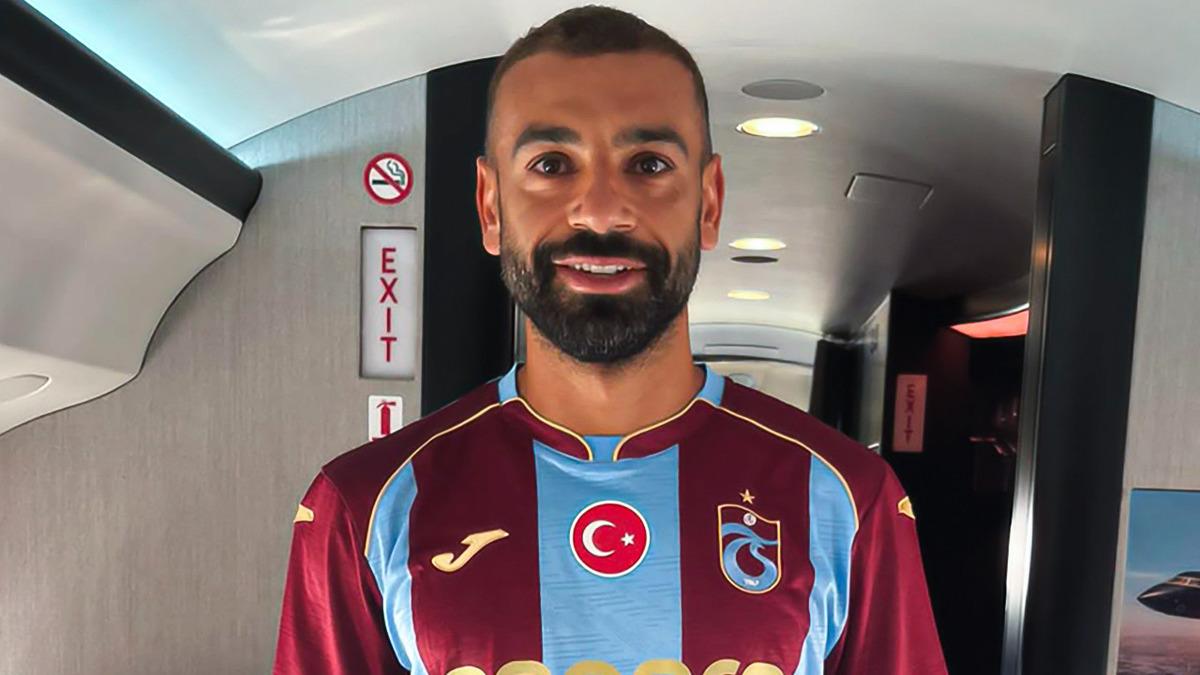
Mohamed Salah smiling inside a private jet wearing the claret and blue Trabzonspor home jersey during his transfer unveiling.
Jeff Bezos is entering Liverpool at an extraordinary moment.
The proposed £1.35 billion investment for 30% of the club values Liverpool at approximately $6 billion and introduces one of the world’s most powerful business figures into the ownership structure.
But the most interesting part of the story is not Bezos’s fortune. It is the timing.
Liverpool are entering their next financial era just as Mohamed Salah’s nine-year chapter has ended.
The Egyptian is no longer at Anfield, but his influence on Liverpool’s modern identity cannot simply disappear with his departure.
He scored 257 goals for the club, won major trophies and became one of the most important African footballers ever to play in England.
Jeff Bezos represents Liverpool’s financial future. Salah represents a huge part of the sporting and cultural past that helped Liverpool reach this moment.
And for African football fans, that distinction matters. The next Liverpool era may belong to Jeff Bezos, FSG and whoever eventually becomes the club’s next superstar.
But when the history of how Liverpool became one of football’s most valuable institutions is written, Mohamed Salah’s name will be impossible to leave out.
Bezos is buying a stake in Liverpool’s future. Salah has already left his mark on its history.