News
‘Enough Is Enough’: Football Legends Turn On Gianni Infantino As FIFA’s African Divide Comes Into Focus
FIFA president Gianni Infantino position at FIFA has become harder to defend.
Not simply because UEFA, CONCACAF and the Asian Football Confederation have criticised his leadership.
Not simply because his controversial FIFA Forward Enterprise proposal triggered a governance crisis. And not simply because the FIFA presidential election is approaching.
Now some of the people who have spent years helping FIFA promote the game have started speaking publicly about the need for change.
A group of prominent current and former footballers, including former Manchester United and Arsenal defender Mikaël Silvestre, England international Lucy Bronze, former England goalkeeper David James and France’s 1998 World Cup winner Emmanuel Petit, have backed a statement demanding structural change at FIFA.
Silvestre’s involvement is particularly significant because he sits on FIFA’s Players’ Voice Panel, an advisory body connected to the organisation’s anti-racism work.
Their intervention matters because this is no longer simply administrators arguing with administrators.
Footballers are entering the political fight. And even more importantly for African football, one of the continent’s biggest former stars is taking the opposite position.
Samuel Eto’o, now president of the Cameroonian Football Federation, has publicly backed Infantino.
That creates a fascinating contradiction. African football has enormous political weight inside FIFA.
But on this question, it is not presenting one obvious position. And that may become one of the most important stories of FIFA’s 2027 presidential election.
Why the Players’ Statement Is Different
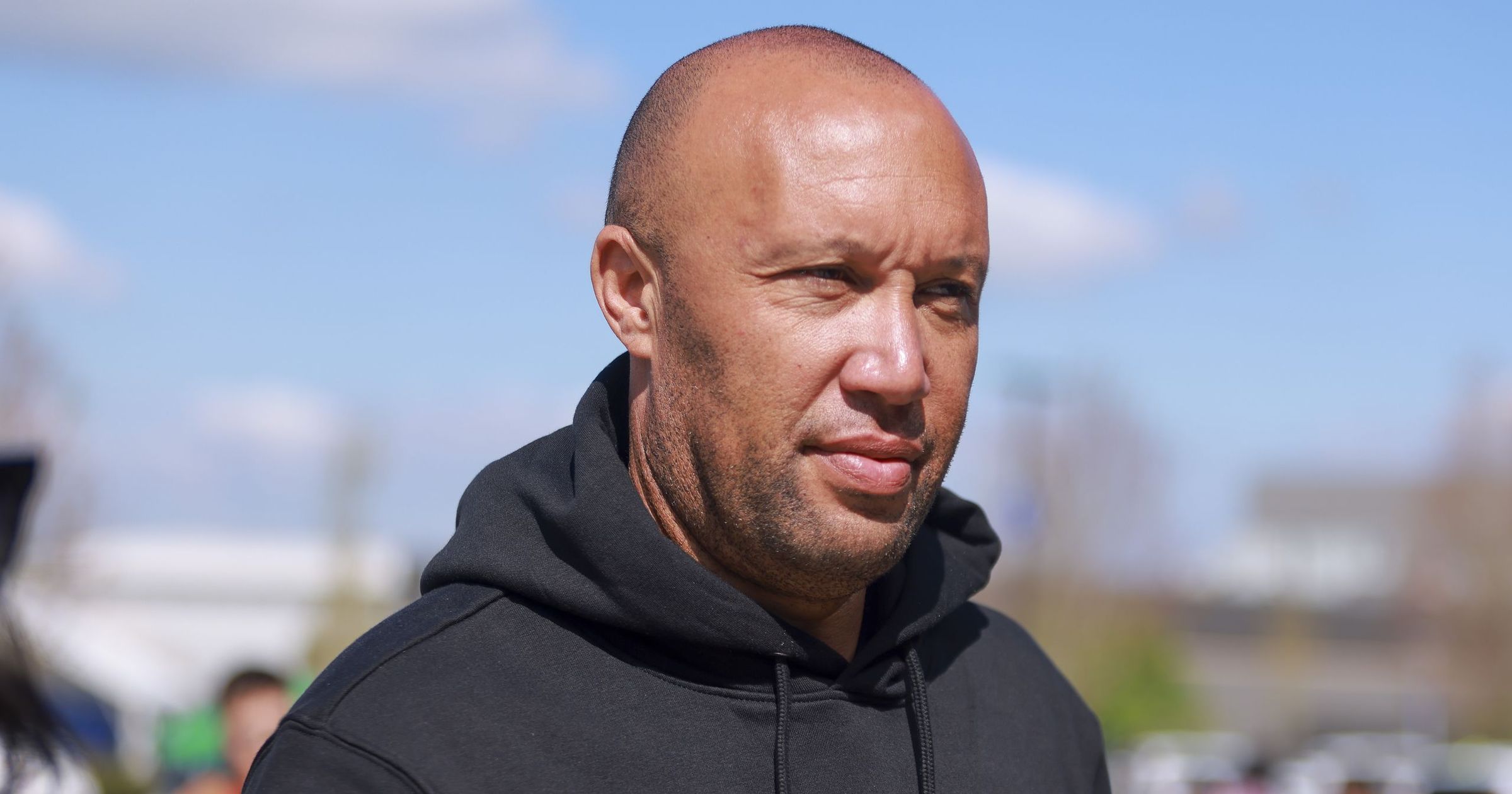
Mikaël Silvestre looking forward outdoors while wearing a black hoodie.
The most revealing part of the players’ intervention is not the phrase “enough is enough.”
It is what comes after it.
“We share the same concerns as the millions of fans around the world,” part of the statement read.
“Like them, we have watched the game we love drift away from its core values under Fifa’s current leadership. For too long, we’ve seen major decisions made without consulting players, considering them, and with no regard for the fans who sustain the sport.
“Change is necessary. Power has blurred the current leadership’s ability to distinguish between its own interests and what is best for football. Recent events have made silence impossible. Enough is enough.”
The players are calling for something more fundamental than replacing one president. They want structural change.
They want players and fans to have a direct voice in the way football is governed. That distinction matters.
A normal political opposition statement says: We don’t like the person in charge.
This one effectively says: The system itself needs to change.
That is a much more serious challenge.
According to the reporting around the statement, the footballers argue that power has blurred the distinction between the interests of the leadership and the interests of football itself. They also say that people inside FIFA who want to rebuild trust should be allowed to do so through a more structured reform process.
That is an extraordinary message to come from p nutlayers associated, directly or indirectly, with the global football establishment.
And it becomes even more significant because of Silvestre. He is not simply an ex-player posting an opinion on social media.
He is part of FIFA’s own Players’ Voice Panel. That means a figure connected to a FIFA advisory mechanism is publicly calling for change at the top of the organisation.
Silvestre, Bronze, Petit and James Are Part of a Bigger Pressure Campaign
The names attached to the statement matter.
Mikaël Silvestre played at the highest level for Manchester United and Arsenal and remains connected to FIFA’s anti-racism initiatives through the Players’ Voice Panel. FIFA’s own material previously identified Silvestre among the figures involved in the organisation’s anti-racism work.
Lucy Bronze brings a different perspective. She is one of the most accomplished defenders in women’s football and a leading figure in the English game.
Emmanuel Petit carries the credibility of a World Cup winner and former France international. David James brings experience from both elite club and international football. That mixture is important.
This is not one generation of players. It is not one country. It is not one gender of the game.
And it is a broader football constituency saying that the relationship between FIFA’s leadership and the people who actually play and support the sport needs to change.
More signatories are reportedly expected to follow. If that happens, the pressure could grow rapidly.
Because once the criticism moves from administrators to players, FIFA faces a different kind of political problem. Administrators can be accused of protecting institutional interests. Players are much harder to dismiss.
Gianni Infantino: The FIFA Forward Enterprise Plan Is the Trigger
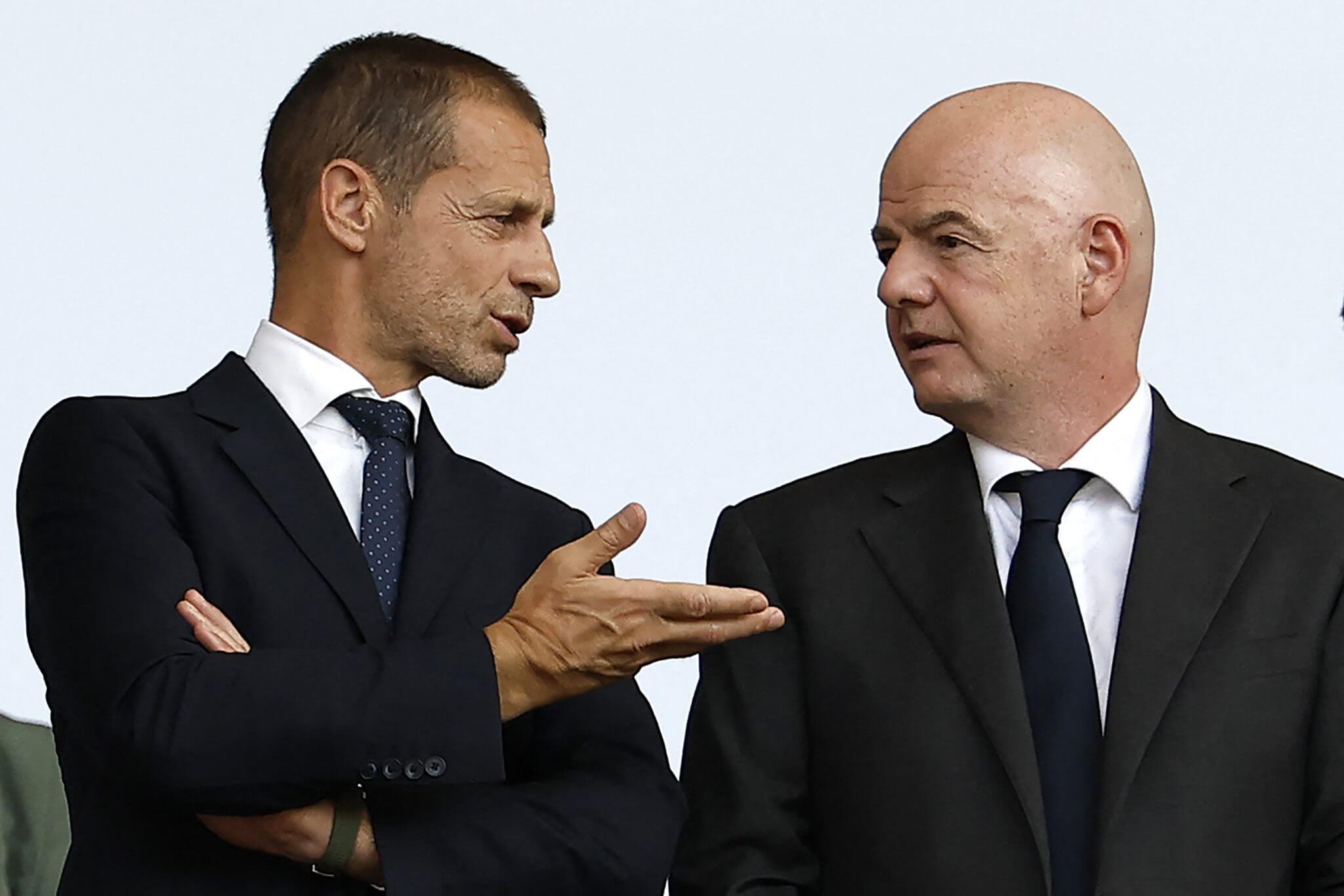
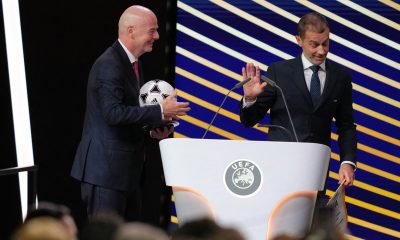
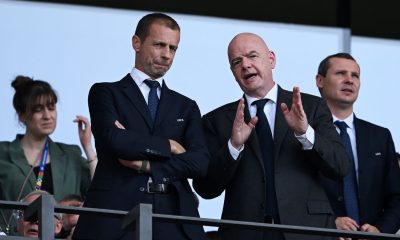
UEFA President Aleksander Čeferin conversing with FIFA President Gianni Infantino in dark suits.
The immediate trigger for the latest crisis is the abandoned FIFA Forward Enterprise proposal.
The plan, as previously reported, involved bringing private investment into FIFA’s commercial structure around future World Cup rights.
And the proposal triggered severe resistance from UEFA, CONCACAF and the AFC, which demanded greater transparency and an independent review of FIFA’s governance.
The proposal was subsequently abandoned, but that did not end the political damage. In fact, the controversy appears to have done the opposite.
It created a much bigger question:
Who gets to make the biggest decisions in world football?
If the footballers are right that players and supporters are increasingly excluded from those decisions, then the Forward Enterprise controversy becomes a symptom rather than the disease.
That is why the current rebellion is bigger than one commercial proposal.
The argument is now about power.
Who controls FIFA? Who controls the money?
And who decides what competitions should look like?
Who represents the players? And who represents the fans?
Those questions will not disappear simply because the proposal that triggered them has been withdrawn.
Gianni Infantino: Eto’o Takes the Other Side
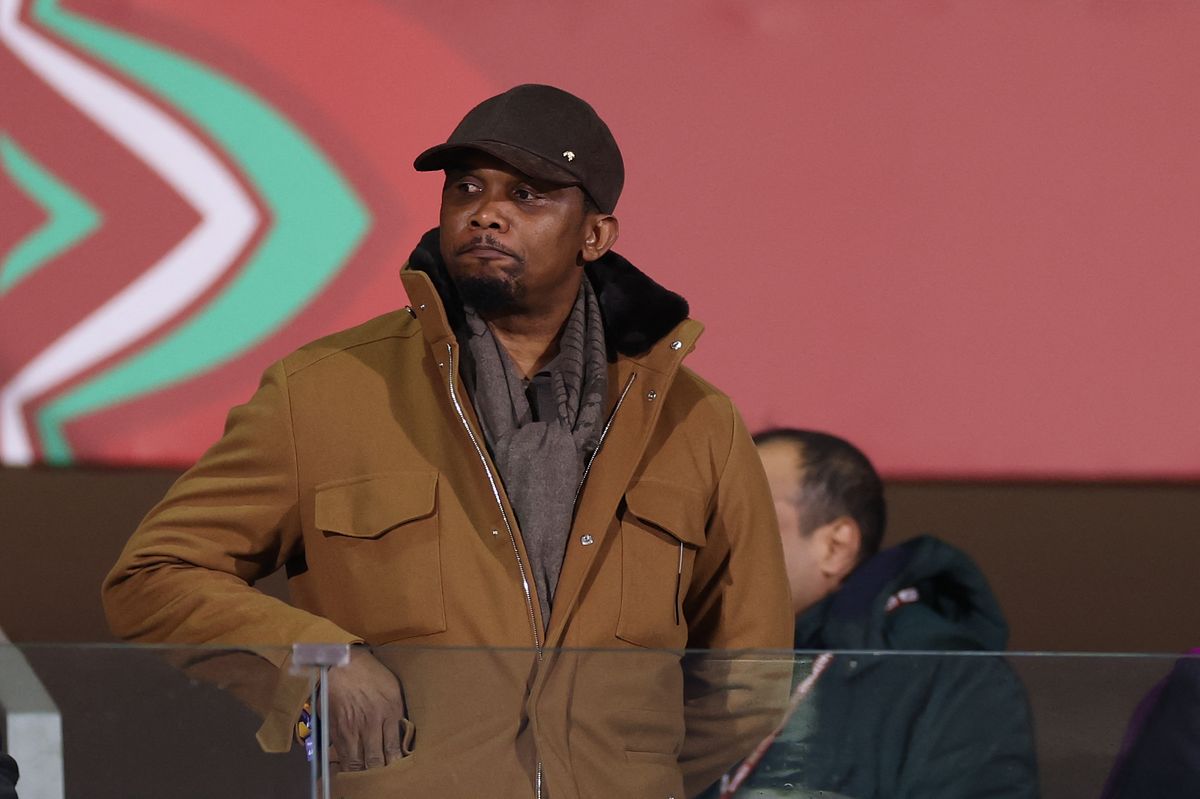
Samuel Eto’o, the president of the Cameroonian Football Federation (FECAFOOT) and legendary former footballer, watching a match from the stands.
This is where the story becomes particularly important for African football.
Samuel Eto’o has given Gianni Infantino something that his opponents desperately do not want him to have: an influential African football voice defending him.
Eto’o, the former Cameroon and Barcelona, Inter Milan and Chelsea striker, is now president of the Cameroonian Football Federation.
In an interview with CNN, he said he did not believe Gianni Infantino had done anything wrong and argued that the backlash was largely connected to the approaching FIFA presidential election. He also called for the FIFA Forward Enterprise project to return if Infantino is re-elected.
“I don’t think that [Gianni Infantino] has done anything wrong,” he said.
“All of this has happened because there’s an election coming up; that’s all there is.
“I want to see all of my colleagues, all of the presidents, re-reading the project. After President Infantino is re-elected, we will have the strength to ask for this project to be put back on the table for discussion. I remain convinced that, if there is a democratic vote, this project will be adopted because it’s good for the majority.”
This Is the African Football Question Nobody Is Asking
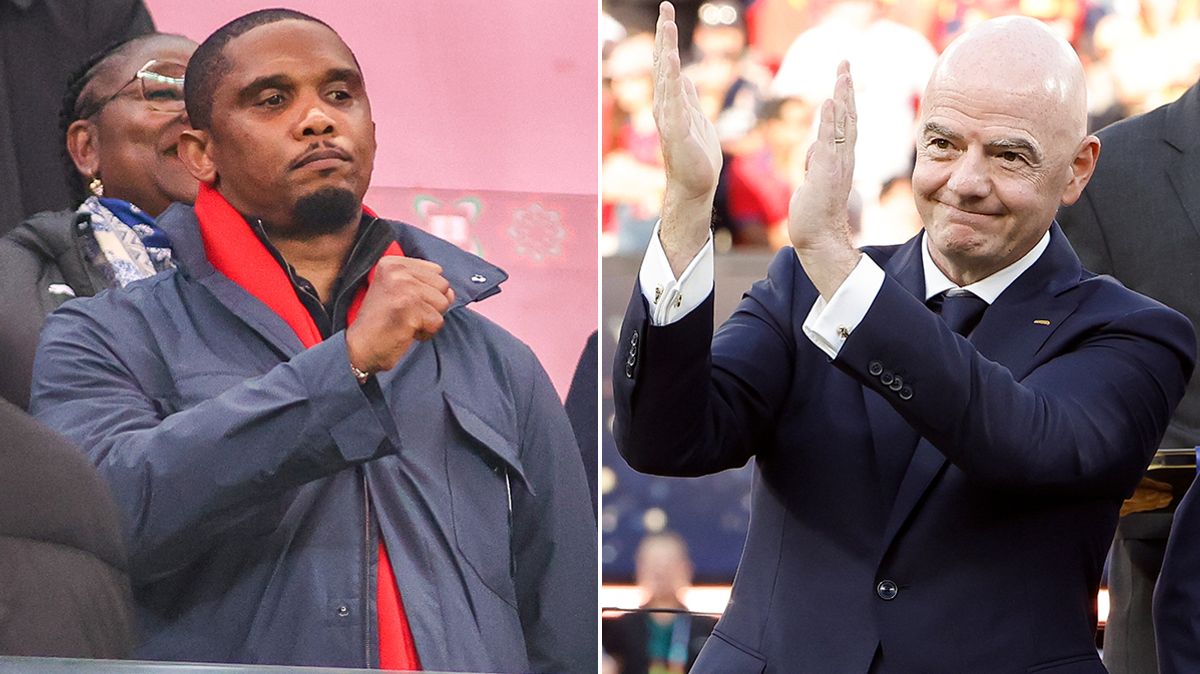
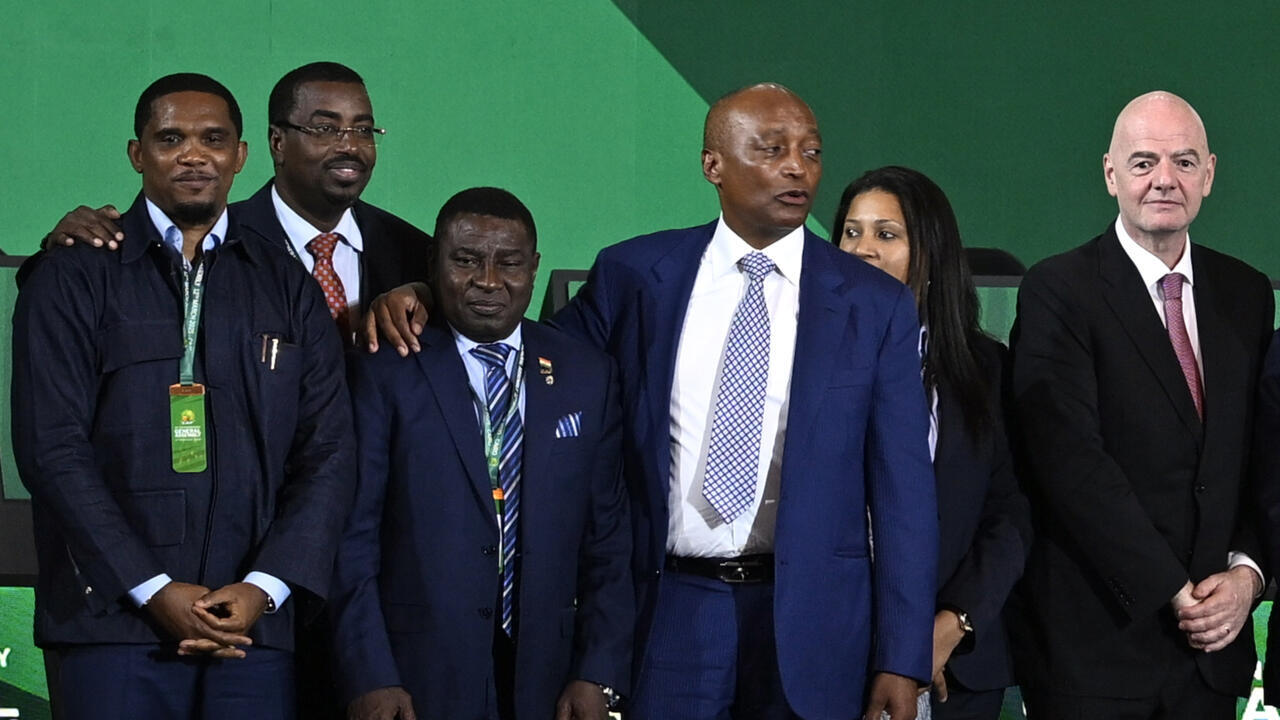
Samuel Eto’o (left), the president of the Cameroonian Football Federation (FECAFOOT) and legendary former striker, alongside Gianni Infantino (right), the President of FIFA.
The easiest way to cover this story is to say:
Europe opposes Infantino. Africa supports Gianni Infantino. That is too simplistic.
And it is precisely the kind of lazy framing Sportxparte should avoid.
African football is not one person. It is 54 national associations. It is CAF.
And it is federations with different financial interests. It is players. It is former players.
And it is supporters. It is clubs. And it is football communities with very different relationships with FIFA.
Eto’o’s support for Infantino is therefore important.
But it does not automatically represent every African football federation, player or supporter.
The stronger question is:
What does African football actually want from the next FIFA era?
More development funding?
More political representation?
And more influence over competitions?
A bigger share of FIFA revenue?
Better protection for African players in European transfer markets?
Those are questions far more important than simply choosing between Gianni Infantino and a challenger.
The 2027 FIFA Election Is Now the Real Battlefield on Gianni Infantino
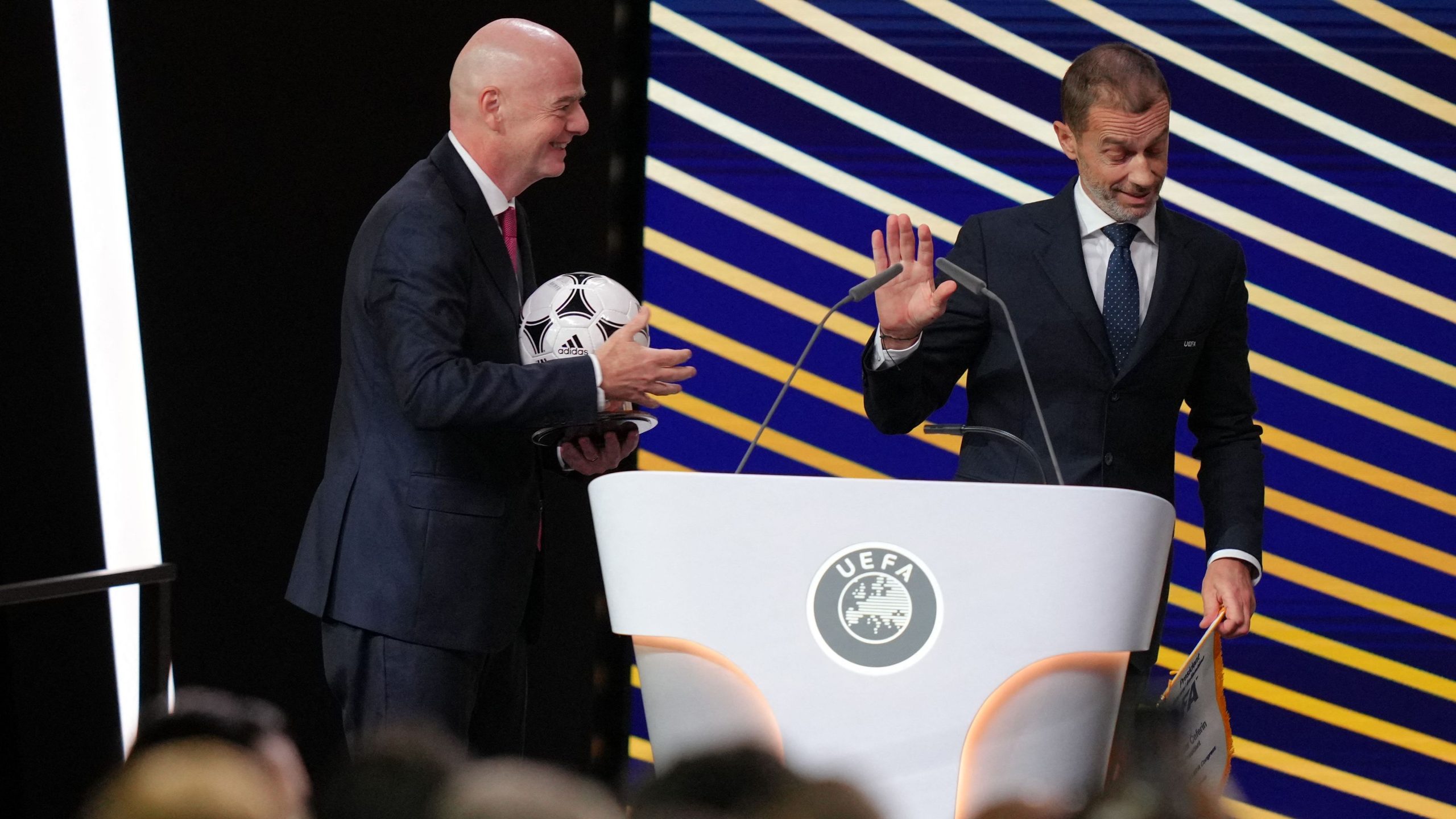
FIFA President Gianni Infantino (left) and UEFA President Aleksander Čeferin (right) standing together behind a UEFA-branded podium.
Gianni Infantino is not facing this pressure in an ordinary year.
The FIFA presidential election is approaching in March 2027, and that changes everything.
Every dispute now has a political dimension. Every public endorsement matters. And every federation matters.
Every confederation matters. And every respected former player who speaks publicly can influence the broader debate.
That is why the timing of the players’ intervention is so significant.
The opponents are building a political case.
Gianni Infantino is defending his record. Eto’o is defending his leadership.
And national associations are deciding where their interests lie.
The election may ultimately come down to a much broader question:
Do FIFA’s member associations value continuity and development funding more highly than the governance reforms demanded by Infantino’s opponents?
That is the real contest.
Gianni Infantino Is Fighting a Political Battle, Not Just a PR Crisis
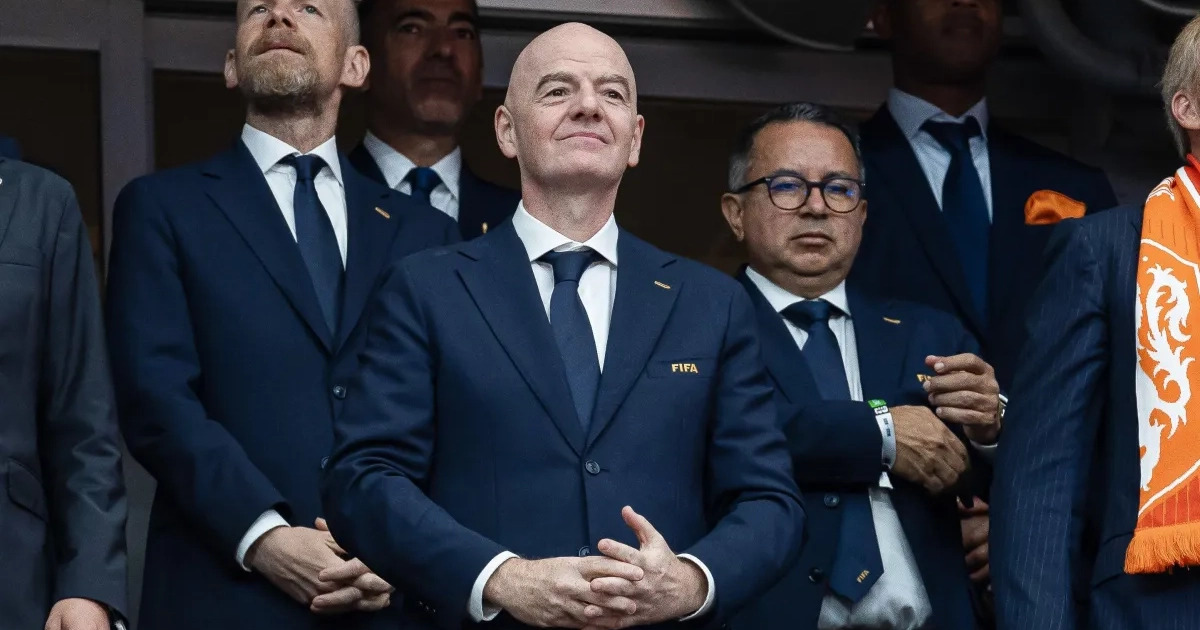
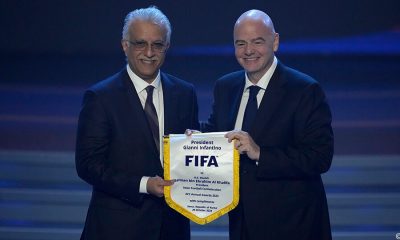
FIFA President Gianni Infantino and Football Delegates
Infantino spent Saturday at a youth tournament in the Dominican Republic while his opponents increased the pressure, according to reporting on the latest developments. The significance is political: Caribbean member associations can be important in FIFA elections, and Infantino’s opponents are attempting to build support across confederations rather than relying only on UEFA’s opposition.
That tells us something. Gianni Infantino understands the arithmetic of FIFA politics.
The president is elected by the 211 member associations, not by UEFA presidents, football journalists or former players.
That means his survival depends on votes. And votes are usually built through relationships.
This is why African football matters so much. CAF represents 54 associations. That is a huge voting bloc.
In a close election, African support could be decisive. And if that support begins to split, the political calculations around the FIFA presidency become much more complicated.
Verdict: Gianni Infantino Faces a New Challenge from the Players
Gianni Infantino’s opponents have spent weeks attacking his governance from the administrative side of football.
Now the players have entered. That changes the tone.
Mikaël Silvestre is not simply a critic. He has worked within FIFA’s own player-voice structure. Lucy Bronze is not a retired outsider looking for attention.
Emmanuel Petit is a World Cup winner. David James understands elite international football from inside the game.
Their message is clear: Change is necessary.
That disagreement should not be hidden. It is the most interesting part of the story.
Because African football now sits at the centre of FIFA’s political future. Europe may be demanding reform. Players may be demanding a voice.
Infantino is fighting to remain in power.
And Eto’o is warning African football not to throw away a development strategy that he believes could strengthen the continent.
The question is therefore no longer simply:
Will Gianni Infantino survive?
The better question is:
What kind of FIFA does African football want after Gianni Infantino or after another Infantino victory?
That is the debate that matters. And with the 2027 presidential election approaching, Africa’s 54 votes may end up deciding it.