Premier League
Ayyoub Bouaddi, Ajayi And Kudus: Africa Is Already Changing the Premier League
The Premier League has only just started, yet Africa is already shaping one of the biggest stories of the new season.
A Nigerian defender has scored in one of the opening weekend’s biggest shocks.
A Senegalese centre-back has announced himself on his Premier League debut.
Moroccan teenager Ayyoub Bouadd, who started five of his country’s six World Cup matches is now heading to Manchester City in a deal that could reach €100 million.
And across the league, a new generation of African and African-diaspora players is beginning to take over from the stars who defined the previous era.
This is important because the Premier League has just lost two of its biggest African figures.
Mohamed Salah has left Liverpool. Riyad Mahrez is no longer in England.
For years, the Premier League’s African story was built around a small group of extraordinary superstars.
Salah. Mahrez. Sadio Mané. Didier Drogba before them. Now the picture is changing.
The new African Premier League is more distributed, younger and potentially more powerful.
Ayyoub Bouaddi, Semi Ajayi and Mohammed Kudus are three very different players.
One represents the next generation. One represents African experience. And one represents an established star who is now being asked to become a leader.
Together, they tell us something bigger. Africa is not leaving the Premier League after Salah and Mahrez. It is changing the league differently.
Ayyoub Bouadd is the £85m Moroccan Teenager Who Could Change Manchester City
Ayyoub Bouaddi is the most extraordinary part of this story because his rise has been so fast. The Moroccan midfielder is only 18.
Yet Manchester City are now closing in on an agreement with Lille that could reach around €100 million (£85m), according to current reporting. That would make Bouaddi one of the most expensive teenagers in Premier League history.
The fee is enormous. The reason is even more interesting.
Ayyoub Bouadd is not being bought because he is simply a talented teenager who might be useful one day.
Manchester City want to integrate him immediately. He already has Champions League experience. He made 30 Ligue 1 appearances for Lille last season.
And most significantly, he was trusted by Morocco at the 2026 World Cup, starting five of their six matches during their run to the quarter-finals.
That matters enormously. The old pathway for an African prospect was often about proving himself in Africa, moving to a smaller European club, developing for several seasons and eventually earning a move to a giant.
Ayyoub Bouadd has accelerated through that process. He went from Lille teenager to Moroccan international to World Cup starter to a potential £85m Manchester City player.
That is no longer a prospect story. It is a global football story.
Why Manchester City Believe Ayyoub Bouadd Is Worth So Much
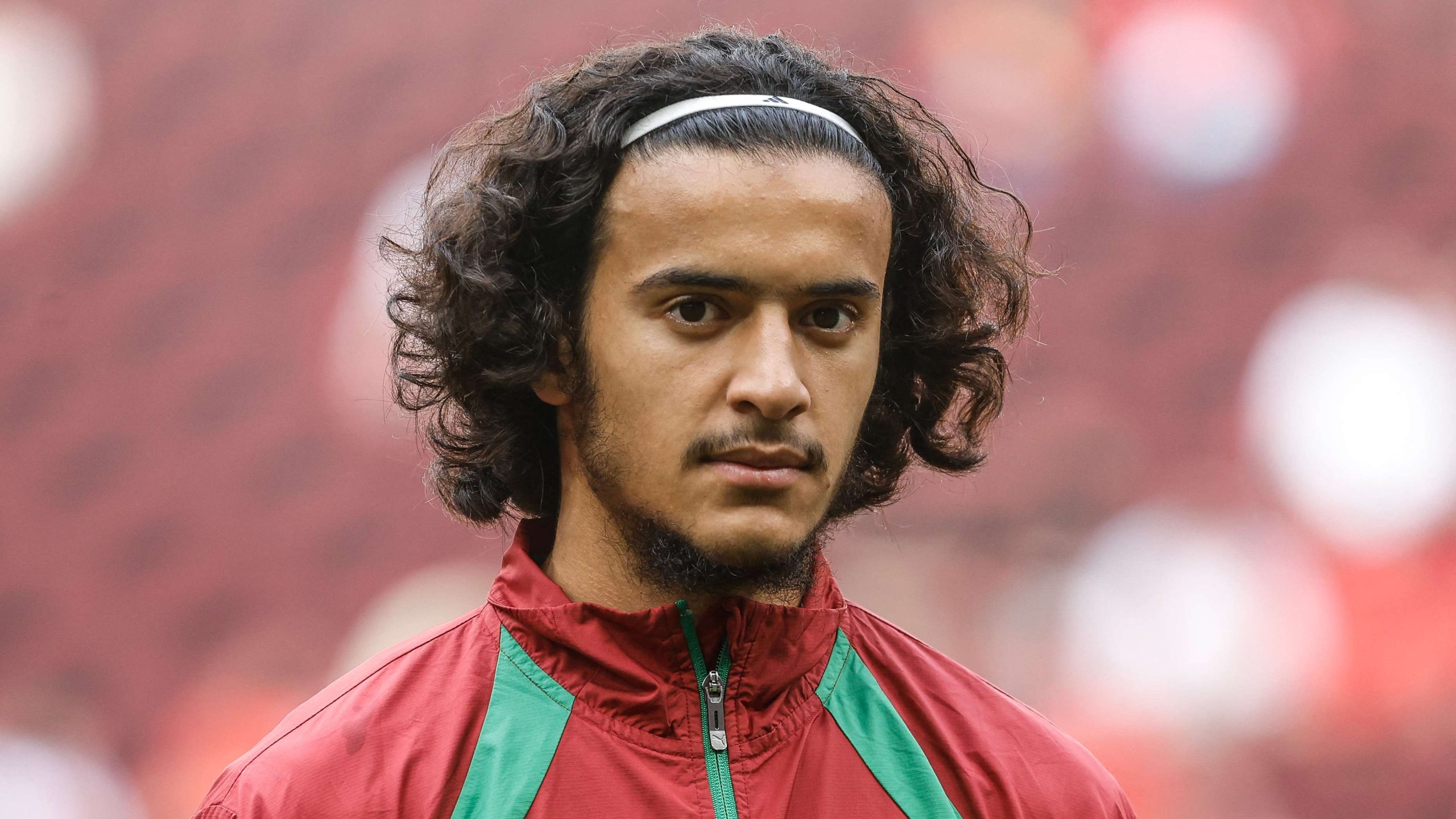
Ayyoub Bouaddi, an 18-year-old midfielder who plays for French club Lille and represents the Morocco national team.
City have lost major midfield figures as part of the transition away from Pep Guardiola’s era.
Rodri has left for Barcelona, while Tijjani Reijnders has also departed, creating a need for fresh energy and technical quality in midfield. City have already invested heavily in Elliot Anderson, and Bouaddi would add another highly flexible option.
This is where Bouaddi’s profile becomes particularly interesting. He is not simply a defensive midfielder.
He has the intelligence to receive under pressure. And he can circulate possession.
He can cover space. And he has already demonstrated that he can operate in high-pressure matches against elite opposition.
For Manchester City, that combination is valuable. They do not need a player who simply destroys attacks.
They need someone capable of understanding when to slow a match down, when to accelerate it and where to position himself when City lose the ball.
That is a very Guardiola-like requirement. But Bouaddi will now have to learn it under Enzo Maresca.
And that makes his transfer even more intriguing.
Bouaddi’s Moroccan Identity Matters More Than the Transfer Fee
African football should not judge Bouaddi’s importance simply by the size of his transfer.
The more significant point is where he comes from and what he represents.
Morocco already demonstrated at the 2026 World Cup that its football infrastructure can produce players capable of competing with the strongest nations.
Ayyoub Bouadd was one of the clearest examples. His rise also reflects the growing importance of the Moroccan diaspora and dual-eligibility football pathways.
Born in France, Ayyoub Bouadd has Moroccan roots and chose to represent Morocco at senior level. That decision has now placed him at the centre of one of England’s biggest clubs.
For young footballers across Africa and the diaspora, that message is powerful.
A player’s African identity is not necessarily an obstacle to reaching elite European football. Increasingly, it can be part of the story that makes them globally marketable.
Then Hull City Produced Their Own African Statement

Hull City player Nobel Mendy celebrating his debut Premier League goal against Manchester United at MKM Stadium.
Bouaddi’s story is about the future. Semi Ajayi’s is about the present.
Hull City returned to the Premier League after nine years away and immediately produced one of the opening weekend’s biggest shocks by beating Manchester United 2–0.
The goals came from two African defenders. Ajayi scored first. Nobel Mendy scored second.
Hull won, United lost, and the Premier League immediately had an African story that nobody could ignore.
Ajayi’s goal was particularly significant because of the context. Hull were not supposed to dominate Manchester United.
They were the newly promoted club. United had ambitions of returning to the top of English football.
Instead, Ajayi reacted quickest from a corner and turned the ball into the net, giving Hull the confidence to believe the impossible was possible.
For a Nigerian international, it was a perfect opening-day moment. But the real story became even better.
Nobel Mendy Turned His Premier League Debut Into a Career Moment
Nobel Mendy’s goal made the afternoon historic. The Senegalese defender was making his Premier League debut.
Before many supporters had even learned how to pronounce his name, he had already scored against Manchester United.
That tells you something about the modern Premier League. African players are arriving not merely as squad fillers.
They are being trusted with responsibility. Mendy was not introduced into a comfortable environment.
He was asked to defend Manchester United on Hull’s first weekend back in the Premier League. Then he scored.
That is exactly the sort of moment that can change a player’s career.
One goal does not make Mendy a superstar. But it gives him something invaluable, belief.
And it gives Hull something equally important, young defender who has already demonstrated that he can handle the emotional pressure of the Premier League.
Mohammed Kudus Is Now Part of a Much Bigger Tottenham Question
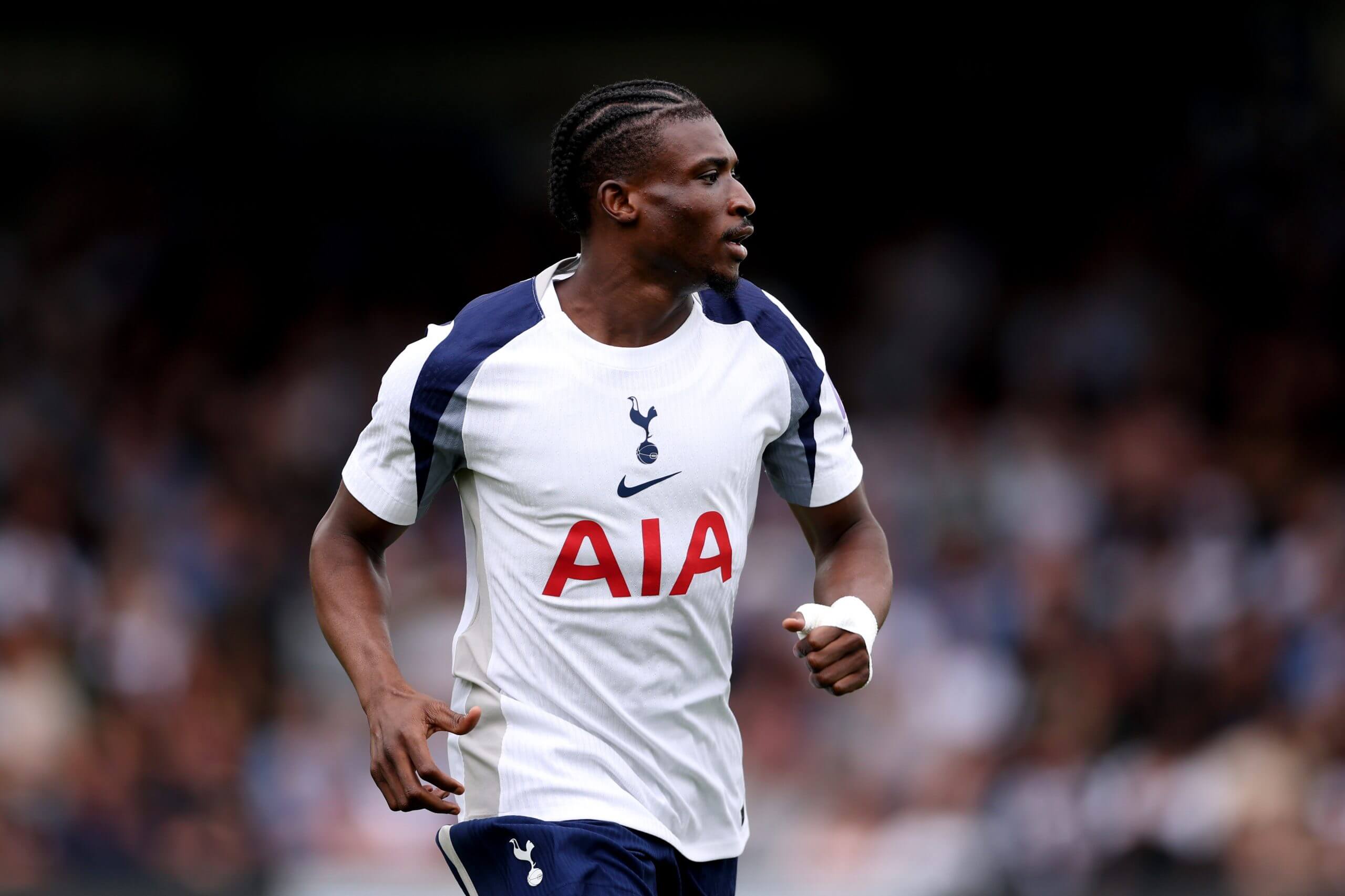
Ghanaian professional footballer Mohammed Kudus wearing the Tottenham Hotspur home kit during a match.
Then there is Mohammed Kudus.
The Ghana international entered the season with Tottenham after a major summer rebuild designed to rescue the club from consecutive 17th-place finishes.
But Spurs were immediately humbled. Brentford beat them 3–0, producing 26 shots and an xG of 3.96 compared with Tottenham’s 0.47.
That is not merely a poor result. It is evidence that Tottenham’s new squad still has a long way to go.
The club has spent more than £300 million and brought in major names including Sandro Tonali, Mateus Fernandes and Jan Paul van Hecke. Several of those players made their debuts in the defeat.
Kudus therefore finds himself in an interesting position. He is not joining a stable team. He is joining a project.
And projects require leaders. Tottenham will need Kudus to do more than provide occasional moments of brilliance.
They need him to carry the ball. Break lines. Create chances. Win fouls.
And give the team an attacking identity when their possession becomes sterile.
The Ghanaian may therefore become one of the most important African players in the Premier League this season.
Not because he has the highest profile. But because his club needs him so badly.
The Kudus Problem: Tottenham Have Talent, But Do They Have a Team?
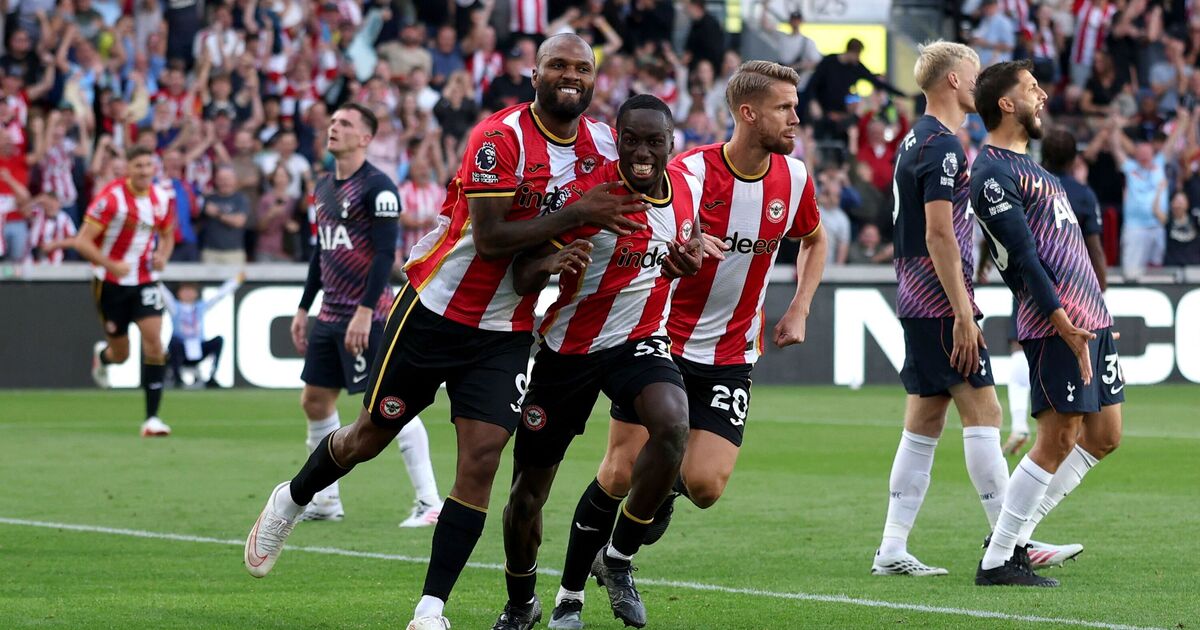
Brentford’s Michael Kayode celebrates scoring his team’s third goal against Tottenham Hotspur with teammate Igor Thiago during their Premier League opening match at the Gtech Community Stadium on August 22, 2026.
This may be the biggest lesson from Spurs’ defeat. Having expensive players does not automatically create a functioning team.
Tottenham’s summer recruitment has been extensive. But several new signings were trying to learn each other’s movements immediately.
De Zerbi himself acknowledged that the team was not physically or tactically ready after a disrupted pre-season. That should make Kudus’s role even more important.
A player who can create something independently is invaluable in a team still learning its structure.
Kudus can beat a defender. He can carry the ball. He can operate centrally or from the wing.
And he can produce moments without needing the entire team to function perfectly. Tottenham will need that. Especially early in the season.
Brighton Could Be the African Football Club to Watch
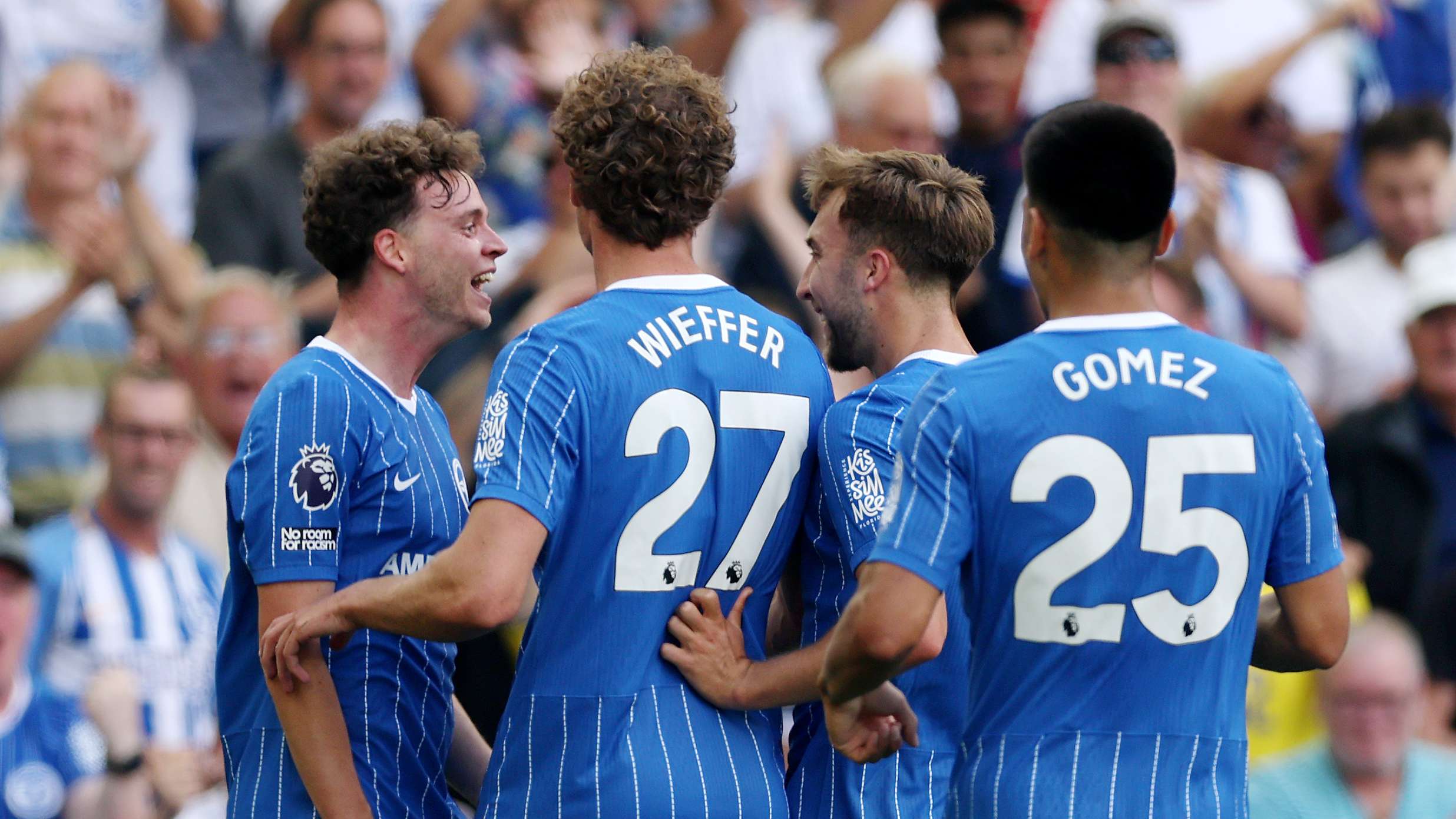
Brighton players Mats Wieffer, Diego Gómez, and Maxim De Cuyper celebrate a goal against Aston Villa during the August 2026 Premier League match at the Amex Stadium.
One club deserves special attention from African supporters this season, Brighton & Hove Albion.
The club’s recruitment model has repeatedly identified young international talent before the wider market fully catches up.
Their current squad includes Cameroonian midfielder Carlos Baleba and Gambian winger Yankuba Minteh, among other players with African connections.
And their opening-weekend performance made the club even more interesting. Brighton destroyed Aston Villa 4–0.
All four goals came before half-time.
The victory was a tactical statement from a side that looked significantly better prepared than its opponent. For Baleba and Minteh, that creates an opportunity.
Brighton are already one of the Premier League’s most interesting development environments.
If either player takes another step forward this season, larger clubs will begin watching closely. That is how the next major transfer story often begins.
Not with a £100m announcement. With one outstanding season at the right club.
What About Salah’s Empty Space?
The biggest mistake African football fans can make is asking: “Who is the next Salah?”
There may not be one. Salah was an extraordinary anomaly. He combined elite goalscoring with longevity, availability, consistency and cultural impact over almost a decade.
Trying to crown his replacement before the season has even settled is unfair to every African player currently developing.
Instead, ask a different question:
Who will create the next great African Premier League story?
It might be Bouaddi at City. It might be Kudus at Tottenham. Or it might be Baleba at Brighton.
It might be Minteh. It might be a Nigerian teenager breaking through at another club.
And it might be Mendy becoming one of the league’s most reliable defenders. The point is that the answer is no longer obvious.
And that is exactly what makes this generation exciting.
The Premier League Is Becoming a Bigger African Opportunity
There is a broader economic story underneath all of this. Premier League clubs are increasingly scouting African and diaspora players at younger ages.
They are investing in players with physical, tactical and technical profiles developed across multiple football cultures.
And the African football market itself is becoming more commercially valuable. That creates a feedback loop.
Young players see African stars succeeding in Europe. European clubs see the talent. African supporters become invested in those players.
The players then become commercial assets. More clubs invest. More players get opportunities.
The cycle continues. Bouaddi’s potential £85m-plus move is an extreme example.
Ajayi’s goal is a more modest example. Kudus’ responsibility at Tottenham is another.
Different levels. Same ecosystem.
Verdict: Africa Isn’t Replacing Salah, It’s Building the Next Generation
The opening weekend of the Premier League has already produced the ingredients of a bigger African story.
A Nigerian defender scored in Hull’s historic victory.
A Senegalese defender scored on his Premier League debut.
Another Ghanaian superstar is being asked to help rescue Tottenham’s rebuild.
And an 18-year-old Moroccan midfielder is on the verge of an extraordinary move to Manchester City after starting five of Morocco’s six World Cup matches.
These stories look unrelated. They are not. They represent different stages of the same evolution.
African football is moving from producing occasional Premier League icons to producing a much deeper ecosystem of elite players.
Salah made the continent impossible to ignore.
The next generation has to make it impossible to overlook.
And if Ayyoub Bouadd fulfils his potential, if Kudus becomes Tottenham’s attacking leader, and if Ajayi and Mendy can turn one unforgettable afternoon into sustained Premier League careers, this season may be remembered as the moment a new African era began.
Salah’s era is over. Africa’s Premier League story is not. It may have just become much bigger.