Premier League
Arsenal’s Big Summer Decisions: Who Will Be Sold?
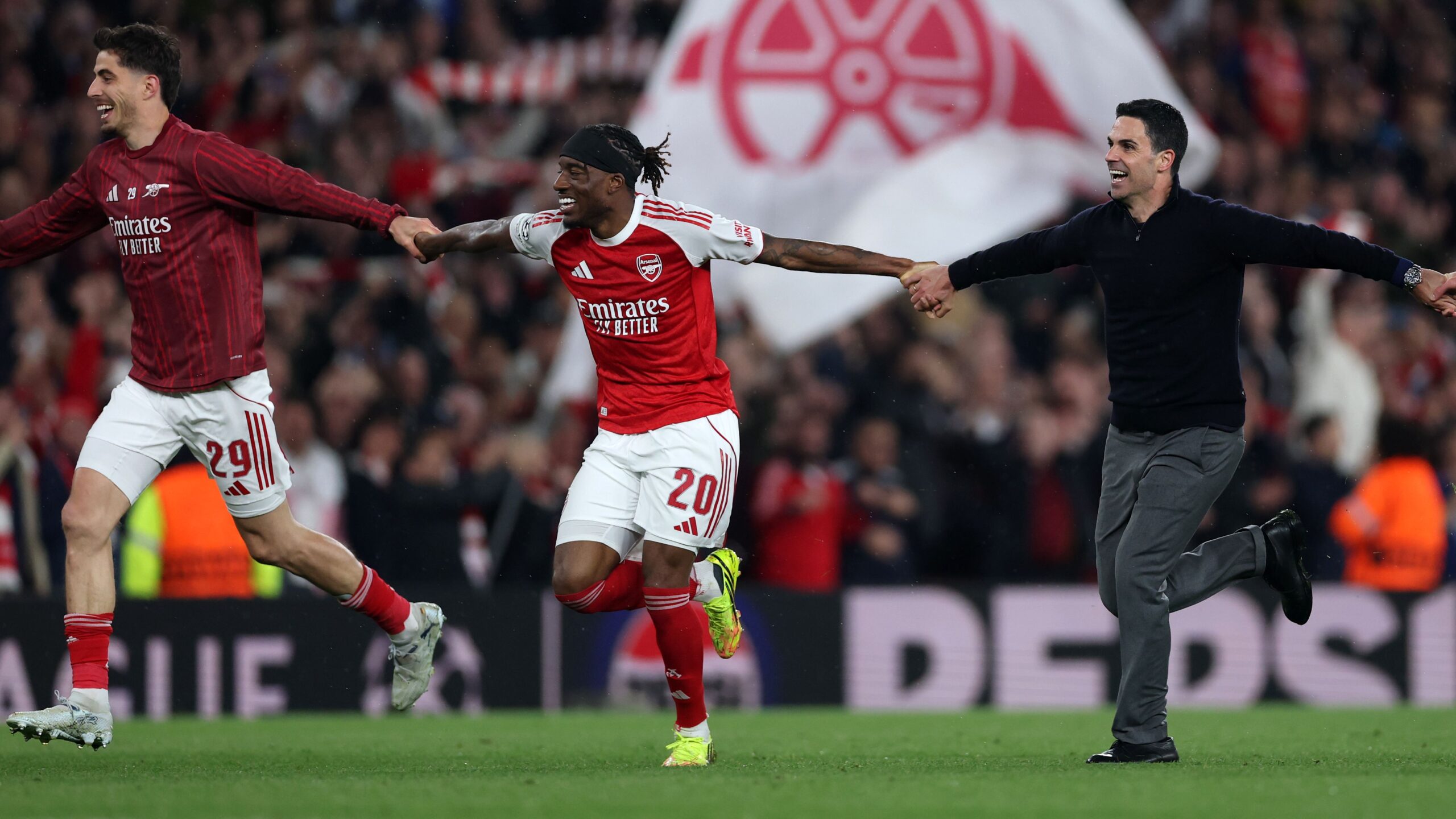
Arsenal are still basking in the glow of reaching only their second-ever Champions League final.
This is their first since the dramatic 2006 loss to Barcelona in a showpiece that also took place in Paris. This season’s achievement is monumental and fully deserving of celebration.
However, behind the jubilation lies a very different truth the club faces a financially sensitive summer. That will almost certainly require significant player departures.
Reaching the final secures a windfall that could rise beyond £120 million should they manage to overcome defending champions Paris Saint-Germain. But even that sizable sum cannot fully offset the constraints of upcoming financial regulations.
Arsenal spent £267 million in the previous summer window and recouped just £10 million in sales. And producing the highest net spend in the Premier League.
With new rules about to tighten further, the necessity to generate revenue through player sales is unavoidable.
The conversation now shifts from celebration to evaluation of who is likely to be sold. Below is a detailed, structured assessment.
Ben White
The resurgence and growing influence of Jurrien Timber have placed Ben White in a more precarious squad position than many expected. Though Timber’s injuries have restricted his availability.
White’s involvement this season 29 appearances, 22 starts, and 1,852 minutes has been consistent. But notably less substantial than Timber’s 3,309 minutes.
Timber’s greater impact in chance creation, one-on-one duels, and overall dynamism points to a hierarchy that is already settled. White continues to perform admirably when called upon.
Yet he finds himself behind a player who offers more in both athleticism and technical progression. In a summer where Arsenal must turn talent into profit, White naturally emerges as a candidate.
Leandro Trossard
Leandro Trossard is one of the squad’s hardest-working and most tactically flexible players. His tally of seven goals and ten assists reflects a player who consistently contributes.
His involvement in forward progression over 500 forward passes and 47 chances created places him among Arsenal’s most productive outlets.
Despite these qualities, the factors that could force the club’s hand are largely circumstantial. Trossard turns 32 next year, and his contract enters its final 12 months.
In squad-building terms, Arsenal are increasingly skewing younger, more athletic, and more long-term. A sale this summer would represent maximum financial return.
From the club’s perspective, this may not be a question of quality but timing.
Gabriel Martinelli
Few players symbolize the duality of Arsenal’s season quite like Gabriel Martinelli. In the Champions League, he has been inspirational, scoring six times and assisting twice in 13 matches a major driver of the club’s march to the final.
Yet the Premier League tells a very different story, with just a single goal across 29 appearances.
Martinelli’s declining domestic influence is further highlighted by a low pass volume and a modest completion rate of 78.86%. While he remains electric in transition, Arsenal’s possession-centric evolution demands more consistent involvement.
Because of his age, reputation, and Champions League impact, Martinelli commands a sizeable market value.
That makes him one of the most financially significant potential departures should the club need a major sale.
Gabriel Jesus
Injuries continue to shape the narrative of Gabriel Jesus, limiting his momentum and rhythm.
With just 26 appearances culminating in five goals and one assist. He has struggled to establish continuity. More importantly, he now sits firmly behind Viktor Gyokeres, whose form has cemented him as Arteta’s starting No. 9.
Despite this, Jesus’ underlying numbers remain impressive. His shot accuracy of 63.33% is the highest among Arsenal’s attackers, and his minutes-per-goal ratio trails only Gyokeres.
In other words, his fundamental quality remains intact he simply lacks the opportunity to show it consistently. That makes him an attractive proposition for clubs seeking a Champions League-calibre forward, and for Arsenal, a logical financial solution.
Myles Lewis-Skelly
There is little doubt that Myles Lewis-Skelly is a technically gifted player. This season, his pass accuracy of 90.56% ranks among the best in the squad, demonstrating composure unusual for a 19-year-old.
Yet he has been used sparingly, and his end-product remains limited. With just three assists and no goals across all competitions.
His minimal shot output and relatively low defensive involvement suggest a player still finding his place at the elite level. With Arsenal under pressure to generate profit, academy graduates offer pure financial gain on the books.
Lewis-Skelly’s promise is undeniable, but so is the reality that his departure would greatly assist Arsenal’s balancing act.
Ethan Nwaneri
Once viewed as a future cornerstone, Ethan Nwaneri has found it difficult to break into Arsenal’s senior setup. His January loan move was intended to accelerate his development.
But two goals and one assist in 11 games have not pushed him closer to a first-team role.
Given his academy background and the pure profit his sale would represent. Nwaneri appears the most likely departure.
His talent remains evident, but the club’s immediate financial needs and competitive squad depth make his exit feel almost inevitable.
Arsenal’s return to the pinnacle of European football has been a triumph years in the making. A testament to strategic planning and on-pitch evolution.
Yet this success does not shield the club from the realities of modern football finance.