African Football
CAF Champions League: A Complete Beginner’s Guide
Sixty years ago, a Cameroonian club called Oryx Douala won a trophy that barely anyone outside Africa knew existed.
Today, the CAF Champions League is a $6 million-prize competition watched by millions across the continent and growing in global stature every single season.
If you have ever wondered what African club football’s biggest night looks like this is your guide.
What Is the CAF Champions League?
The CAF Champions League is the premier club football competition organized by the Confederation of African Football (CAF).
Originally launched in 1964 as the African Cup of Champions Clubs. The tournament was created to determine the best club side on the continent.
The inaugural competition was won by Cameroonian club Oryx Douala, who defeated Mali’s Stade Malien to become Africa’s first continental champions.
For more than three decades, the tournament operated as a straight knockout competition featuring national league champions from across Africa.
In 1997, CAF introduced a major overhaul.
The competition was rebranded as the CAF Champions League and adopted a group-stage format similar to Europe’s Champions League. This change increased competitiveness, television appeal, and commercial value.
Today, more than 60 clubs participate in various qualifying rounds each season.
The winner now receives approximately $6 million in prize money, highlighting the growing financial importance of the tournament.
The CAF Champions League is widely regarded as the toughest club competition in Africa. Because of the travel demands, varying climates, passionate fan bases, and diverse playing styles encountered across the continent.
How Does the CAF Champions League Work?
For newcomers wondering what the CAF Champions League is and how it operates, the format is relatively straightforward.
The competition begins with qualification rounds involving clubs from across Africa.
Teams earn entry based primarily on their domestic league performances. Stronger football nations often receive additional places.
The qualifying rounds are played over two legs, with teams facing each other both home and away.
Successful clubs advance to the group stage.
The group stage consists of four groups of four teams. Each club plays six matches, facing every opponent home and away.
The top two teams from each group advance to the quarter-finals. From there, the competition moves into knockout football.
The quarter-finals and semi-finals are played over two legs, with aggregate scores determining who progresses.
The final is also contested over two legs, allowing both clubs to host one match.
This format creates drama throughout the tournament, rewarding consistency. It still provides opportunities for memorable knockout moments.
Unlike many domestic competitions, clubs often travel thousands of kilometres for matches. Making the CAF Champions League one of the most physically demanding tournaments in world football.
CAF Champions League History: From Oryx Douala to Modern Giants
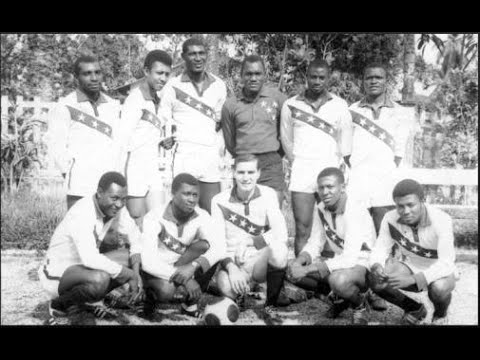
Oryx Douala made history by winning the very first African Cup of Champions Clubs.
The CAF Champions League history can broadly be divided into two eras.
The first era ran from 1964 to 1996, when the competition was known as the African Cup of Champions Clubs.
During this period, several clubs established themselves as continental powers.
Guinea’s Hafia FC dominated the 1970s, winning three titles. Cameroon’s Canon Yaoundé also became one of Africa’s earliest football dynasties.
The 1980s saw increasing influence from North African clubs, particularly from Egypt, Morocco, Algeria, and Tunisia.
The second era began in 1997 following the rebranding to the CAF Champions League.
This period has been characterized by professionalization, greater television coverage, improved infrastructure, and increased financial rewards.
Egyptian clubs, especially Al Ahly and Zamalek, have thrived in this environment. Moroccan giants Raja Casablanca and Wydad Casablanca have also enjoyed tremendous success.
More recently, South African clubs have become increasingly competitive. While clubs from sub-Saharan Africa continue to challenge traditional powerhouses.
The tournament has evolved significantly, but its core purp
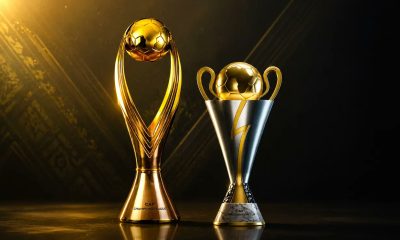
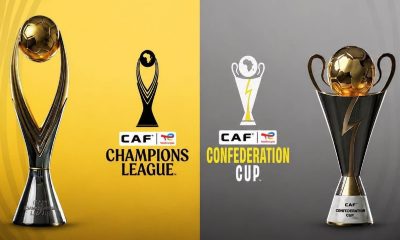
The official logo and trophy of the CAF Champions League
ose remains unchanged crowning Africa’s best club side.
Who Has Won the CAF Champions League the Most?
When discussing CAF Champions League winners, one club stands above all others.
Al Ahly are the undisputed kings of African football. The Egyptian giants have won the competition a record 12 times, more than double the total of many continental rivals.
Their dominance has become one of the defining stories in African football history.
The most successful clubs include:
- Al Ahly – 12 titles
- TP Mazembe – 5 titles
- Zamalek – 5 titles
- Esperance Tunis – 4 titles
- Wydad Casablanca – 3 titles
- Raja Casablanca – 3 titles
- Canon Yaoundé – 3 titles
- Hafia FC – 3 titles
Several other clubs have won multiple titles, including Mamelodi Sundowns, Enyimba, ES Sétif, JS Kabylie, and Asante Kotoko.
One remarkable feature of the competition is its geographic diversity.
Champions have emerged from Egypt, Morocco, Tunisia, Algeria, Cameroon, Ghana, DR Congo, South Africa, Nigeria, Guinea, Ivory Coast, and several other nations.
This diversity demonstrates the depth of football talent spread across the continent.
Nigerian Clubs in the CAF Champions League
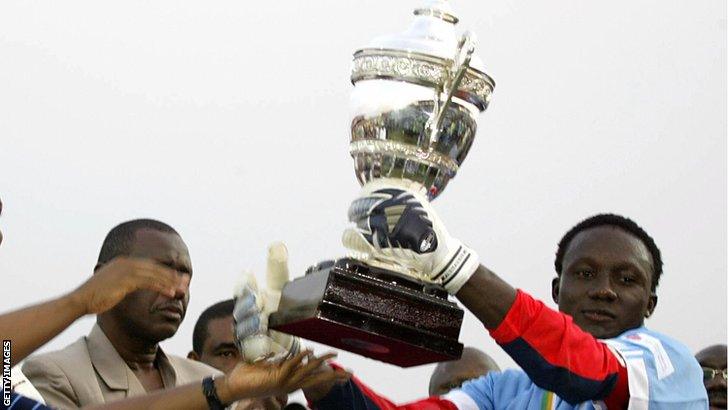
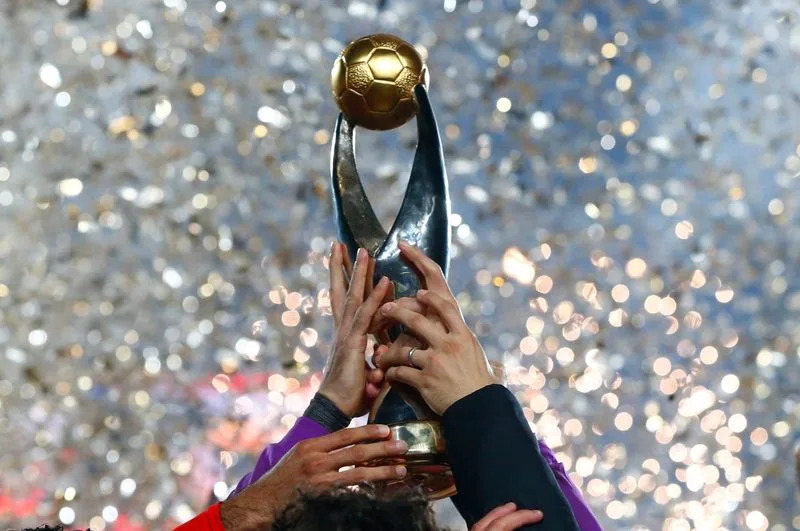
Dele Aiyenugba, a Nigerian goalkeeper, is lifting the CAF Super Cup trophy.
Nigeria is one of Africa’s greatest footballing nations. The Super Eagles have won three Africa Cup of Nations titles.
The country has produced world-class players who have graced the Premier League, La Liga, and Serie A for decades.
Yet when it comes to the CAF Champions League, Nigeria’s record tells a very different story.
Only one Nigerian club has ever lifted the trophy and they did it twice in a row.
Enyimba of Aba. The People’s Elephant. Back-to-back champions in 2003 and 2004.
Under Kadiri Ikhana and Okey Emordi, Enyimba defeated some of Africa’s biggest clubs and wrote their names permanently into continental history. Those two titles remain the greatest achievement in Nigerian club football and nothing has come close since.
More than 20 years later, that drought continues.
Financial instability, poor infrastructure, inconsistent league administration, and the constant drain of top players to foreign clubs have all played their part.
Clubs like Kano Pillars, Rangers International, Rivers United, and Remo Stars have represented Nigeria with pride. But none have been able to recreate what Enyimba achieved.
The question Nigerian football must answer is simple a country that produces Osimhen, Lookman, and Iheanacho why can it not produce a club capable of winning Africa?
The answer starts with investment. In stadiums.
In academies. In league structure.
Until that changes, Enyimba’s two titles will remain Nigeria’s only answer to that question.
Mamelodi Sundowns: Africa’s Current Champions
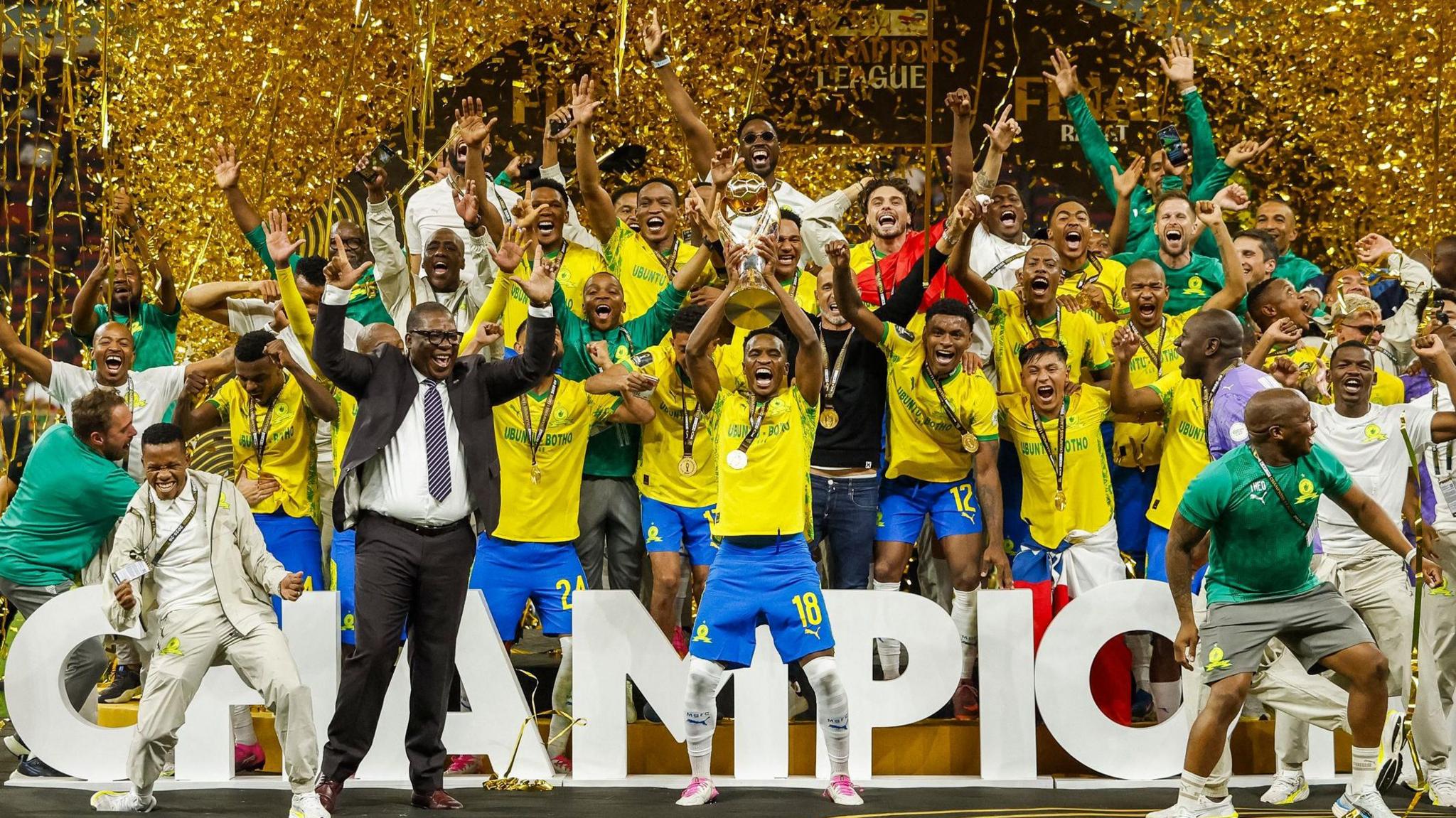
Mamelodi Sundowns F.C. team celebrating their victory in the 2026 CAF Champions League final.
Interestingly, Sundowns’ rise mirrors what Nigerian clubs need to do.
Strong ownership, consistent investment, a clear footballing philosophy, and patience.
Pitso Mosimane built the foundation. Miguel Cardoso has continued it. That is what a continental dynasty looks like.
South African football has grown enormously over the past decade, and no club embodies that progress more than Mamelodi Sundowns.
The Pretoria-based giants first won the CAF Champions League in 2016 under Pitso Mosimane.
That triumph elevated the club into Africa’s elite.
Since then, Sundowns have consistently challenged for continental honours, building one of the strongest squads on the continent.
The achievement confirmed Sundowns as one of the modern powerhouses of African football.
What makes their rise particularly impressive is their consistency. Many clubs experience brief periods of success before fading away.
Sundowns have remained competitive year after year, regularly reaching the latter stages of continental competitions.
Their modern infrastructure, financial stability, and professional approach have helped establish a blueprint for success that other African clubs are increasingly trying to follow.
Why the CAF Champions League Matters
Many casual football fans focus exclusively on European competitions.
That is understandable given the global visibility of leagues such as the Premier League, La Liga, and the UEFA Champions League.
However, the CAF Champions League plays a crucial role in the global football ecosystem.
First, it provides African clubs with opportunities to compete at the highest level.
Second, it acts as a showcase for emerging talent. Many African stars who later shine in Europe first announce themselves through performances in continental competitions.
Third, it generates revenue and exposure for clubs that might otherwise struggle financially.
The recent increase in prize money reflects CAF’s ambition to strengthen the tournament’s status.
The competition is also helping improve standards across African football by encouraging investment in infrastructure, youth development, and professional administration.
Most importantly, it gives millions of African supporters a competition they can truly call their own.
The Future of the CAF Champions League
The CAF Champions League may never match the UEFA Champions League in terms of financial power or global television audiences.
That is simply the reality of modern football economics.
However, the gap is narrowing in other ways. The quality of football continues to improve.
Broadcast coverage is expanding. Prize money is increasing. African clubs are becoming more professional.
Young talents are receiving greater international exposure. Most importantly, fan interest across the continent remains enormous.
The CAF Champions League is no longer just Africa’s biggest club competition. It is becoming one of the continent’s most valuable sporting products.
Verdict: Africa’s Competition Is Ready for the World
The CAF Champions League will never have the financial muscle of the UEFA Champions League.
That is simply the reality of global football economics.
But here is what it does have: passion, history, drama, and stories that no European competition can replicate.
From Oryx Douala in 1964 to Mamelodi Sundowns in 2026 six decades of African football told through one trophy.
For Nigerian fans, the competition is also a reminder of what is possible.
Enyimba proved it. Someone will prove it again.
The only question is who and when.