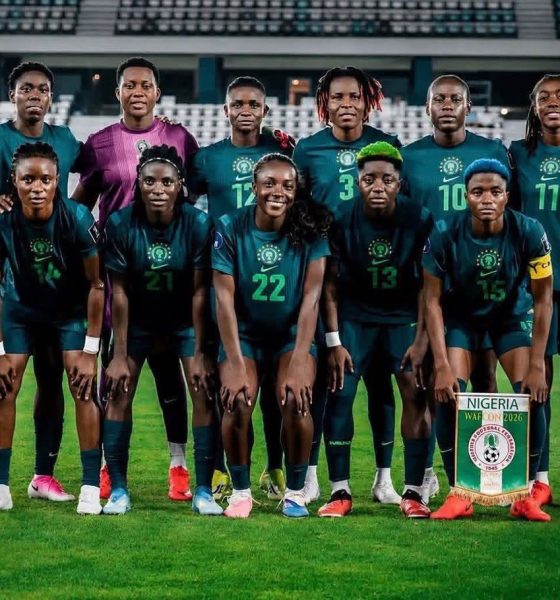
African Football
Nigeria’s Worst WAFCON Performance In 35 Years And the Long Road To Brazil That Remains
In 35 years of Women’s Africa Cup of Nations football, Nigeria’s Super Falcons had never failed to reach the semifinals. Not once.
That extraordinary record ended on Sunday in Casablanca.
A thunderous free-kick from teenage defender Maeva Nyadjou. A goalkeeper in Michaely Bihina who seemed determined to stop everything Nigeria threw at her. And one agonising missed opportunity from Esther Okoronkwo that could have changed the entire story.
Cameroon won 1-0.
For Nigeria, it was their worst WAFCON performance in the competition’s history.
Yet there is an important twist. The Super Falcons are not out of the race for the 2027 FIFA Women’s World Cup in Brazil.
Their direct qualification route has disappeared, but another route remains, beginning with a huge meeting with South Africa.
And that makes Nigeria’s defeat to Cameroon more than a historic disappointment. It is now a test of character.
The Free-Kick That Changed Nigeria’s Super Falcons History
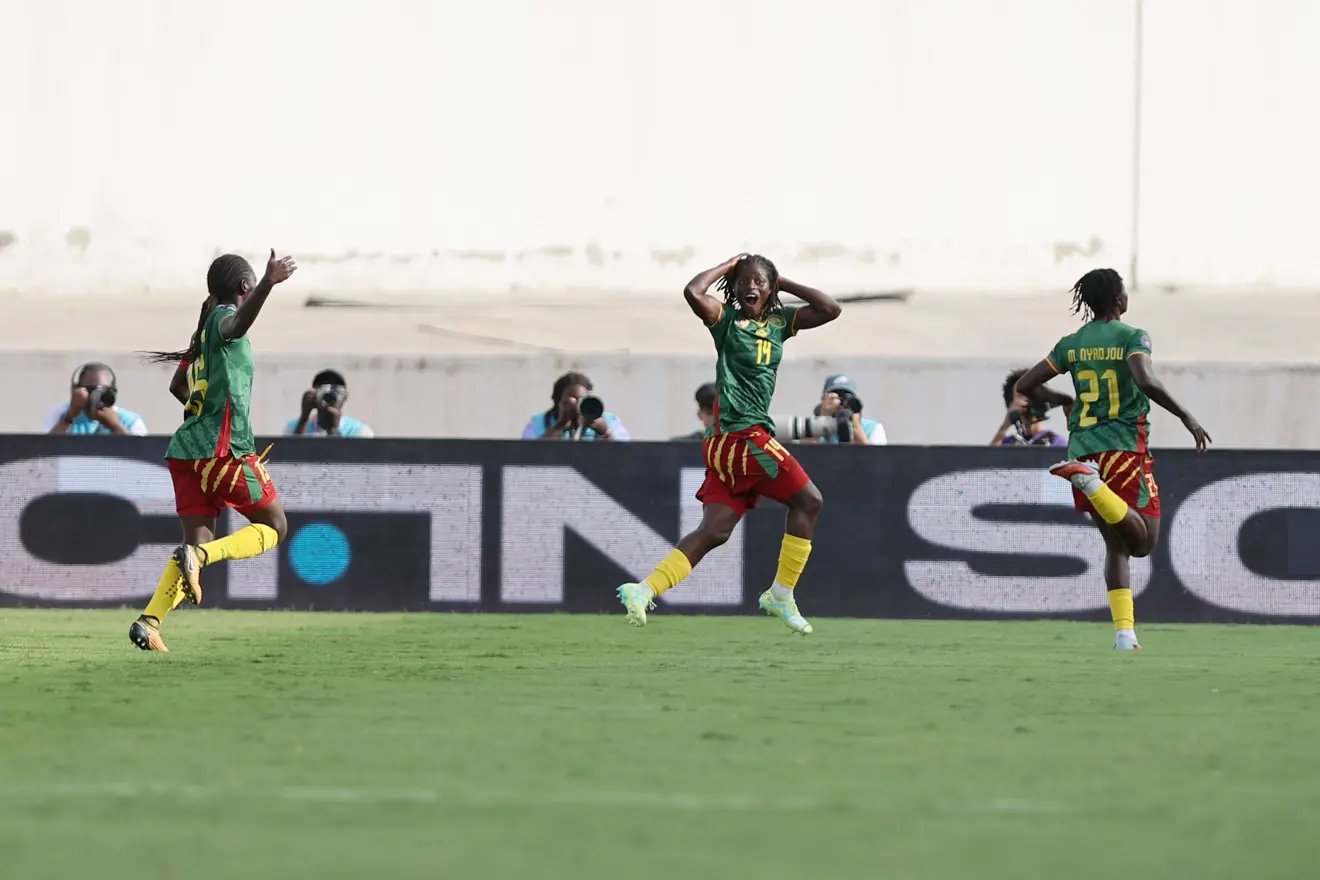
Cameroon women’s national football team players celebrate on the pitch at the Larbi Zaouli Stadium after a historic 1-0 quarter-final win over Nigeria during the 2026 WAFCON tournament in Morocco.
Nigeria had been the better side before Cameroon’s opening goal.
Nigeria’s Super Falcons were creating opportunities, pushing Cameroon backwards and looking increasingly dangerous in possession.
Then came the 20th minute. Cameroon won a free-kick roughly 30 yards from goal after Nigeria were penalised during a transition. Colette Ndzana appeared to be preparing to take it.
She wasn’t. Instead, teenager Maeva Nyadjou stepped forward.
The defender produced a stunning swerving strike that flew beyond Chiamaka Nnadozie and into the side netting.
It was the kind of goal that changes a tournament. It was also the kind of moment Nigerian supporters will remember for a very long time.
Nyadjou had just produced one of the defining moments of Cameroon’s campaign against the most successful team in the history of the WAFCON.
Nnadozie got both hands to the ball, and questions will inevitably be asked about whether the goalkeeper could have done better.
But reducing the goal to a goalkeeping error would be unfair to Nyadjou. The strike was powerful, deceptive and perfectly capable of troubling any goalkeeper.
The more painful part for Nigeria was what happened afterwards.
They had the chances. And they had the possession. They had the attacking players.
But they could not find the equaliser. And in knockout football, that is often all that matters.
Nigeria’s Super Falcons Dominated the Chances
This is where the raw scoreline fails to explain the match. Nigeria did not play like a team that deserved to lose 1-0.
They simply failed to turn their superiority into goals. At half-time, the Super Falcons had registered nine shots compared with Cameroon’s one.
Rasheedat Ajibade was involved in Nigeria’s attacking efforts. Gift Monday repeatedly threatened the Cameroon defence. Jennifer Echegini had opportunities.
But every time Nigeria’s Super Falcons appeared close to breaking through, Michaely Bihina was there.
The Cameroon goalkeeper became the unexpected star of the evening. She claimed crosses. And she smothered dangerous efforts. She reacted quickly.
And, most importantly, she never appeared overwhelmed by the pressure.
Her performance created an uncomfortable truth for Nigeria: sometimes a team can do almost everything right territorially and still lose because the opposing goalkeeper produces a performance that changes the mathematics of the game.
That was Cameroon. Nigeria’s Super Falcons kept attacking. Bihina kept saying no. The longer the match continued at 1-0, the greater the psychological pressure became.
For the Cameroon players, every save strengthened belief. For Nigeria, every missed chance increased desperation.
That psychological shift was arguably as important as the tactical battle.
Bihina Was Not Just Good; She Changed the Match
Bihina deserves special attention because Nigeria’s elimination cannot be properly understood without discussing her performance.
Her most spectacular intervention came in the second half.
Nigeria worked the ball into a dangerous area, and Uchenna Kanu found herself with an opportunity from close range.
Bihina appeared to move in the wrong direction initially. Then she recovered.
A left-handed save prevented what looked like an almost certain equaliser.
That was the moment when it became clear that Nigeria were fighting not only Cameroon but also a goalkeeper having one of those rare matches when everything seems to go right.
She had already denied Nigeria several times before that. And she stopped Echegini.
She dealt with Gift Monday’s efforts. She made important claims from crosses.
And when Nigeria’s Super Falcons increased the pressure late in the game, she remained composed.
For Cameroon, Bihina’s performance was the difference between a good defensive effort and a historic victory.
For Nigeria’s Super Falcons, it will become part of the explanation for why a team that created so much ended the evening without a goal.
This is also an important African football story. African women’s football is producing increasingly fearless young players who are comfortable performing on major stages.
Nyadjou’s free-kick and Bihina’s goalkeeping display offered two very different examples of that development.
Nigeria’s pain should not obscure Cameroon’s achievement.
The Oshoala Decision Will Be Debated for a Long Time
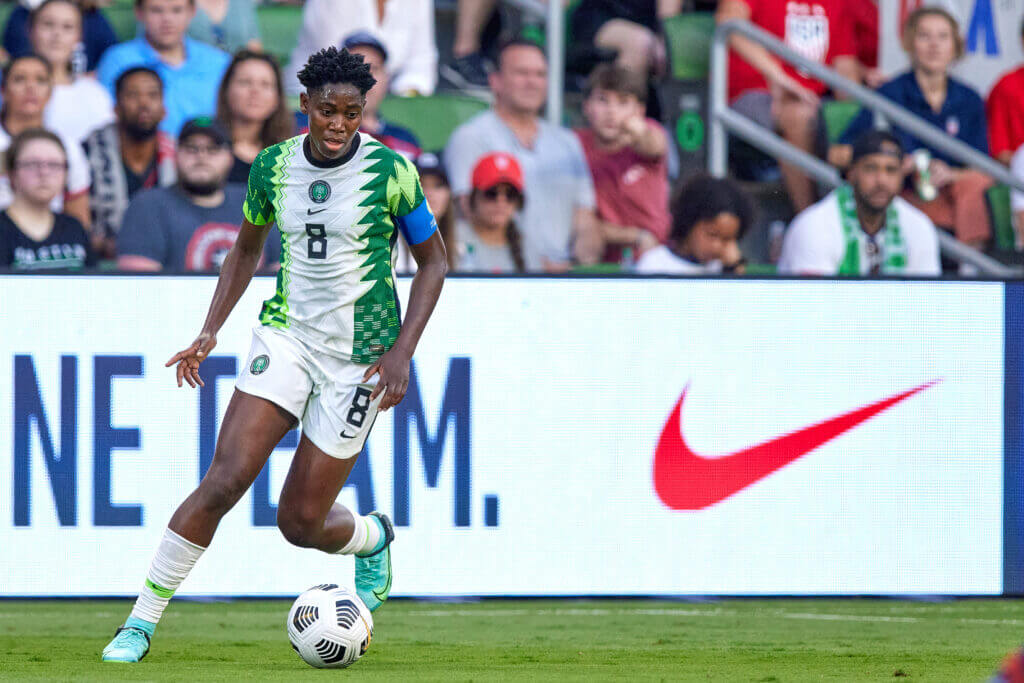
Asisat-Oshoala
Then comes the question Nigerian football supporters are already asking.
Why was Asisat Oshoala not used earlier?
The six-time African Women’s Footballer of the Year remained on the bench until stoppage time.
There is an important qualification here: if Oshoala was not physically ready to start, that has to be respected.
A player cannot simply be thrown into a high-intensity quarterfinal because of her reputation.
But the tactical question remains.
Could Nigeria have benefited from having one of their most experienced attacking players on the pitch earlier?
That question becomes even more uncomfortable when considered alongside the decision to leave Esther Okoronkwo on the bench at kick-off.
Late in the game, she raced onto a through ball, beat Bihina and found herself with the opportunity to rescue the Super Falcons.
Instead, her effort rolled agonisingly wide. Oshoala was arriving.
A square pass might have created another option. It was a moment that summed up Nigeria’s night.
The experienced players were being asked to rescue a game that had already become extremely difficult.
And the margin between elimination and survival was tiny. This is not an argument that Oshoala should automatically have started.
It is an argument that Nigeria’s attacking plan needs to be examined honestly.
When a team possesses experienced match-winners, the coaching staff must find the right balance between protecting players physically and maximising their influence when the tournament is on the line.
Justin Madugu will face questions about that balance.
This Was Bigger Than One Bad Night for Nigeria’s Super Falcons
Nigeria’s Super Falcons’ quarterfinal defeat did not happen in isolation.
The warning signs were already visible during the group stage.
Nigeria’s Super Falcons lost to Tanzania. They struggled against Zambia.
They eventually defeated Egypt 6-2, but even that result did not completely erase the concerns surrounding the team’s performances.
The problem was not simply that Nigeria were losing games. It was that the performances did not consistently resemble those of a team with Nigeria’s historical dominance.
That makes Sunday’s defeat particularly significant. Nigeria have won the WAFCON ten times.
They have traditionally been the standard by which African women’s football is measured.
For decades, reaching the semifinals was almost automatic. Now that streak is gone.
The question is no longer whether Nigeria can maintain their historical record.
They cannot. The question is whether this tournament represents the beginning of a genuine decline or merely one disastrous campaign.
That distinction matters. Because the Super Falcons still possess players capable of competing at the highest level.
Ajibade remains a major attacking threat. Nnadozie remains an elite goalkeeper despite the criticism surrounding her tournament.
Echegini has technical quality. Monday has pace and directness. Oshoala remains one of Africa’s most decorated women’s footballers.
The talent has not disappeared. What has disappeared is the assumption that talent alone will keep Nigeria at the top of African football.
The African Diaspora Should Pay Attention to What Happens Next
For Nigerian fans watching from Lagos to London, Abuja to Atlanta, Port Harcourt to Toronto and across the wider diaspora, this is where the story becomes particularly important.
Nigeria’s Super Falcons are not simply trying to recover from a WAFCON defeat.
They are trying to protect Nigeria’s presence at the next Women’s World Cup.
For generations of Nigerians abroad, the Super Falcons have been one of the clearest connections between Nigerian identity and international women’s football.
That makes the road to Brazil more than a qualification exercise.
It is a reputational battle. Nigeria have spent decades being the African women’s team that everyone expects to see at the World Cup.
Now that expectation has been replaced by uncertainty. And the players will have to respond under pressure.
The good news is that the World Cup qualification structure gives Nigeria another opportunity.
FIFA confirmed four direct CAF places for the 2027 Women’s World Cup. While two additional African teams can reach the intercontinental play-off tournament.
That means Nigeria’s WAFCON elimination is devastating, but it is not the same thing as World Cup elimination.
There is still a route. The problem is that the route has become much harder.
South Africa Is Now the Match That Defines Nigeria’s Super Falcons Tournament
Nigeria’s next challenge is South Africa. That is not an easy opponent.
It is almost impossible to imagine a more emotionally charged response to the Cameroon defeat than having to face another African heavyweight almost immediately.
South Africa will understand exactly what is at stake. Nigeria will understand it even more.
This is where the Super Falcons have to show whether Sunday’s defeat was a collapse or a wake-up call.
The team cannot afford to spend the next match carrying the emotional baggage of Casablanca.
They have to use it. The defeat exposed several areas that South Africa will try to attack.
Nigeria’s finishing has to improve. The midfield must provide greater control. The defence cannot afford unnecessary errors.
And the coaching staff must make faster decisions when the match begins to move away from the original plan.
The most important change, however, may be psychological.
Nigeria cannot approach South Africa as the ten-time African champions expecting history to win the match for them.
They have to approach it as a team fighting for survival. That difference could determine everything.
The Long Road to Brazil Has Suddenly Become Real
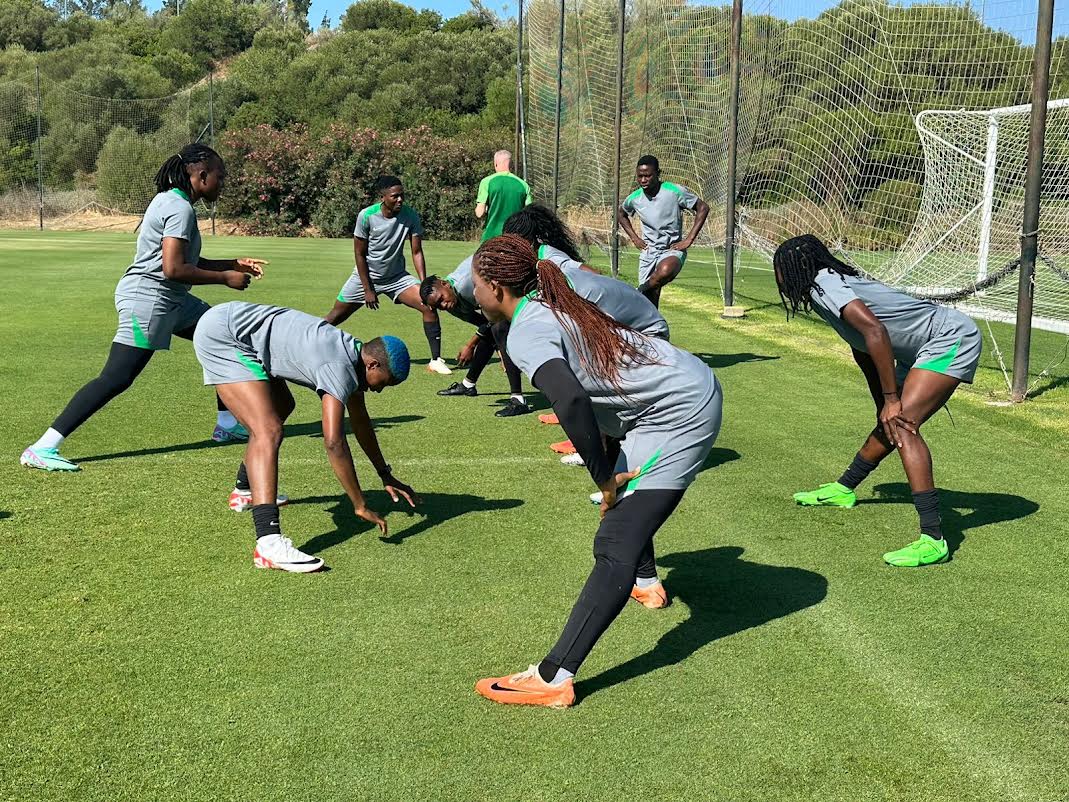
Nigerian women’s football team, the Super Falcons, participating in a training session in Spain to prepare for the Paris 2024 Olympic Games.
The 2027 Women’s World Cup will be staged in Brazil from 24 June to 25 July 2027.
FIFA’s qualification structure gives CAF four direct places, with additional African representation possible through the intercontinental play-off route.
For the teams that enter that play-off pathway, the first phase is scheduled for November and December 2026.
Six teams will compete at a centralised venue, with the two highest-ranked teams advancing to the second phase.
Those two teams will then join four other teams from Concacaf, CONMEBOL and UEFA in February 2027.
Six teams will be divided into three knockout paths, with the winners of those three paths claiming the final three World Cup places.
Read that carefully.
Nigeria could potentially have to navigate multiple elimination matches simply to reach Brazil.
That is the price of Sunday’s defeat. The Super Falcons have moved from a position where qualification was expected to one where every remaining match carries enormous consequences.
There is no safety net after the next failure. There is no guarantee that reputation will be enough.
And there is no room for another night like Casablanca.
Nigeria’s Super Falcons Must Turn This Disaster Into a Reset
There is a temptation after a result like this to demand that everything be changed.
That is rarely the smartest response. Nigeria does not need to abandon everything.
They need to identify what failed. The first issue is tactical consistency. And the second is player management.
The third is finishing. And the fourth is the development pipeline behind the established stars.
The wider Nigerian women’s football system also needs to keep producing players capable of competing internationally.
The Super Falcons cannot remain dependent on the same generation forever.
A country with Nigeria’s football population should be producing more elite women’s players, more competitive domestic structures and more pathways from youth football into the senior national team.
The WAFCON defeat therefore needs to become a footballing audit. Not a witch hunt. Not a social-media blame game.
An audit.
Why did Nigeria lose to Tanzania?
And Why did the attack struggle to convert chances?
Why did the team look so uncomfortable in key phases?
Was the squad selection optimal?
Was the tactical plan flexible enough?
And were players physically ready for the demands of a tournament of this magnitude?
These are the questions that matter.
The Verdict: Nigeria’s Super Falcons Record Is Gone, But Their World Cup Dream Isn’t
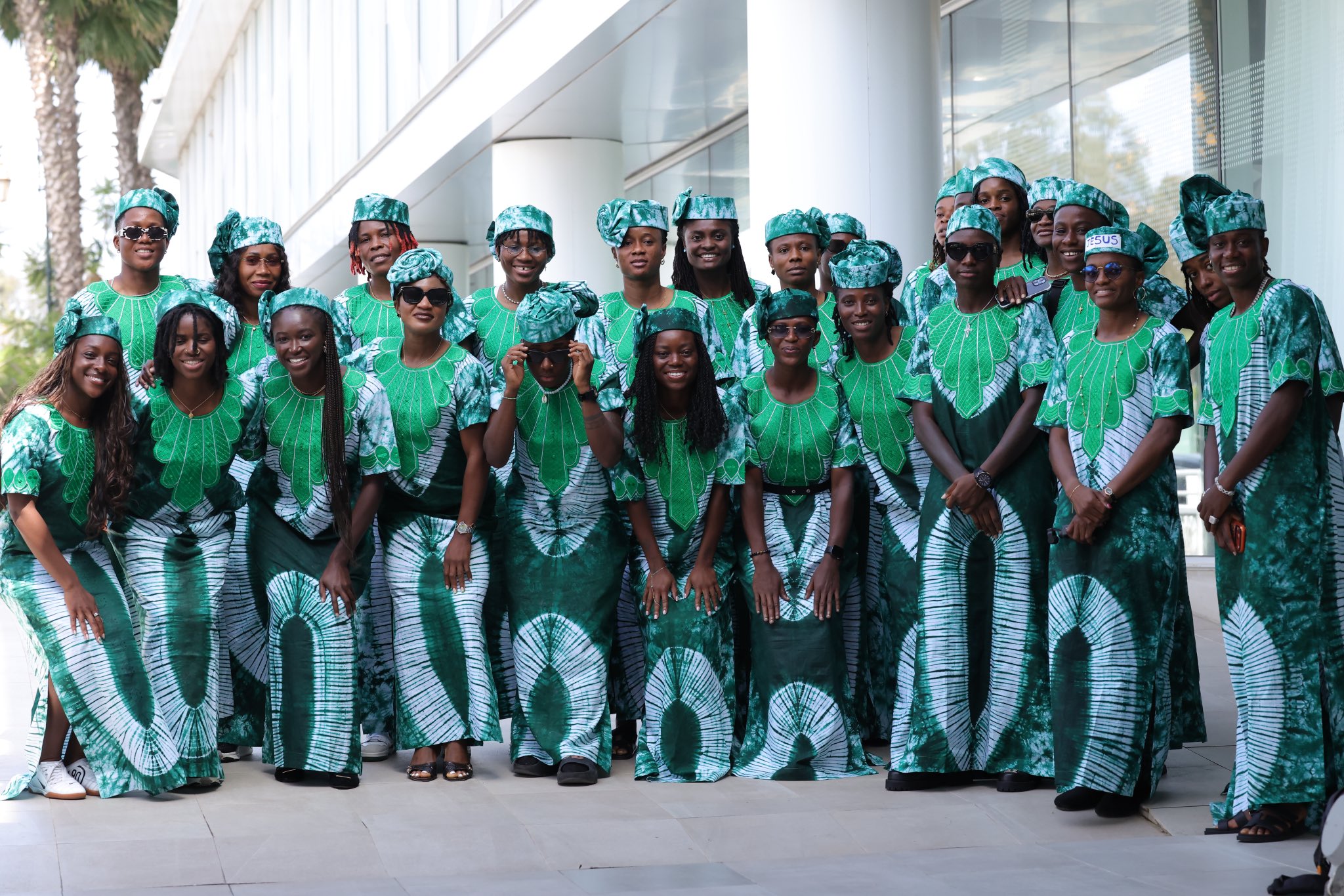
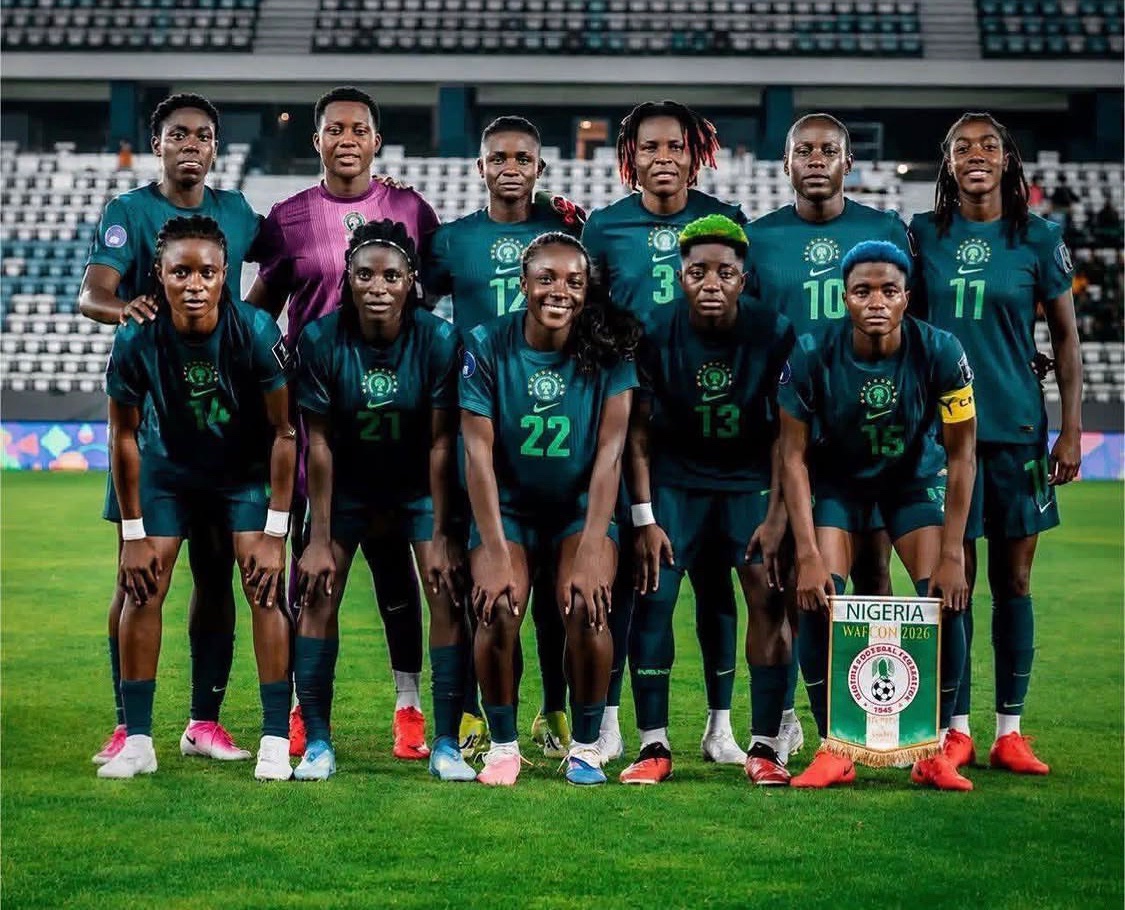
The Nigeria women’s national football team, known as the Super Falcons, is shown arriving in Rabat, Morocco, for the 2026 Women’s Africa Cup of Nations (WAFCON).
Nigeria’s Super Falcons suffered the most damaging WAFCON result in their history.
The 1-0 defeat to Cameroon ended a 35-year record of reaching at least the semifinals.
Nyadjou provided the moment of brilliance. Bihina provided the heroics. Nigeria provided the chances but not the finish.
And the coaching decisions will be debated long after the players leave Morocco.
But this is not yet the end of Nigeria’s story. The Super Falcons still have a route to Brazil 2027.
That route now begins with South Africa. And that is the real test. Nigeria cannot change the goal.
They cannot change Bihina’s saves. And they cannot change Okoronkwo’s missed opportunity.
They cannot restore the semifinal streak.
What they can change is what happens next.
For a team that has spent decades setting the standard for African women’s football. The response to this defeat may ultimately tell us more about the Super Falcons than the defeat itself.
Sportxparte verdict:
Nigeria’s WAFCON campaign has been a historic failure, but the tournament does not have to become a qualification disaster. Beat South Africa, rebuild the confidence, and the road to Brazil remains open.
Lose again, however, and the greatest women’s football nation in Africa could find itself watching the 2027 World Cup from home.
The Super Falcons no longer have history to protect. They have a World Cup place to fight for.