African Football
CAF Preliminary Draw 2026: Winners, Losers And The Biggest Talking Points Ahead Of The New African Club Season
The CAF preliminary draw for the 2026/27 CAF Champions League and CAF Confederation Cup will do far more than decide a collection of early-season fixtures.
For clubs across Africa, it could determine budgets, coaching futures, player transfers and the balance of power between the continent’s established giants and ambitious challengers.
The first and second preliminary rounds represent the most unforgiving stage of African club football. A team can spend an entire domestic season earning continental qualification, only to have its campaign ended after two matches against an unfamiliar opponent thousands of kilometres away.
That is why the draw matters.
A favourable pairing can provide time for a new squad to settle, allow a club to control its travel costs and create a realistic route into the group stage. A difficult draw can immediately expose poor preparation, weak squad depth and the financial limitations that continue to hold many African clubs back.
The 2026/27 CAF interclub season begins with the first preliminary-round matches from September 4 to 6, followed by the second legs from September 11 to 13. The second preliminary round will be played in October, before the group stages begin in late November.
For Africa’s biggest clubs, the mission is to challenge for the trophy. For dozens of others, simply surviving the preliminary rounds could transform their season.
Why the CAF Preliminary Draw Is So Important
European football’s biggest clubs normally enter continental competitions with guaranteed league-phase income and clearly established schedules. African clubs face a much less predictable route.
Before reaching the CAF Champions League or Confederation Cup group stage, many teams must survive two rounds of home-and-away football. The challenges are not limited to what happens on the pitch.
A club from West Africa could be drawn against opposition in North, East or Southern Africa. That means expensive flights, visa arrangements, unfamiliar weather, difficult playing surfaces and limited recovery time between continental and domestic fixtures.
These details can decide ties before the first ball is kicked.
The strongest clubs usually possess the resources to manage such complications. Al Ahly, Mamelodi Sundowns, Espérance, RS Berkane and other established continental sides have experience, deeper squads and stronger administrative structures.
Smaller clubs frequently do not.
A CAF Preliminary-round draw against an opponent from a neighbouring country may reduce travel costs and allow supporters to attend the away match. A cross-continental fixture can consume a major part of a club’s annual budget before it has earned meaningful prize money.
This is why the draw should not be assessed only in terms of football quality. Geography, administration and finance are just as important.
The clubs that prepare for all four factors will have the best chance of reaching the group stage.
Nigerian Clubs Must Break the Cycle of Early Elimination in CAF Preliminary
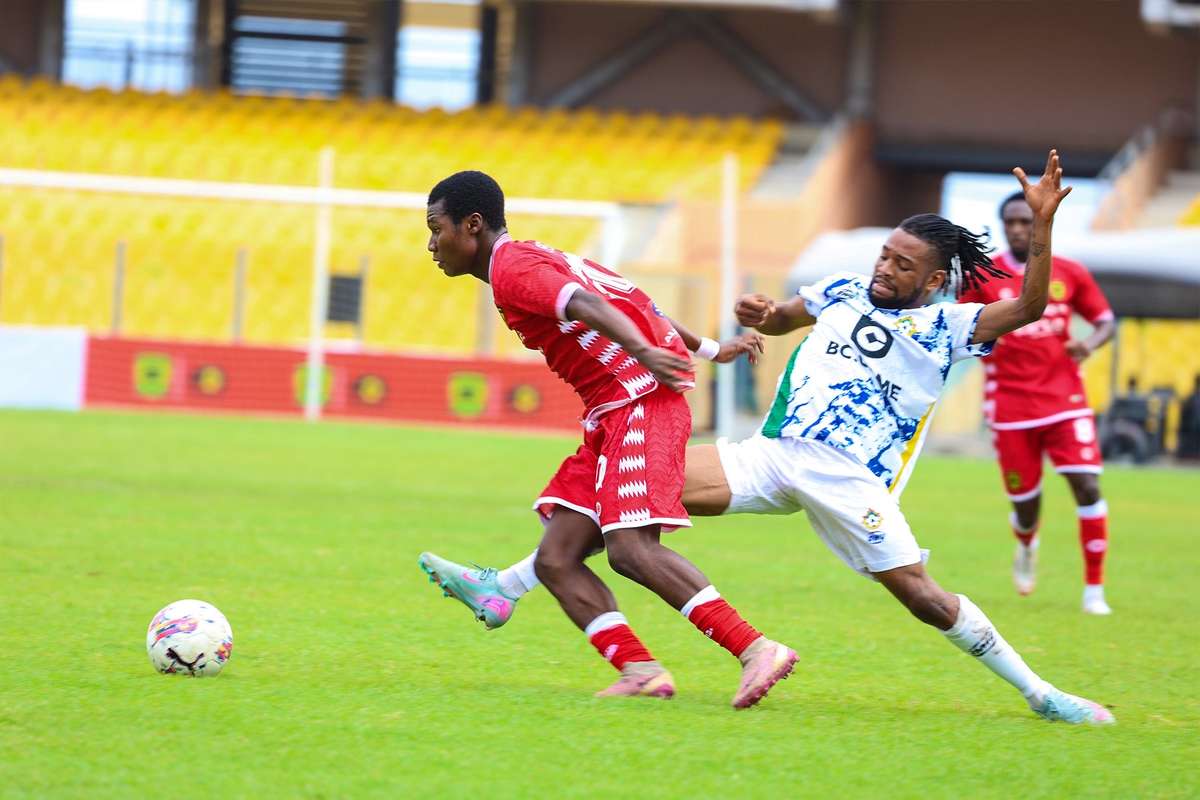
Asante Kotoko forward dribbling past a Kwara United defender during the CAF Confederation Cup match at Accra Sports Stadium.
Nigeria is expected to be represented in the CAF Champions League by Rangers International and Rivers United, with Shooting Stars and another domestic cup representative involved in the Confederation Cup.
The names carry history and significant domestic support.
However, Nigerian clubs can no longer rely on reputation when competing on the continent.
The country has one of Africa’s largest populations, one of its strongest football cultures and a domestic league filled with talented players. Yet Nigerian teams have struggled to establish themselves consistently among the final contenders in CAF’s major club competitions.
The problem is not a lack of individual ability. Nigerian clubs regularly produce players capable of performing abroad. The deeper issues include unstable squads, congested travel arrangements, inconsistent preparation, poor management and the sale of important players before continental campaigns begin.
The CAF Preliminary draw will test whether Nigeria’s representatives have learned from previous failures.
Rangers and Rivers United must avoid viewing the opening round as an extension of domestic football. Continental matches require a different level of tactical discipline.
Away goals may no longer carry the old advantage under certain competition formats, but managing the first leg remains essential.
A team cannot approach an away fixture recklessly, concede several goals and expect atmosphere alone to rescue it in Nigeria.
The clubs must also complete their player registration early, resolve travel documentation and study possible opponents before the draw.
For Nigeria, success should not mean having one team survive a preliminary tie. At least one Champions League representative should be capable of reaching the group stage.
Anything less would deepen the gap between Nigerian club football and the continent’s better-organised leagues.
North Africa’s Advantage Is Structural, Not Accidental
The CAF Preliminary rounds also reveal why North African clubs continue to dominate CAF competitions.
Teams from Egypt, Morocco, Tunisia and Algeria are not automatically more talented than every opponent they face. Their advantage is often structural.
Many of them have better training facilities, stronger sponsorship arrangements, more experienced administrators and larger budgets. They are also accustomed to continental travel and understand how to manage two-legged knockout ties.
Their players rarely appear surprised by hostile away environments. Their coaches know when to slow matches down, protect narrow leads or exploit an opponent’s impatience.
This institutional knowledge matters.
When a North African team draws a less experienced opponent, the difference may not initially be visible. The first leg could be competitive. The weaker side may even create better chances.
But across 180 minutes, experience usually becomes decisive.
One late mistake, one unnecessary red card or one poorly defended set piece can end the campaign.
This is the standard clubs from West, Central, East and Southern Africa must match. Complaining about North African dominance will not change the balance of power. Investment, organisation and tactical maturity will.
The draw could still create opportunities for emerging teams. Established clubs are not unbeatable, particularly when they are rebuilding squads or entering the season under new coaches.
However, defeating them requires more than motivation. It requires an institution prepared for continental football.
The Financial Cost of an Early CAF Preliminary Exit

Mamelodi Sundowns F.C. team celebrating their victory in the 2026 CAF Champions League final.
The CAF Champions League winner is scheduled to receive $6 million, while the Confederation Cup champion will earn $4 million.
Those headline prizes demonstrate how valuable the competitions have become. Yet most participating clubs will never get close to those amounts.
For them, the immediate financial objective is reaching the group stage.
Group-stage qualification provides more matches, greater visibility and better opportunities to attract sponsors. It also gives players a continental platform that can increase their transfer value.
An early exit produces the opposite result.
The club may have already spent heavily on recruitment, travel, accommodation and player bonuses. Losing in September or October can leave it with no continental football for the remainder of the season and little return on that investment.
This is especially damaging in leagues where commercial income is already limited.
There is also a wider national impact. Clubs earn coefficient points through continental performance. When representatives repeatedly exit early, their country’s standing suffers, potentially affecting future seeding and representation.
Therefore, a poor CAF campaign is not only a failure for one club. It weakens the league it represents.
This should matter to domestic football authorities.
National associations and league organisers cannot celebrate continental qualification and then leave clubs to manage the logistical burden alone. Support with visas, scheduling and travel coordination could make the difference between progression and elimination.
African club football will not improve if every team is forced to solve the same structural problems individually.
The Draw Could Create Africa’s Next Breakthrough Club
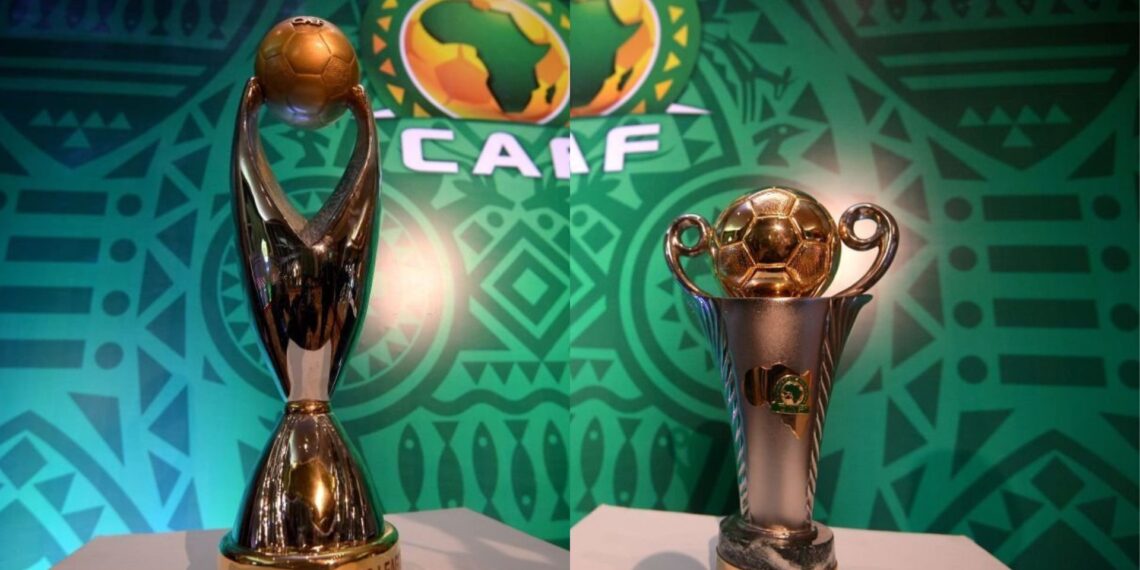
These are the trophies for the CAF Champions League (left) and the CAF Confederation Cup (right).
The preliminary stage is often discussed as an obstacle, but it can also become the beginning of a breakthrough.
Every major African club once had to establish its reputation.
A less celebrated team that survives two difficult preliminary ties can enter the group stage with confidence, momentum and continental experience. It may also attract stronger players, new commercial partners and a larger following.
The modern CAF competitions have created room for clubs outside the traditional elite to challenge. Recent seasons have shown that organisation and tactical clarity can reduce the gap between wealthy giants and determined challengers.
The 2026/27 draw could introduce supporters to a new force from an emerging league.
East African clubs, in particular, have invested heavily in players, facilities and fan engagement. Teams from Tanzania have demonstrated growing ambition. While clubs from Sudan, Mali and Angola continue to present difficult challenges.
West Africa still produces enormous talent, but its clubs must become better at retaining that talent long enough to build competitive continental teams.
The draw could therefore tell us something important about Africa’s changing football geography.
A fixture between a famous former champion and an ambitious emerging club is no longer automatically predictable. The badge may belong to the established side, but preparation can shift the advantage.
That uncertainty is one of the reasons the preliminary rounds deserve more attention.
CAF Must Improve the Commercial Value of the Early Rounds
CAF has increased prize money and attempted to improve the profile of its interclub competitions.
However, the preliminary rounds remain commercially underdeveloped.
Many matches are difficult to watch legally outside the countries involved. Broadcast details are often unclear, fixture changes can be communicated late, and clubs sometimes provide the only reliable updates through social media.
This limits the competitions’ growth. The CAF Preliminary rounds involve champions and cup winners from across the continent.
They should be presented as part of the main competition, not as an inconvenient qualifying process happening away from public attention.
CAF could improve its value by providing centralised streaming, consistent match information, better digital coverage and stronger storytelling around participating clubs.
African football supporters want to discover teams from other regions. They want to understand the histories, rivalries and players involved.
The competition cannot build a truly continental audience if fans are unable to follow its opening stages.
Better coverage would also help smaller clubs secure sponsors. Visibility creates commercial value, and commercial value can improve preparation.
This is where CAF’s responsibility extends beyond conducting the draw. It must ensure that the fixtures produced by that draw are accessible to the people the competition is supposed to serve.
What the 2026/27 Season Could Reveal About African Football

Players celebrating with the CAF Champions League trophy.
The new interclub season will reveal whether the continent’s club football is becoming more competitive or simply more concentrated.
If the usual teams dominate every stage, it will confirm that the financial and institutional gap remains wide.
If clubs from less celebrated leagues reach the group stages and compete strongly, it will suggest that investment across the continent is beginning to produce results.
The CAF Preliminary draw is the first step in answering that question.
It will show which clubs face expensive journeys, which giants receive manageable routes and which emerging teams have the opportunity to make a statement.
For Nigerian football, the standard must be higher than participation. Rangers, Rivers United and the country’s Confederation Cup representatives must show that domestic success can be converted into continental credibility.
For CAF, the responsibility is to deliver an organised competition with clear communication and improved access for supporters. For the clubs, preparation must begin before their opponents are known.
Verdict: The CAF Preliminary Draw Will Reward Organisation More Than Reputation
The CAF preliminary draw will produce winners and losers before any match is played. But no club’s fate will be decided by the draw alone.
A difficult opponent can be overcome. Long-distance travel can be managed. A limited budget can be used intelligently.
What cannot be hidden is poor preparation.
The clubs that register players late, underestimate opponents or treat logistics as an afterthought will struggle. The teams with stable squads, strong administration and clear tactical plans will give themselves a chance.
Sportxparte’s verdict is that the 2026/27 preliminary rounds will not simply measure the quality of African players. They will measure the quality of African football institutions.
That is why these opening fixtures matter so much.
The road to continental glory may end with a trophy in May 2027, but for most clubs, their real future will be decided during two tense months in September and October 2026.