World Cup 2026
World Cup 2026: IFAB Approves Strict New Red-Card Rules
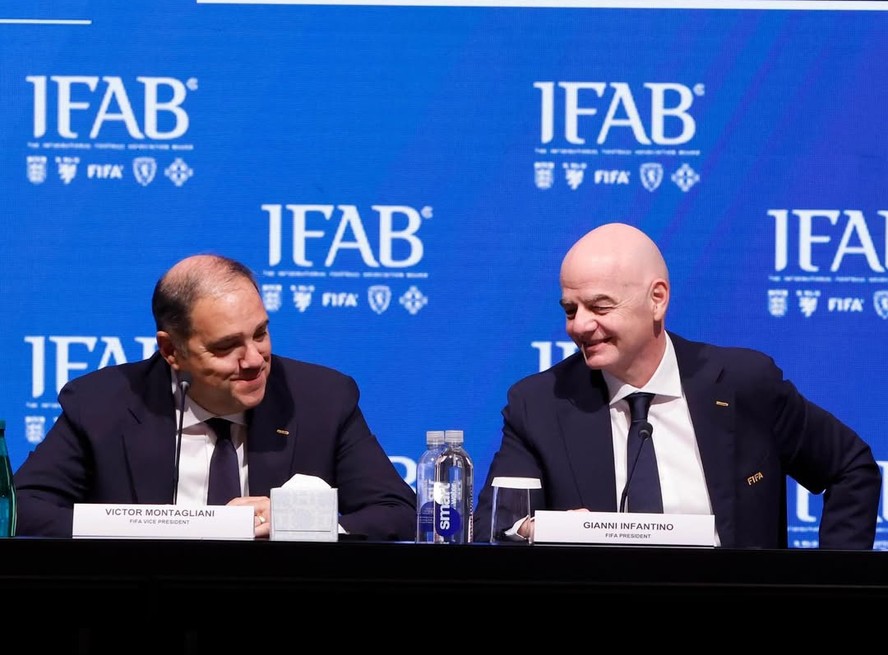
A major shift in football’s disciplinary framework will be on display at this summer’s World Cup after the International Football Association Board (Ifab) approved new rules.
The rule targets player dissent, hidden verbal, exchanges, and walk-offs in protest of refereeing decisions. The regulations confirmed ahead of Thursday’s FIFA Congress in Vancouver will apply specifically to the upcoming tournament.
A Tournament-Specific Set of Rules
Although Ifab has endorsed the changes, the body clarified that implementation outside the World Cup will not be mandatory.
Domestic leagues and continental competitions will decide independently whether to align with the new standards. This selective enforcement makes the World Cup an experimental stage for assessing how such measures affect behaviour, communication, and overall match management.
Red Cards for Walk-Off Protests
One of the most impactful changes focuses on players leaving the pitch in protest. The move comes directly in response to the chaotic ending of the 2026 Africa Cup of Nations final.
When several Senegal players walked off following a disputed late penalty. Morocco’s Brahim Díaz eventually missed after a lengthy delay, and Senegal went on to win in extra time.
Later, the CAF appeal board overturned the result and awarded the game to Morocco. A decision Senegal has since challenged at the Court of Arbitration for Sport.
Ifab addressed the issue, “At the discretion of the competition organiser. The referee may sanction with a red card any player who leaves the field of play in protest at a referee’s decision.
”This new rule will also apply to any team official who incites players to leave the field of play. A team that causes a match to be abandoned will, in principle, forfeit the match.”
The intention is to reinforce refereeing authority and prevent matches from descending into disruption-driven stalemates.
Concerns Over Racism-Related Walk-Offs
Despite the rationale, several European leagues have expressed concern. Their primary objection is the potential for punishing players who leave the pitch because they have received racist abuse.
In such cases, the walk-off is an act of self-protection rather than dissent. This tension highlights the challenge of creating universal rules in a sport. Off-ball incidents, discrimination, and player safety issues vary widely across competitions.
Mouth-Covering Confrontations Under Scrutiny
Another highly discussed regulation targets players who confront opponents while covering their mouths. Though historically associated with privacy or avoiding lip-reading. The gesture has become entangled with discriminatory behaviour after a major incident earlier this year.
In February, Real Madrid’s Vinícius Jr accused Benfica’s Gianluca Prestianni of racially abusing him while shielding his mouth with his shirt.
UEFA later banned Prestianni for six matches after he admitted to making homophobic comments. The episode accelerated pressure on governing bodies to prevent players from concealing potentially abusive language.
FIFA president Gianni Infantino has been at the forefront of the campaign for stricter measures. They are pushing for decisive action both on mouth-covering and on punitive walk-offs in the wake of the AFCON controversy.