

Champions League
Arsenal Vs PSG: Champions League Final Preview, Stats & Prediction
The 2025/26 Champions League final in Budapest brings together two giants who have travelled drastically different paths to reach the same destination.
Arsenal and Paris Saint-Germain arrive with 62–63 matches on the clock since June of last year. But the numbers alone disguise the contrasting realities behind each team’s campaign.
One has crawled to the finish line after an exhausting domestic title race. The other has been carefully preserved for this very moment.
A Season of Unequal Demands
On paper, Arsenal have played 63 matches and PSG have played 56.
However, PSG’s participation in the extended Club World Cup last summer adds seven more matches, pushing them to 62 games since June. Yet those figures only scratch the surface.
While Arsenal enjoyed a proper off-season. PSG spent the summer travelling across the United States, competing in a tournament played in extreme heat. And just 14 days after beating Inter Milan in the Champions League final.
Their new Ligue 1 season began barely a month after the Club World Cup ended, creating a congested calendar before the campaign had even started.
The expanded Club World Cup exposed teams to unprecedented physical stress. Chelsea, who reached the 2025 final, never recovered and won just two of their first six league games the following season, eventually finishing 10th.
Cole Palmer’s form collapsed so dramatically that he missed out on World Cup selection altogether.
Against this backdrop, PSG’s season should have been a recipe for fatigue. Instead, Luis Enrique managed it with surgical precision.
PSG’s Hidden Advantage
Since the start of the 2025/26 season, Arsenal have played more competitive matches than any team in Europe’s top five leagues. Their deep runs in the FA Cup and League Cup created a relentless schedule with little space for rest or strategic rotation.
PSG, by contrast, has spent the season rotating heavily, protecting key players for Champions League nights. When their Ligue 1 campaign kicked off against Nantes. Only two starters from the Champions League final featured in the XI.
Reinforcements like Nuno Mendes, Achraf Hakimi, Ousmane Dembélé, Désiré Doué, and Khvicha Kvaratskhelia arrived from the bench to secure a late win.
This pattern continued throughout the season. PSG’s star players played astonishingly few domestic minutes. Dembélé started only 11 of 34 Ligue 1 matches.
Mendes, Ruiz, and Neves started with only 13 each. Marquinhos managed just 11. Not one of PSG’s core players even reached half of their available league minutes.
Incredibly, Mendes and Marquinhos logged more minutes in the Champions League than in Ligue 1. Despite PSG playing eighteen fewer matches in Europe.
Injuries did occur, but almost always minor. The rest was intentional. Squad freshness was the plan.
Arsenal’s Relentless Workload
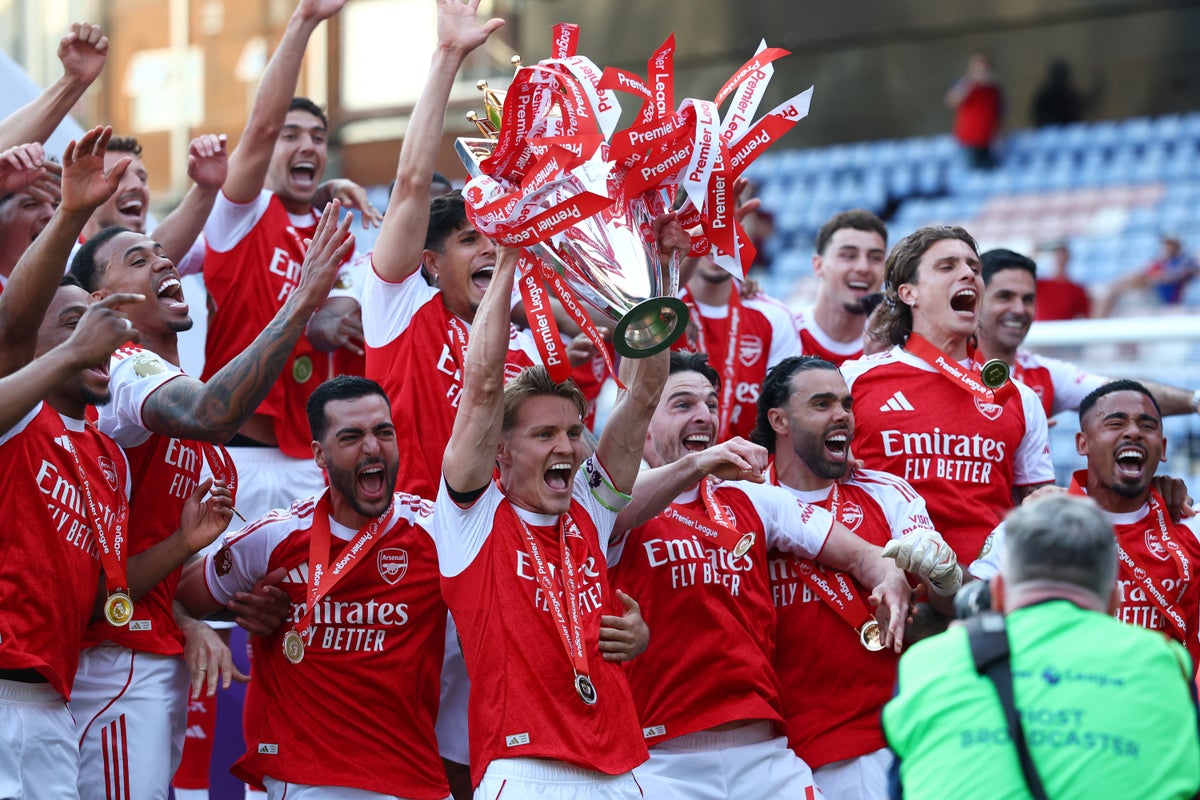
Arsenal F.C. celebrating their victory as the 2025/26 Premier League champions.
Arsenal entered this final with justified confidence after winning their first Premier League title in 22 years. But that triumph came at a major physical cost.
Certain players were simply never rotated. David Raya played every Premier League minute until the title was secured.
Declan Rice missed only two league games. Martin Zubimendi did not miss a single one. Saliba and Gabriel barely rested unless unavailable.
Five Arsenal players started 30+ league matches. No PSG player reached that number.
Nine of the twelve players across both squads who have played more than 3,000 minutes this season are Arsenal players. All have exceeded 4,000 minutes in all competitions.
PSG have only one the sensational Warren Zaïre-Emery who has crossed that threshold.
This disparity raises one question who will still have fuel in the tank when the final reaches the decisive moments?
Key Injuries and Selection Dilemmas
Arsenal enter with mixed fitness news. Ben White is ruled out, while Jurriën Timber is only rated at 25% fitness.
Noni Madueke, however, may return in time, with a 50/50 chance of participating.
PSG face their own uncertainty. Achraf Hakimi remains a late decision for Luis Enrique. While Dembélé despite a recent knock has declared himself available.
The stakes of these selections are enormous. One player’s absence could tilt the final.
The Players to Watch
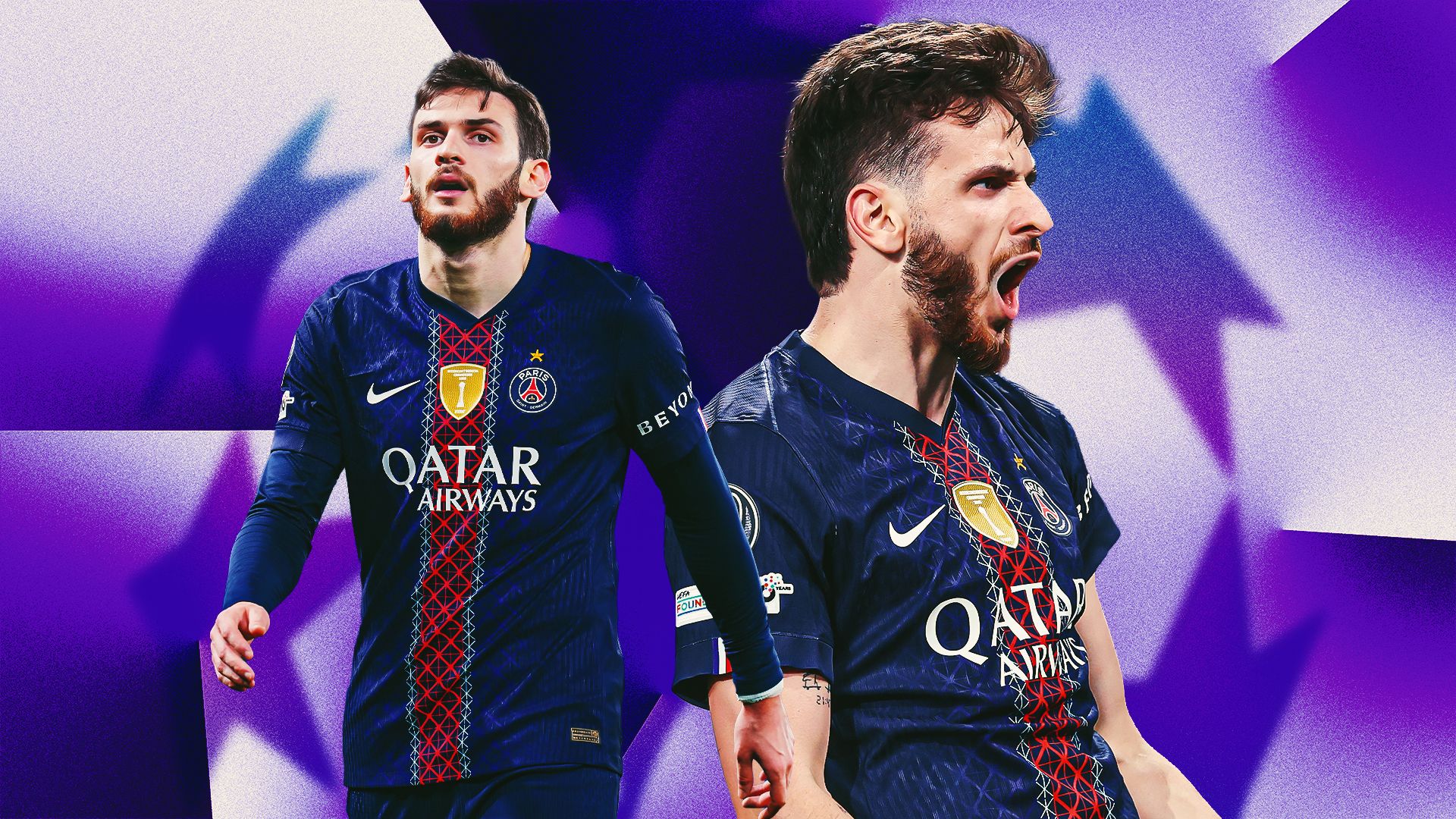
Georgian and PSG winger Khvicha Kvaratskhelia.
Khvicha Kvaratskhelia has been PSG’s main attacking weapon in Europe. He scored 10 Champions League goals and recorded six assists.
He leads PSG in shots taken and shots on target and brings a relentless threat from the flank.
Vitinha, meanwhile, has been the metronomic heart of PSG’s midfield. His 1,553 passes in the competition dwarf Arsenal’s top passer, William Saliba, who has completed 678.
Arsenal’s route to the final has relied on the firepower of Gabriel Martinelli (six goals) and Viktor Gyokeres (five). Declan Rice has created 24 chances more than any other Arsenal player.
And in Kai Havertz, they possess a man who has already scored a Champions League final winner.
Statistical Contrasts: Attack vs Defence
The statistical gulf between the two teams is stark in attack. PSG are ranked No. 1 in the Champions League this season for goals scored (44), total shots (298), shots on target (114), and total passes (9,809). Their passing accuracy stands at 89%.
Arsenal lag far behind, ranking sixth for goals (29), sixth for total shots (209), seventh for passes (6,358), and 13th for pass accuracy (86%).
Yet Arsenal shine defensively. They have conceded only six goals in the competition 36th in the rankings. While PSG have conceded 22, placing them fifth.
This final may pit the tournament’s most dominant attack against its most resolute defence.
Recent Form and Head-to-Head Record
In their last six matches in all competitions, Arsenal have won five and drawn one. PSG have won three, drawn two, and lost one.
In their last six meetings across competitions, the record is perfectly balanced two wins each and two draws.
It is a matchup with no clear psychological edge.