World Cup 2026
France Ends Morocco’s Dream Again But The Atlas Lions Leave As Africa’s Greatest World Cup Generation
On Thursday in Boston, they did it again.
Kylian Mbappe and Ousmane Dembele scored the decisive goals. While Yassine Bounou better known as Bono produced another unforgettable performance that included a remarkable first-half penalty save from Mbappe.
Morocco’s journey is over, but its legacy stretches far beyond this defeat. This generation has transformed African football, raising expectations from simply qualifying for knockout rounds to genuinely competing for the World Cup itself.
Bono Makes World Cup History Despite Morocco’s Exit
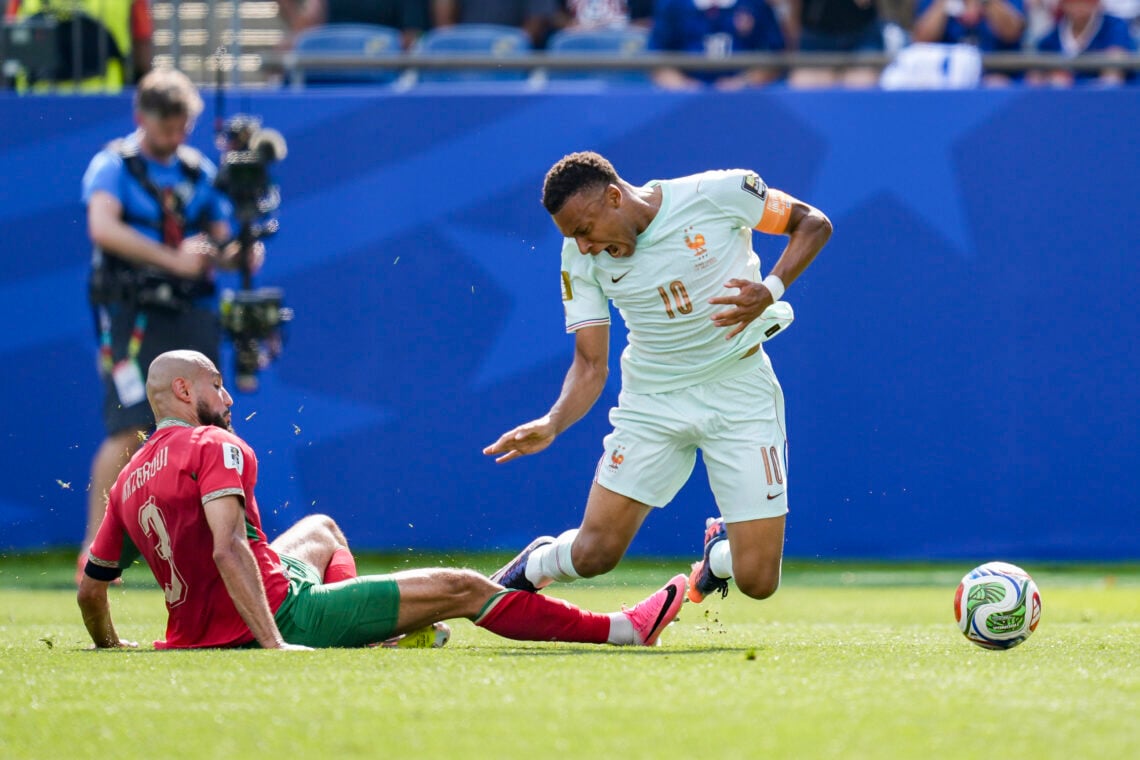
Morocco’s defender Noussair Mazraoui fouling France’s captain Kylian Mbappé inside the penalty box.
If Morocco were to produce another famous upset, Bono was always going to play a central role.
The veteran goalkeeper did everything possible to keep his country alive.
Midway through the first half, Mbappe burst into the penalty area before winning a spot-kick. With seven tournament goals already, the French captain looked certain to give Les Bleus the lead.
Instead, Bono guessed correctly and brilliantly pushed the penalty away.
It was far more than just another penalty save.
The stop took Bono to four penalty saves at World Cups, including shootouts, the highest total by any goalkeeper in the history of the competition.
His overall record is extraordinary. Of the nine penalties he has faced at the World Cup, only two have found the net. Four have been saved, while three have failed to hit the target altogether.
For several minutes after that save, belief spread through the Moroccan supporters inside Boston and millions watching across Africa.
Perhaps history was about to repeat itself. Unfortunately for Morocco, France simply had too much quality.
France’s Tactical Plan Slowly Broke Morocco Down
France dominated almost every statistical category throughout the match.
They produced 13 shots and three clear-cut chances before halftime while Morocco managed only one harmless effort on Mike Maignan’s goal.
Yet Didier Deschamps’ side did not dominate through possession.
Instead, they invited Morocco forward before pressing aggressively in midfield and immediately attacking the open spaces left behind.
That has been France’s blueprint throughout the World Cup 2026. Whenever they recover possession, their pace becomes devastating.
Desire Doue repeatedly drove past defenders, while Mbappe constantly threatened runs behind the Moroccan back line.
Despite Bono’s heroics, Morocco struggled to turn possession into genuine opportunities.
The Atlas Lions used the same disciplined low block that frustrated Brazil earlier in the tournament, but France never lost patience. Eventually, the breakthrough arrived.
Mbappe finished clinically after another devastating transition move before Dembele doubled the advantage using almost the identical formula.
The scoreline reflected France’s superiority, even if Morocco’s determination deserved enormous respect.
Mbappe Reaches a Historic Landmark against Morocco
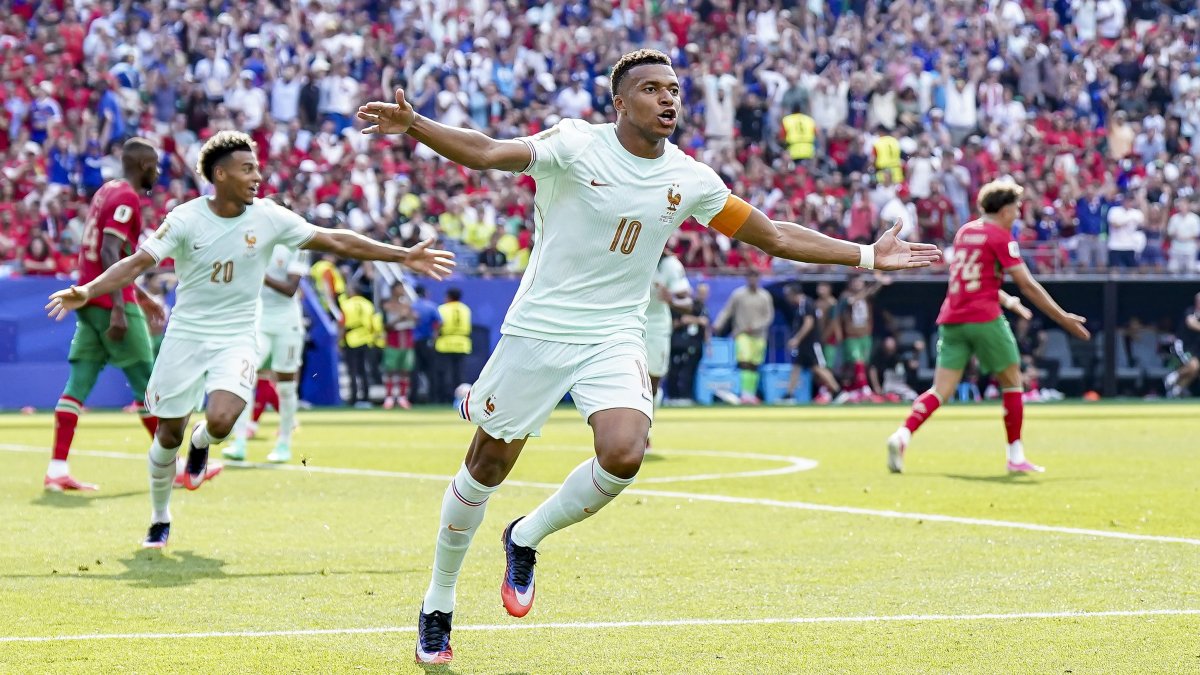
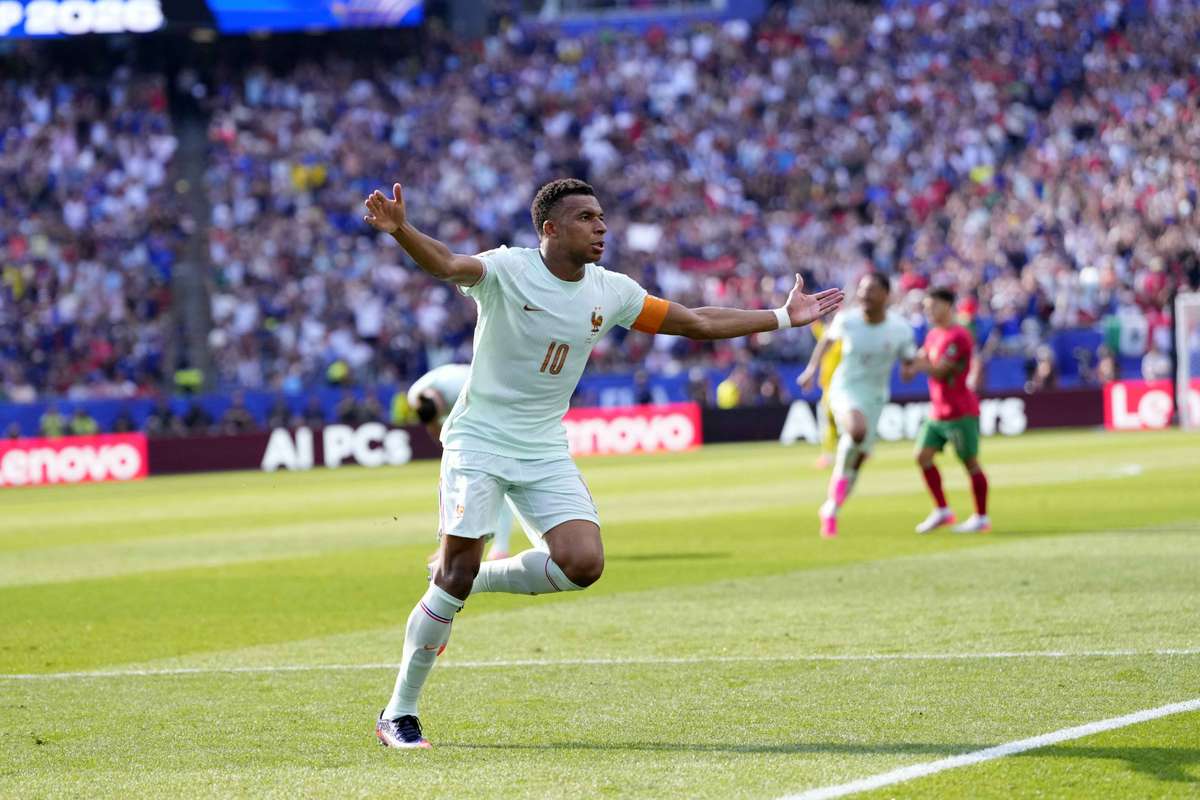
Kylian Mbappé celebrating a goal for France during their 2-0 victory over Morocco in the 2026 FIFA World Cup quarterfinals.
The evening was significant for Kylian Mbappe beyond simply sending France into another semi-final.
His goal made him the first player in French football history to register 100 direct goal involvements for the national team.
His remarkable numbers now stand at:
- 64 international goals
- 36 assists
- 100 total goal involvements
The strike also moved him level with Lionel Messi in the Golden Boot race, adding another fascinating chapter to the tournament’s biggest individual battle.
At only 27 years old, Mbappe continues rewriting French football history almost every time he steps onto the pitch.
His combination of pace, intelligence, and finishing remains the biggest weapon France possesses as they chase another World Cup title.
France Looks Almost Perfect But Spain May Have Found a Weakness
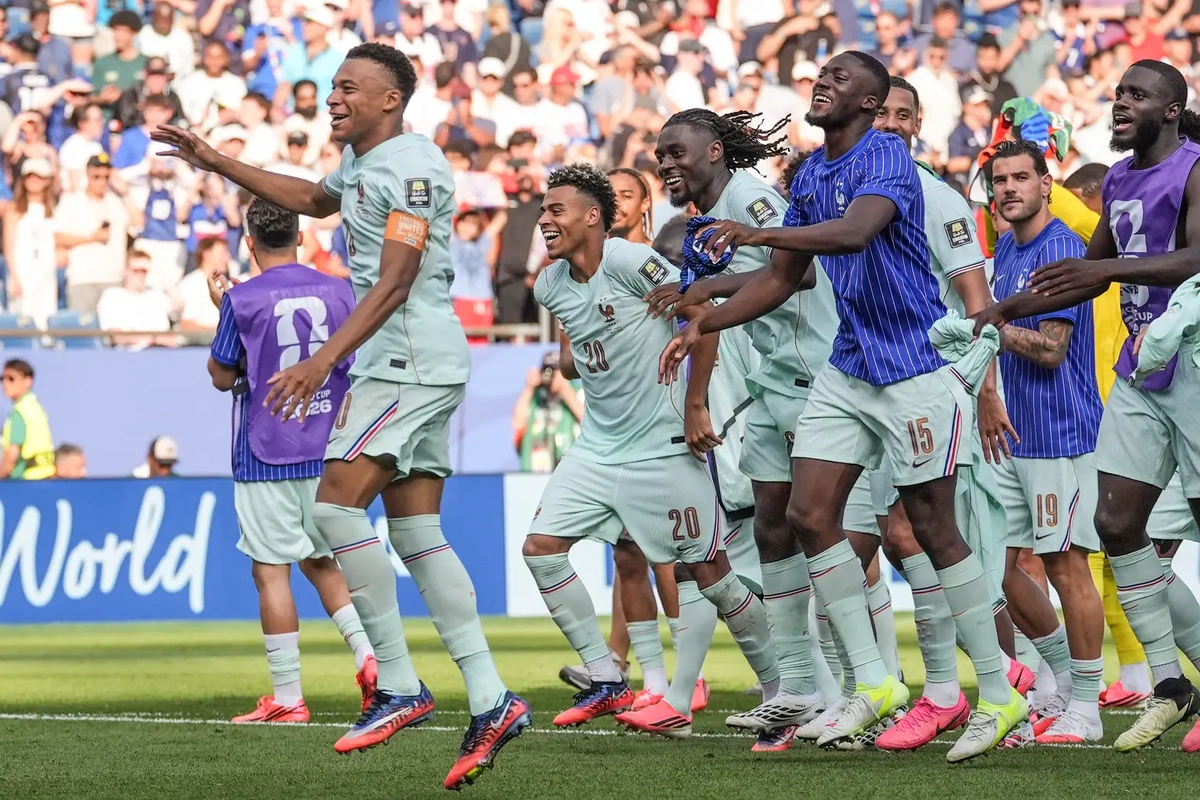
The France national football team celebrates a goal during their 2-0 quarter-final victory against Morocco at the 2026 FIFA World Cup.
France has now reached another World Cup semi-final looking like arguably the strongest team remaining.
Their numbers underline just how dominant they have been. They have conceded only two goals in six matches, kept four clean sheets, lead the tournament in chances created and shots hitting the woodwork, and have held every knockout opponent to 0.7 expected goals or fewer.
Against Morocco, the Atlas Lions created just 0.1 expected goals according to Opta. Those are extraordinary defensive numbers.
However, one potential weakness continues to emerge.
Lucas Digne has replaced Theo Hernandez at left-back after the latter struggled earlier in the tournament.
Digne has improved France defensively, but he lacks the athleticism and physical dominance of Jules Kounde on the opposite side.
Fast, direct wingers capable of isolating him could create problems. Spain, should they meet France next, possesses exactly that profile.
Unlike Morocco, Spain is also comfortable dominating possession, forcing opponents into prolonged defensive phases.
France’s compact 4-4-2 block has rarely been tested by a side capable of controlling midfield for long periods.
There have also been occasional gaps between midfield and defence whenever France retreats into a medium block.
Those spaces have not been punished yet. Spain possesses the technical quality to do exactly that.
Despite appearing almost unbeatable, France is not flawless. France’s tactical quality deserves enormous praise. But Morocco also deserves recognition for another outstanding World Cup campaign.
Morocco’s Brave Approach Falls Short
Mohamed Ouahbi refused to abandon the identity Morocco has built over recent years.
The Atlas Lions defended with discipline, stayed compact, and searched for quick transitions whenever opportunities appeared. For long periods, the plan worked.
Bono’s penalty save kept the match level and Morocco remained organised throughout the first half.
However, the absence of injured Ismael Saibari reduced Morocco’s attacking threat considerably.
Without his pace stretching France’s defence, counter-attacks became easier to contain.
France’s relentless pressure eventually wore Morocco down. Both goals came from exactly the situations Les Bleus wanted winning possession before attacking quickly into open spaces.
Morocco fought until the final whistle, but France rarely looked genuinely uncomfortable once they found their rhythm.
Morocco’s Leave With African Football Forever Changed
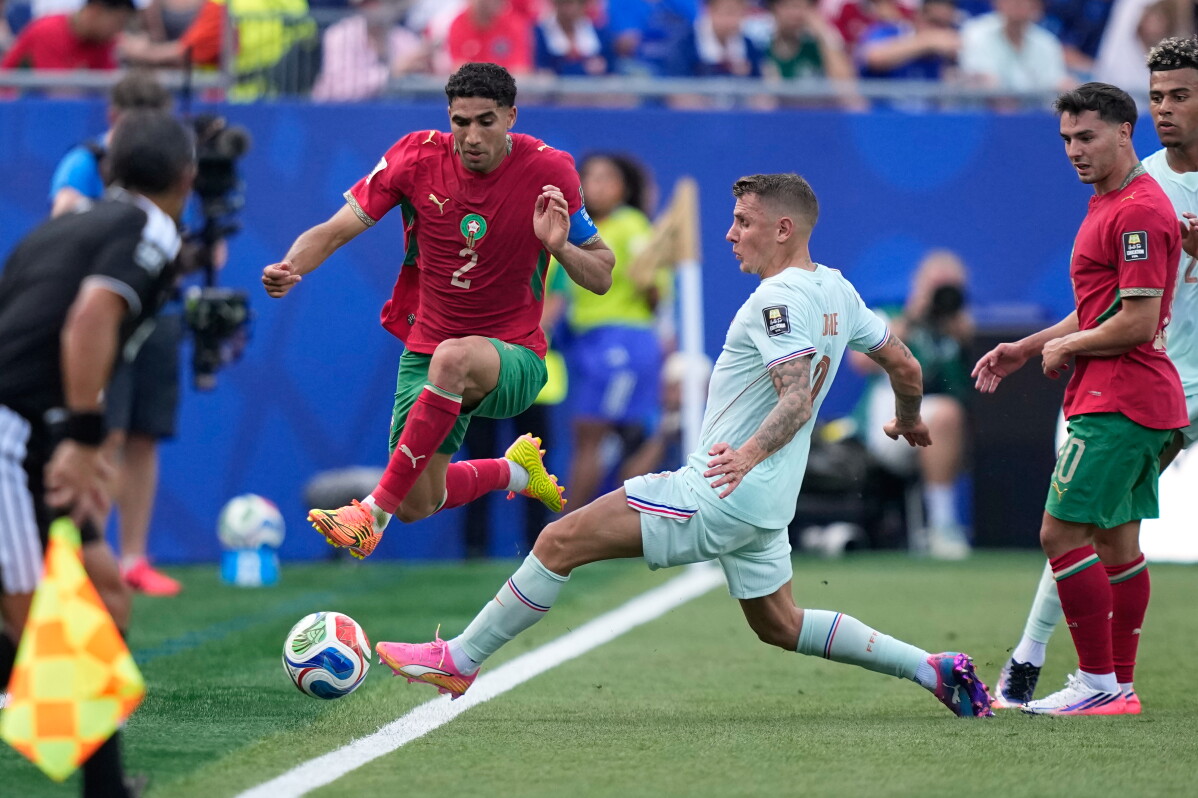
Achraf Hakimi battling for the ball during the FIFA World Cup 2026 quarterfinal match between France and Morocco at Boston Stadium.
Defeat hurts. But it should never define what this Moroccan generation has achieved.
Across two consecutive World Cups, the Atlas Lions have permanently altered expectations for African football.
In 2022 they became the first African nation to reach a World Cup semi-final.
In 2026 they returned to the quarter-finals, proving their previous success was no accident.
Along the way, they eliminated the Netherlands on penalties, beat Canada convincingly, and held Brazil. They also produced another disciplined performance against one of the world’s strongest teams.
Players like Achraf Hakimi, Bono, Brahim Diaz, Azzedine Ounahi, and the emerging Ayyoub Bouaddi have inspired an entire continent.
Perhaps the biggest achievement is psychological. Four years ago reaching the semi-finals felt impossible.
Today, Morocco’s presence in the last eight felt expected. That change in expectation is their greatest legacy.
African football now believes it belongs among the world’s elite.
What Comes Next for Morocco?
Although the tournament ends here, Morocco’s future remains incredibly bright.
Bouaddi continues developing into one of Europe’s most exciting young midfielders. Brahim Diaz remains one of Africa’s most creative players.
Hakimi is still among the world’s best full-backs.
Ouahbi has blended tactical discipline with greater attacking ambition, giving Morocco a foundation capable of challenging again at AFCON 2027 and beyond.
The World Cup dream has not ended.
It has simply been postponed.
Verdict on Morocco
France deserved their place in another World Cup semi-final.
Mbappe reached another historic milestone. Dembele delivered when it mattered.
Bono made history with yet another unforgettable penalty save.
Yet this match should not simply be remembered as another Moroccan defeat.
It should be remembered as the latest chapter in the rise of Africa’s greatest World Cup generation.
Morocco did not lift the trophy. But they changed the way the football world views African teams.
That achievement will outlive any single result.