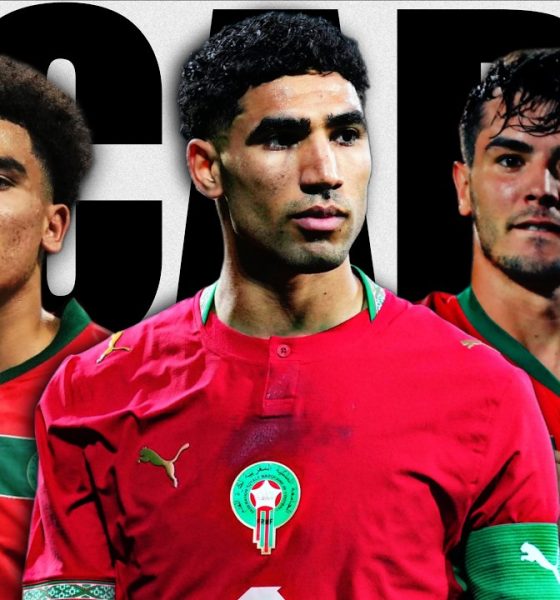
African Football
Morocco’s Football Revolution: How the Atlas Lions Built Africa’s New Football Superpower
For decades, African football searched for a blueprint capable of producing a genuine global powerhouse.
Nigeria had its golden generation. Cameroon conquered Olympic football. Ghana came within a penalty kick of a World Cup semi-final.
Ivory Coast produced legends like Didier Drogba and Yaya Touré. Egypt dominated Africa with three consecutive AFCON titles.
Yet none of those nations managed to build sustained success across every level of football.
Then Morocco changed everything.
The Atlas Lions are no longer simply Africa’s best national team. They have become a football ecosystem admired around the world. From youth development to coaching education, from elite infrastructure to scouting dual-nationality talent.
Morocco has quietly built a model that many European nations now study with respect.
Their remarkable run to the quarter-finals of the 2026 FIFA World Cup following their historic 2022 semi-final appearance proved beyond doubt that their rise is no miracle.
It is a revolution. And perhaps the biggest question African football should now ask is this: If Morocco can build this system, why can’t the rest of the continent?
Morocco’s Football Revolution Didn’t Start in Qatar
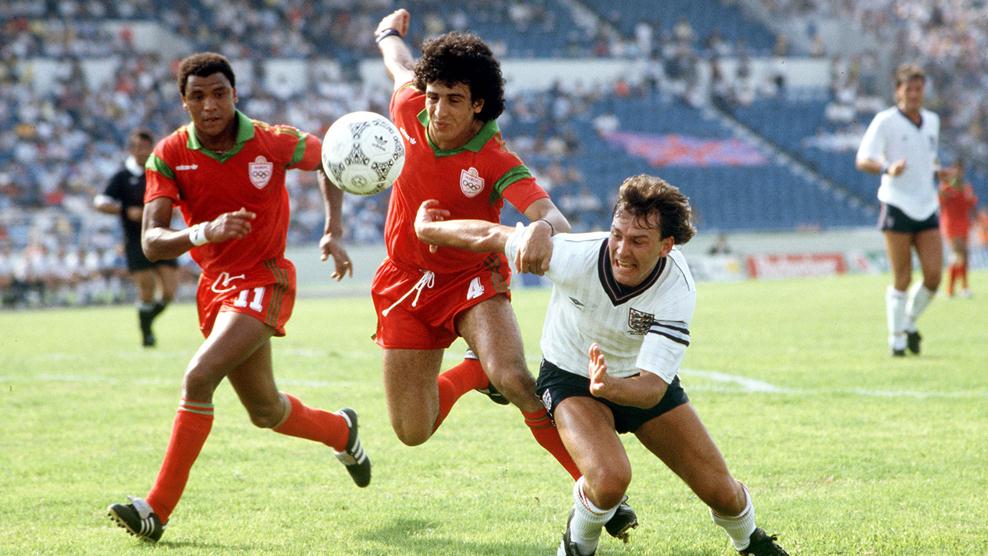
Group F match between England and Morocco at the 1986 FIFA World Cup in Monterrey, Mexico.
Many football fans believe Morocco’s rise began when Achraf Hakimi’s penalty eliminated Spain at the 2022 World Cup.
That moment made headlines. The work behind it started nearly two decades earlier.
Long before Morocco stunned Belgium, Portugal, Brazil and Spain on football’s biggest stages, the Royal Moroccan Football Federation (FRMF) had already accepted an uncomfortable truth.
African football could no longer rely on individual talent alone. The country needed a complete football identity.
Instead of chasing short-term results, Morocco invested in long-term structures.
They modernised coaching education. And they upgraded training facilities. They expanded youth scouting networks. They introduced a consistent playing philosophy across every national age group.
Perhaps most importantly, they stopped treating youth football as an afterthought.
While many African nations continued changing coaches every few years and rebuilding from scratch, Morocco focused on continuity.
That patience is now paying dividends. Today, every Moroccan national team from the Under-17s to the senior Atlas Lions plays with similar tactical principles.
Players grow into the senior side instead of learning entirely new systems every time they receive an international call-up.
That consistency has become one of Morocco’s greatest competitive advantages.
The Mohammed VI Football Academy Changed Everything
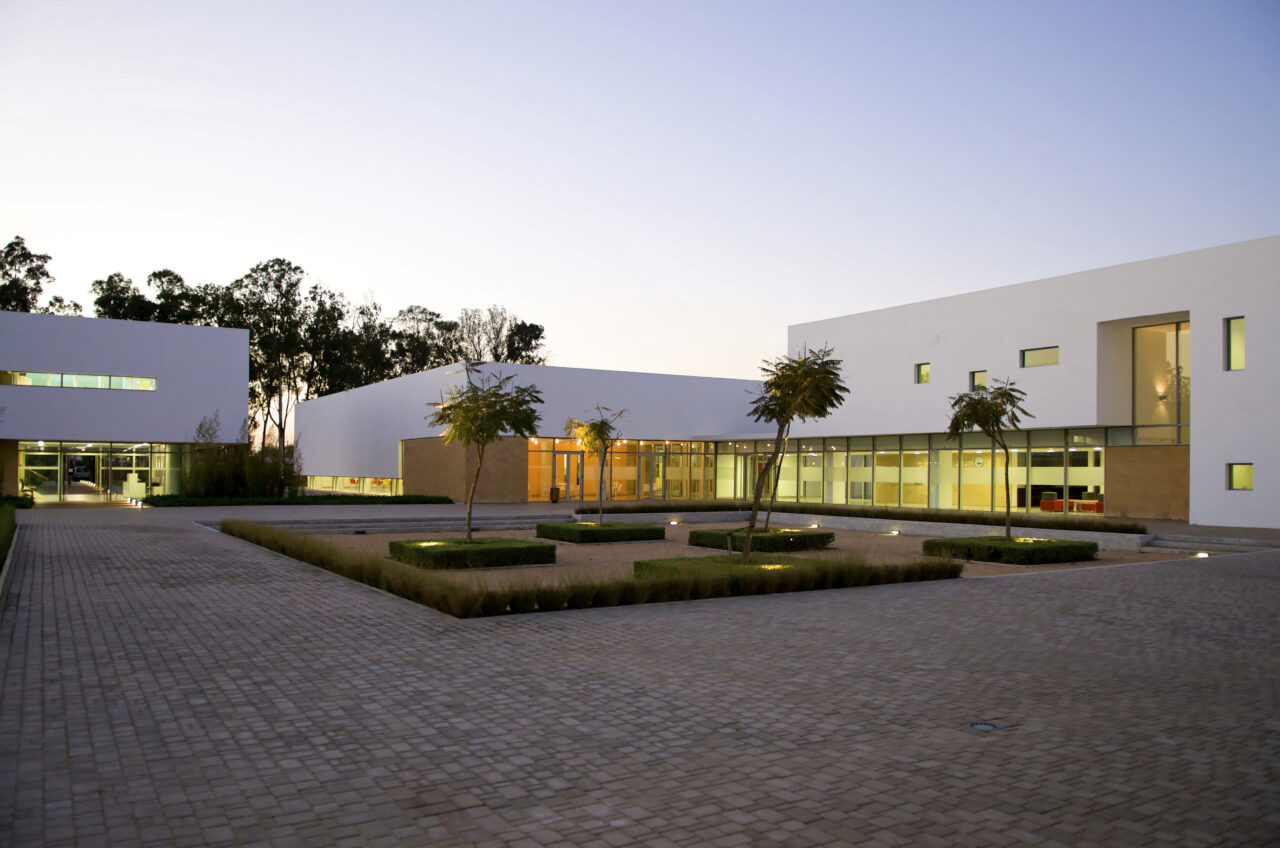
Mohammed VI Football Academy in Salé, Morocco, designed by Groupe 3 Architectes.
Every football revolution has a birthplace. For Spain, it was La Masia. For France, Clairefontaine.
And for Morocco, it is the Mohammed VI Football Academy.
Opened with one clear objective: producing world-class Moroccan footballers, the academy has become one of Africa’s finest talent factories.
Unlike traditional academies that focus solely on football, Morocco’s model combines elite coaching, education, sports science, nutrition, and psychological development.
Young players live in an environment designed to prepare them for professional football from an early age.
The academy has produced or influenced numerous international players and has become a symbol of Morocco’s long-term vision.
Rather than hoping talented youngsters emerge naturally, Morocco actively creates the conditions for excellence.
That philosophy explains why the country continues producing technically gifted players capable of competing immediately at the highest level.
World Cup 2026 offered further evidence. While many African teams depended on experienced veterans, Morocco’s younger generation looked completely comfortable against football’s biggest nations.
That confidence wasn’t accidental. It had been rehearsed for years.
Why Europe’s Best Young Players Keep Choosing Morocco
One of the biggest reasons behind Morocco’s football revolution has nothing to do with stadiums or tactics.
It has everything to do with identity. For years, African nations struggled to convince dual-nationality footballers to represent their countries.
Many talented youngsters born in France, Belgium, Spain and the Netherlands often chose European national teams because they believed those countries offered a better chance of success.
Morocco decided to change that perception. Instead of waiting until players became stars, the Royal Moroccan Football Federation began building relationships with them and their families from a young age.
Federation officials travelled across Europe, met parents, attended youth matches and explained Morocco’s long-term vision.
Players were not simply asked to represent Morocco. They were invited to become part of a project.
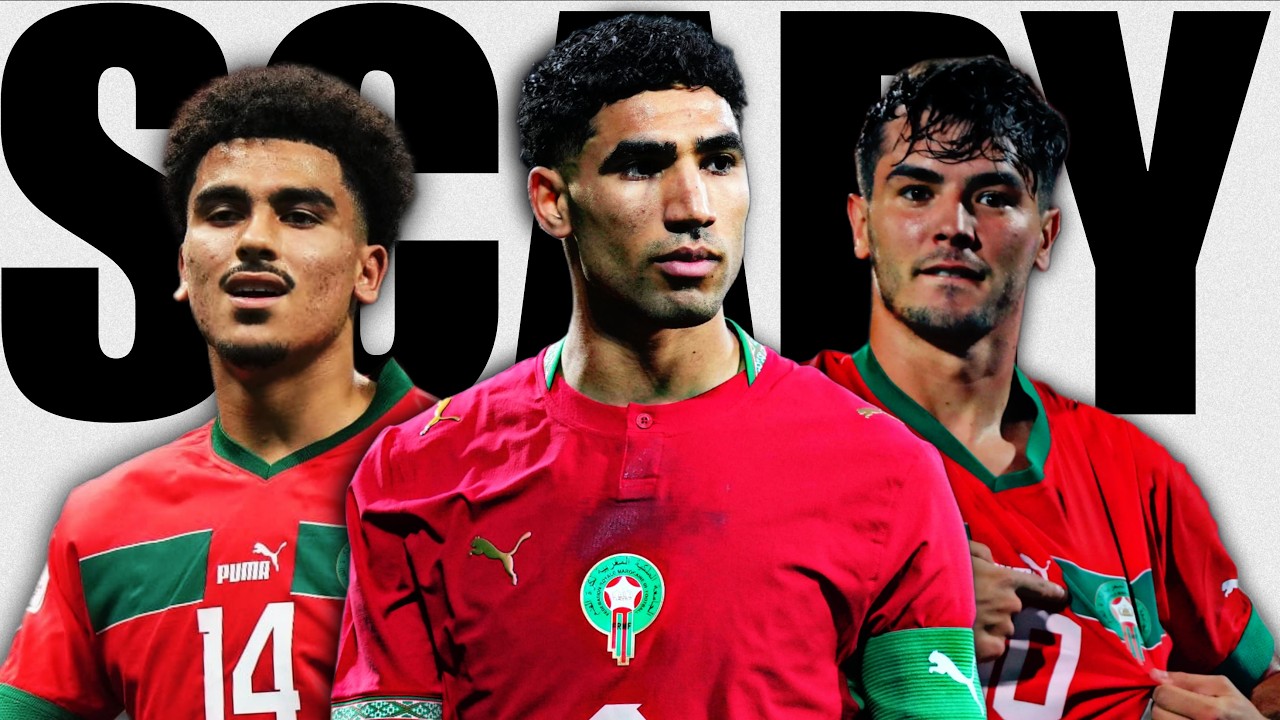
That strategy has transformed the Atlas Lions. Achraf Hakimi, born in Spain. Sofyan Amrabat, born in the Netherlands.
Noussair Mazraoui, also born in the Netherlands. Brahim Diaz, who chose Morocco despite representing Spain at youth level. Now the next generation is following the same path.
Rather than losing elite talent to European nations, Morocco is attracting some of the world’s brightest young footballers.
It is a recruitment strategy few African countries have managed to replicate successfully.
From Hakimi to Bouaddi: Morocco’s Production Line Never Stops
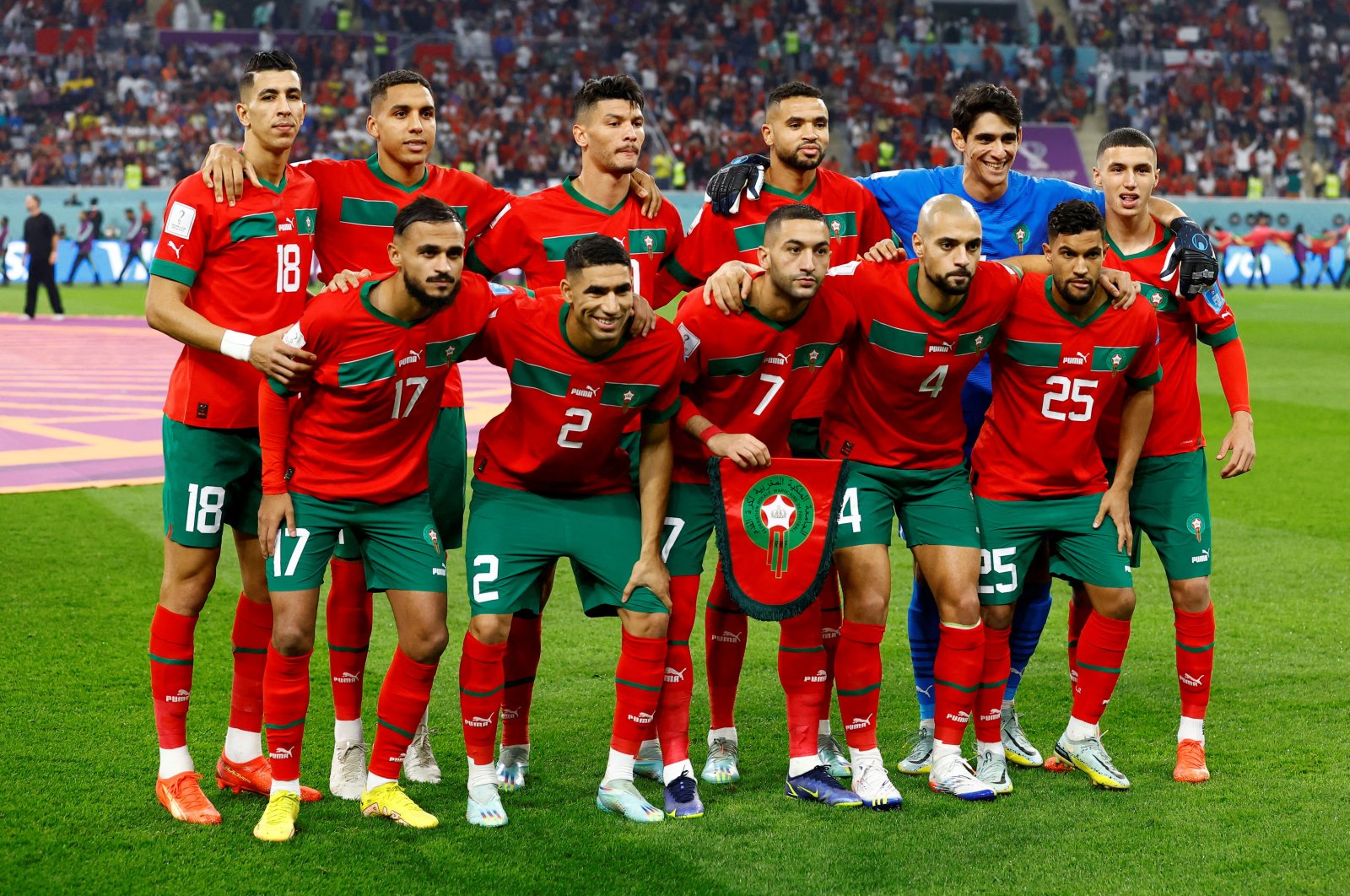
Morocco national football team posing for a group picture. The specific photo was taken during their historic run at the FIFA World Cup Qatar 2022.
Perhaps the greatest compliment anyone can pay Morocco is this: The stars keep changing, but the quality never drops.
That is the hallmark of every football superpower. Spain replaced Xavi and Iniesta with Pedri and Gavi.
France replaced Zidane with Mbappé. Argentina moved from Maradona to Messi.
Now Morocco is beginning to demonstrate the same continuity.
World Cup 2026 introduced a new generation capable of carrying African football for the next decade.
Ayyoub Bouaddi became one of the tournament’s biggest revelations despite being only 18 years old. Calm under pressure, technically exceptional and tactically mature far beyond his years, he controlled games against some of the world’s strongest midfielders.
His performances have reportedly pushed his valuation beyond €100 million, with Europe’s biggest clubs monitoring his future.
Then there is Ismael Saibari. Before World Cup 2026, the Bayern Munich midfielder was already highly respected across Europe. His performances in Morocco’s run to another World Cup quarter-final elevated him into global recognition before his move to Germany’s biggest club.
Meanwhile, players like Bilal El Khannouss, Chadi Riad and several emerging academy graduates continue to strengthen Morocco’s talent pool.
Unlike many nations that rely on one exceptional generation, Morocco appears capable of producing elite footballers year after year.
That should concern every opponent not just in Africa, but around the world.
World Cup 2026 Proved Morocco’s Success Was No Accident
When Morocco reached the semi-finals in Qatar 2022, some critics called it a fairy tale.
Others described it as luck. World Cup 2026 ended those debates forever.
The Atlas Lions once again competed with football’s elite. They opened their campaign by holding Brazil to a thrilling draw before comfortably navigating one of the tournament’s toughest groups.
Their penalty shootout victory over the Netherlands demonstrated composure under enormous pressure. While an emphatic victory over Canada showed the attacking quality that had sometimes been questioned during Qatar 2022.
Eventually, only France managed to stop Morocco’s remarkable journey, winning 2-0 in a fiercely contested quarter-final.
Losing to one of Europe’s traditional giants is hardly a failure.
If anything, it confirmed Morocco now belongs among football’s elite. More importantly, they achieved another deep World Cup run with a squad that looked younger, deeper and technically stronger than the one that shocked the world four years earlier.
That is what separates a golden generation from a football revolution. Golden generations disappear.
Systems continue producing talent. Morocco now possesses the latter.
As Africa looks ahead to AFCON 2027 and the 2030 FIFA World Cup, which Morocco will co-host, the Atlas Lions are no longer chasing history.
They are setting the standard every other African nation is now trying to reach.
The Next Step: Can Morocco Build a Dynasty?
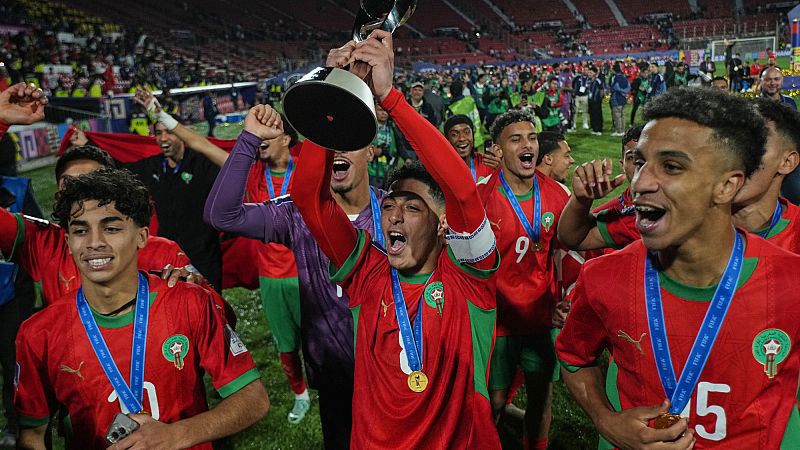
Morocco under-20 national football team is celebrating its historic victory at the 2025 FIFA U-20 World Cup.
Winning once can be explained as a golden generation. Reaching consecutive FIFA World Cup quarter-finals cannot.
That is why Morocco’s football revolution now enters its most important phase. The challenge is no longer proving that African football can compete with the world’s elite. The challenge is staying there.
Spain did not become world champions overnight. France did not dominate international football by relying on one talented generation.
Both countries built systems that continually produced elite players, coaches and winning teams.
Morocco now has the opportunity to follow that blueprint. The Mohammed VI Football Academy continues to produce exceptional talent. While Moroccan clubs have invested heavily in youth development, scouting and sports science.
The country’s decision to co-host the 2030 FIFA World Cup alongside Spain and Portugal provides another incentive to keep investing in football infrastructure.
The success of the men’s national team has also transformed how young Moroccans view football. Children across Casablanca, Rabat, Tangier and Marrakech now grow up believing they can compete with Brazil, France and Argentina instead of simply admiring them from afar.
That psychological shift may become the greatest legacy of Morocco’s revolution.
What Other African Nations Can Learn
Morocco’s rise offers valuable lessons for every African federation.
The first lesson is that infrastructure matters. Elite academies, qualified coaches, nd modern training facilities create better footballers than short-term solutions.
The second lesson is the importance of a clear football identity. Every Moroccan youth team plays with similar tactical principles, making progression to the senior side much smoother.
The third lesson is embracing the African diaspora rather than viewing it as a complication. Morocco successfully convinced players raised across Europe that representing the Atlas Lions was both an honour and an opportunity.
Finally, patience is essential. The federation did not abandon its long-term project after disappointing tournaments or managerial changes.
Instead, it trusted the process, knowing sustainable success cannot be built overnight.
Countries such as Nigeria, Ghana, Senegal, Ivory Coast and Egypt all possess enormous talent. Morocco has demonstrated that talent alone is not enough. It must be supported by planning, investment and consistency.
Verdict: Morocco Didn’t Change African Football by Accident
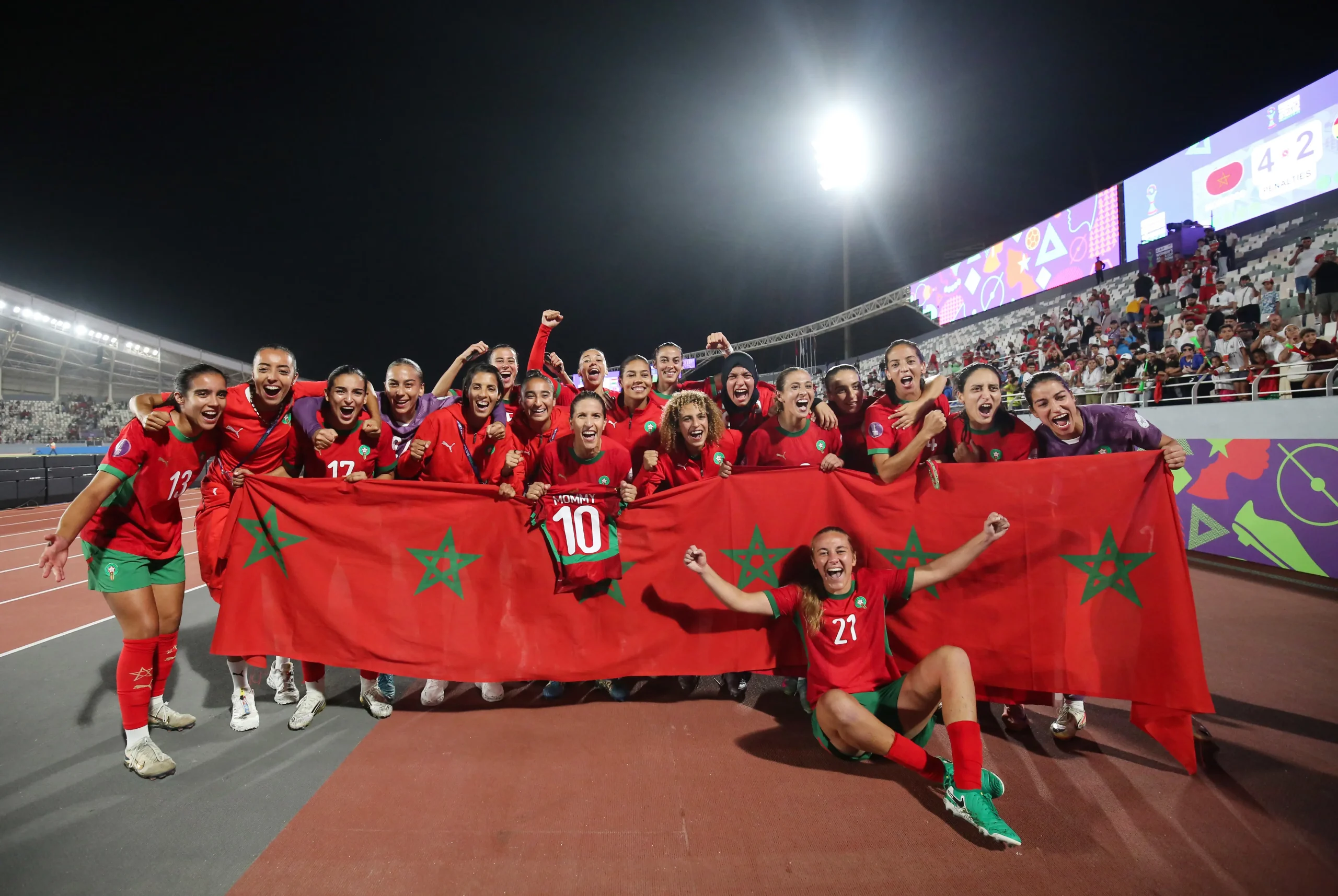
Morocco women’s national football team celebrating their dramatic victory against Ghana in the semi-finals of the Women’s Africa Cup of Nations (WAFCON).
Morocco’s football revolution is no longer just a remarkable story; it is a proven model for African success.
From the establishment of the Mohammed VI Football Academy to strategic investment in infrastructure, diaspora recruitment and coaching development. Every major achievement has been the result of deliberate planning rather than good fortune.
The Atlas Lions have now reached consecutive World Cup quarter-finals, defeated some of the world’s biggest football nations and inspired millions across Africa to believe that competing for football’s biggest prizes is no longer impossible.
The real victory, however, extends beyond Morocco itself.
Every African federation now has a blueprint showing that long-term investment can transform a nation from occasional participants into genuine contenders on the global stage.
The question is no longer whether Africa can produce world-class football teams.
Morocco has already answered that. The next question is whether the rest of the continent is prepared to follow their example.