African Football
Nigeria’s Super Falcons Have Fallen: How Africa’s Greatest Women’s Team Lost Its Way
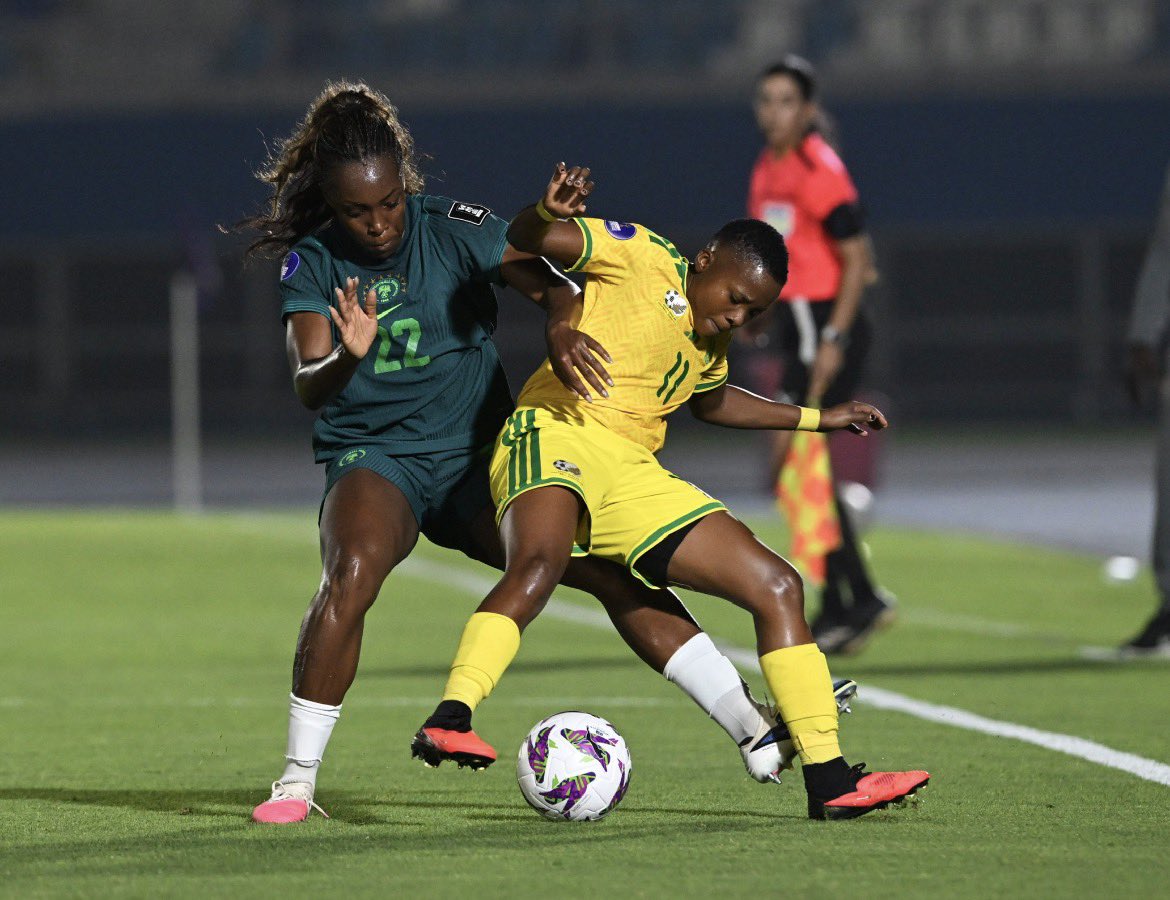
Nigeria’s Super Falcons have fallen. For the first time in their history, Nigeria will not be at a FIFA Women’s World Cup after South Africa defeated them 2-1 in the WAFCON 2026 play-off in Rabat.
The final whistle did not simply end another tournament. It ended a record.
For decades, Nigeria had been the one constant in African women’s football. Ten WAFCON titles. Every previous Women’s World Cup. Generations of stars. A reputation built over more than three decades.
Now that reputation has been shattered.
South Africa scored through Thembi Kgatlana and Refiloe Jane before Christy Ucheibe pulled one back in stoppage time. But Nigeria could not find the second goal required to keep their World Cup dream alive.
There was no dramatic comeback. No late miracle. No escape route.
For the first time, the Super Falcons will watch the Women’s World Cup from home.
And the hardest truth for Nigerian football is this. The rest of Africa did not suddenly become better than Nigeria. Nigeria stopped being far enough ahead.
The Super Falcons Record That Nobody Thought Would End
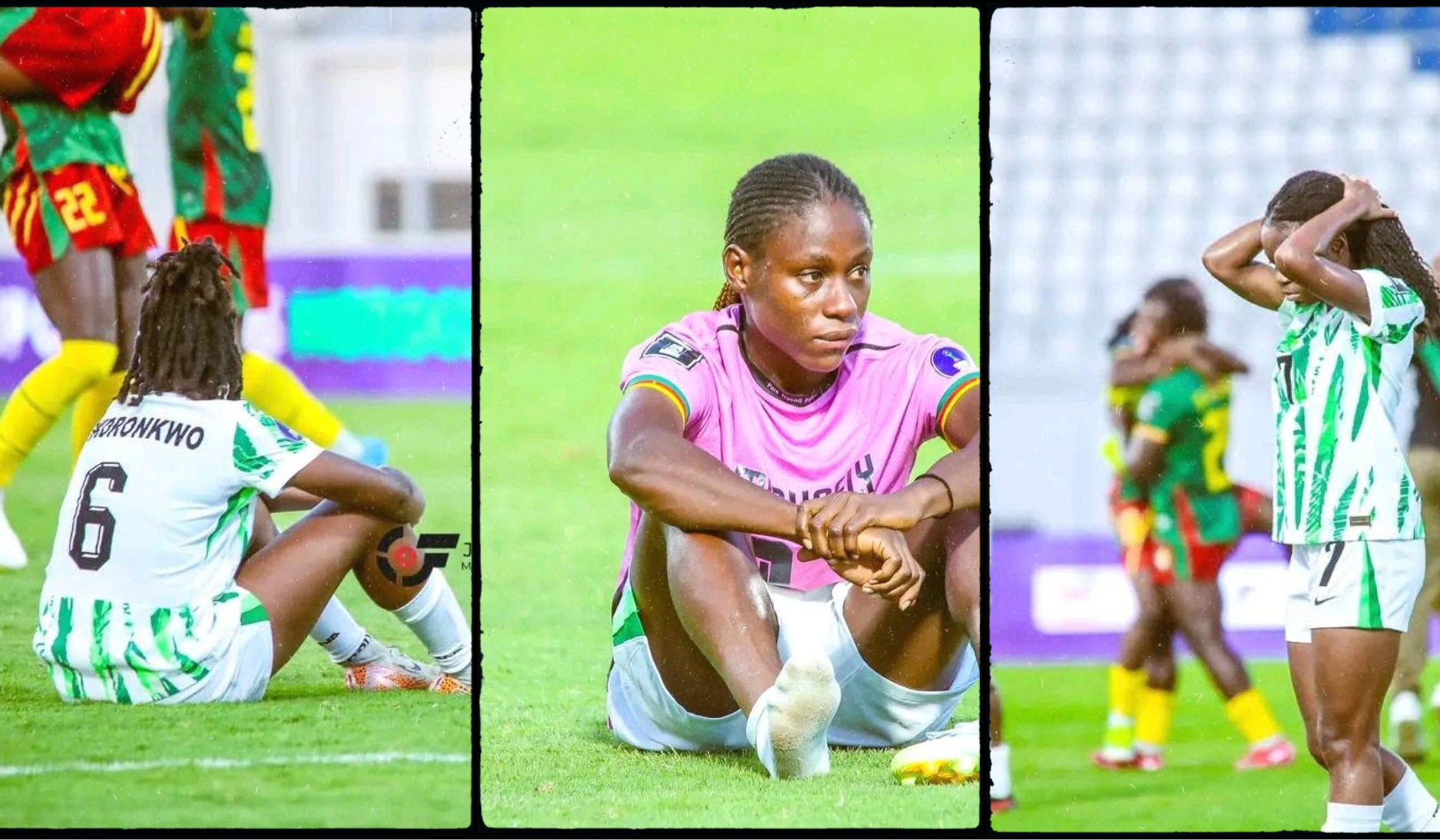
Esther Okoronkwo and her Super Falcons teammates were visibly heartbroken after Nigeria’s 1-0 defeat to Cameroon in the quarter-finals of the 2026 Women’s Africa Cup of Nations on August 9, 2026.
There was a time when discussing Nigeria at a Women’s World Cup was not really a question. The Super Falcons would be there.
Whether they were African champions or not, Nigeria had become the continent’s permanent representative on the world’s biggest women’s football stage.
That consistency created something rare in international sport: expectation. Nigeria were not simply qualifying. They were expected to qualify.
They were expected to win WAFCON.
And they were expected to produce the next generation of African stars.
They were expected to compete with the world’s best. And that expectation was built on evidence.
Nigeria has won a record number of WAFCON titles and spent decades establishing themselves as the benchmark for women’s football in Africa.
That is why this failure hurts differently. A team like Malawi reaching a first World Cup would be historic.
A team like South Africa qualifying after their recent rise is confirmation of progress.
Nigeria missing out is something else entirely. It represents the collapse of an assumption that had existed for generations.
The assumption that Nigeria would always find a way. This time, they did not.
South Africa Did Not Steal Nigeria’s World Cup Place; They Earned It
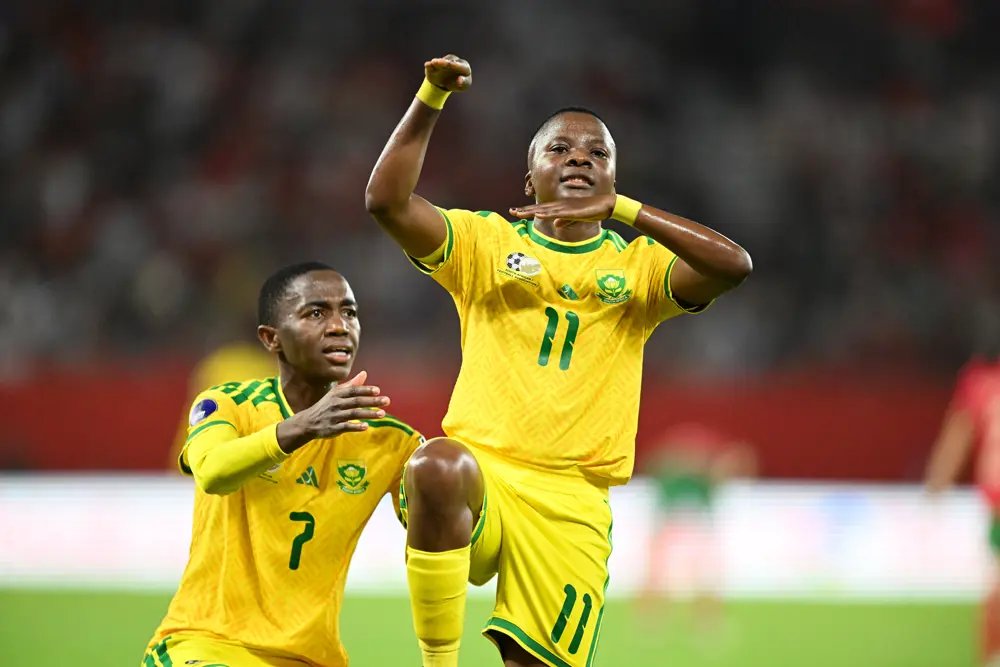
Banyana Banyana striker Thembi Kgatlana (number 11) performs her signature celebration after scoring a crucial goal for the South Africa women’s national football team, alongside midfielder Karabo Dhlamini (number 7).
The immediate reaction in Nigeria will inevitably focus on disappointment. Some will blame finishing, and some will blame the manager.
Some will blame player selection. Others will blame federation administration. All of those conversations have a place.
But there is another truth Nigerian football must accept. South Africa were good enough to win.
Thembi Kgatlana opened the scoring after the break before Refiloe Jane doubled Banyana Banyana’s advantage.
Nigeria responded through Christy Ucheibe deep into stoppage time, but the comeback arrived too late. For South Africa, this was not simply a famous victory.
It was confirmation of a transformation that has been taking place for years. Banyana Banyana won the 2022 WAFCON.
They reached the knockout stage of the 2023 Women’s World Cup. They have developed a core of players who understand what it takes to win important matches.
And now they have eliminated Nigeria from the 2027 World Cup. That last achievement carries enormous symbolic weight.
South Africa are no longer chasing Nigeria.
They have started taking Nigeria’s place in the conversation. That is the real warning.
The Super Falcons Still Have Elite Players
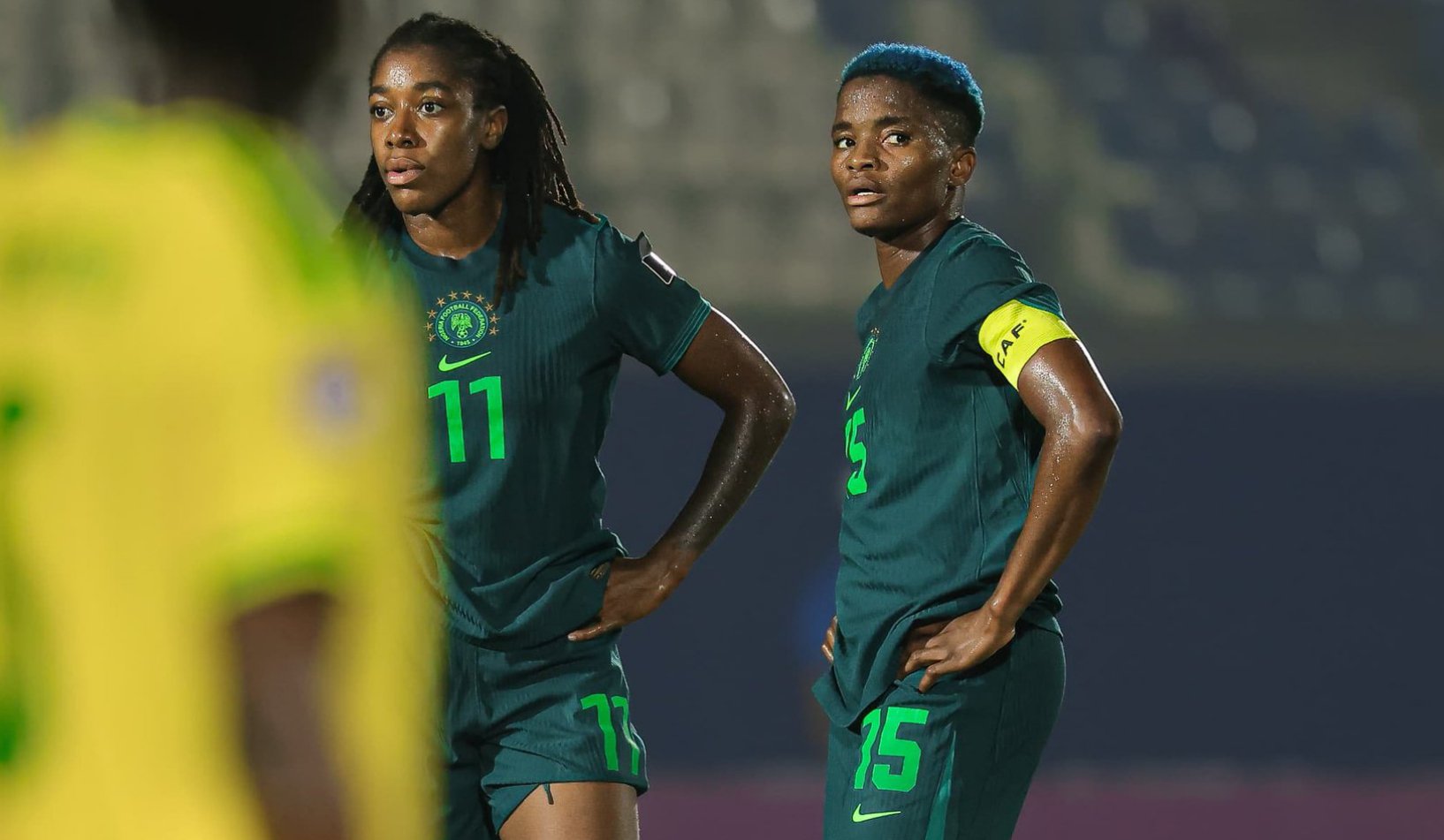
Super Falcons players’ reaction after the 2-1 defeat against South Africa’s Banyana Banyana in Morocco during the World Cup play-offs. Image used for Sportxparte news.
It would be wrong to look at Nigeria’s failure and conclude that the country suddenly lacks football talent.
It does not. Rasheedat Ajibade remains one of Africa’s most talented attacking players.
Chiamaka Nnadozie has established herself as one of the continent’s leading goalkeepers. Michelle Alozie has experience in top-level football.
Jennifer Echegini has the technical qualities required to compete internationally. Esther Okoronkwo has shown she can decide major matches.
Asisat Oshoala remains one of the most decorated African women’s footballers of her generation.
And Nigeria continues to produce talented players through domestic football, international academies and the diaspora.
So the problem cannot simply be talent. That explanation is too easy.
The more uncomfortable question is why a country with this much individual quality is no longer converting that talent into consistent team success.
That leads directly to the structure surrounding the players.
Nigeria’s Super Falcons Problem Is Bigger Than the Coach
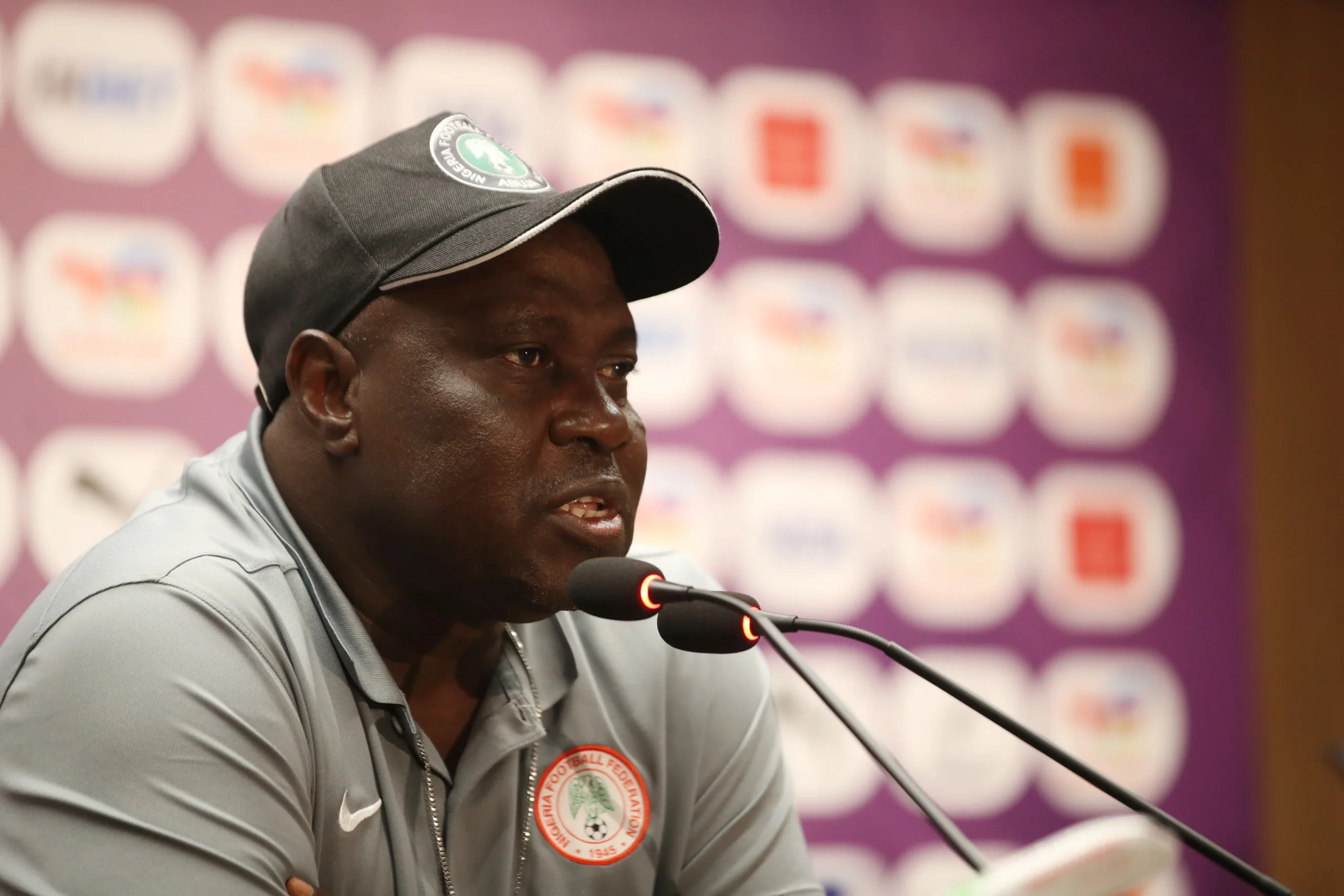
Official press imagery of Nigeria Women’s National Football Team head coach Justin Madugu during the CAF Women’s Africa Cup of Nations (WAFCON) campaign.
Justin Madugu will inevitably face criticism after this failure. That criticism is part of international football. Coaches are judged by results.
But replacing one coach and declaring the problem solved would be the easiest and least useful response. The issues around the Super Falcons are bigger than one tactical system.
Nigeria needs to ask difficult questions about preparation, player development, squad selection, domestic competition, coaching pathways and federation administration.
Why is Nigeria producing world-class individuals without consistently producing a world-class team?
And why does the national team sometimes look tactically disconnected despite having players who understand elite football?
Why are important tournaments repeatedly surrounded by debates about preparation and organisation?
Why does Nigeria continue to rely so heavily on the brilliance of individual players?
Those questions have existed for years. The World Cup failure simply makes them impossible to ignore. The worst response would be another temporary solution.
Nigeria cannot rebuild the Super Falcons every time a major tournament goes badly. There needs to be a long-term football plan.
Africa Has Changed, And Super Falcons Has Not Changed Fast Enough
This may be the biggest lesson of all.
Nigeria’s old dominance was built during an era when the number of serious African women’s football programmes was much smaller. That world no longer exists.
South Africa have invested heavily in women’s football. Morocco have developed rapidly, reaching consecutive WAFCON finals and becoming a major continental force.
Zambia have produced players capable of challenging the best. Ghana remain a historic power. Cameroon continue to develop technically gifted players.
Malawi have now gone from WAFCON debutants to finalists. The competition has become deeper.
That is excellent for African women’s football. But it is uncomfortable for Nigeria.
For decades, Nigeria could afford a mediocre tournament preparation and still have enough individual talent to survive.
That margin has disappeared. Other countries are investing. Other countries are professionalising.
Now, other countries are developing better tactical structures.
Other countries are building players specifically for elite women’s football. Nigeria can no longer depend on history.
The Chawinga Sisters Show the New African Reality
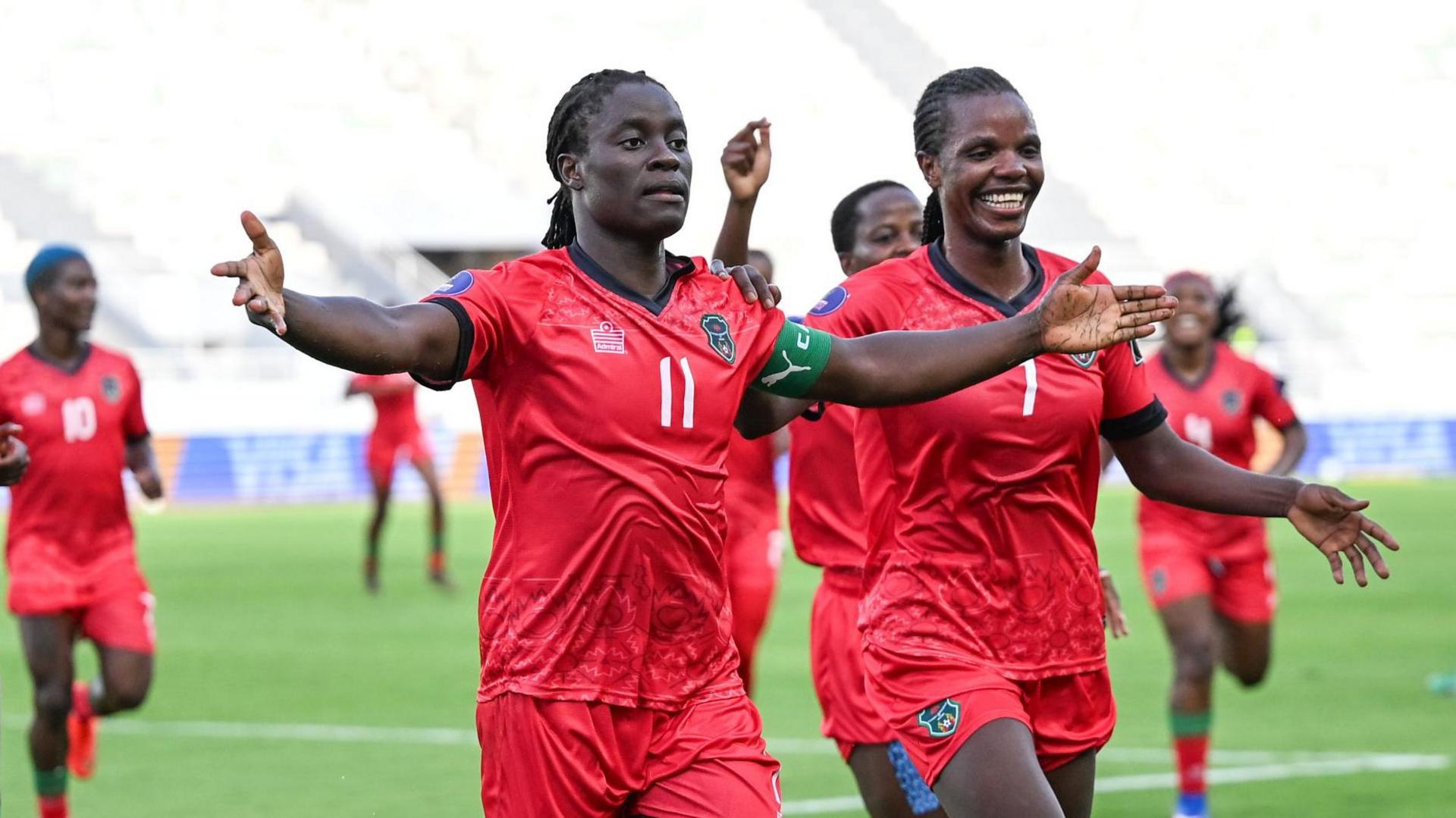
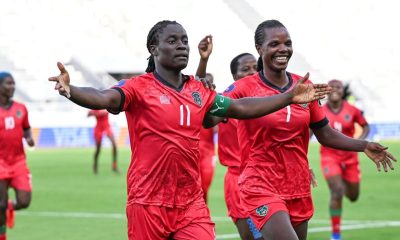
Tabitha Chaŵinga (left, wearing jersey number 11) is celebrating alongside her sister Temwa Chaŵinga (right, captain’s armband). They are representing the Malawi women’s national football team (popularly known as the Scorchers) during their historic, fairytale run at the 2026 Women’s Africa Cup of Nations (WAFCON).
Malawi’s WAFCON success provides another example of why Nigeria’s old dominance cannot be taken for granted.
The Chawinga sisters have become symbols of Malawi’s rise, but their importance goes beyond their individual talent.
They are evidence of what happens when a national team develops a system that understands how to maximise its best players. Malawi entered the tournament as outsiders.
They leave it as finalists and World Cup qualifiers. That is precisely the kind of story Nigerian football should study.
Not mock. Not dismiss. Study.
Because the question should not be:
“How did Malawi get so far?”
It should be:
“What did Malawi do that Nigeria Super Falcons did not?”
That is how serious football institutions respond to failure.
Nigeria’s Diaspora Advantage Is Becoming a Missed Opportunity
Nigeria has another advantage that relatively few African countries possess. Its diaspora.
Nigerian players are developing in England, the United States, France, Germany, Spain and other major football countries.
Some have Nigerian eligibility. And also some have represented other nations.
Some are still deciding. The Super Falcons need to become more strategic about this talent pool.
This is not about convincing every player with Nigerian heritage to represent Nigeria. It is about identifying elite talent early enough to build genuine relationships.
International women’s football is becoming increasingly competitive. Player development begins earlier.
National teams are scouting younger. Countries are becoming more aggressive about dual-national recruitment.
Nigeria cannot wait until a player becomes globally famous before making contact. The country must build a sophisticated diaspora scouting and development network.
Because if Nigeria possesses one thing that could help it rebuild quickly, it is the enormous amount of Nigerian football talent developing outside the country.
Chiamaka Nnadozie And the Pressure of Being Nigeria’s Super Falcons Last Line
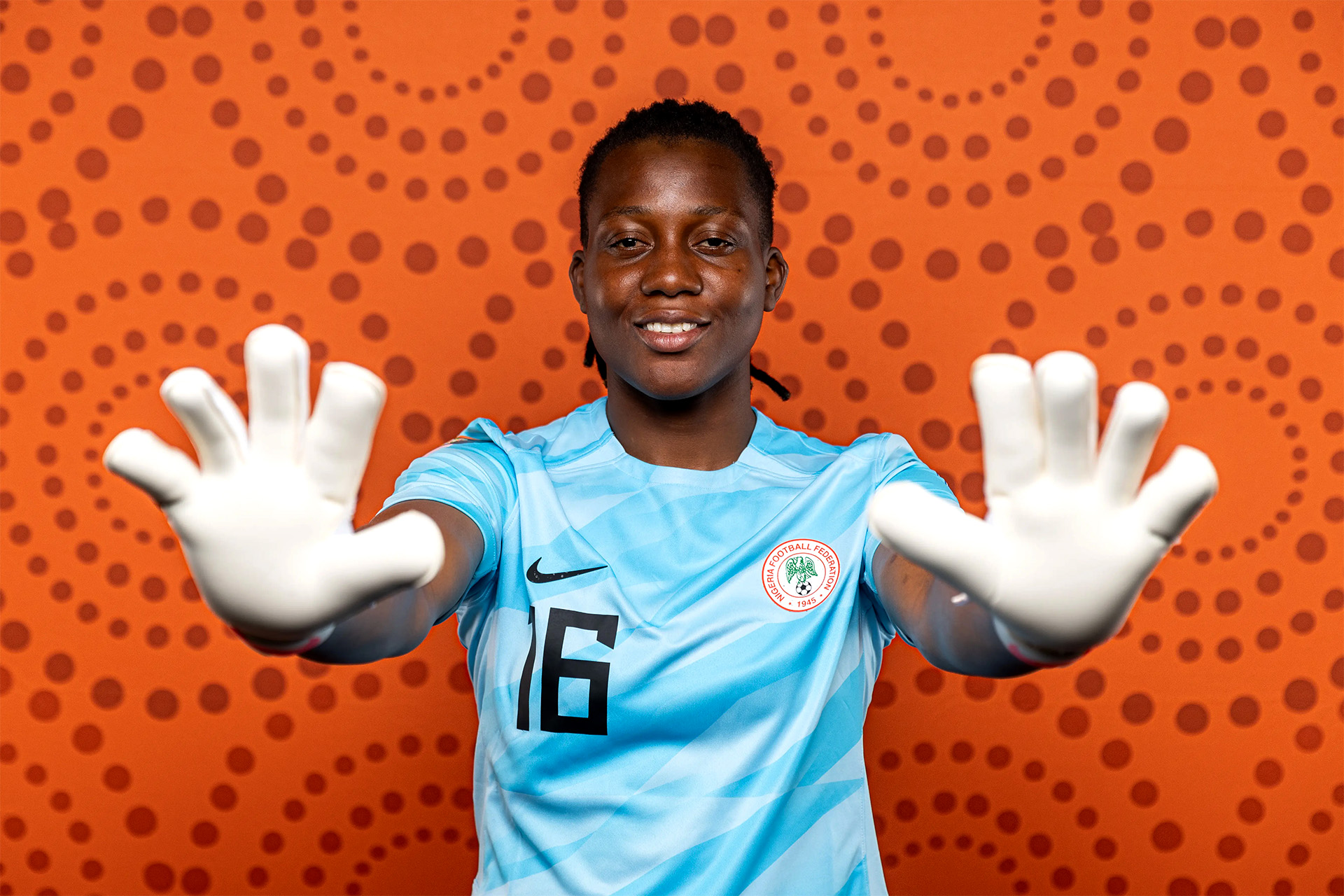
Chiamaka Nnadozie, Nigeria women’s national football team goalkeeper, smiling in her blue jersey and white gloves.
Nnadozie deserves particular attention because goalkeeping reflects one of the biggest psychological pressures surrounding this team.
The Super Falcons have increasingly depended on her to rescue difficult moments. That is what elite goalkeepers are supposed to do.
But a goalkeeper cannot permanently compensate for structural problems.
Nnadozie’s experience, athleticism and shot-stopping ability make her valuable.
However, when a team repeatedly allows matches to become desperate, the goalkeeper ends up carrying too much responsibility.
Nigeria’s future team must not simply ask:
“How do we replace Nnadozie?”
It should ask:
“How do we make sure the next Nnadozie has less to do?”
Defensive organisation begins with the entire team. Pressing. Midfield protection.
Spacing. Transition defence. Set-piece organisation. These are collective responsibilities.
A goalkeeper should be the final safety net, not the entire insurance policy.
The Oshoala Generation Cannot Carry Nigeria Super Falcons Forever
Asisat Oshoala has been one of the defining figures in African women’s football. Her career changed perceptions of what an African women’s footballer could achieve.
She played at some of Europe’s biggest clubs. She won major honours.
And she became a global African football icon. But Nigeria’s future cannot depend on asking Oshoala’s generation to save every tournament.
That is not fair to them. It is not sustainable. And it is not how successful national teams remain successful.
The Super Falcons now need to build the next generation around players who are entering their prime.
Ajibade. Echegini. Okoronkwo. Monday. Alozie.
And the next group of players currently developing outside the senior national-team spotlight.
Nigeria’s challenge is to create a smooth transition rather than waiting for the old generation to disappear before starting the rebuild.
What Nigeria Super Falcons Should Do Next
There should be no panic. But there must be urgency.
The NFF should conduct a full review of the women’s national-team programme.
Not a superficial press conference. A genuine technical review.
The review should examine coaching, player development, preparation, medical support, scouting, domestic competitions and the relationship between the NFF and professional players abroad.
Nigeria also needs a clearer tactical identity. The best African teams increasingly know exactly how they want to play. South Africa can press.
Morocco can control possession and build patiently. Zambia can transition at speed.
Malawi know how to maximise their runners. Nigeria still too often appear dependent on individual moments.
That cannot remain the plan. The Super Falcons need a recognisable identity that survives changes in personnel.
The Most Important Question Is What Happens Before 2031
The temptation after missing a World Cup is to focus entirely on the next qualification campaign. Nigeria should think bigger.
The aim should not simply be to qualify for the next tournament. The aim should be to rebuild a programme capable of competing consistently for another decade.
That means investing in youth football. It means improving domestic women’s competitions. And it means developing coaches.
It means strengthening scouting. It means creating better links between clubs and the national team.
And also, it means treating women’s football as a permanent strategic priority rather than a tournament-specific project.
Nigeria has enough talent to do this. What it needs is enough organisation.
The Verdict: The Super Falcons Did Not Collapse in One Night
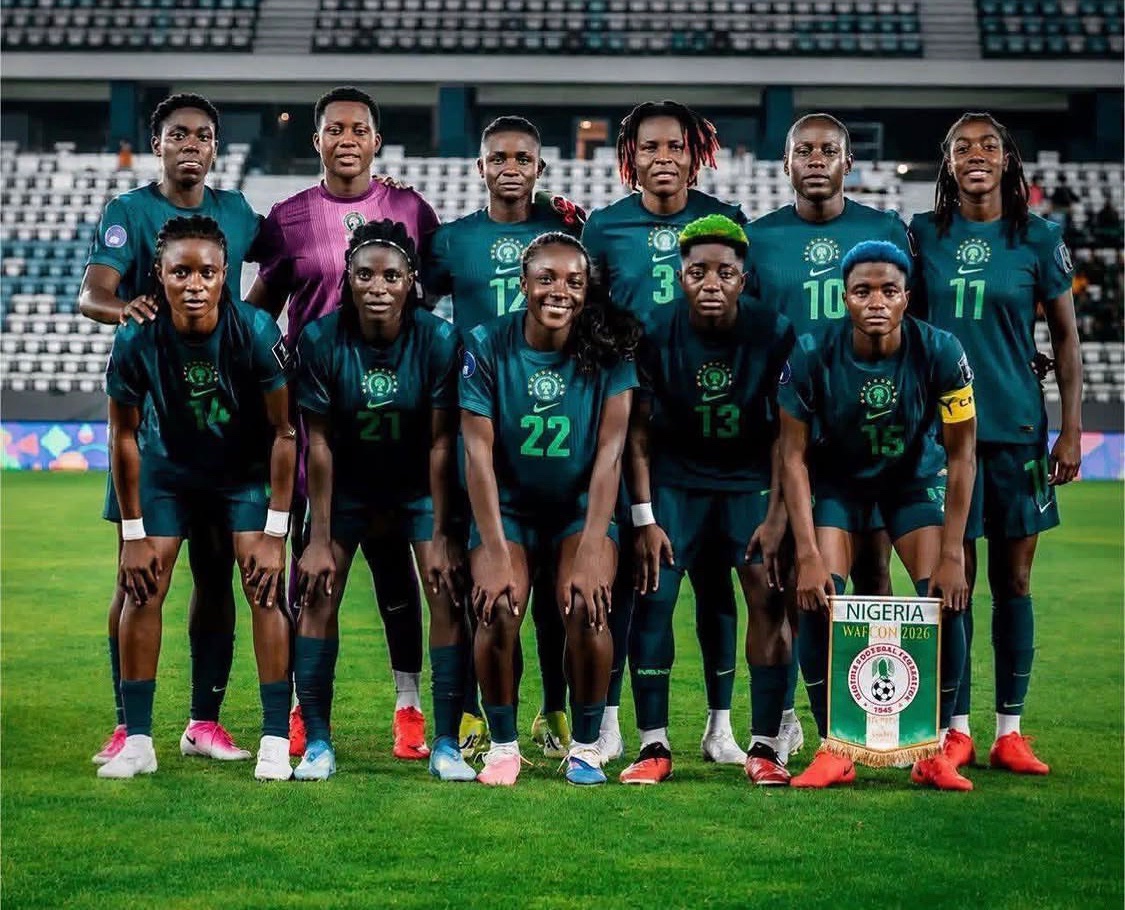
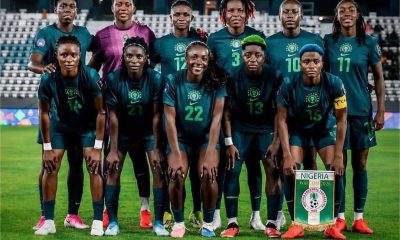
Nigeria women’s national football team, nicknamed the Super Falcons, wearing their 2026 kit featuring 10 stars on the badge.
Nigeria’s Super Falcons’ failure to qualify for the 2027 Women’s World Cup is devastating.
But blaming everything on the 2-1 defeat to South Africa would miss the point. The real failure developed over years.
While Nigeria relied heavily on its historical advantage, other African countries invested, improved and caught up.
South Africa eventually overtook them. Morocco challenged them. Zambia threatened them. Malawi shocked everyone.
The gap is gone. That should hurt Nigerian football. But it should also motivate it.
The Super Falcons are not finished. Nigeria still has extraordinary players.
It still has one of the deepest talent pools in Africa. It still has the history. And it still has the supporters. What it no longer has is the luxury of assuming that history will win the next match.
That may ultimately be the most valuable lesson from this disaster.
Nigeria did not lose its place in African women’s football because South Africa suddenly became unbeatable. It lost its place because the rest of Africa stopped waiting for Nigeria to remain dominant.
The Super Falcons have fallen.
Now Nigeria has to decide whether this is the end of an era or the beginning of the next one.