News
Did Africa Save Gianni Infantino? Inside The FIFA Crisis Meeting That Kept Him In Power
Did Africa save Gianni Infantino? That question now sits at the centre of football’s latest political crisis after FIFA’s leadership emerged from an emergency meeting in Rabat, Morocco, publicly united behind its embattled president.
Infantino had faced mounting criticism over the abandoned FIFA Forward Enterprise proposal. This plan would have transferred a 20% stake in a newly created World Cup commercial-rights company to private investors.
The backlash was not simply about money. It was about who controls the world’s most valuable football competition. Why FIFA’s 211 member associations were not properly consulted, and whether one president had accumulated too much authority.
European opposition grew louder. Several national federations reconsidered their support. Concacaf officials called for FIFA’s governance to be reviewed.
Even parts of Asia, traditionally regarded as friendly territory for Gianni Infantino, criticised the lack of consultation surrounding the commercial proposal.
Yet when FIFA’s senior executives met in Rabat, the outcome was not Infantino’s resignation. It was a declaration of loyalty.
That raises a deeper issue for African football. Europe may dominate the sport financially, but it cannot control FIFA elections alone.
In a one-country, one-vote system, the ballot of Nigeria, Ghana, Liberia or Malawi carries the same formal weight as England, Germany or France.
Infantino’s survival therefore cannot be understood only through UEFA’s anger. It must also be examined through Africa’s growing political importance and the relationship FIFA has carefully developed with the continent.
FIFA Confirms Gianni Infantino Will Stay After the Rabat Crisis Meeting
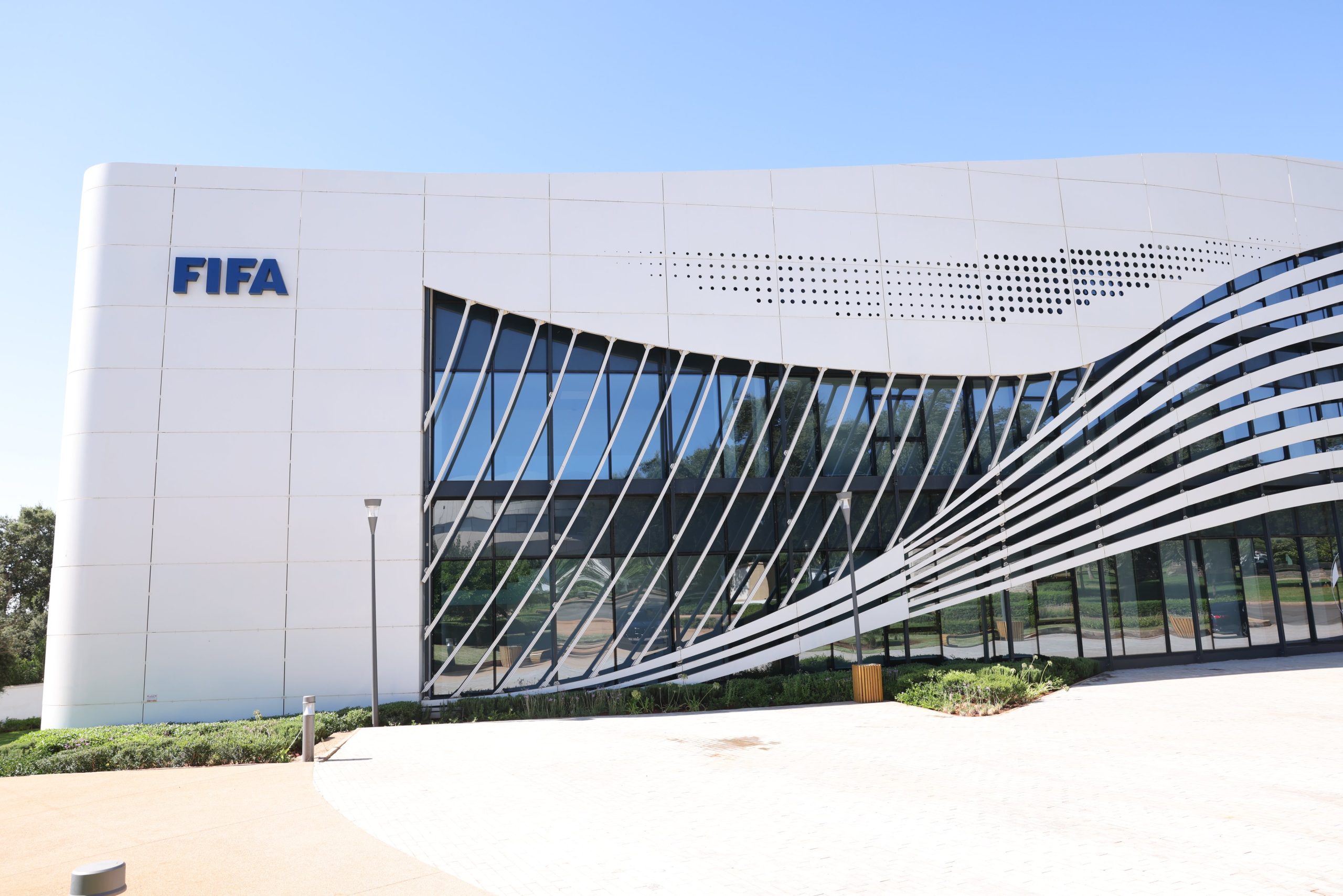
FIFA regional headquarters building with modern white architecture and wave design at the Mohammed VI Football Complex in Rabat, Morocco.
FIFA confirmed on Wednesday night that Gianni Infantino would remain as president following talks involving senior members of the organisation’s administration in Rabat.
Infantino spent the day meeting FIFA secretary general Mattias Grafström and chief legal officer Emilio García Silvero as criticism intensified over the organisation’s handling of the proposed World Cup commercial sell-off.
In its statement, FIFA said the secretary general and management-board members present had reaffirmed their “full support” for Infantino, describing him as the only FIFA official directly elected by the organisation’s 211 member associations.
Infantino, in return, expressed his support for Grafström and FIFA’s administration, praising their work in delivering his vision for the organisation.
The statement was carefully written to project reconciliation. FIFA acknowledged that its internal processes, communications and interactions required improvement.
It also claimed that the Rabat meeting would strengthen governance, restore confidence and allow the organisation to prepare for future events in a united and transparent manner.
That language matters. FIFA did not admit that its entire governance model had failed. Instead, it treated the crisis largely as a problem of communication, consultation and administrative process.
The organisation’s position was effectively that mistakes had been made but that those mistakes did not justify removing the president.
Infantino also sent written apologies to FIFA Council members and all 211 member associations for failing to involve them adequately in the commercial proposal.
But an internal review is unlikely to end the political argument. FIFA’s critics are not only demanding better communication.
They are asking whether the president should have been able to advance such an important proposal without broader approval in the first place.
The World Cup Sell-Off Was About More Than Commercial Rights
The abandoned FIFA Forward Enterprise proposal would reportedly have sold a 20% stake in a new commercial company connected to FIFA’s major competitions.
For FIFA’s critics, the central concern was not simply private investment. Modern football already relies heavily on broadcasters, sponsors, investment funds and commercial partners.
The controversy came from the scale of the asset involved and the limited consultation surrounding it.
The World Cup is not an ordinary commercial product. It is the economic foundation of FIFA’s global power. Revenue generated by the competition funds tournaments, administrative operations and development programmes across the world.
For many African federations, FIFA funding is especially significant. Some national associations lack the domestic sponsorship, television income, infrastructure and government support enjoyed by wealthier football nations.
That means any restructuring of World Cup commercial rights could eventually affect African football directly.
Who receives the revenue?
Who decides how it is distributed?
Would private investors demand greater returns?
Could development funding become more dependent on commercial priorities?
These were questions that FIFA’s member associations deserved to examine before any deal was advanced.
Infantino’s apology therefore acknowledges something serious: the countries whose football systems depend heavily on FIFA were not properly included in a decision involving the organisation’s most valuable commercial asset.
The crisis also exposed the contradiction at the heart of Infantino’s FIFA. His leadership has repeatedly promoted inclusion, global development and the empowerment of smaller football nations.
Yet this proposal appeared to move forward without giving those same nations sufficient influence over the process.
Why Africa May Be Gianni Infantino Political Firewall
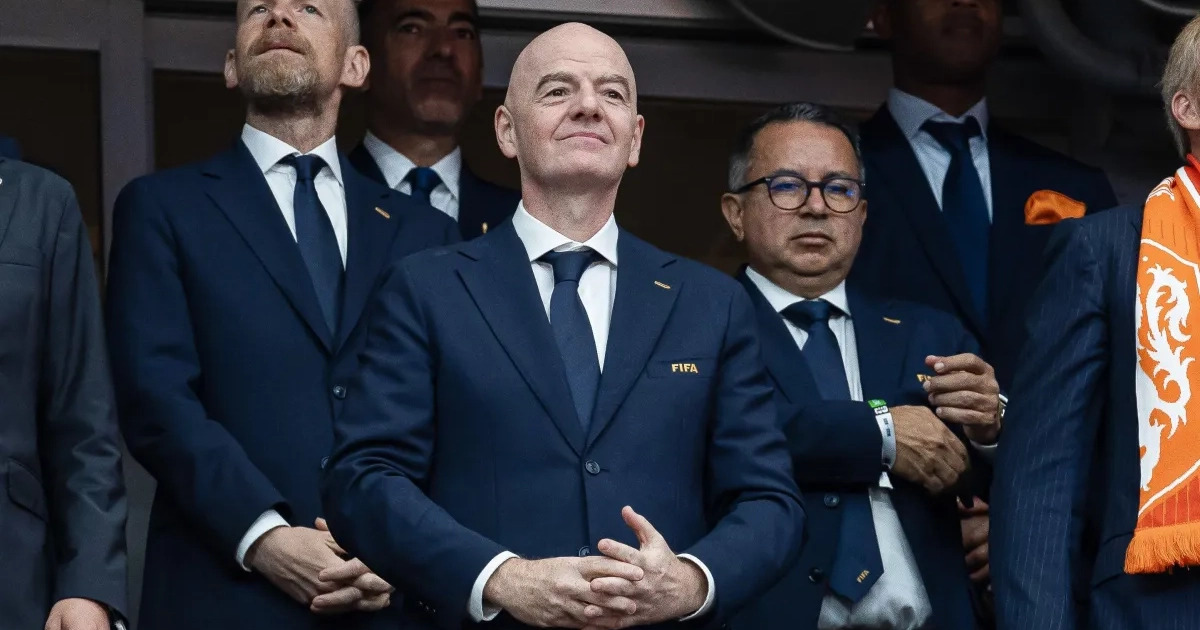
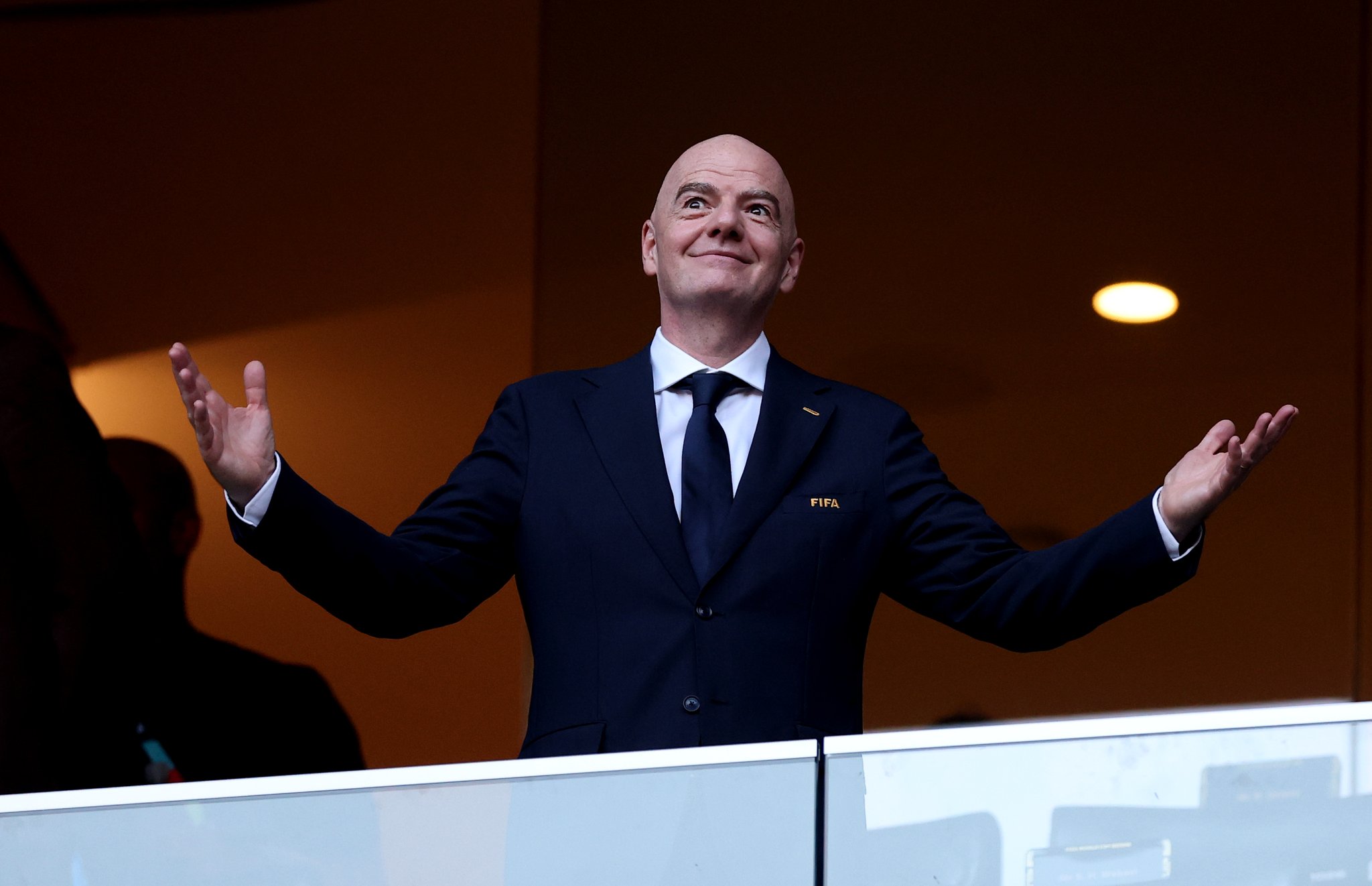
FIFA President Gianni Infantino and Football Delegates
UEFA remains the richest and most commercially powerful confederation in world football.
However, Europe controls only 55 of FIFA’s 211 national-association votes.
That is nowhere near enough to remove a president or determine a FIFA election without support from other regions.
Africa, through CAF, has 54 member associations. As a voting bloc, it is almost equal to UEFA.
Add support from parts of Asia, the Caribbean and Oceania, and European opposition can be politically contained.
This is why Africa matters so much to Gianni Infantino.
Since becoming FIFA president, he has built a close relationship with African football’s leadership. He has repeatedly attended CAF events, promoted FIFA development programmes and supported an expanded World Cup that gives Africa more qualification places.
His presidency has also coincided with Morocco’s rise as a major centre of football diplomacy. Morocco hosted the crisis meeting and is scheduled to host the next FIFA presidential election in Rabat.
The symbolism is difficult to ignore. At the height of a revolt led mainly by European officials, Infantino went to Africa to demonstrate that his administration remained intact.
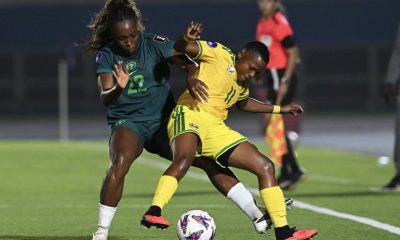
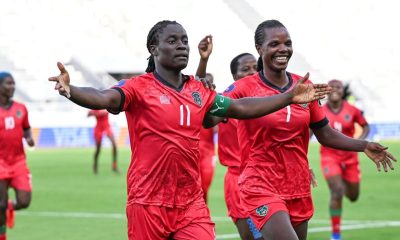
He and Grafström also appeared together at the Women’s Africa Cup of Nations match between Malawi and Zambia. The appearance served as a public display of unity after reports of internal strain.
None of this proves that CAF’s 54 associations have already committed themselves to Infantino. African football is not politically uniform, and individual federations may take different positions.
However, the available political arithmetic is clear: Infantino does not need unanimous support across world football. He needs a winning coalition. Africa remains one of the largest and most valuable components of any such coalition.
In that limited but important sense, Africa may be functioning as his political firewall.
What Has African Football Received During Gianni Infantino Presidency?
African support for Infantino should not automatically be dismissed as blind loyalty.
There are strategic reasons many federations may consider his presidency beneficial.
The expansion of the men’s World Cup increased Africa’s guaranteed representation. That means more African countries can qualify, more players can compete on the global stage and more national federations can benefit financially from tournament participation.
FIFA Forward funding has also supported football infrastructure, technical development, women’s football and administrative projects across the continent.
Morocco has become increasingly influential and will co-host the 2030 World Cup alongside Spain and Portugal. African football has also received greater rhetorical recognition within FIFA’s global-development agenda.
These developments give Infantino a compelling political message when speaking to African administrators: under his leadership, the continent has received more places, more funding and more visibility.
But African supporters should separate symbolic access from structural power.
More World Cup places are important. Development money is valuable. Regular presidential visits create a sense of inclusion.
Yet genuine influence means being consulted before major decisions, not simply receiving an apology after a proposal collapses.
If Africa’s votes are essential to Infantino’s survival, then African federations should demand more than ceremonies, grants and promises.
They should demand enforceable transparency, independent oversight, stronger representation in major commercial decisions and clear guarantees concerning the future distribution of World Cup revenue.
Europe’s Revolt Exposes the Limits of Its Football Power
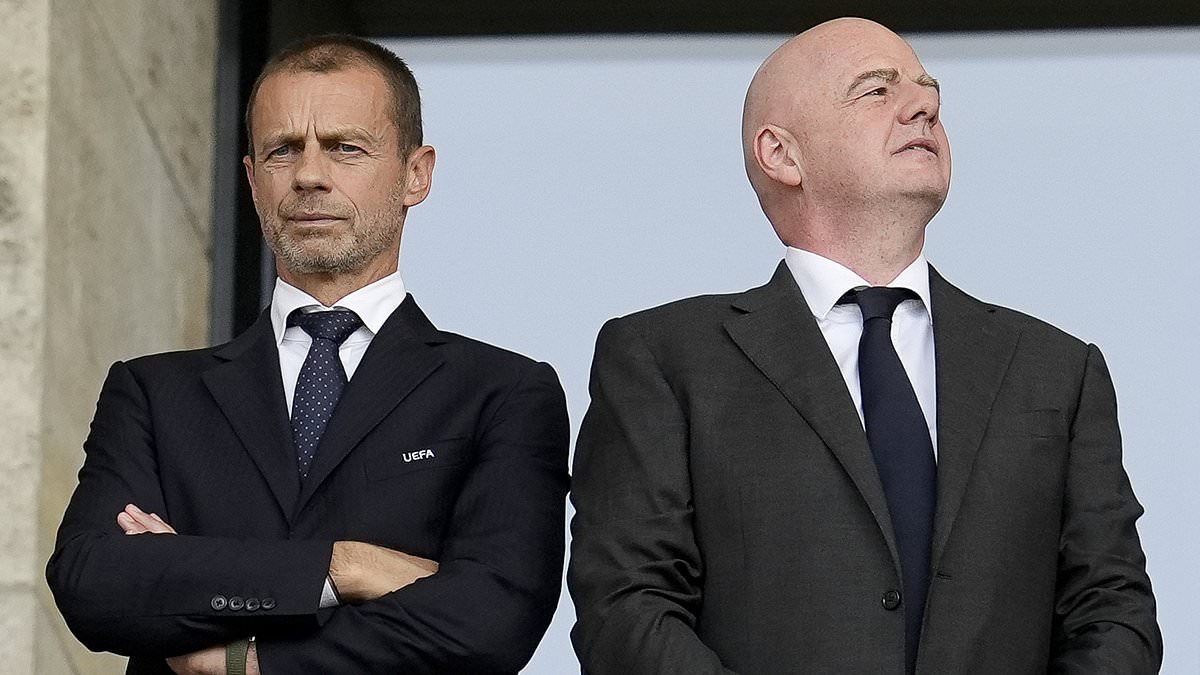
UEFA President Aleksander Ceferin (left) and FIFA President Gianni Infantino (right) amid escalating tensions and UEFA’s boycott of FIFA tournaments.
UEFA’s continued search for a candidate to oppose Infantino demonstrates that the crisis is not over.
European federations possess the most valuable leagues, clubs, broadcasters and sponsors. They supply a large proportion of the players who make the World Cup commercially successful.
But FIFA is not the UEFA Champions League. Its elections are not decided by television revenue, coefficient rankings or the historical strength of national teams. They are decided by member associations, with each association holding one vote.
This structure was designed to prevent the richest football nations from formally controlling the global game. It gives smaller countries political relevance even when their teams rarely qualify for major tournaments.
Europe is now confronting the consequences of that system.
UEFA can condemn Gianni Infantino. It can threaten institutional resistance. European countries can withdraw endorsements.
But unless Europe persuades enough African, Asian, Caribbean and Oceanian associations to join its rebellion, its commercial power will not automatically translate into electoral victory.
That does not mean Africa should support Gianni Infantino simply to oppose European dominance.
Africa must avoid becoming a passive voting bloc used by one side against another. UEFA should not be allowed to assume African support, but neither should FIFA’s president be entitled to it.
The continent’s votes should serve African football’s strategic interests.
What Africa Should Demand Before Supporting Gianni Infantino Again
The immediate question is not whether African federations like Infantino personally. It is what they will demand politically.
First, CAF’s member associations should insist that the promised governance review is credible and not merely an internal exercise designed to protect senior management.
Second, FIFA should explain how the commercial proposal was developed, who authorised negotiations, what financial advice was received and why the FIFA Council and national associations were not consulted earlier.
Third, African federations should demand guarantees that future World Cup revenue structures will protect development funding rather than prioritise private-investor returns.
Fourth, Africa should seek stronger representation within the bodies that evaluate FIFA’s most important commercial and governance decisions.
Finally, CAF must demonstrate that it can act independently. Supporting Gianni Infantino may still be a legitimate strategic decision, but that decision should follow transparent debate rather than a private exchange of favours between senior officials.
Africa’s football institutions have often complained that Europe treats the continent as a supplier of talent rather than an equal partner.
FIFA’s crisis allows Africa to prove that it will not allow itself to be treated merely as a supplier of votes either.
Verdict: Africa May Have Saved Gianni Infantino Now It Must Name Its Price
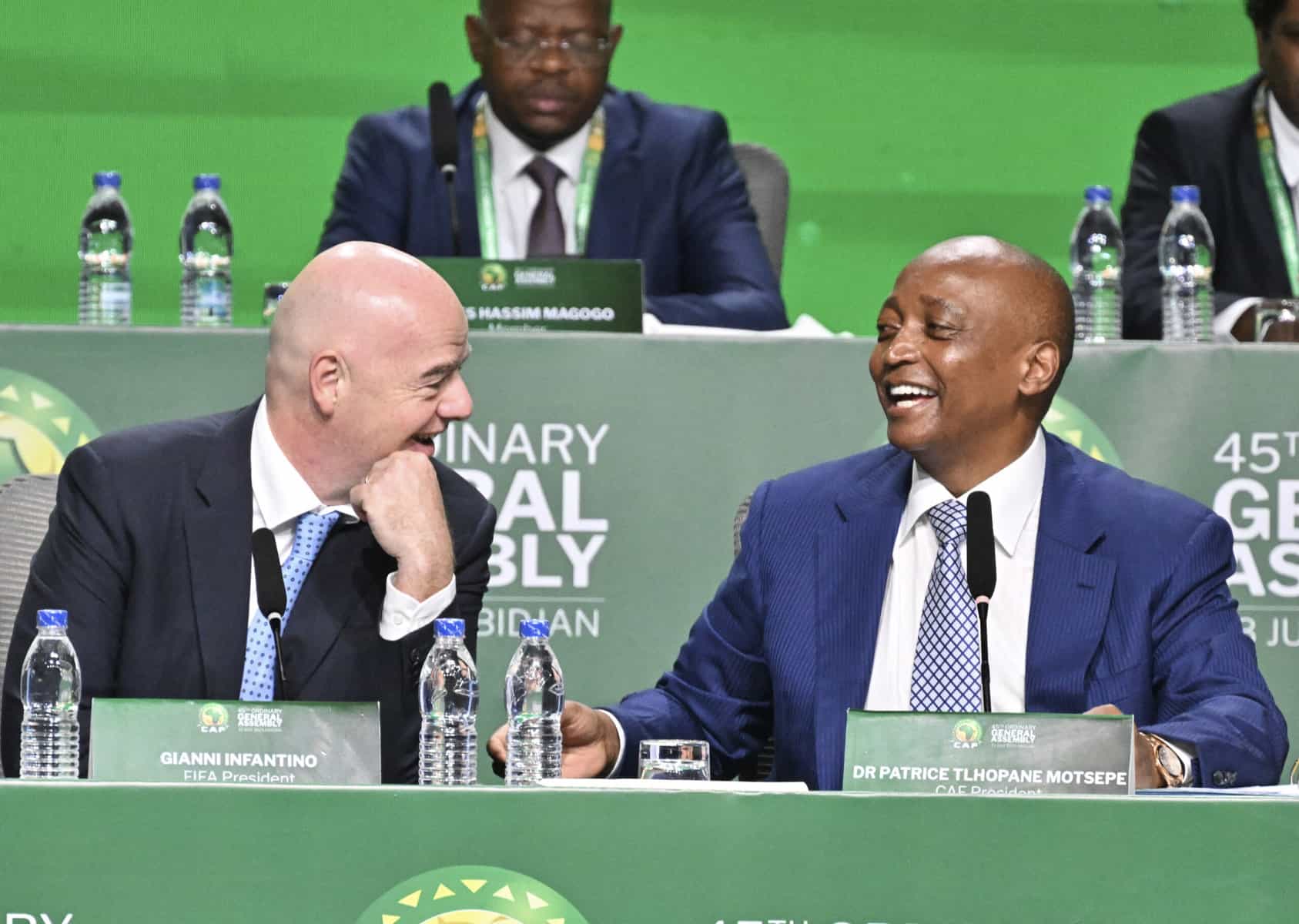
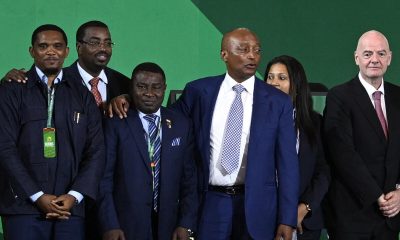
Gianni Infantino (left) and Dr. Patrice Motsepe (right) sharing a laugh during a press conference at the 45th Ordinary General Assembly of the Confederation of African Football (CAF).
Gianni Infantino remains FIFA president because the revolt against him has not yet produced a global majority, a unified opposition candidate or a coalition strong enough to force him out.
His internal leadership team has publicly backed him. He has apologised to FIFA’s members. The controversial commercial plan has been abandoned, and FIFA is attempting to frame the episode as a correctable failure of process.
But the political reality is harder to disguise.
Infantino’s position would be far more vulnerable if Africa’s 54 associations joined UEFA’s rebellion. His continued confidence suggests that he still believes substantial support exists outside Europe.
Africa may therefore have helped save his presidency not through a dramatic public declaration, but through the absence of a continental revolt.
That support should not be free. African football has real leverage, and leverage only matters when it is converted into lasting institutional benefit.
The continent should demand transparency, commercial protection, stronger representation and genuine consultation. Anything less would mean exchanging Africa’s most powerful asset, its collective vote, for short-term access and promises.
Sportxparte’s verdict is clear: Africa did not create FIFA’s crisis, but it may have prevented the crisis from removing Gianni Infantino. The question now is whether African football will use that influence to reform FIFA or simply return the president to power without changing the system that failed.