African Football
Why Europe’s Fight With FIFA Matters More To African Football Than You Think
The battle for football’s future is no longer taking place on the pitch.
It is unfolding inside boardrooms, federation headquarters and emergency meetings across Europe. And while the headlines focus on UEFA’s growing rebellion against FIFA president Gianni Infantino.
The continent that may ultimately decide the outcome is not Europe. It is Africa.
In just a matter of weeks, FIFA has been thrown into its deepest governance crisis in decades. The collapse of Gianni Infantino’s controversial proposal to sell a stake in the FIFA World Cup to private investors has triggered an unprecedented backlash.
UEFA threatened to boycott FIFA competitions. CONCACAF openly criticised FIFA’s handling of the proposal. Asian football has become divided. Now Europe is preparing an even bigger move.
More than 50 European football associations are considering withdrawing the letters they previously submitted in support of Infantino’s re-election as FIFA president.
If that happens, it would amount to an extraordinary public vote of no confidence against the most powerful man in world football.
But this story is about far more than Europe’s frustration with FIFA.
For African football, this could become one of the defining political moments of the decade.
CAF’s 54 member associations represent one of the largest voting blocs inside FIFA. While Europe may have started the revolt, Africa could determine whether it succeeds.
That makes this more than another governance dispute.
It is a struggle over who will control football’s future and whether African football will continue following FIFA’s current direction or demand something different.
Europe’s Rebellion Against Gianni Infantino
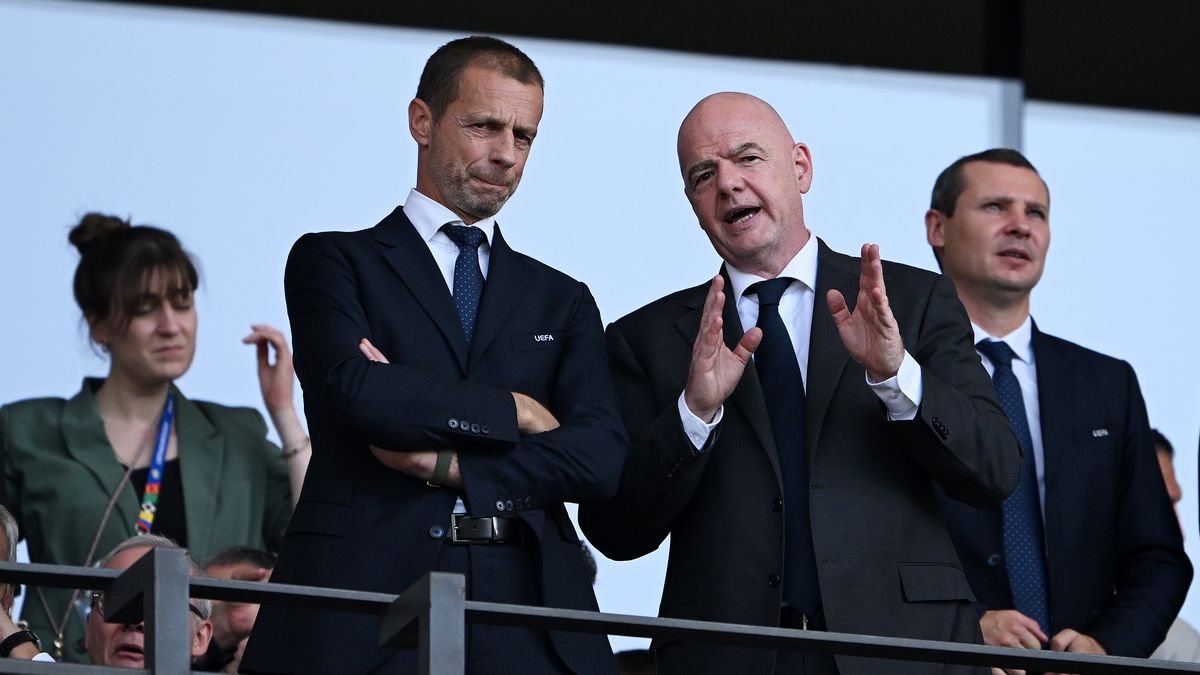
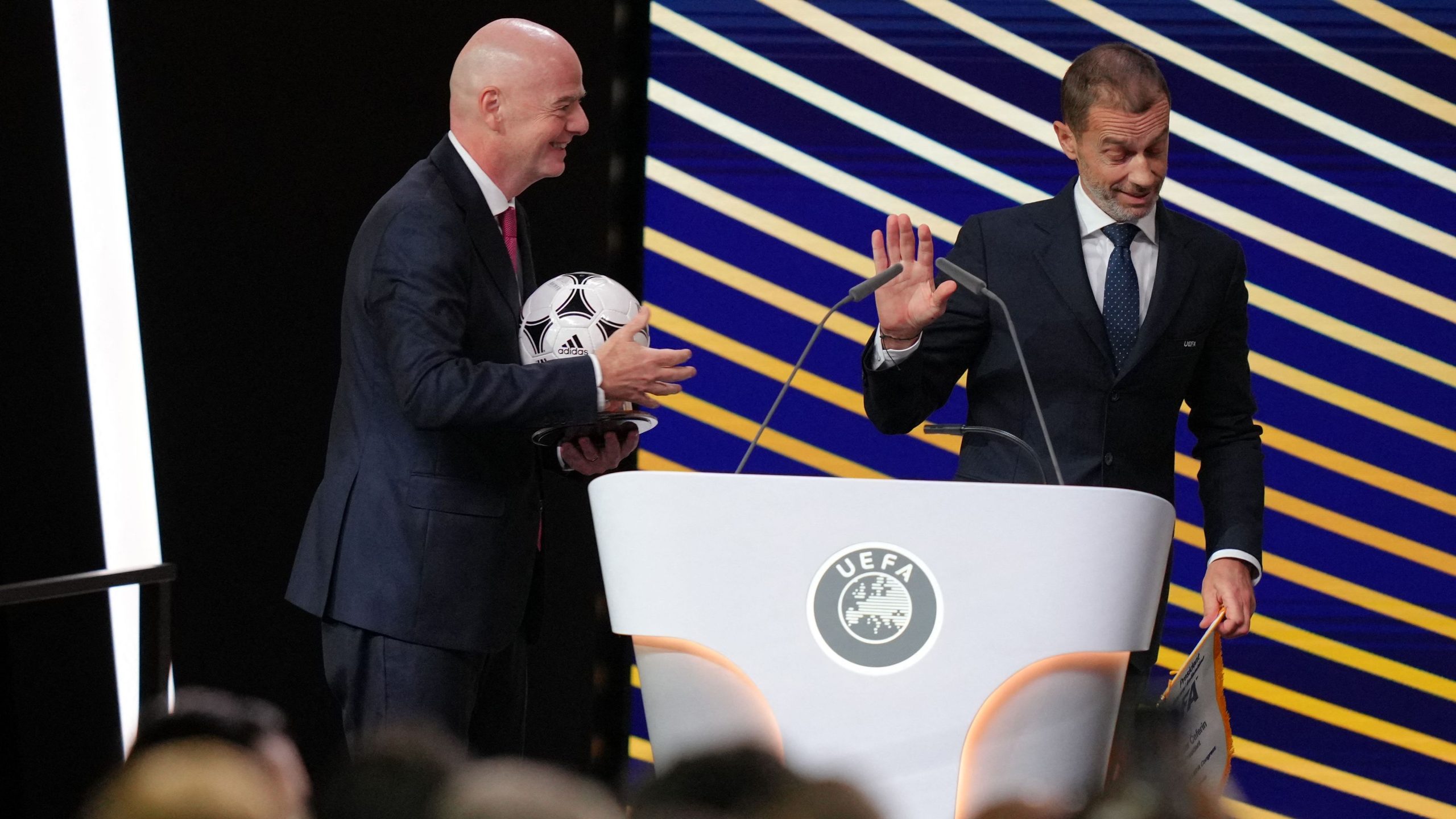
Aleksander Čeferin (left), the President of UEFA, alongside Gianni Infantino (right), the President of FIFA.
Just months ago, Gianni Infantino appeared untouchable.
More than 200 of FIFA’s 211 member associations had submitted letters supporting his re-election ahead of next year’s FIFA presidential election. A fourth term looked inevitable.
Now the picture has changed dramatically. European football associations are actively discussing withdrawing those same letters.
Before last week’s crisis, every UEFA member except Germany, Norway and Romania had endorsed Infantino’s candidacy. Those endorsements were supposed to demonstrate overwhelming confidence in his leadership.
Instead, they may soon become evidence of football’s biggest political U-turn in years. Some federations are considering announcing their withdrawal together.
Others prefer removing their support individually over several days to maintain constant pressure on FIFA. Either approach sends the same message.
Europe no longer believes Gianni Infantino should continue leading world football. Should dozens of associations formally notify FIFA of their withdrawal of endorsement, the symbolism would be devastating.
While such letters are not official election votes, their withdrawal would represent something arguably more damaging.
It would tell the football world that confidence in FIFA’s president has collapsed among the continent that generates the sport’s greatest commercial value.
For Gianni Infantino, that could become the beginning of the end.
What Triggered the Crisis for Gianni Infantino?
The breaking point was not simply one decision.
It was the growing perception that FIFA had begun making football’s biggest decisions without properly consulting the people who govern the game.
The controversy surrounding FIFA Forward Enterprise, a proposal to sell part of the commercial rights of the FIFA World Cup and Club World Cup to private investors, became the catalyst.
UEFA described the proposal as effectively “selling the soul of football.”
European officials accused FIFA of prioritising commercial interests over the long-term integrity of the sport.
That criticism quickly spread beyond Europe. CONCACAF expressed serious concerns over the lack of consultation. Several Asian football leaders questioned the process.
Within days, FIFA was facing coordinated opposition from some of football’s most influential confederations.
Although the investment proposal eventually collapsed under growing resistance, the political damage remained.
Many football leaders now believe the issue is no longer about one commercial project.
Instead, it is about how FIFA is governed. The investors’ proposal exposed a growing divide between FIFA’s leadership and many of the organisations responsible for running football across the world.
Once that trust disappeared, attention shifted from the proposal itself to the man behind it.
For the first time in years, Gianni Infantino’s presidency suddenly looked vulnerable.
Why Africa Should Be Paying Close Attention
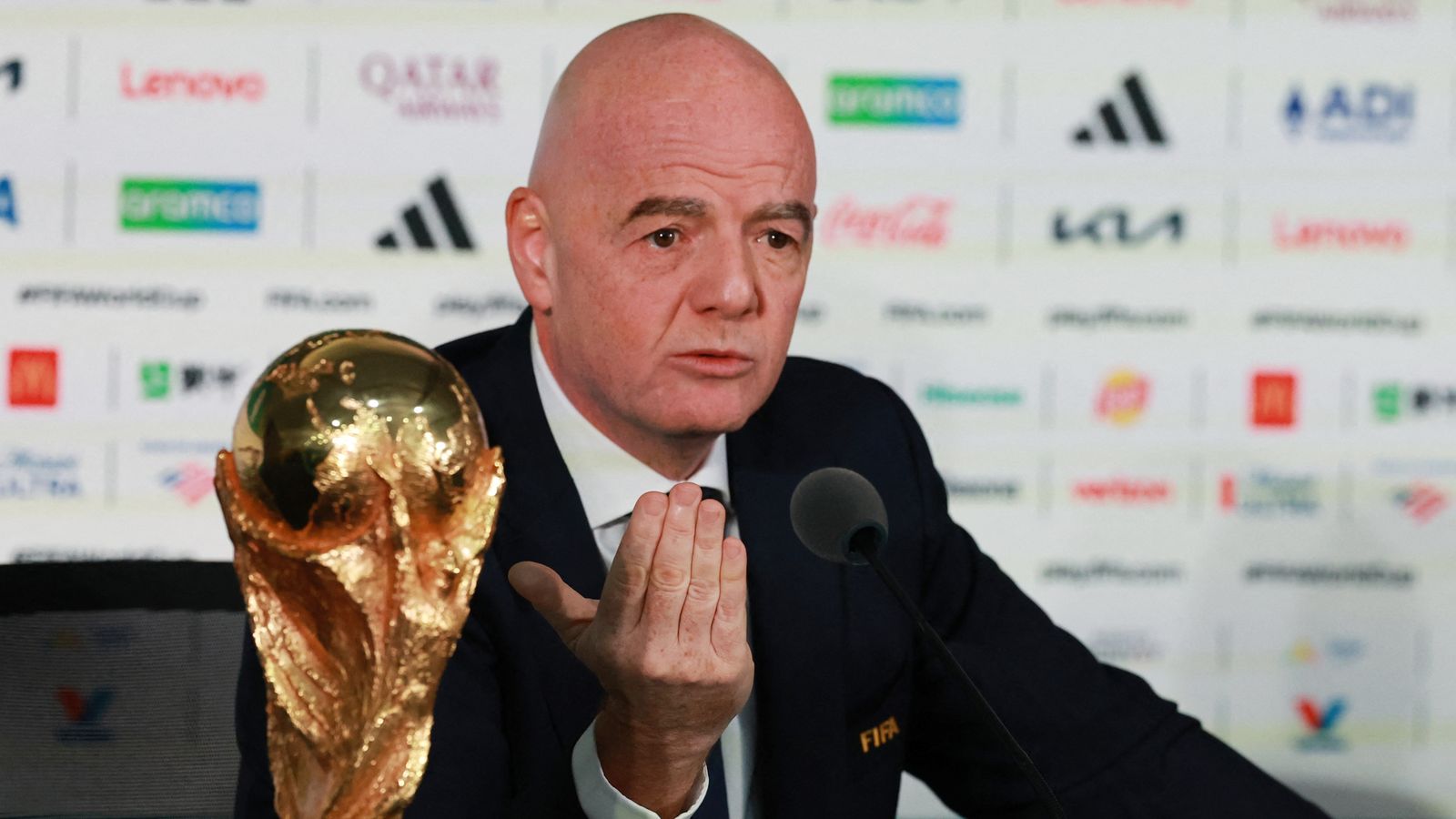
Gianni Infantino, FIFA President, gesturing at a microphone next to the gold World Cup trophy during an official 2026 FIFA World Cup press conference with sponsor logos on the backdrop.
Many African supporters may wonder why this political battle inside Europe should matter.
After all, European football has always had disagreements with FIFA. This one is different.
Africa has benefited from several of Infantino’s major policies.
The expansion of the FIFA World Cup has increased African qualification places. Development funding has grown under FIFA Forward programmes.
Smaller football associations have received greater financial support than in previous decades.
Those are tangible benefits. But they also create a difficult question.
Should African football continue supporting a FIFA president simply because more money and more World Cup places have arrived?
Or should governance, transparency and long-term leadership carry equal weight?
That question is becoming increasingly unavoidable.
For perhaps the first time since Gianni Infantino became FIFA president, African football may eventually have to choose between political loyalty and institutional reform.
And whatever decision CAF members make could shape the future of football far beyond Africa.
Why Africa Could Decide FIFA’s Future
For decades, FIFA presidential elections have largely been decided behind closed doors, long before official voting begins.
Public endorsements, political alliances and confederation support usually determine the outcome months in advance. That is why the reported withdrawal of support from dozens of European associations matters so much.
It is no longer simply about whether Europe wants Gianni Infantino to stay. It is about whether enough countries outside Europe still believe he should lead football into the next decade.
That is where Africa enters the story. CAF has 54 member associations, making it the second-largest voting bloc inside FIFA after UEFA. Historically, African votes have often played a decisive role in FIFA elections because they represent a substantial share of the organisation’s 211 members.
If Europe successfully convinces enough African federations that change is necessary, Infantino’s seemingly comfortable path toward a fourth term could suddenly become uncertain.
Equally, if African associations continue backing him, Europe may discover that political influence alone is no longer enough to reshape FIFA.
The continent therefore occupies a unique position. It is no longer simply watching the crisis unfold.
It may ultimately determine how it ends.
Why Some African Associations Still Support Gianni Infantino
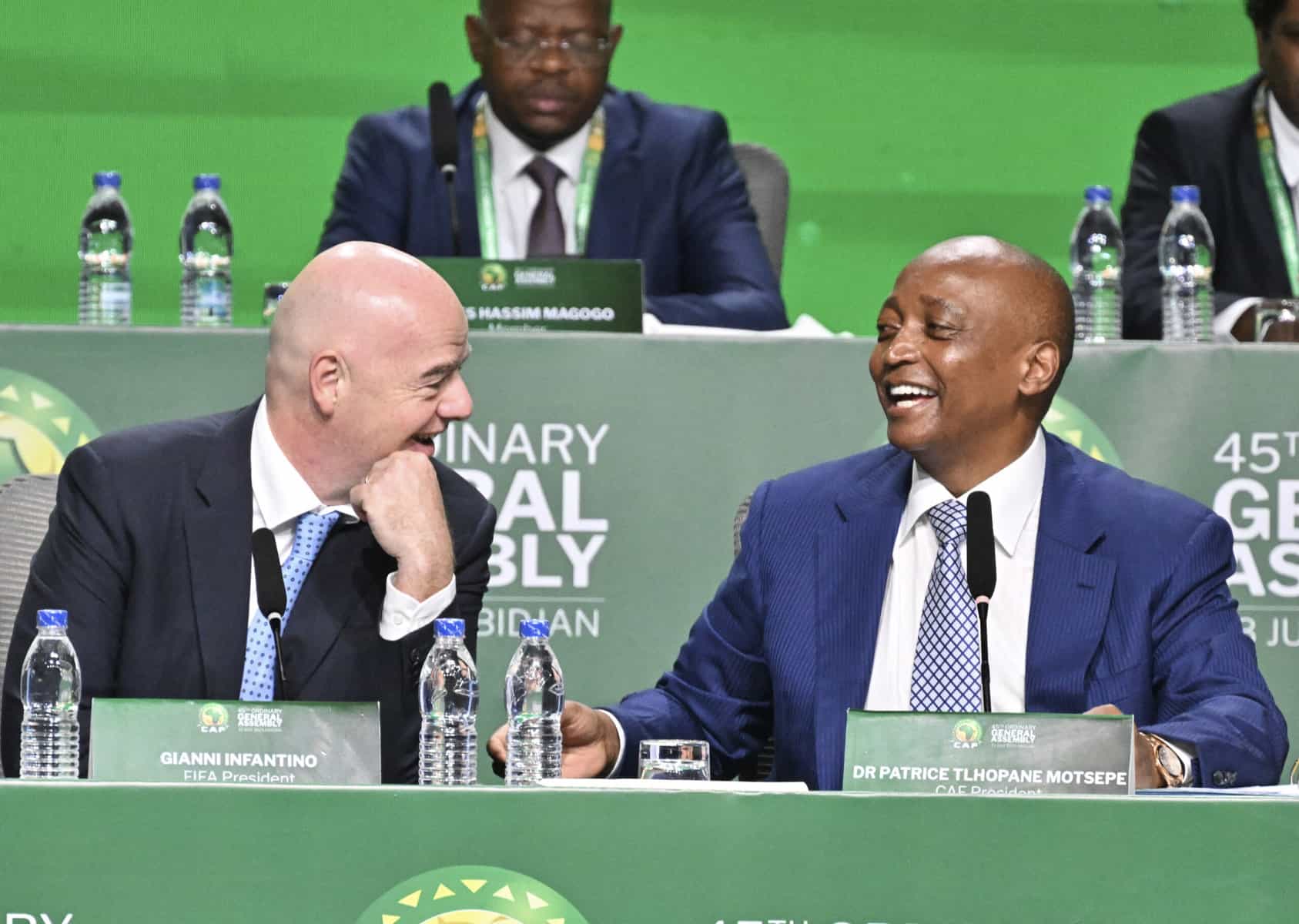
Gianni Infantino (left) and Dr. Patrice Motsepe (right) sharing a laugh during a press conference at the 45th Ordinary General Assembly of the Confederation of African Football (CAF).
It would be unfair to assume African football has no reason to continue supporting FIFA’s current leadership.
Since becoming FIFA president in 2016, Infantino has repeatedly promised to give developing football nations a larger voice.
Some of those promises have produced visible results. Africa received more qualification places at the expanded 2026 FIFA World Cup. Development funding increased through FIFA Forward programmes.
For many smaller African football federations, FIFA remains one of the few reliable financial partners capable of funding long-term football development.
That reality explains why the debate inside CAF is likely to be far more complicated than it appears from Europe.
European football generates billions through domestic leagues and the UEFA Champions League.
Many African federations simply do not have those financial advantages.
When FIFA funding helps build training centres, improve youth football or support women’s football, those investments cannot simply be ignored because Europe has turned against Infantino.
That creates an uncomfortable balancing act.
Should African football prioritise continued financial support?
Or should governance reforms now become the bigger priority?
There are no easy answers.
Europe Needs More Than European Votes against Gianni Infantino
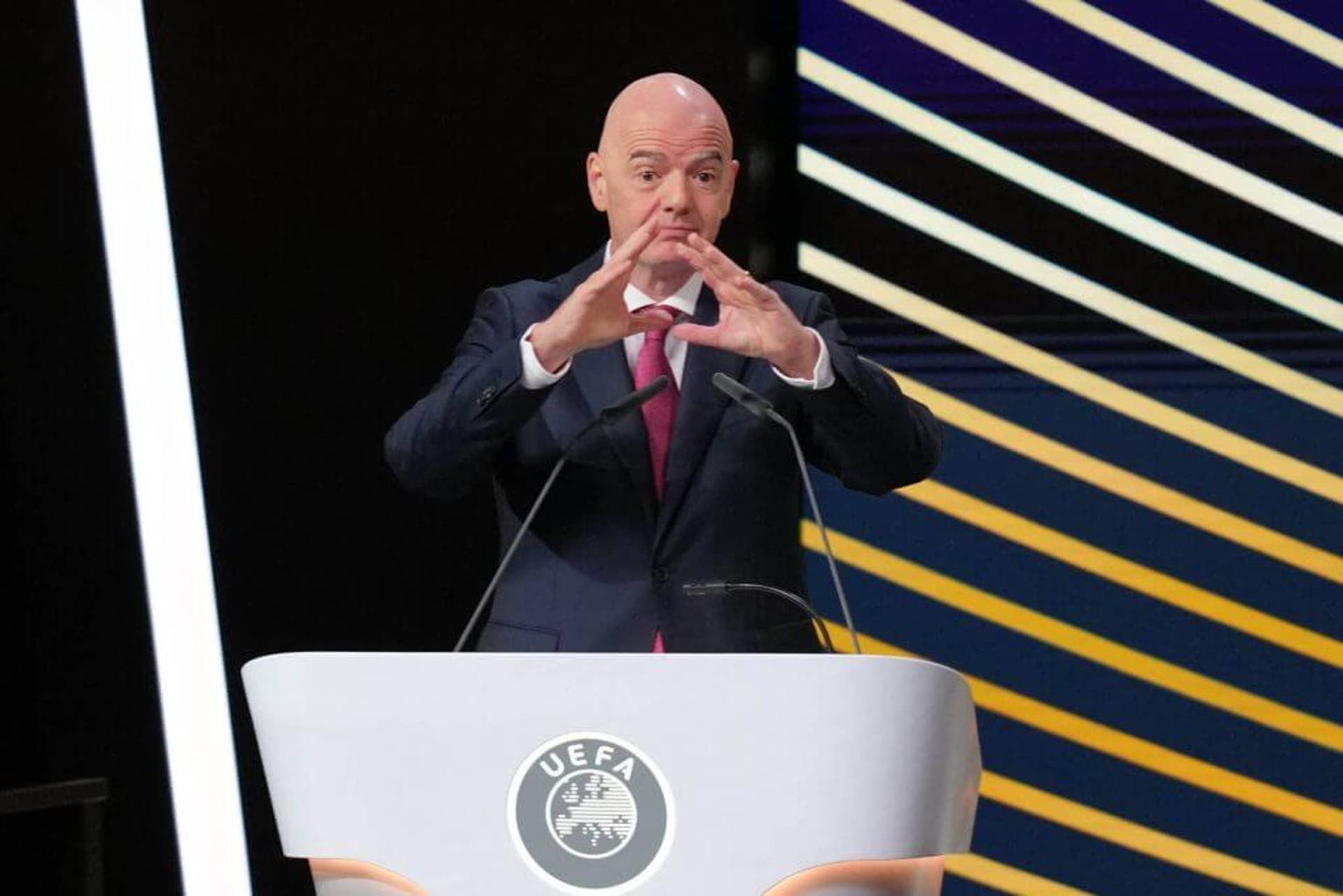
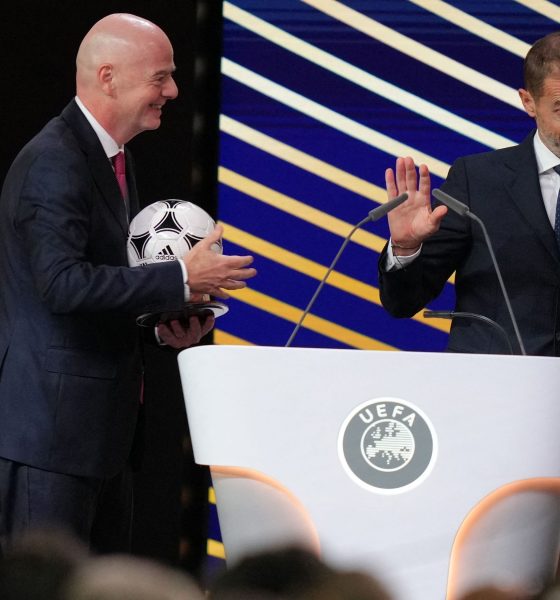
Gianni Infantino, FIFA President, speaking at a UEFA podium while wearing a navy blue suit and pink tie, gesturing with his hands.
One of the biggest misconceptions surrounding this crisis is that UEFA alone can remove the FIFA president.
It cannot. Even if every European association withdraws support, FIFA elections remain global.
Europe will need significant backing from Africa, Asia, CONCACAF and Oceania to produce a credible challenger capable of defeating Infantino.
That is why discussions are reportedly taking place beyond Europe.
Football leaders are quietly exploring whether there is enough international support to present an alternative candidate.
Finding such a candidate will not be easy. The replacement would need broad credibility across multiple confederations, strong administrative experience and enough political support to unite federations with very different priorities.
At present, no obvious successor has emerged. That uncertainty may ultimately become Infantino’s greatest advantage.
Many associations unhappy with FIFA’s current leadership may hesitate to abandon him without knowing who would replace him.
As football history repeatedly shows, removing a leader is often easier than agreeing on the next one.
What This Means for African Football
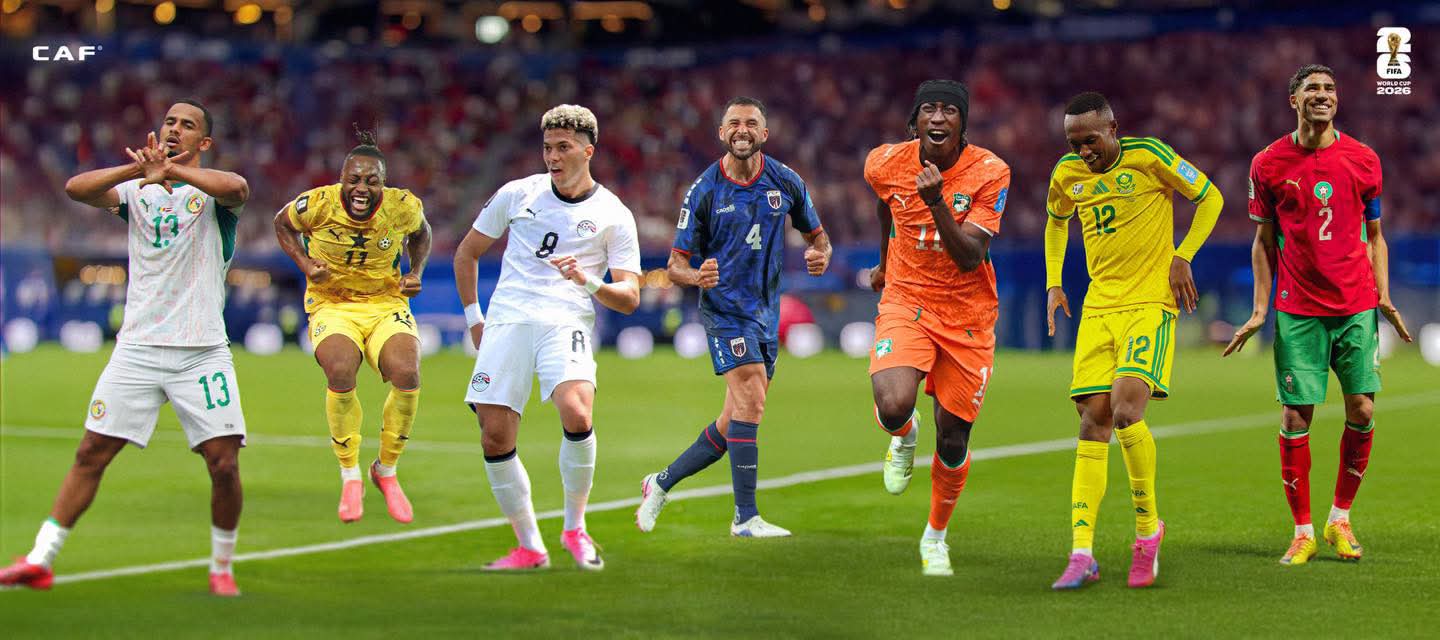
Seven African national football team players celebrating a historic advancement to the 2026 FIFA World Cup knockout stage.
For African football supporters, this story is bigger than one presidency. It is about influence.
For years, African football has argued that it deserves a stronger voice within FIFA’s decision-making structures. This crisis offers exactly that opportunity.
If CAF chooses to remain united, its position could become decisive in determining football’s political future.
That influence should not simply be used to support one candidate or another. It should be used to demand meaningful reforms.
African football still faces enormous structural challenges despite producing some of the world’s finest players.
Infrastructure remains inconsistent. Coaching development still lags behind Europe. Many domestic leagues struggle financially.
Women’s football continues to fight for sustainable investment.
Whether Gianni Infantino remains FIFA president or not, African football should use this moment to negotiate for stronger governance, greater investment accountability and long-term football development rather than short-term political promises.
That would represent a far greater victory than simply helping elect or remove a FIFA president.
Europe’s Plan Is Bigger Than One Election
Removing Gianni Infantino is only the first objective. The more difficult challenge is deciding what comes next.
European football leaders understand that forcing a FIFA president to resign without presenting a credible alternative could create even greater instability inside world football. That is why discussions have reportedly shifted beyond withdrawing endorsement letters to identifying a candidate capable of uniting multiple confederations.
Such a candidate would require support far beyond Europe.
Africa, Asia, CONCACAF and Oceania would all need to believe that new leadership offers a better future than the current administration.
Without that global coalition, Europe risks winning a political battle but losing the election itself.
This explains why European officials are now engaging football associations outside UEFA far more aggressively than before.
The goal is no longer simply opposing Infantino. It is building an international movement capable of replacing him.
Whether that movement succeeds remains uncertain.
Could This Be the End of the Gianni Infantino Era?
Only weeks ago, Gianni Infantino appeared politically untouchable.
More than 200 FIFA member associations had reportedly submitted letters supporting his re-election.
A fourth term seemed inevitable. Now that certainty has disappeared.
The collapse of FIFA Forward Enterprise has triggered the biggest governance crisis of his presidency.
UEFA has openly rebelled. CONCACAF questioned FIFA’s decision-making process.
Several Asian associations continue to back him publicly, but European officials believe dissatisfaction exists beyond those public statements.
Most importantly, discussions are no longer centred on criticism.
They are centred on succession.
When football leaders begin searching for your replacement, political survival becomes significantly more difficult.
Infantino may yet retain enough international support to survive this crisis.
But regardless of the outcome, the perception of unquestioned authority that surrounded his presidency has already been damaged.
That alone makes this one of the defining moments in modern FIFA history.
Verdict: Africa Must Think Beyond Personalities
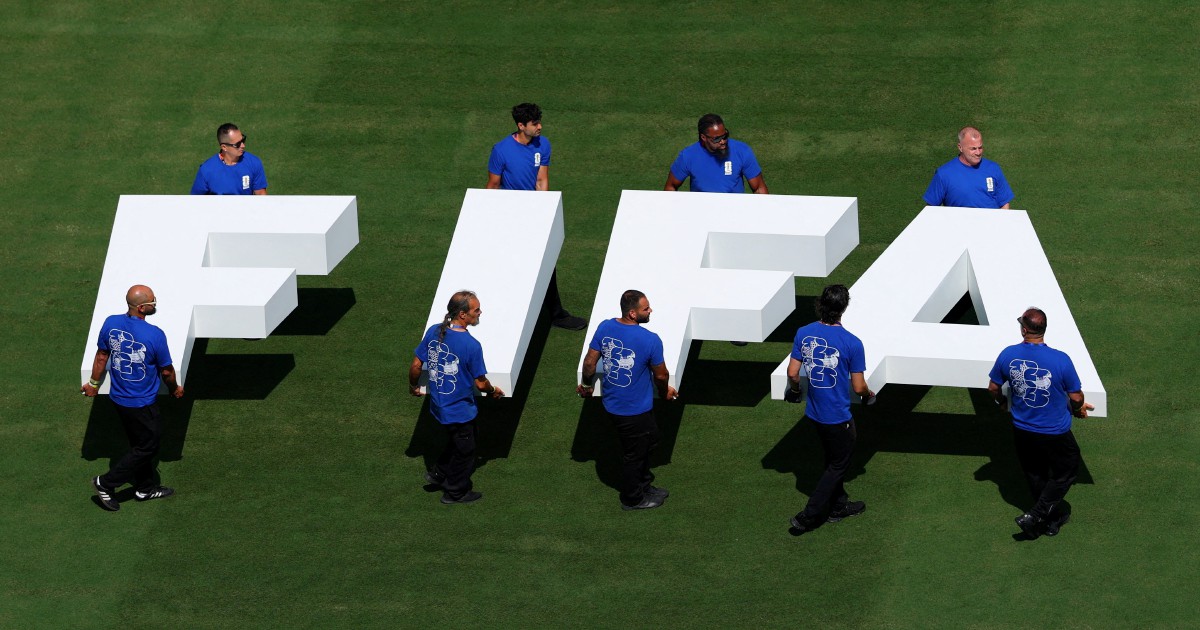
Volunteers carrying large white 3D block letters spelling FIFA on a green football field during a stadium event.
This crisis is no longer simply about Gianni Infantino. It is about the future direction of world football.
Europe is preparing to withdraw its support. Alternative candidates are being discussed. Football’s political landscape is shifting faster than anyone expected.
For African football, the temptation will be to focus on personalities. That would be a mistake.
The continent’s priority should not be deciding whether Gianni Infantino stays or goes.
Its priority should be ensuring that whoever leads FIFA next is committed to genuine football development, transparent governance and giving African football the structural support it needs to compete with Europe and South America.
Leadership changes. Institutions remain.
Africa now possesses rare political leverage within FIFA. How it uses that influence may shape world football long after this current crisis has passed.
The battle to replace Gianni Infantino has begun.
Whether Africa becomes a spectator or a decisive player could determine football’s future for the next generation.