News
Football’s Rebels Are Building A World Without Infantino, And This Time They Mean It
For ten years, Gianni Infantino has been the most powerful man in world football.
He arrived at FIFA in 2016 promising a new beginning after the corruption scandal that ended Sepp Blatter’s presidency. A decade later, the football world is facing another extraordinary governance crisis.
UEFA, CONCACAF and the Asian Football Confederation are no longer simply criticising Infantino’s leadership. They are reportedly working on a new framework for how world football should be governed.
That changes everything. The immediate dispute began with Infantino’s controversial proposal to sell a stake in FIFA’s World Cup commercial rights to private investors.
UEFA, CONCACAF and the AFC have demanded an independent review and assurances that similar decisions will not be made without proper consultation. They have also threatened boycotts and discussed the possibility of alternative competitions if the confrontation continues.
Now, according to reporting published this week, the three confederations are considering something much bigger: an alternative blueprint for FIFA itself.
For African football, this is not a distant European political fight.
It could determine who controls the billions of dollars flowing through the global game, how development money reaches Africa and, potentially, who occupies the FIFA presidency after the March 2027 election.
And there is one uncomfortable question African football can no longer avoid:
What side will Africa choose?
What Is Actually Happening Beyond the Headlines?
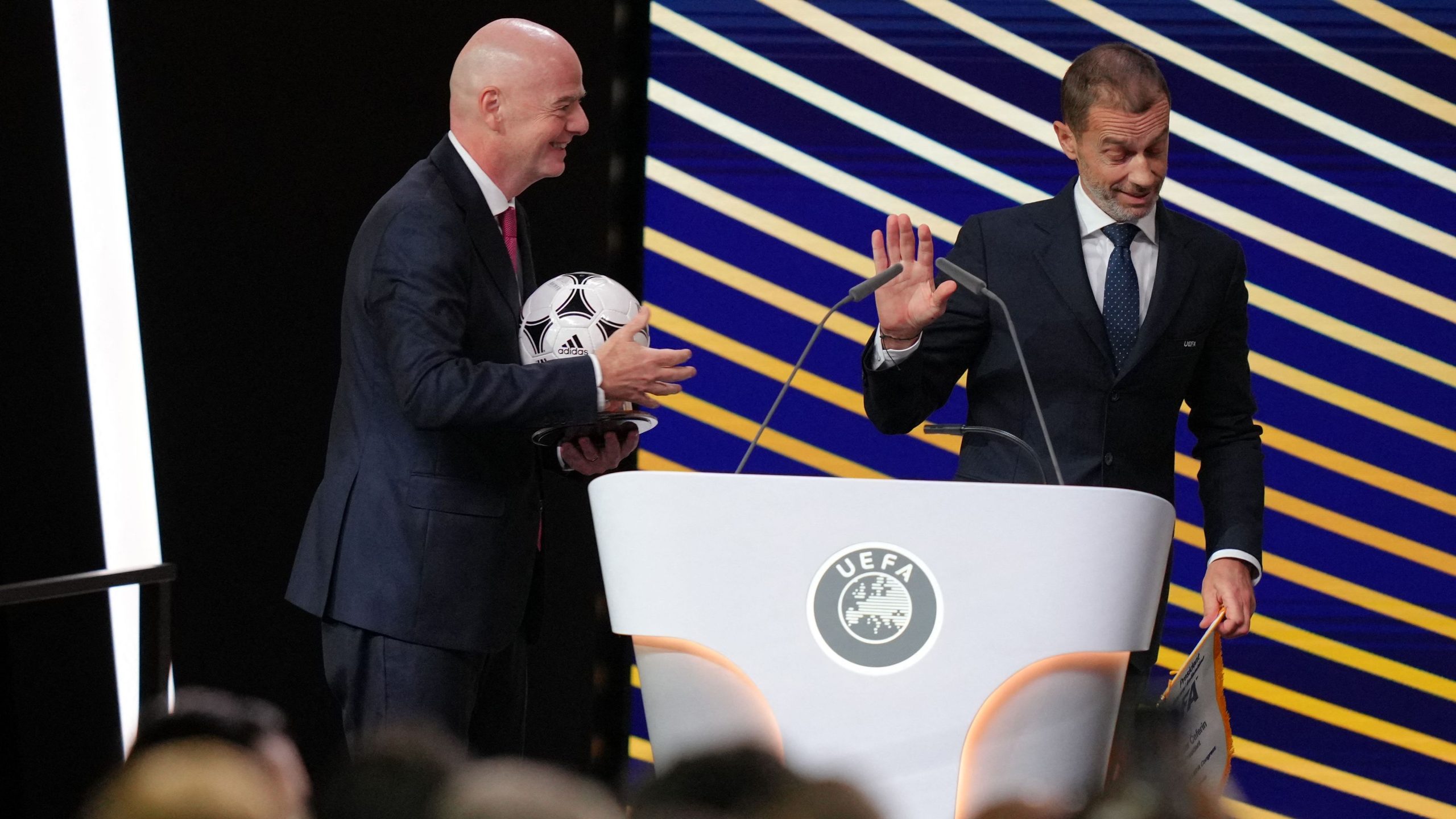
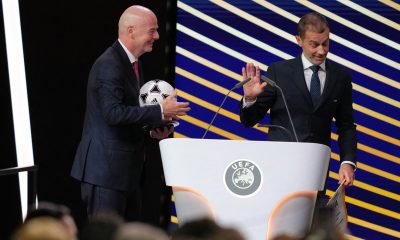
FIFA President Infantino (left) and UEFA President Aleksander Čeferin (right) standing together behind a UEFA-branded podium.
It would be easy to describe this as another disagreement between FIFA and UEFA. That would dramatically underestimate what is happening.
The controversy surrounding the proposed World Cup commercial-rights sale has developed into a wider argument about who FIFA actually serves, how decisions are made and how much power should sit with the president of the organisation.
UEFA, CONCACAF and the AFC have publicly challenged Gianni Infantino over the process surrounding the proposal. Reuters reported that the three confederations accused him of acting unilaterally and demanded an independent review of the failed plan.
The latest development is more significant. The Guardian reports that representatives of UEFA, CONCACAF and the AFC are working on a policy document examining fundamental questions about FIFA’s future, including its precise role, organisational structure, governance model and the distribution of its financial resources.
That means the argument has moved from:
“Should Infantino have made this decision?”
to:
“Should FIFA operate this way at all?”
That is a much more dangerous question for the FIFA president. The difference matters because institutions survive individual controversies. They become vulnerable when their members begin designing alternatives.
The coalition is not yet a breakaway organisation. It would be premature to claim that FIFA is about to disappear.
But the fact that a potential alternative governance framework is being discussed demonstrates how seriously the relationship between FIFA and some of its most powerful confederations has deteriorated.
The crisis is no longer about one investment proposal. It is about power.
Gianni Infantino: The Breakaway Threat Is No Longer Just Football Fantasy
Football has threatened to break apart before. The most obvious recent example was the European Super League in 2021.
But that crisis was fundamentally different. The Super League was driven by clubs attempting to create a competition outside the established European football structure. UEFA and FIFA were fighting against the clubs.
This time, the challenge is coming from inside football’s governing architecture.
UEFA is one of FIFA’s most powerful confederations. CONCACAF controls football across North America, Central America and the Caribbean. The AFC represents Asian football.
Together, they possess enormous sporting, commercial and political influence. The Guardian reports that the new governance framework could potentially become a template for a breakaway organisation if Infantino refuses to engage with the opposition. The confederations have also indicated that alternative competitions could be considered if the standoff continues.
That is the nuclear option. Nobody should assume it will happen.
Running a genuinely global alternative to FIFA would be extraordinarily complicated. There would be questions over competitions, statutes, player eligibility, national associations, commercial rights, international recognition and the relationship with other confederations.
But the most important change has already happened. The idea is now being discussed seriously.
And once football’s biggest institutions begin planning for a world without FIFA cooperation, the old balance of power becomes much harder to restore.
The Women’s Game Has Become the First Battlefield
There is something particularly uncomfortable about the fact that women’s football could become the first casualty of this dispute.
UEFA has threatened a boycott of FIFA competitions unless its demands over governance and the abandoned commercial-rights proposal are addressed.
The FIFA Under-20 Women’s World Cup in Poland is scheduled for September, and the tournament has already become a test of whether the boycott threat will translate into actual withdrawals.
The situation remains fluid. Poland says preparations are continuing normally, while France and New Zealand have confirmed their intention to participate despite the wider dispute.
That is important. The boycott threat is real, but it does not mean every European team has already withdrawn.
And that distinction matters because young players should not become collateral damage in a political battle between administrators.
The Under-20 Women’s World Cup exists for a very different reason from FIFA’s commercial strategy. It is a development tournament.
And it is where future stars receive their first experience of global competition. It is where players who may eventually become household names build international careers.
African football understands this particularly well.
Women’s football across the continent has been developing rapidly. The 2026 WAFCON demonstrated the depth of African women’s football. While the 2027 Women’s World Cup in Brazil will provide another major opportunity for African nations.
A prolonged FIFA governance war could therefore have consequences far beyond Zurich, Salzburg or Rabat.
It could affect the competitions through which the next generation of African players develop.
That is why the political fight needs to be resolved without sacrificing the players.
Victor Montagliani Is Becoming the Name to Watch against Gianni Infantino
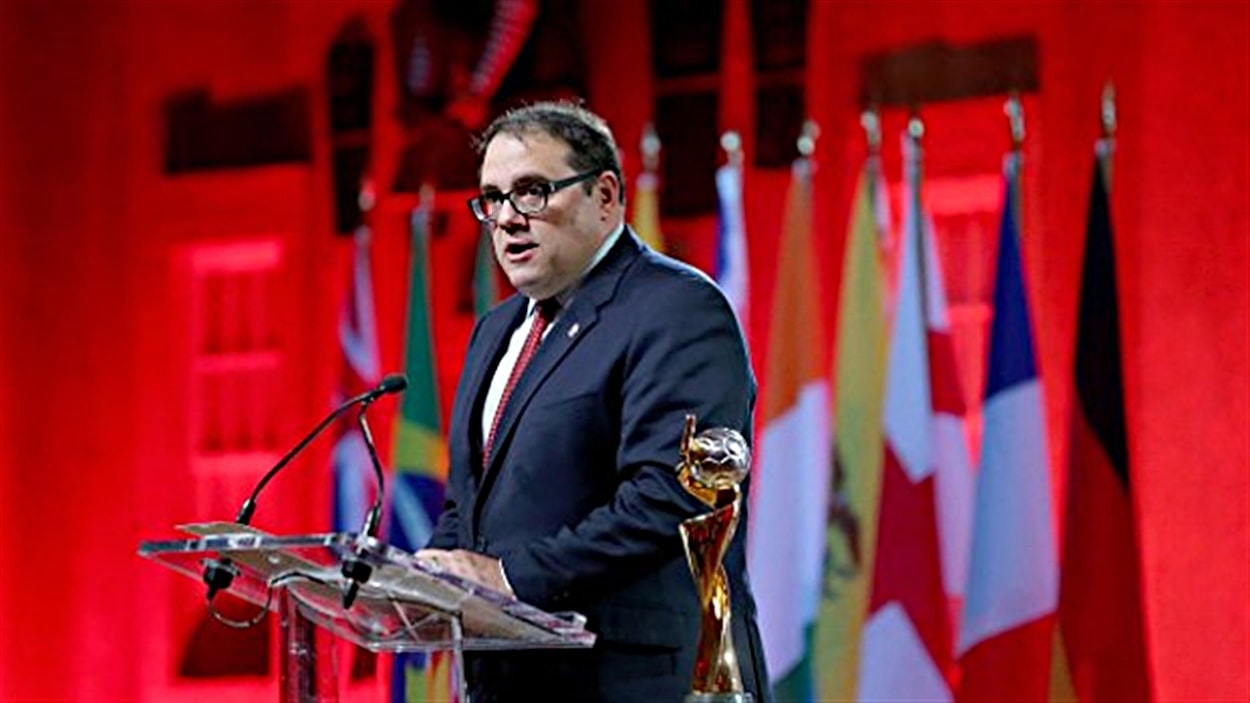
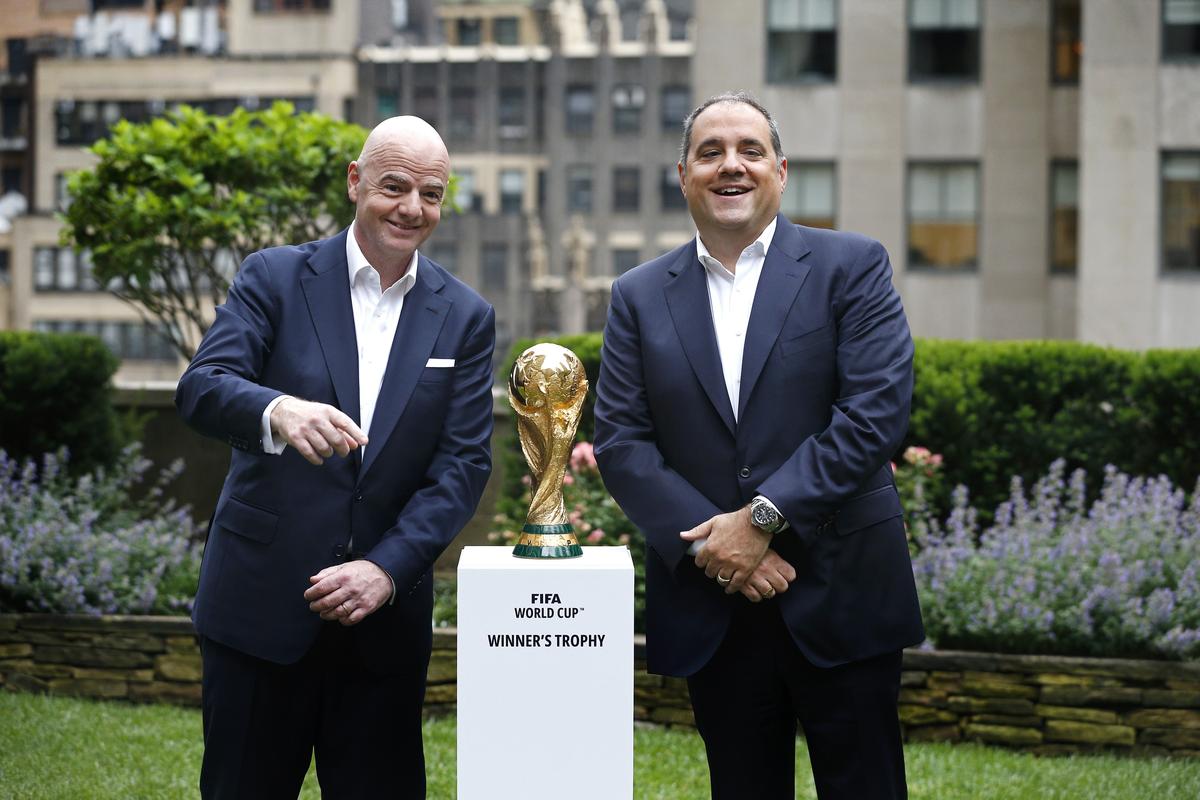
Victor Montagliani is a prominent Canadian sports administrator and FIFA Vice President who serves as the President of CONCACAF (Confederation of North, Central America and Caribbean Association Football).
If this crisis eventually becomes a FIFA presidential election battle, Victor Montagliani could become one of the most important figures in world football.
The CONCACAF president is currently regarded as a potential challenger to Infantino in the 2027 FIFA presidential election. The political significance of his position has increased because CONCACAF is part of the coalition opposing Infantino’s leadership.
But Montagliani has not formally declared that he will challenge Gianni Infantino. That distinction is important.
He has previously said his immediate focus was his CONCACAF responsibilities and his own re-election campaign.
Yet the language coming from the opposition camp is increasingly political.
The joint statement from UEFA, CONCACAF and the AFC called for leadership that serves football rather than seeking to command it. That message closely resembles comments Montagliani made at the FIFA Congress earlier this year, when he argued that leadership was not about power.
That does not prove a presidential campaign exists. But football politics rarely begins with an official announcement.
It begins with alliances. And it begins with speeches. It begins with policy documents.
It begins with people asking whether another person could run the organisation differently. And that is precisely what appears to be happening now.
If the governance framework becomes a manifesto for the 2027 election, Montagliani could become the most credible challenger to Infantino.
The Gianni Infantino $5 Billion Question Matters More to Africa Than Europe
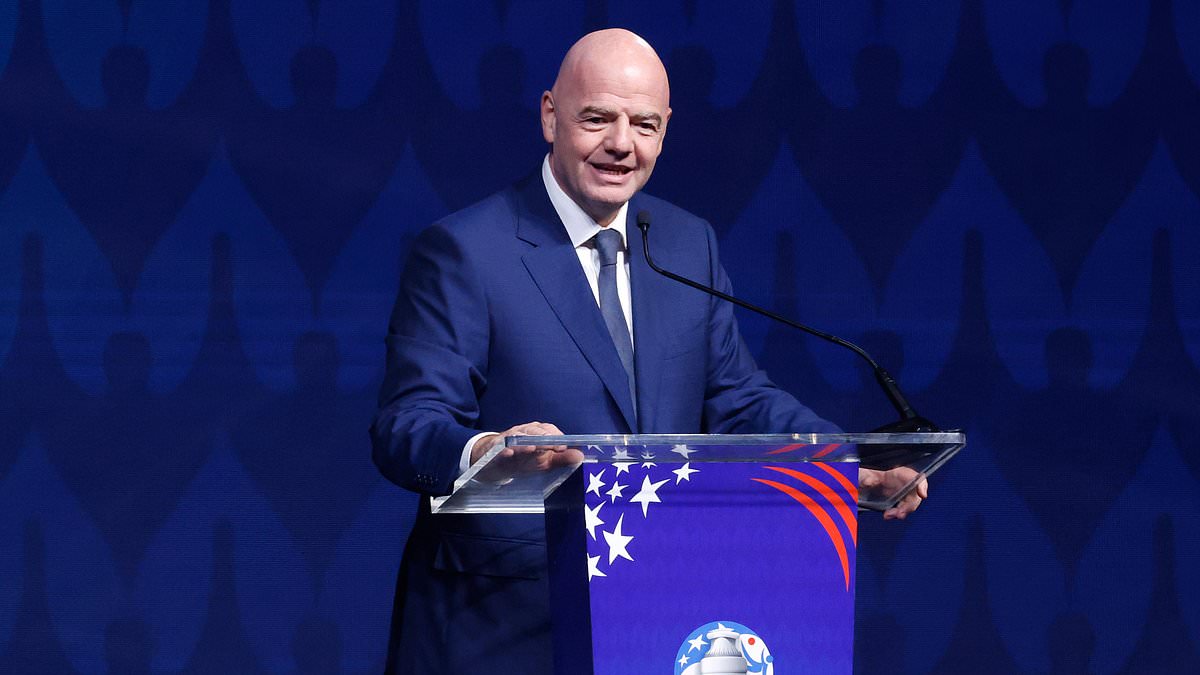
Gianni Infantino, President of FIFA, smiling and speaking at a blue podium during an official football federation event.
This is where the FIFA governance crisis becomes an African football story. Money.
FIFA’s financial strength is enormous. FIFA itself has repeatedly highlighted the scale of its revenues and development spending. The organisation has said its 2023–2026 cycle could exceed $15 billion in revenue. It continues to redistribute money through its member associations and development programmes.
FIFA has also said that more than $1 billion has been invested in African football through the FIFA Forward programme since 2016, with projected support to Africa reaching approximately $1.28 billion by the end of 2026.
That creates the central African dilemma. FIFA development money matters enormously to African football. Infrastructure matters.
Training centres matter. Women’s football programmes matter. Youth competitions matter. Coaching development matters. Referee development matters.
National associations across the continent depend on international football funding to build systems that domestic football revenues often cannot finance alone.
So when UEFA, CONCACAF and AFC challenge FIFA’s governance, Africa cannot simply follow automatically.
African football has its own interests. And those interests may not always align with Europe.
That is why CAF’s position is arguably the most fascinating part of this entire crisis.
Africa Is Not Silent: Motsepe Has Chosen a Different Route
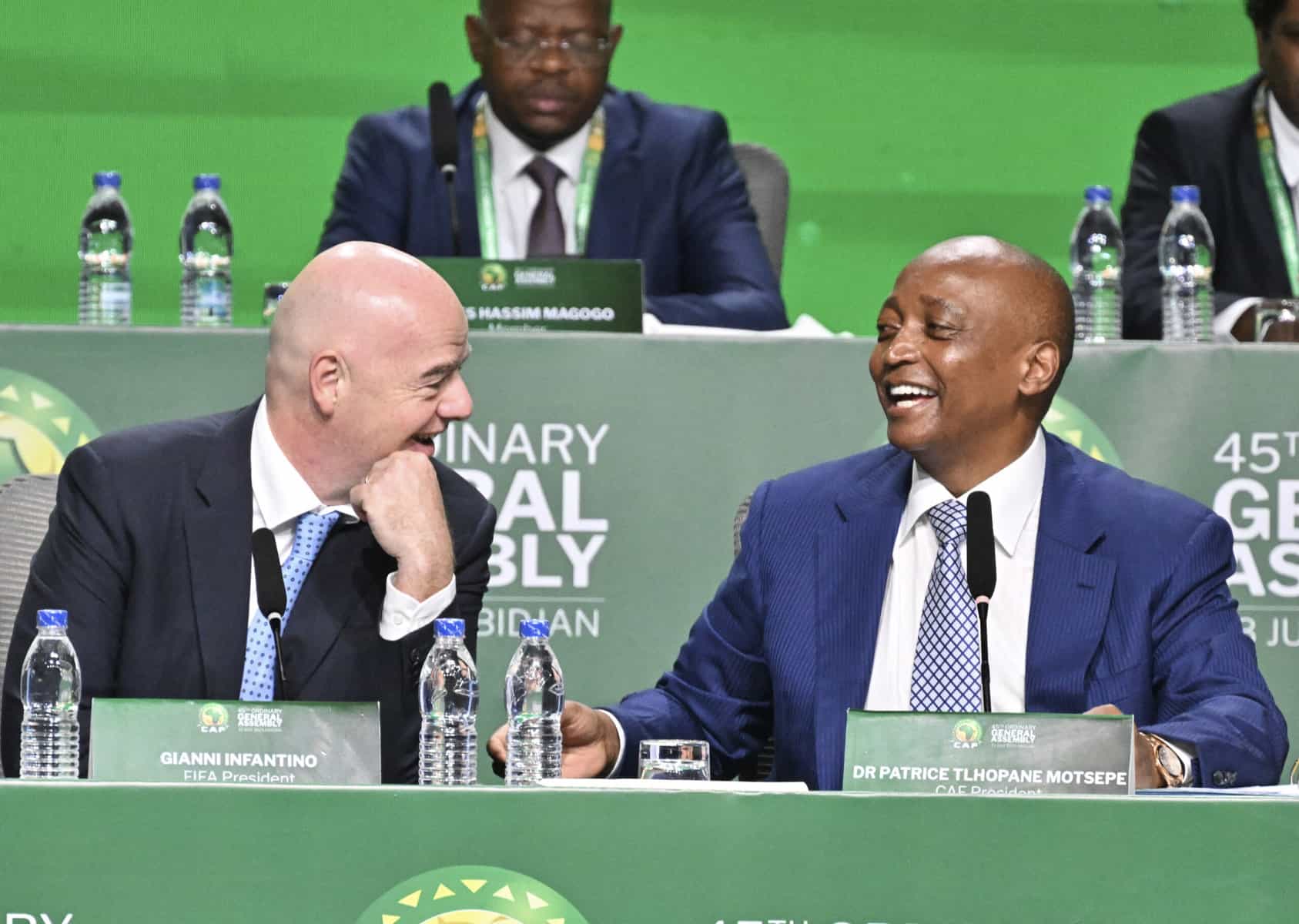
Gianni Infantino (left) and Dr. Patrice Motsepe (right) sharing a laugh during a press conference at the 45th Ordinary General Assembly of the Confederation of African Football (CAF).
The original reporting suggested that CAF was conspicuously absent from the opposition alliance.
That remains true in the narrow sense that CAF has not joined UEFA, CONCACAF and AFC in demanding Infantino’s removal. But there has been a major development.
CAF president Patrice Motsepe said on August 12 that FIFA’s 211 member associations should decide Infantino’s future through the democratic presidential election scheduled for March 2027. He also confirmed that CAF continues to support Gianni Infantino.
This makes Africa’s role much more complicated than simply asking whether CAF will “join the rebels.”
Motsepe’s position is essentially: Let the election decide. That is a significant political choice.
It means CAF is not presently treating the crisis as sufficient reason to remove Infantino before the election.
It also means African football could become one of the decisive blocs when FIFA’s members eventually vote.
And the numbers are extraordinary. CAF has 54 member associations. FIFA has 211.
That makes Africa the largest continental bloc in FIFA’s membership.
If the 2027 election becomes a genuine contest between Gianni Infantino and an opposition candidate, African votes could be decisive.
This is why the assumption that Africa is merely waiting on the sidelines is wrong.
Africa is holding some of the most valuable political cards in the entire dispute.
The question is how those cards will eventually be played.
Gianni Infantino: Why African Football Cannot Afford to Be Anybody’s Voting Machine
There is a temptation in football politics to reduce Africa to a simple equation: FIFA provides development money. Africa provides votes. That is exactly the mentality African football should resist.
The continent should not become a voting bloc that automatically supports whichever side promises the largest financial allocation.
Nor should CAF automatically join UEFA simply because Europe is demanding reform. African football deserves something more sophisticated.
It deserves a governance position built around its own priorities. If FIFA is going to reform, African football should demand transparent development funding.
It should demand stronger women’s football investment. And it should demand better youth competitions. It should demand clearer financial accountability. It should demand greater representation in decision-making. And it should demand development programmes that are measured by outcomes rather than announcements.
And it should demand that African football associations have a meaningful voice when decisions affecting the global game are made.
The current crisis creates an opportunity.
Instead of asking: “Infantino or his opponents?”
Africa should be asking: “What does African football get from whoever wins?”
That is the question that matters.
Gianni Infantino Still Has One Major Advantage
For all the noise surrounding the FIFA president, it would be foolish to write Infantino off. He still has institutional advantages.
FIFA has 211 member associations. A president does not need unanimous support. And FIFA itself has said more than 200 member associations have pledged support for Infantino’s re-election.
That figure is politically important, although it should be treated as a claim of pledged support rather than an election result.
Gianni Infantino also has a powerful argument to make.
Under his leadership, FIFA has dramatically increased the money flowing into global football development. FIFA says its financial position is stronger than ever and that World Cup revenues are redistributed to member associations around the world.
That message will resonate particularly strongly with smaller football nations.
A national association that has received substantial development funding may not view FIFA in the same way as a European federation worried about governance structures.
That is the political reality Gianni Infantino understands. The opposition can control headlines.
Gianni Infantino can potentially control votes.
And that is why the 2027 election could become one of the most consequential FIFA presidential elections in decades.
The Four Possible Futures for World Football
There are now four realistic directions this crisis could take.
Scenario one: Infantino compromises.
An independent review is established. Governance concerns are addressed. The commercial-rights controversy is formally investigated. UEFA’s boycott threat disappears, and the confederations return to normal relations with FIFA.
This would be the least destructive outcome.
Scenario two: The stalemate continues.
UEFA maintains its pressure. FIFA refuses to accept all the opposition’s demands. Boycotts remain possible. Alternative competitions are discussed without actually being created.
This could produce months of institutional paralysis.
Scenario three: The 2027 election becomes the battlefield.
A credible challenger emerges, potentially Montagliani or another senior football administrator. The opposition publishes its governance framework.
African, Asian, European and other associations decide which vision they prefer. The election becomes a referendum on Infantino’s decade in power.
Scenario four: Football splits.
The governance framework becomes the foundation for an alternative organisation. Major confederations begin operating outside FIFA.
Players and national teams face difficult questions about which organisation they recognise.
This remains the most extreme possibility. But the fact that serious administrators are reportedly discussing the architecture of an alternative system means it cannot simply be dismissed as fantasy.
The Bigger Question: Who Owns World Football?
This is ultimately not just about Gianni Infantino. Presidents come and go.
What matters is the structure they leave behind. The central question is whether FIFA is primarily a governing institution accountable to its 211 members or a powerful commercial organisation capable of making enormous decisions from the top down.
That distinction matters.
The World Cup generates billions. Broadcast rights generate billions. Sponsorship generates billions.
Club competitions generate billions. And development money determines whether football infrastructure exists in countries that cannot finance it themselves.
The more valuable football becomes, the more important governance becomes. That is why the current crisis could ultimately be useful if it produces genuine reform.
A better FIFA would benefit everyone. Europe. Africa. Asia. CONCACAF. South America. Oceania.
And most importantly, the players and supporters who ultimately give football its value.
Verdict: Africa Should Not Pick a Side, Yet It Should Set the Price of Reform
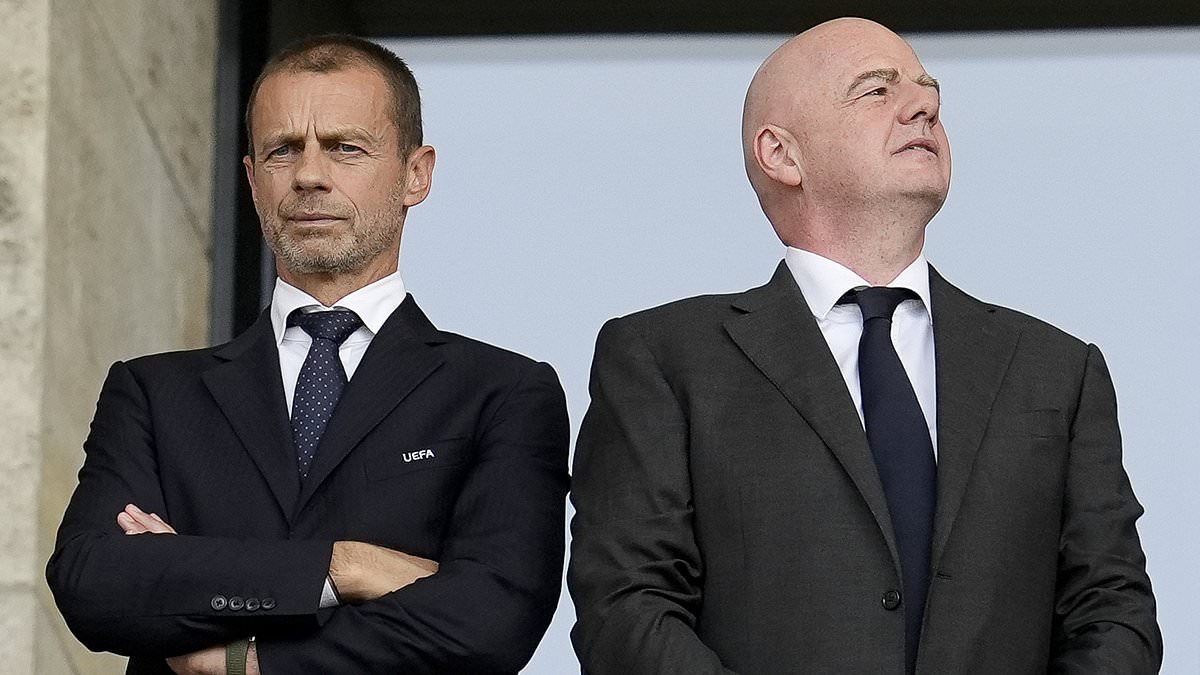
UEFA President Aleksander Ceferin (left) and FIFA President Gianni Infantino (right) amid escalating tensions and UEFA’s boycott of FIFA tournaments.
The biggest mistake African football could make now would be to treat this crisis as somebody else’s war.
It is not. Africa has 54 votes. It has millions of players. And it also has some of the fastest-growing football markets in the world.
It has enormous youth potential. And it remains heavily dependent on the international football development system.
Patrice Motsepe has chosen to let FIFA’s 211 members decide Infantino’s future at the 2027 election rather than joining the calls for his immediate removal.
That position gives CAF time. But time should not mean silence. Africa should use its political leverage to demand something in return: transparent governance, accountable financial distribution, stronger women’s football, better development infrastructure and genuine representation in the institutions that determine the future of the game.
The rebels are building a possible world without Gianni Infantino.
Infantino is preparing to defend his position at the ballot box. And Africa sits between them with 54 votes and a footballing future worth far more than any temporary political favour.
The real question is no longer whether Infantino survives. It is whether African football uses this crisis to demand a better FIFA, whoever ends up running it.