World Cup 2026
FIFA Wants to Sell The World Cup To Private Investors, And Europe Is Threatening To Boycott
The FIFA World Cup 2026 ended with unforgettable moments.
Spain lifted the trophy after a dominant tournament. Lamine Yamal became the youngest superstar to win football’s greatest prize.
African nations produced their finest collective World Cup campaign in history, with Morocco once again reaching the quarter-finals. Egypt pushing Argentina to the limit, Cape Verde capturing global hearts, and the continent proving it belongs among football’s elite.
For a brief moment, football belonged entirely to the players. Now, barely days after the final whistle, the sport faces one of the biggest governance crises in its modern history.
The conversation has shifted away from goals, tactics and trophies.
Instead, it is about ownership. It is about power. And it is about money.
FIFA president Gianni Infantino has unveiled a proposal that could fundamentally change how football’s biggest competition is controlled. Through a newly created commercial entity known as FIFA Forward Enterprise (FFE), FIFA wants to sell a 20% stake in the commercial rights of the FIFA World Cup and Club World Cup to private investors.
Supporters of the proposal describe it as an opportunity to generate billions of dollars that could accelerate football’s development across every continent.
Critics describe it very differently. UEFA has accused FIFA of attempting to “sell the soul of football.”
The European governing body has reacted by calling an emergency meeting involving all 55 member associations. While discussions about a coordinated boycott of future FIFA competitions have already begun.
For the first time in years, football’s most powerful organisations are openly confronting each other.
This is no longer a disagreement behind closed doors. It is a battle over who controls the future of the world’s biggest sport.
What Gianni Infantino Is Actually Proposing on FIFA World Cup
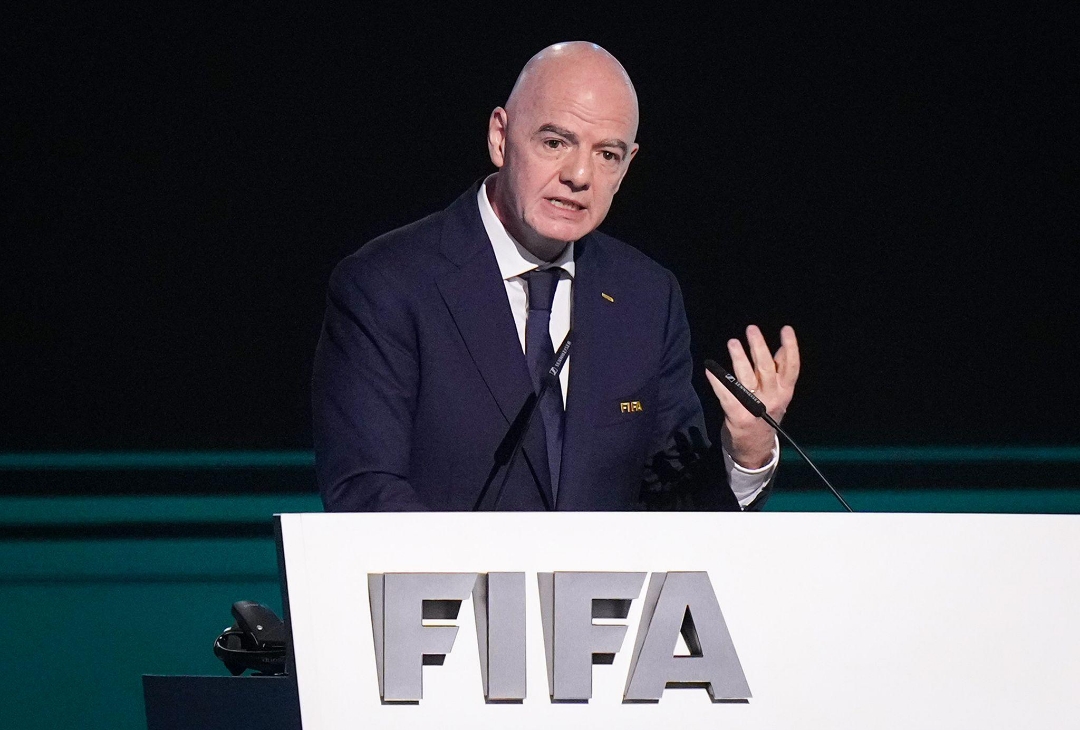
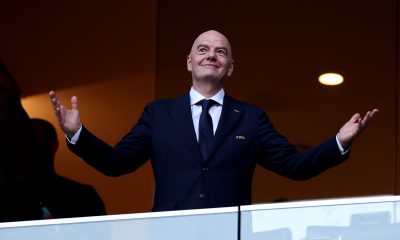
Gianni Infantino, the current President of FIFA, the global governing body for association football. He was first elected to the position in February 2016 and is a Swiss-Italian football administrator.
To understand why this proposal has caused such outrage, it is important to understand what FIFA is trying to build.
Rather than simply selling sponsorship packages or television rights as FIFA has always done the organisation wants to establish a separate commercial company called FIFA Forward Enterprise (FFE).
That company would own part of FIFA’s commercial assets, including future revenues generated by the men’s FIFA World Cup and the FIFA Club World Cup.
FIFA would then sell 20% of that company to private investors. According to reports, the leading investor is New York-based investment firm Thrive Eternal, although FIFA insists discussions remain part of an ongoing consultation process.
Infantino argues that outside investment would unlock enormous financial resources that could then be redistributed across football’s 211 member associations.
His message is simple. Instead of relying only on tournament revenues every four years, FIFA believes private investment could provide immediate funding that helps associations improve infrastructure, youth development, coaching education and grassroots football.
In a video released following widespread criticism, Infantino defended the proposal.
”FFE is actually a proposal, an offer. It’s part of a democratic consultation process and, above all, an opportunity not an obligation. It is a golden opportunity to turbocharge the development of the game globally.”
On paper, the argument sounds attractive.
Who would oppose more money flowing into football?
The answer lies in what accompanies that money.
Reports indicate every national football association would be eligible for an initial payment of $20 million, with another $20 million available later if the proposal moves forward.
However, FIFA has also reportedly set a September 19 deadline for associations wishing to access that first payment. UEFA argues that this transforms what FIFA calls a consultation into something entirely different.
Instead of allowing football associations unlimited time to study one of the biggest commercial decisions in football history, critics believe FIFA is creating financial pressure that encourages quick approval before difficult questions can be asked.
That deadline has become almost as controversial as the proposal itself. Because once money enters the conversation, football governance becomes much more complicated.
And that is exactly where this story begins to affect every federation including those across Africa.
UEFA’s Fury on FIFA World Cup: “Football Is Not for Sale”
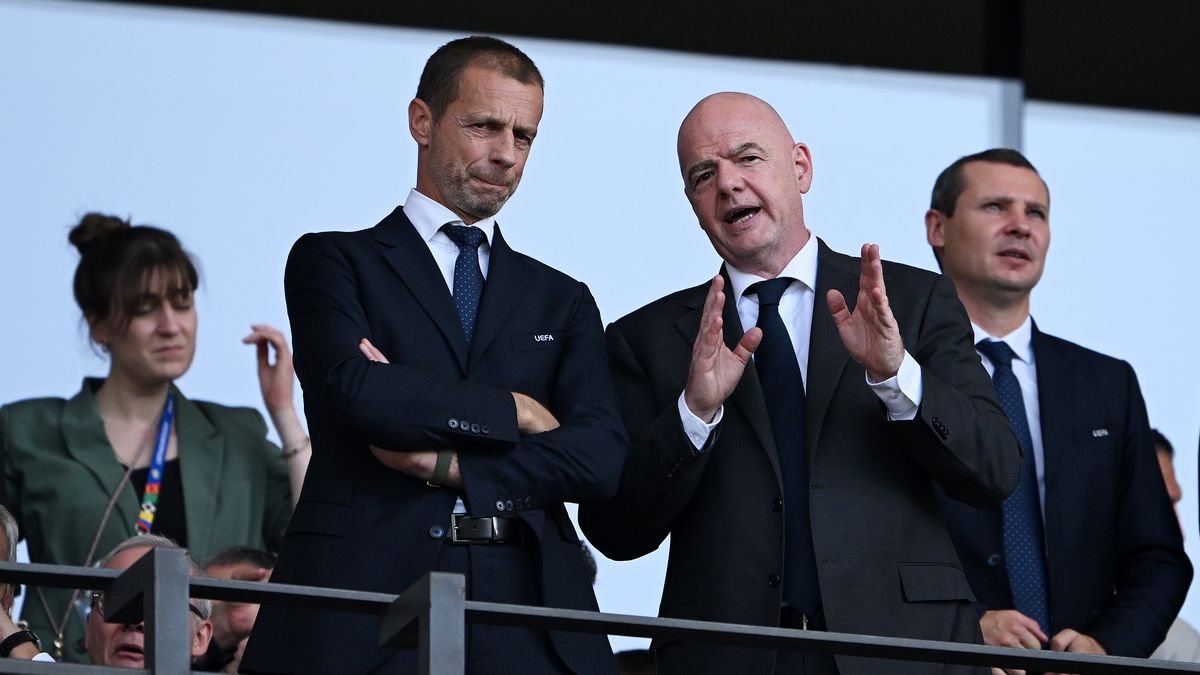
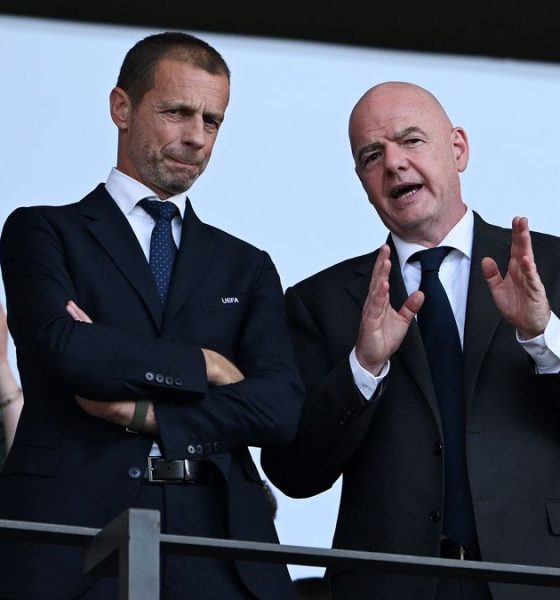
Aleksander Čeferin (left), the President of UEFA, alongside Gianni Infantino (right), the President of FIFA.
UEFA’s response was immediate, coordinated and unusually aggressive.
Rather than issuing a routine statement expressing concern, European football’s governing body called an emergency meeting involving all 55 member associations, making it clear that this is not simply another disagreement with FIFA. It is a fight over the future ownership of football’s biggest competition.
At the heart of UEFA’s anger is a belief that FIFA has crossed a line. Selling television rights is normal.
Signing commercial sponsors is expected. Negotiating broadcasting deals has always been part of modern football.
But selling an ownership stake in the commercial future of the FIFA World Cup is something entirely different.
For UEFA, that represents the beginning of football becoming another financial asset controlled by investment firms rather than sporting institutions.
Its strongest statement yet accused FIFA of “using our sport to enrich themselves and their friends.”
Those words sent shockwaves across world football. Public disputes between FIFA and UEFA are nothing new, but language this direct is exceptionally rare.
The situation became even more explosive after reports revealed FIFA had given member associations until September 19 to decide whether they wished to receive the first $20 million payment connected to the proposed investment structure.
UEFA interpreted that deadline as financial pressure rather than democratic consultation.
In a strongly worded statement, the organisation said, “Today we have learned of FIFA’s deadline to associations to support their proposals or have the one-off payout offer withdrawn. This says everything you need to know about this plan.”
UEFA insists football should never be governed through financial ultimatums.
Instead, it argues that decisions affecting the future of the World Cup deserve transparency, debate and consultation with clubs, leagues, players and supporters not deadlines attached to multi-million-dollar payments.
FIFA World Cup: CONCACAF and Asia Join the Opposition
If UEFA had been fighting alone, Infantino’s proposal might have survived without much difficulty.
Instead, two other powerful confederations quickly entered the battle.
CONCACAF, representing North America, Central America and the Caribbean, issued one of the strongest criticisms FIFA has faced in recent years.
What makes their position remarkable is that CONCACAF has arguably benefited more than any confederation from FIFA’s recent success.
The United States, Canada and Mexico had just hosted one of the most commercially successful World Cups in history.
If any confederation had reason to support FIFA’s commercial ambitions, it should have been CONCACAF. Instead, it sided with UEFA.
Its president, Victor Montagliani, reportedly learned about the proposal through media reports rather than through FIFA’s internal governance structures.
That revelation immediately raised questions about transparency.
In an official statement, CONCACAF declared, “Concacaf was only made aware of this matter through media reports and, subsequently, via a media release. We are deeply concerned by the lack of due process.”
Those words matter. Football’s continental confederations are supposed to be partners in FIFA’s decision-making process.
If senior football leaders are discovering major structural reforms through journalists rather than official meetings, confidence in FIFA’s governance inevitably begins to collapse.
The Asian Football Confederation (AFC) has also expressed support for UEFA’s concerns, creating an alliance that now stretches across Europe, North America and Asia.
Together, those three confederations account for 143 of FIFA’s 211 member associations. That is an extraordinary coalition.
Never before have three of football’s biggest confederations appeared so united against a major FIFA proposal.
Does Infantino Actually Have Enough Votes for the new FIFA World Cup?
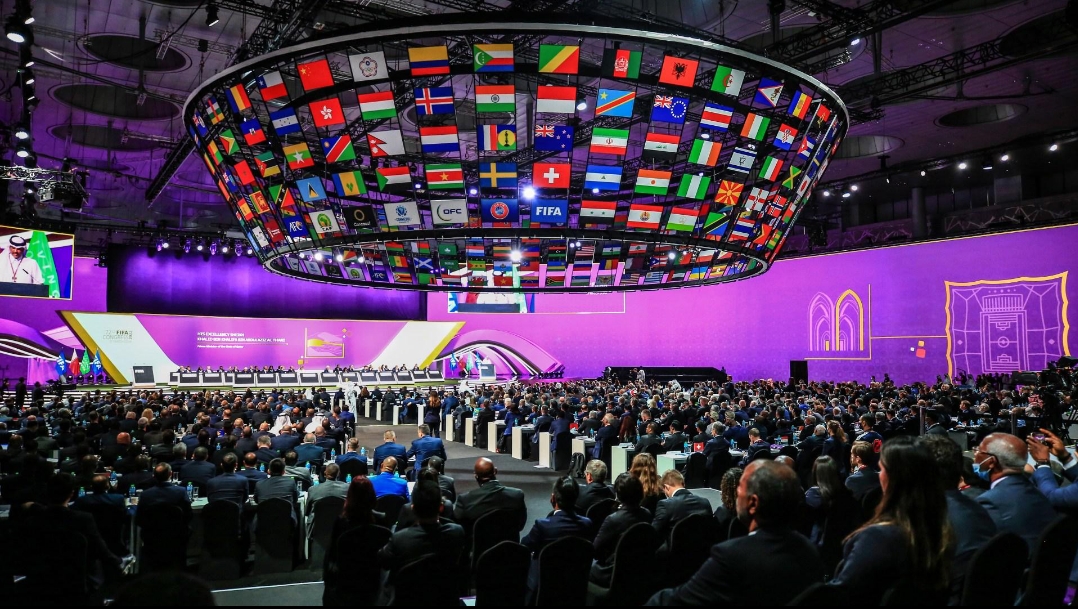
Large conference hall filled with attendees at the 72nd FIFA Congress in Doha, Qatar, featuring a massive, illuminated circular overhead display covered in international flags.
On paper, the numbers appear straightforward. FIFA has 211 voting member associations.
UEFA has 55. CONCACAF has 41. The AFC has 47. Combined, that equals 143 associations.
If they all vote together, logic suggests the proposal should fail.
Yet Gianni Infantino remains publicly confident. Reports indicate he has already received more than 200 letters supporting his re-election, and insiders believe he still expects the investment proposal to succeed.
How? That question has become one of football’s biggest mysteries.
Several governance experts believe the answer lies in FIFA’s statutes.
If the proposal requires only a simple majority, Infantino’s chances improve considerably.
However, many legal experts argue that creating an entirely new commercial company and selling part of FIFA’s flagship competitions would require changing FIFA’s statutes.
That process demands a 75% majority, not just 50%. Achieving that threshold would be significantly harder.
It would require approximately 159 votes. If UEFA, CONCACAF and the AFC remain united, blocking the proposal becomes mathematically possible.
But football politics rarely follows simple mathematics. Some smaller associations may decide that immediate financial support is more valuable than long-term governance concerns.
Others may believe the investment genuinely benefits football. And some may simply choose loyalty to FIFA’s leadership.
One crack has already appeared. The Czech Football Association became the first UEFA member publicly reported to support Infantino’s proposal.
If more European associations follow that path, the united front UEFA is trying to build could quickly weaken. That possibility explains why Thursday’s emergency meeting has become so important.
It is not simply about expressing opposition. It is about ensuring Europe speaks with one voice before FIFA’s September deadline arrives.
The African Dilemma: $20 Million Today or Football’s Future Tomorrow?
This is where the story moves beyond Europe. It becomes Africa’s story.
While UEFA, CONCACAF and the Asian Football Confederation have publicly questioned FIFA’s proposal, the Confederation of African Football (CAF) has remained noticeably silent.
That silence is not accidental. It reflects one of the most difficult decisions African football has faced in decades.
Reports indicate that every FIFA member association could receive an initial payment of $20 million, followed by another $20 million at a later stage if the investment proposal proceeds.
For many European associations, that money is significant. For many African associations, it is transformative.
Across the continent, numerous football federations operate with limited budgets. Many continue to struggle with inadequate stadium infrastructure, insufficient youth academies, poor training facilities, financial instability and domestic leagues that desperately need investment.
An immediate injection of $20 million could change everything. It could build academies. And it could modernise stadiums.
It could improve women’s football. Also it could finance coaching education.
It could strengthen youth competitions that African football has needed for decades.
This is precisely why Africa now occupies the most important position in this entire debate.
FIFA World Cup: Africa Could Decide Football’s Future
For years, African football has fought to gain greater influence inside FIFA.
Ironically, that influence has now arrived but not because Africa asked for it.
Instead, it has arrived because Europe and Asia need Africa’s votes.
CAF represents 54 FIFA member associations. If Europe, CONCACAF and Asia remain united against Infantino’s proposal, Africa’s collective position could determine whether the plan succeeds or collapses.
That gives CAF enormous leverage. But it also creates enormous responsibility.
Supporting the proposal would likely help Infantino secure one of the biggest commercial reforms in FIFA’s history.
Rejecting it could stop the project entirely. Very few moments have ever placed African football in such a powerful political position. For once, Africa is not simply watching history. It is helping write it.
Is This Development Funding or Financial Pressure?
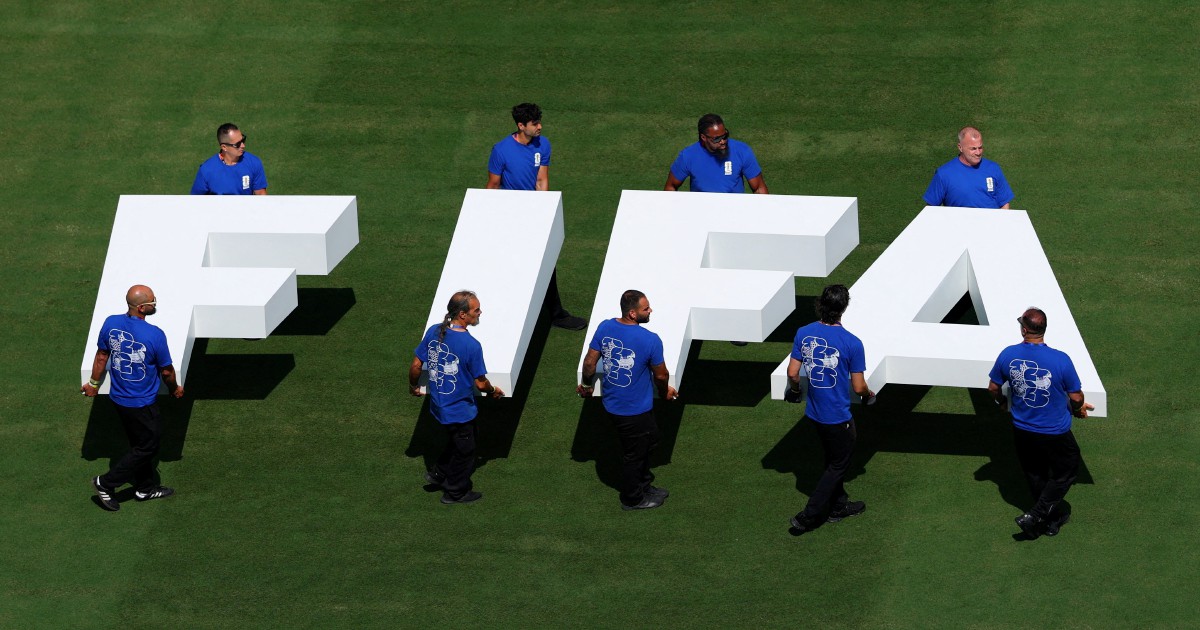
Volunteers carrying large white 3D block letters spelling FIFA on a green football field during a stadium event.
Supporters of FIFA’s proposal argue that critics are ignoring the obvious benefits.
Football development requires money. Many African associations genuinely need greater financial support.
Infrastructure projects cannot be built on promises alone. Grassroots football cannot grow without investment.
Women’s football deserves significantly higher funding. From that perspective, FIFA’s proposal appears attractive.
But UEFA insists there is another side to the story. The concern is not simply about the money itself.
It is about how that money is being offered. The reported September 19 deadline has become one of the biggest flashpoints.
Associations are effectively being asked to indicate support for a proposal before every detail has been publicly debated. That creates uncomfortable questions.
Can a decision of this magnitude truly be independent when millions of dollars are attached to it?
Does accepting the money automatically imply political support?
Or is it simply development funding with no strings attached?
FIFA says the proposal is voluntary.
Its critics argue the financial structure tells a different story.
For African football associations facing genuine financial challenges, separating those two arguments becomes incredibly difficult.
Africa Has Already Changed Football Now It Must Protect It
The timing makes this story even more significant.
Only days ago, the football world celebrated the greatest collective World Cup performance in African history. Ten African nations qualified.
Nine progressed beyond the group stage. Morocco reached another quarter-final. Egypt almost eliminated Argentina.
Cape Verde became one of the tournament’s biggest success stories. DR Congo announced its return to the global stage.
The old stereotype surrounding African football was finally buried. The continent proved it belongs among football’s elite.
Now Africa faces a different challenge. It must show leadership away from the pitch. The decisions made over the coming weeks could shape football for generations.
If Africa simply follows whichever side offers the biggest financial incentive, critics will argue the continent missed an opportunity to influence global football responsibly.
If it rejects funding that could transform local football, millions of supporters may question whether politics has been placed ahead of development.
There is no easy answer. That is exactly why CAF’s silence has become one of the biggest stories in world football.
For perhaps the first time in FIFA history, Africa is not merely participating in the conversation. It is at the centre of it.
The African Vote That Could Decide The New FIFA World Cup
For Sportxparte readers, this is where the story becomes personal.
UEFA may be leading the resistance. CONCACAF may be questioning FIFA’s governance. The AFC may be backing calls for greater transparency. But African football could ultimately decide the outcome.
CAF has not yet announced its official position on Gianni Infantino’s proposal. That silence has become one of the most important stories in world football.
Africa has always fought for greater investment. From inadequate infrastructure to underfunded youth academies and struggling domestic leagues. Many African football associations operate on budgets that are tiny compared to their European counterparts.
That is why FIFA’s proposal is so complicated.
An immediate payment of $20 million could transform football in many African countries. It could fund coaching education, improve stadiums, invest in women’s football, strengthen youth development and modernise federation structures.
For many associations, that amount represents years of football investment.
But the bigger question is whether accepting the money comes with a price that cannot be measured financially.
If the proposal succeeds because financially vulnerable federations feel compelled to support it. African football risks being remembered as the deciding vote in one of FIFA’s most controversial governance decisions.
This is not simply about money. It is about who controls football’s future.
After World Cup 2026, Africa finally earned global respect on the pitch.
Ten African nations qualified. Historic performances changed international perceptions.
European clubs rushed to sign African stars. Now the continent faces another defining moment not with a football at its feet, but with a vote.
Will Africa choose immediate financial support?
Or will it demand stronger governance before agreeing to football’s biggest commercial transformation?
Whatever CAF decides will influence world football for decades.
Why the Women’s World Cup Is Being Dragged Into the Crisis
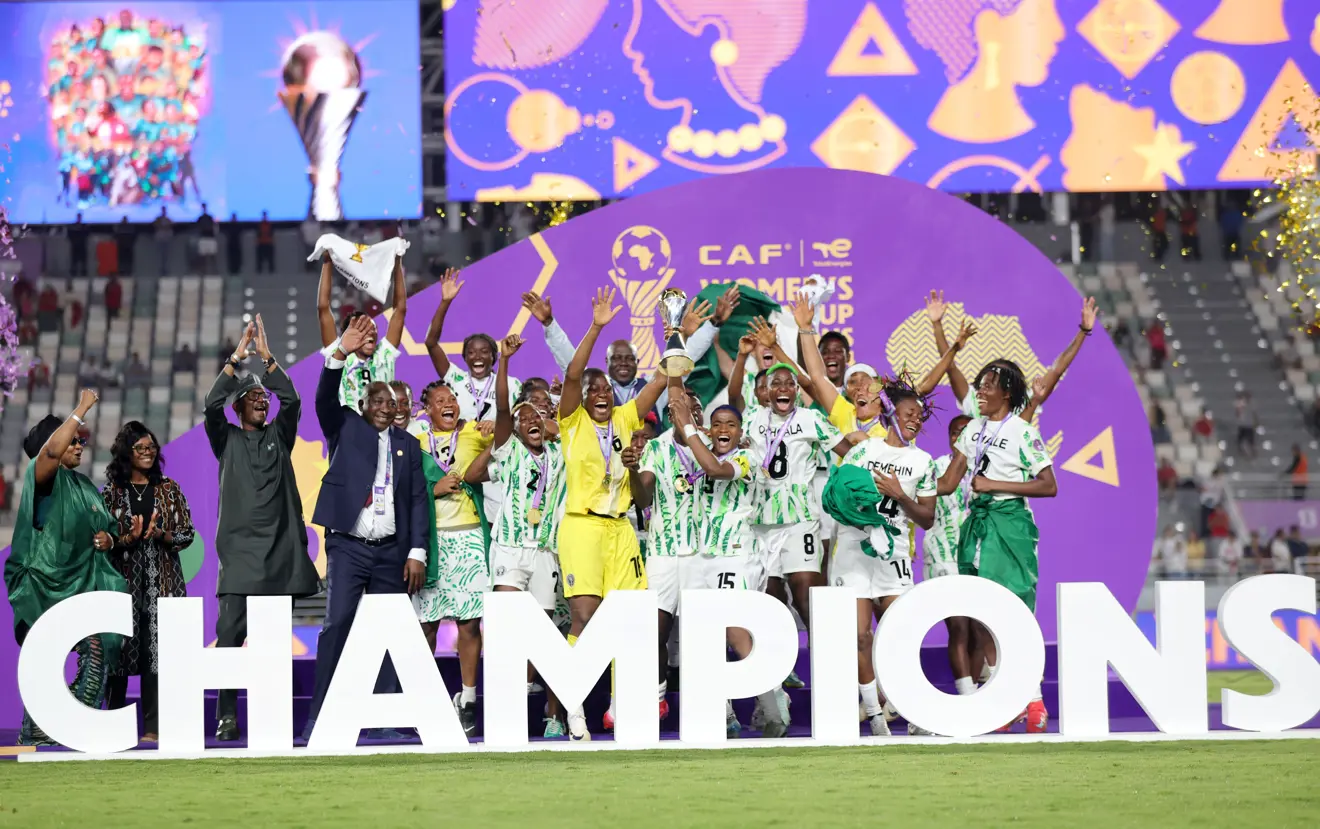
The Nigeria women’s national football team, known as the Super Falcons, is celebrating their 10th Women’s Africa Cup of Nations (WAFCON) title.
Perhaps the most worrying aspect of this dispute is that the 2027 FIFA Women’s World Cup has become a potential bargaining chip.
Reports suggest that UEFA has discussed the possibility of boycotting FIFA tournaments, with the Women’s World Cup being mentioned because it is the next major FIFA competition.
Even within UEFA there appears to be hesitation. Many officials understand that punishing women’s football over disagreements involving the men’s World Cup would be deeply unfair.
That concern is particularly relevant for Africa. Women’s football across the continent is enjoying unprecedented growth.
Nigeria’s Super Falcons remain Africa’s benchmark. Morocco continues investing heavily after hosting consecutive major women’s tournaments.
South Africa, Zambia, Cameroon and several other nations have dramatically improved their women’s programmes.
The last thing African women’s football needs is political conflict between FIFA and UEFA overshadowing the game’s biggest stage.
The players have done nothing wrong. Their tournament should not become collateral damage in a governance battle.
FIFA World Cup: Can Infantino Actually Win?
Despite the growing opposition, Gianni Infantino remains publicly confident.
According to multiple reports, he has already secured more than 200 letters supporting his re-election next year.
However, support for a president and support for a specific commercial proposal are not necessarily the same thing.
The crucial issue is the voting threshold. Several governance experts believe creating FIFA Forward Enterprise would require changing FIFA’s statutes.
If that interpretation is correct, the proposal would need a 75% majority rather than a simple majority.
That changes everything. With UEFA, CONCACAF and the AFC representing 143 member associations, reaching that threshold becomes significantly more difficult unless divisions emerge within those confederations.
The September 19 deadline therefore becomes critical. Every discussion between now and then could determine whether football enters a completely new commercial era or whether FIFA is forced back to the negotiating table.
Verdict: Football Is Fighting for Its Soul
The greatest football stories are usually decided on the pitch.
Goals. Finals. Last-minute winners. This story is different.
It will be decided inside boardrooms.
Through votes, and through governance.
Through the decisions of football administrators whose choices may affect the sport long after today’s players have retired.
Gianni Infantino describes FIFA Forward Enterprise as an opportunity.
UEFA calls it the sale of football’s soul. CONCACAF questions the process. Asian football has joined the opposition.
Africa now finds itself in perhaps the most influential position of all.
For decades, African football has demanded a greater voice inside FIFA. Now it has one. How that voice is used may define football’s future far more than any World Cup final.
Because once ownership of football’s biggest competition begins changing hands, there may be no going back.
The World Cup belongs to generations of supporters. To legends who built its history.
To nations that dream of lifting the trophy.
The question now facing world football is simple. Should football’s greatest tournament ever become another commercial asset for private investors?
The answer could reshape the game forever.