News
Spain’s Football Philosophy Explained: The Real Reason They Keep Winning
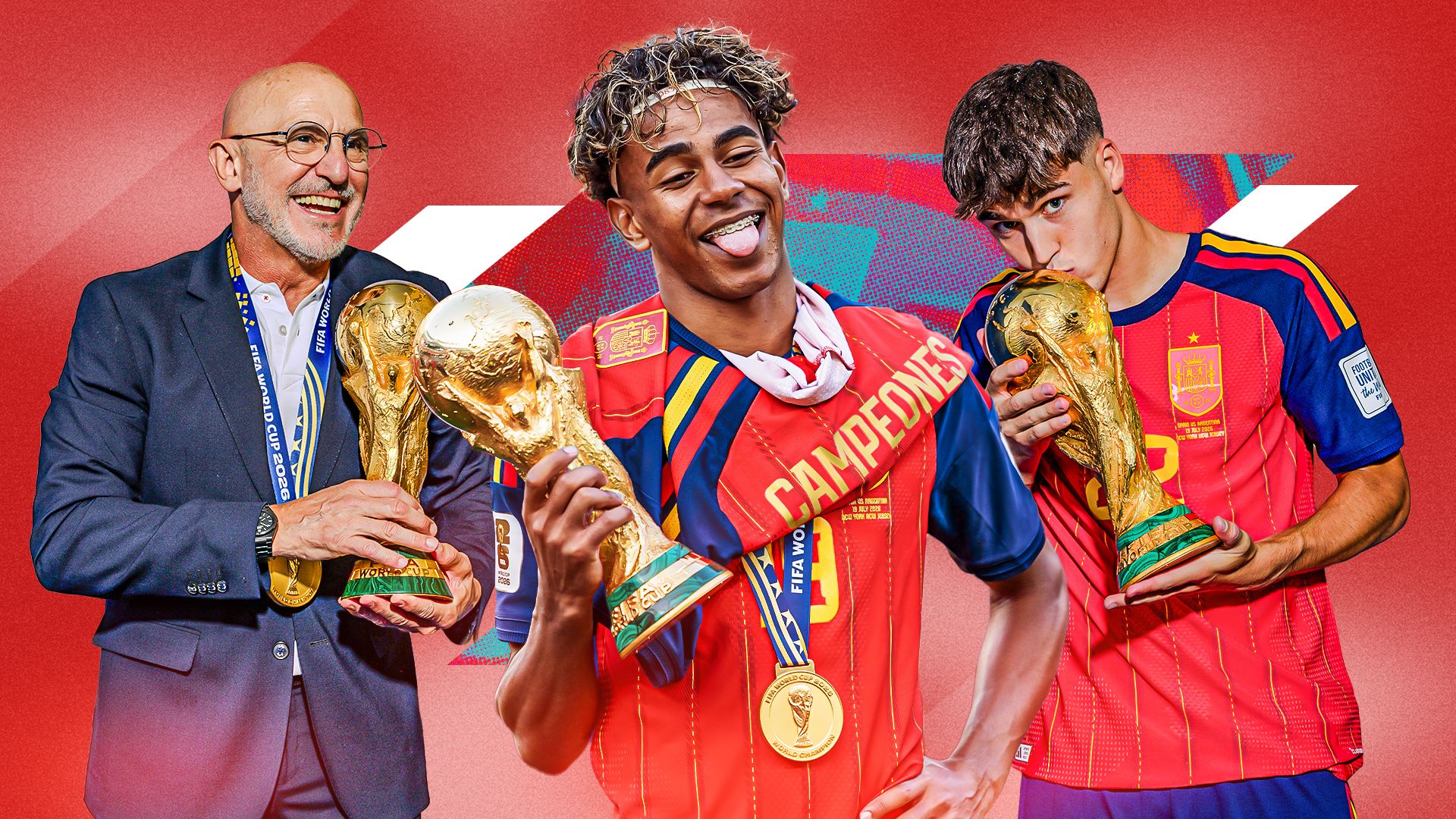
When the final whistle sounded at MetLife Stadium and Spain lifted the 2026 FIFA World Cup, there was remarkably little shock across the football world.
This was not a surprise champion. It was the inevitable conclusion to a project that has been quietly perfected over decades.
Spain defeated Argentina to become world champions, extending their unbeaten run to 38 matches the longest ever recorded by a European or South American national team.
Even more remarkably, they repeated a familiar pattern from 2010, winning the FIFA World Cup after arriving as reigning European champions.
For most nations, winning one major tournament is the culmination of a golden generation. For Spain, it has become a production line.
That reality should concern every football nation hoping to compete with them, especially those in Africa. While many countries continue to search for the next superstar capable of changing their fortunes. Spain has built a system where stars emerge naturally because the structure never changes.
Spain Football: Sixteen major titles in just five years
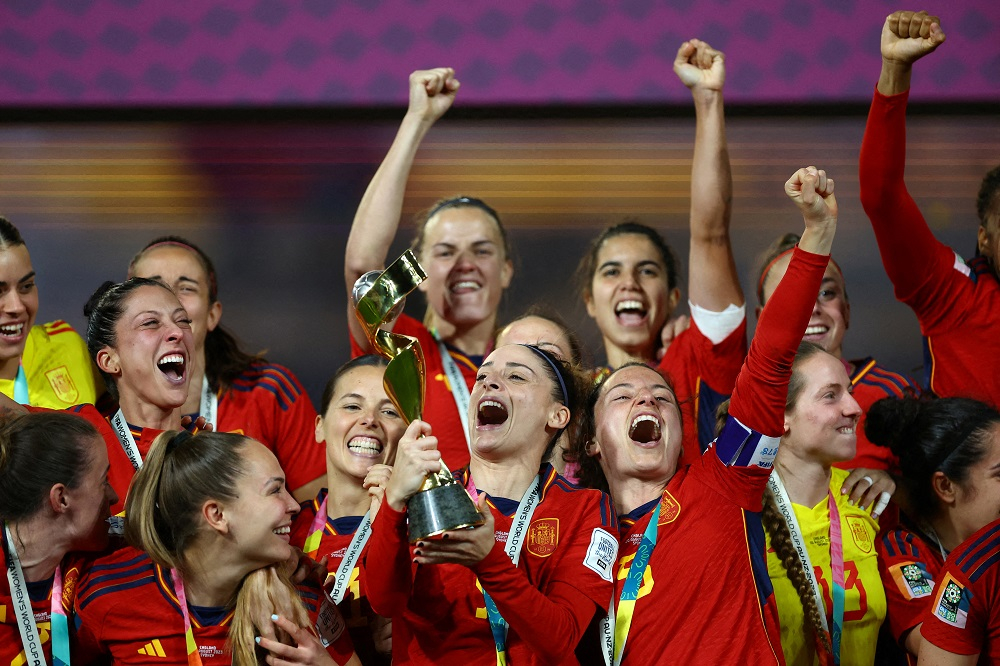
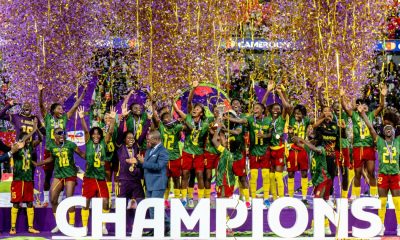
Spain women’s national football team celebrating their victory in the 2023 FIFA Women’s World Cup final against England.
Spain’s dominance goes far beyond the senior men’s national team.
During the last five years, Spanish football has collected an astonishing 16 European and world titles across different age categories. From Under-17 level right through to senior football, on both the men’s and women’s sides.
No other nation can currently claim such consistency.
Even more impressively, Spain simultaneously hold both the men’s and women’s FIFA World Cup titles a testament to a football culture that produces excellence regardless of gender or age group.
This consistency is no coincidence. Players come and go. Coaches retire. Generations change.
Yet Spain continue winning. That is because their success has never depended on one exceptional player.
It has depended on an exceptional football philosophy.
Spain’s Football: The Difference Between Producing Players and Producing Footballers
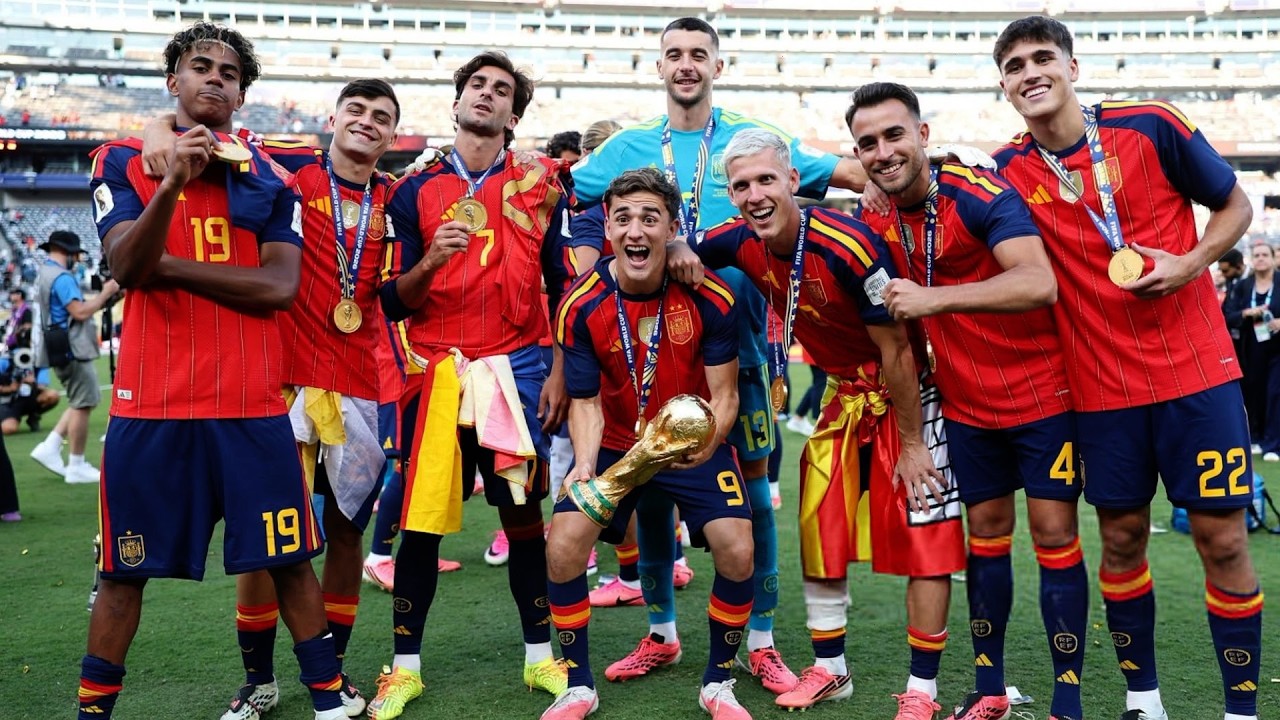
Spain national football team players from FC Barcelona celebrating after winning the 2026 FIFA World Cup final. The match took place on July 19, 2026, at MetLife Stadium (New York/New Jersey Stadium) in East Rutherford, New Jersey. Spain defeated Argentina 1–0 in extra time, courtesy of a decisive championship goal from substitute Ferran Torres.
Most football nations celebrate when they discover one outstanding youngster.
Spain expects to produce hundreds. That difference begins long before players reach professional football.
Children entering football academies in Spain at eight or nine years old are introduced to a common understanding of the game. Before they think about trophies or contracts, they are taught how to receive the ball. How to position themselves, how to create passing triangles and, perhaps most importantly, how to make decisions under pressure.
Winning youth matches is never the primary objective. Creating intelligent footballers is.
That philosophy continues throughout every stage of development. Perhaps no club represents this better than Barcelona.
For decades, every young player wearing the famous Blaugrana shirt has been educated under essentially the same football principles.
Whether they play for the Under-10s or the first team, the identity remains recognisable.
Coaches may adjust formations. Managers may introduce slight tactical differences.
But the core principles rarely change. That continuity explains why Barcelona graduates often look comfortable immediately after reaching senior football.
They are not learning a new language. They have been speaking it since childhood.
Much of this philosophy traces back to Johan Cruyff, whose revolutionary ideas transformed Barcelona during the late 1980s and early 1990s.
Cruyff believed football should be simple, intelligent and courageous.
More importantly, he believed these ideas should be taught from the very beginning rather than introduced once players became professionals.
More than three decades later, Spain continues benefiting from that vision.
Why This Matters to African Football
Spain’s success should not simply be admired from afar. It should be studied.
African football has never lacked talent. World Cup 2026 proved that beyond any doubt. Morocco reached another quarter-final.
Egypt finally broke through to the knockout rounds. Cape Verde became one of the tournament’s biggest surprises.
DR Congo announced themselves as a genuine rising force. Across Europe, clubs are already competing to sign African stars like Ayyoub Bouaddi, Ismael Saibari, Yan Diomande and several others.
Talent has never been Africa’s problem. Consistency has. Too often, African nations rely on extraordinary generations rather than extraordinary systems.
When those golden generations retire, rebuilding often begins from scratch. Spain offers a completely different model.
Instead of waiting for another Lionel Messi or Kylian Mbappé-style talent, they simply trust their football education system to produce the next wave.
That is why they keep winning while everyone else starts over.
For Africa, the lesson is obvious. The continent does not need to copy Spanish players.
It needs to understand the Spanish process. Because while individual brilliance can win a match, only a coherent football philosophy can dominate generations.
And right now, nobody in world football has mastered that philosophy better than Spain.
Spain Didn’t Become World Champions Overnight
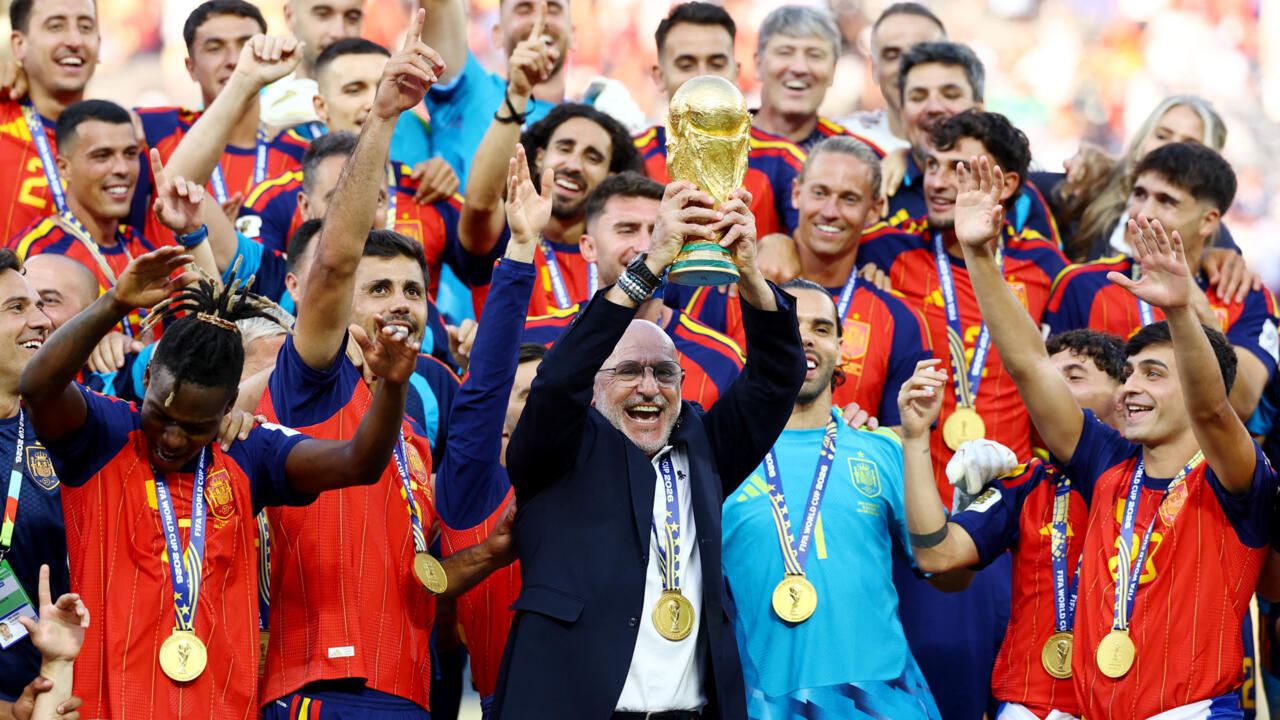
Spain national football team is celebrating their victory after winning the 2026 FIFA World Cup final match against Argentina on July 19, 2026.
Spain’s latest World Cup triumph may look effortless from the outside. But it is the product of a football philosophy that has remained remarkably consistent for more than three decades.
While many national teams rebuild every four years after tournament disappointments. Spain have spent decades refining one identity rather than constantly searching for a new one.
The result is astonishing. Since 2021, Spanish football has collected 16 European and World titles across men’s and women’s football, from Under-17 level all the way to the senior national teams. No other country can claim that level of sustained dominance across every age group.
For African football, that achievement should be studied closely. Morocco’s rise has shown that long-term planning works, but Spain demonstrate what happens when an entire football ecosystem commits to one philosophy over several generations.
Spain’s Football: One Philosophy From Childhood to the Senior Team

This resurfaced 2007 photograph depicts a young Lionel Messi helping to bathe a six-month-old baby who is now football star Lamine Yamal.
The biggest difference between Spain and many football nations is that Spanish players are not introduced to a new playing style every time they move up an age group.
Instead, the principles remain almost identical.
A player joining a Spanish academy at eight or nine years old is taught to value possession, create passing triangles, play under pressure, and understand positioning long before physical strength becomes important. As they progress through the youth ranks, those ideas are reinforced rather than replaced.
By the time they reach the senior national team, the tactical language is already familiar.
That continuity makes the transition almost seamless. Young players are not trying to adapt to an entirely different football philosophy they are simply executing concepts they have lived with for years.
It explains why Spain can introduce teenagers into major tournaments without disrupting the team’s identity. Whether it is Lamine Yamal, Pau Cubarsí or another emerging talent, they already understand what the shirt demands.
Spain’s Football: Barcelona and Johan Cruyff’s Lasting Legacy
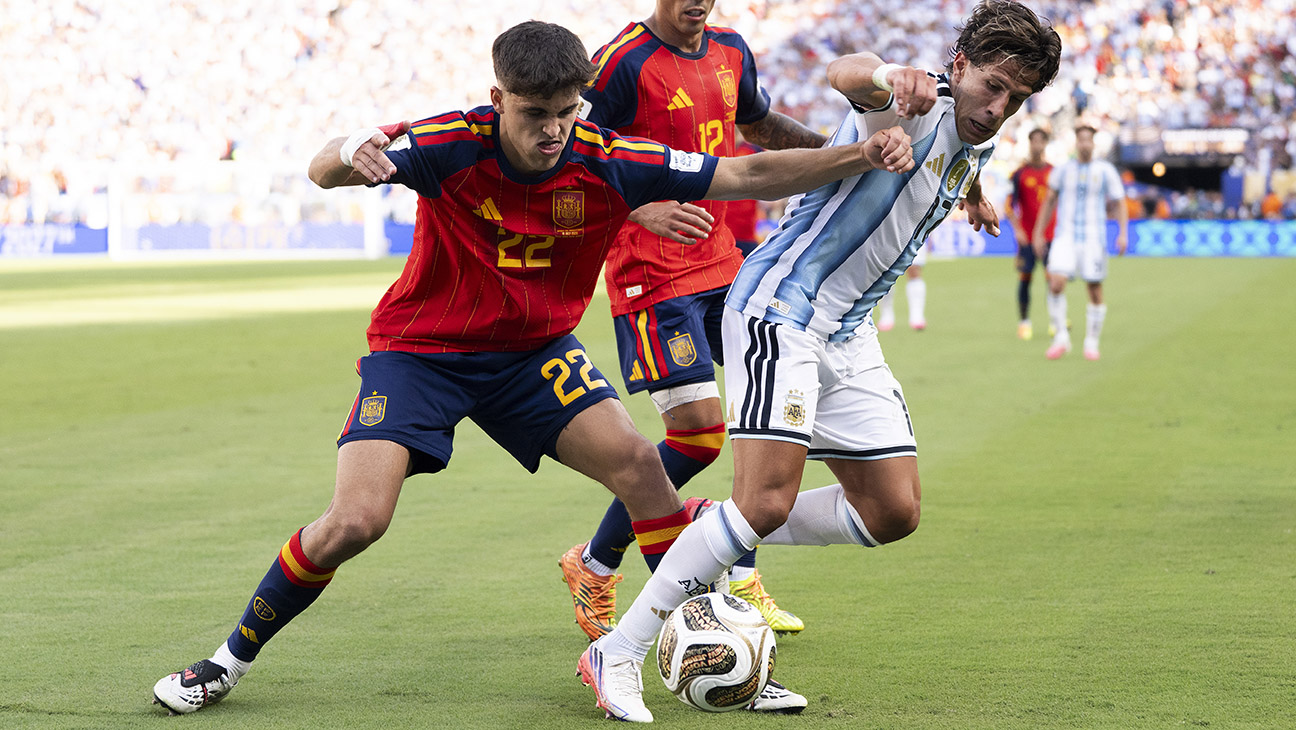
Spain defender Pau Cubarsí number 22 battling Argentina midfielder Giuliano Simeone for possession during the 2026 FIFA World Cup Final match at MetLife Stadium.
No discussion of Spain’s football philosophy is complete without acknowledging Johan Cruyff.
When the Dutch legend transformed Barcelona during the late 1980s and early 1990s, he did much more than win trophies. He fundamentally changed how the club viewed football development.
Cruyff insisted that technical ability should always come before physical dominance. Every youth team would mirror the first team’s style, ensuring that promotion through the academy became a natural progression rather than a dramatic adjustment.
That philosophy still defines Barcelona today.
Whether watching Barcelona’s Under-15 side or the senior team, the same footballing DNA is immediately recognisable. Coaches may introduce slight tactical adjustments, but the core principles remain untouched.
Possession, movement, intelligent positioning, and quick combinations.
Playing through pressure instead of avoiding it.
That consistency has allowed Barcelona to produce generation after generation of elite footballers, many of whom have become the backbone of Spain’s national teams.
Spain’s National Teams Speak the Same Football Language
The same philosophy extends beyond Barcelona. Spain’s football headquarters at La Ciudad del Fútbol in Las Rozas acts as the central hub for every national team, from youth football to the senior squads.
Players arriving from different clubs already understand the country’s footballing identity because it has been reinforced throughout their development.
Rather than spending international camps teaching completely new tactical systems, coaches focus on refining details.
This saves valuable preparation time while strengthening the collective identity that has become Spain’s greatest competitive advantage.
It also explains why Spain continue producing technically gifted midfielders regardless of generation.
Xavi and Iniesta retired. Pedri and Gavi emerged. Now another generation is already arriving.
The names change. The football does not.
What Africa Can Learn From Spain’s Football
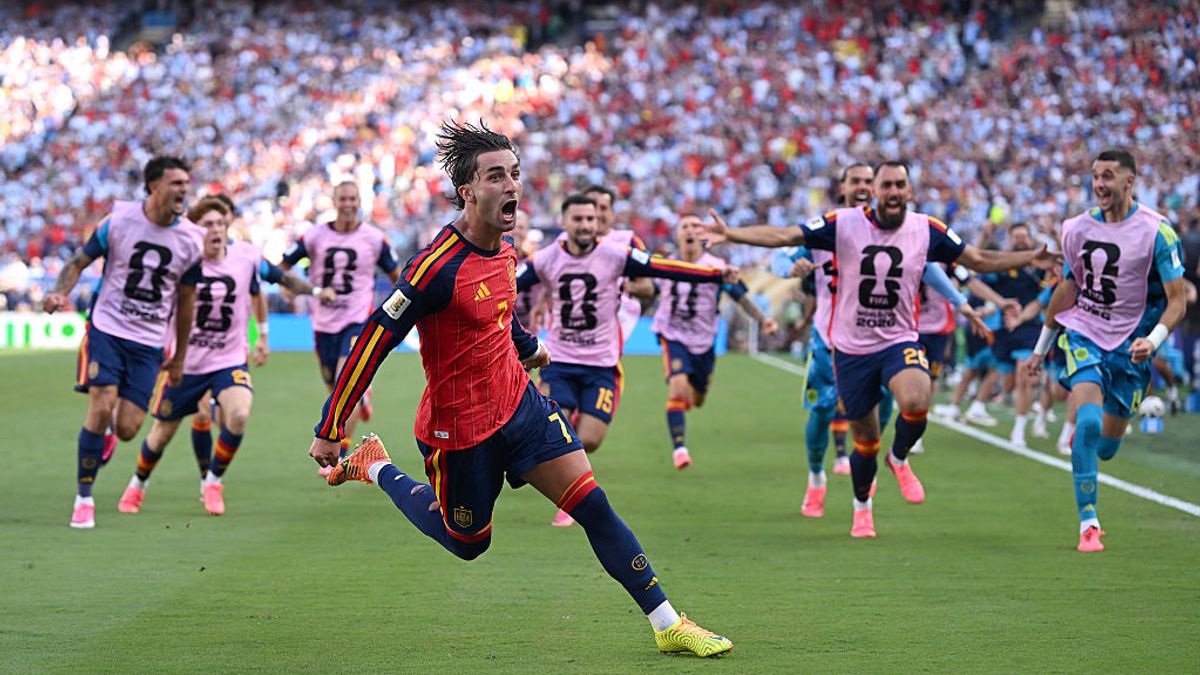
Ferran Torres of Spain celebrating after scoring the winning goal in the 2026 FIFA World Cup final against Argentina.
For African football, Spain’s model offers an important lesson.
Success cannot rely solely on talented individuals.
Many African countries consistently produce exceptional footballers capable of starring in Europe’s biggest leagues.
However, those players often arrive in national team camps having developed under completely different tactical systems.
One player comes from England. Another from France. And another from Belgium.
Another from North Africa another from local domestic leagues.
Each has learned football differently. That diversity creates exciting talent, but it can also make building a consistent national identity far more difficult.
Morocco have started solving that challenge better than anyone else on the continent.
The Atlas Lions now play with a clearly recognisable identity regardless of personnel. Their back-to-back deep World Cup runs are evidence that long-term planning can close the gap with traditional football powers.
The challenge for other African nations is to create similar pathways that connect youth football with senior success.
Spain did not become world champions because they discovered one extraordinary generation.
They became champions because every generation has been prepared to play the same game.
Why England Still Cannot Catch Spain’s Football
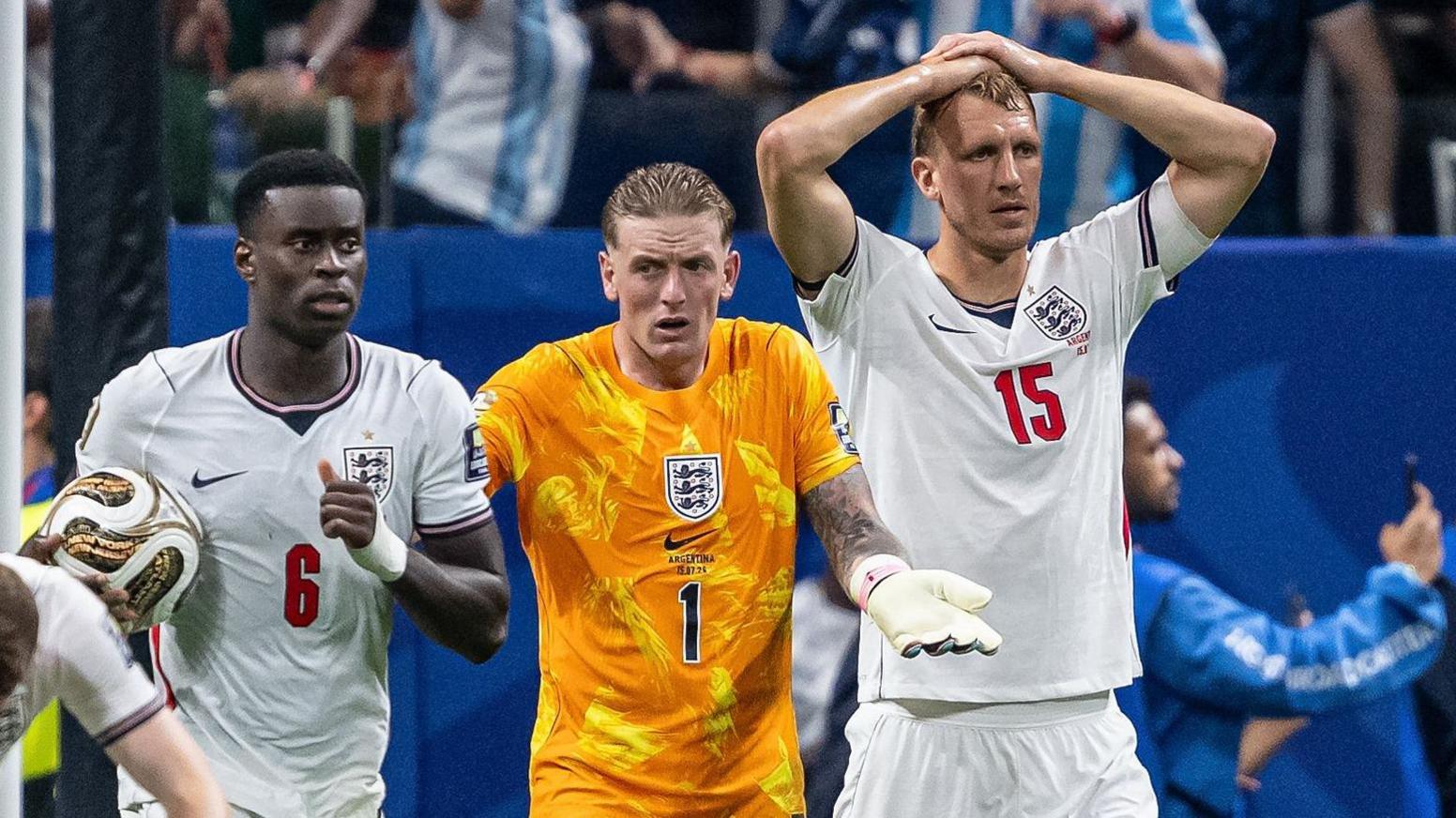
An England national football team players Jordan Pickford, John Stones, and Marc Guéhi react with heartbreak and dejection on the pitch following their 2-1 defeat to Argentina in the 2026 FIFA World Cup semi-finals.
Spain’s triumph at the 2026 FIFA World Cup was not simply another trophy added to an already overflowing cabinet. It was another reminder that football success is rarely accidental. It is planned, protected and passed from one generation to the next.
England, meanwhile, continue to ask the same question every tournament: Why do we keep falling short?
The answer is not simply about producing talented footballers. England has never lacked talent. Jude Bellingham, Bukayo Saka, Cole Palmer, Phil Foden and Declan Rice would improve almost any national team in the world.
Yet once again, they were left watching another country celebrate. The biggest difference lies in consistency.
Since 2000, England have appointed nine different managers. Sven-Göran Eriksson, Steve McClaren, Fabio Capello, Stuart Pearce, Roy Hodgson, Sam Allardyce, Gareth Southgate, Lee Carsley and Thomas Tuchel have all brought different tactical philosophies, different coaching methods and different ideas of how England should play.
That constant change creates confusion.
One generation of players learns possession football. The next is introduced to a counter-attacking system.
Another is expected to press aggressively. Then comes another manager who prefers defensive stability. Instead of building a football identity, England keeps rebuilding from scratch.
Spain’s football has done the opposite. Whether it was Vicente del Bosque, Luis Enrique or Luis de la Fuente, the philosophy barely changed. The faces on the touchline changed, but the football remained recognisably Spanish.
That continuity allows players to move seamlessly from the Under-17s to the senior team because they already understand what is expected of them.
England’s players often spend years adapting to entirely new systems whenever a managerial change occurs.
Why France Built a Winning Machine
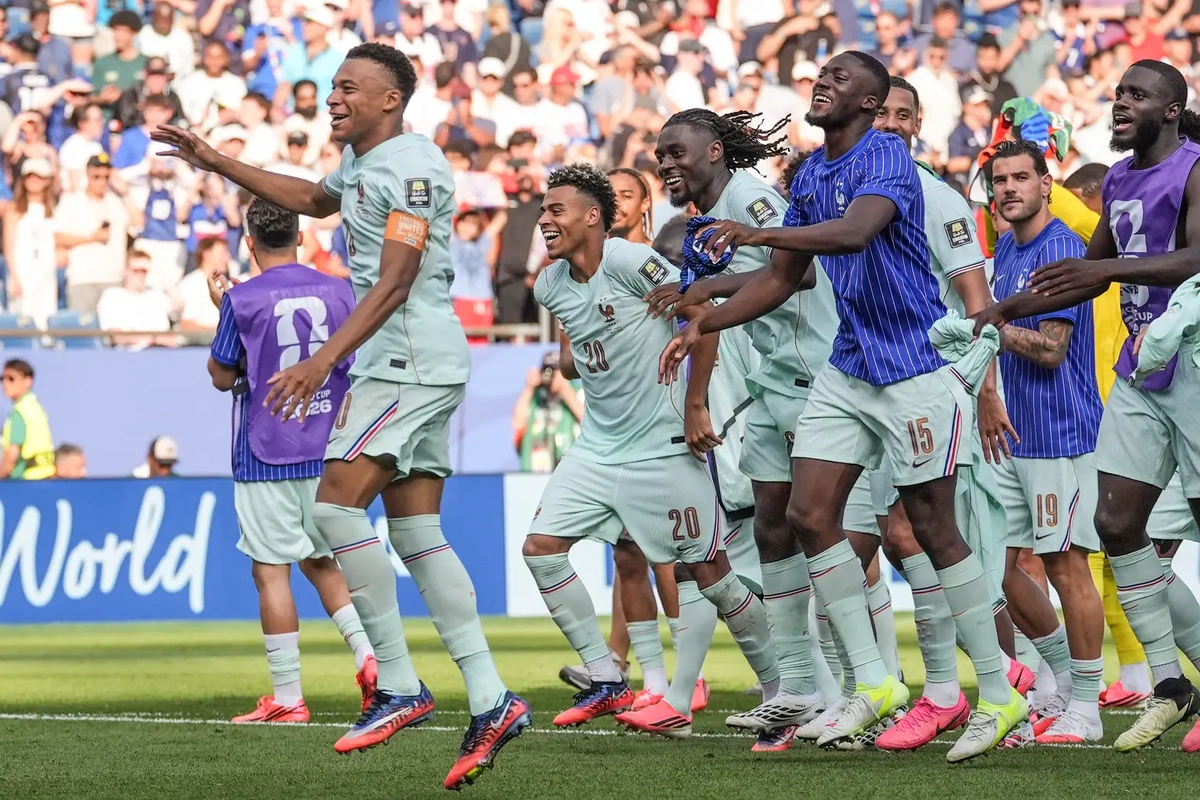
The France national football team celebrates a goal during their 2-0 quarter-final victory against Morocco at the 2026 FIFA World Cup.
If Spain perfected possession football, France perfected player development.
The French Football Federation recognised decades ago that producing elite footballers required far more than talented coaches.
It required infrastructure. That thinking led to the creation of Clairefontaine, officially known as the Centre National du Football, which opened in 1988.
Initially, some questioned the investment.
However, ten years later France lifted the 1998 FIFA World Cup on home soil.
Since then, French football has become one of the world’s greatest talent factories.
Thierry Henry. Zinedine Zidane. Kylian Mbappe. Antoine Griezmann, Paul Pogba, N’Golo Kante, Aurelien Tchouameni, and Eduardo Camavinga.
Different generations, different personalities, but all emerging from a football structure built around the same principles.
Young French players are introduced to the national identity long before they reach senior football.
Every age group speaks the same football language. That consistency explains why France have remained among football’s elite for almost three decades.
England Started Too Late
England attempted to replicate that model through St George’s Park, but timing matters.
The national football centre only opened in 2012.
By then, Clairefontaine had already been operating successfully for 24 years. Spain’s Las Rozas had also become one of Europe’s leading football education centres.
England was trying to solve a problem that other nations had already fixed a generation earlier.
Even today, another significant difference remains. Spanish and French players are introduced to national-team environments much earlier.
Many English youngsters are not invited into St George’s Park until they are around 15 years old.
That might not sound significant. In reality, those two years represent hundreds of training sessions, thousands of touches on the ball and countless tactical lessons.
By the time English teenagers arrive, many have spent years playing different systems at club level that may bear little resemblance to what the national team expects.
Spanish players rarely experience that disconnect. Their football education follows one continuous pathway.
What Africa Should Learn From Spain’s Football
This is where the conversation becomes particularly relevant for African football.
The temptation after Morocco’s historic World Cup run in 2022 and another outstanding campaign in 2026 is to focus only on results.
That would be a mistake. The real lesson is not Morocco reaching the latter stages of the tournament.
The real lesson is how Morocco reached them. And the Royal Moroccan Football Federation spent years investing in coaching education, academies and youth development before the results appeared.
The Mohammed VI Football Academy became one of Africa’s finest development centres.
Players such as Ayyoub Bouaddi, Ismael Saibari and several members of Morocco’s golden generation benefited from an organised football structure rather than isolated talent.
That approach mirrors Spain. It proves that success starts long before the World Cup begins.
Across Africa, enormous talent exists in Nigeria, Senegal, Ghana, Ivory Coast, Egypt, DR Congo and South Africa.
What remains inconsistent is the pathway. Too many African nations still change coaches after every disappointing tournament.
Each new manager introduces a different philosophy. And each youth team plays differently. Each generation starts again.
Spain demonstrates that sustained excellence comes from continuity, not constant reinvention.
Imagine if every Nigerian youth team, from Under-13 to senior level, played the same style.
Imagine Ghana building a football identity that survived multiple coaching changes. Also imagine CAF nations collaborating to improve coaching education while strengthening domestic academies.
The continent has already proven it can produce world-class players. The next challenge is producing world-class football systems.
As Johan Cruyff famously said, “Playing football is very simple, but playing simple football is the hardest thing there is.”
Spain has mastered that simplicity. England is still searching for it.
Africa now has an opportunity to learn from it.
What African Football Must Learn From Spain’s Success
For African football fans, Spain’s latest World Cup triumph should be more than a story of admiration. It should be a case study.
The continent has never lacked talent. Every generation has produced world-class players capable of competing with anyone. George Weah, Samuel Eto’o, Didier Drogba, Yaya Touré, Mohamed Salah, Riyad Mahrez, Achraf Hakimi and Victor Osimhen are proof that Africa can produce players of the highest quality.
The problem has rarely been talent. The problem has been creating an environment where that talent develops within one clear football identity.
Spain did not become world champions because they discovered better footballers than everyone else. They became champions because thousands of coaches across the country teach football in the same language.
African football can take important lessons from that. Morocco has already shown what happens when long-term planning replaces short-term thinking. The Royal Moroccan Football Federation invested heavily in coaching education, modern training facilities and youth development years before the Atlas Lions reached the 2022 World Cup semi-finals.
That investment is now producing consistent results. Morocco reached another World Cup quarter-final in 2026, proving that 2022 was not a miracle but the beginning of a sustainable football project.
Other African nations should study that blueprint carefully.
Nigeria continues to produce extraordinary attacking players but often changes coaches and tactical identities before major tournaments.
Ghana regularly develops gifted youngsters but struggles to maintain continuity from youth football to the senior national team.
Egypt showed enormous tactical discipline at the 2026 World Cup. Yet that philosophy must now become permanent rather than depending on whichever coach happens to be in charge.
DR Congo’s remarkable return after more than five decades away from the World Cup should encourage further investment instead of satisfaction with simply qualifying.
Cape Verde demonstrated that even one of Africa’s smallest nations can compete with football’s biggest powers through organisation, belief and coaching.
The challenge for CAF is turning these isolated success stories into a continental standard.
Imagine an Africa where national teams no longer rebuild every four years but instead evolve continuously, just as Spain have done for decades. That is the next frontier.
The Verdict on Spain’s Football Philosophy
Spain’s 2026 World Cup triumph was never just about lifting another trophy.
It was the latest reward for a football philosophy that has remained consistent from childhood to the senior national team.
While other countries search for miracle coaches or revolutionary tactics every tournament. Spain’s football continue trusting a development system that has already delivered generations of champions.
England’s struggle is a reminder that history alone wins nothing. Being the birthplace of football offers no advantage if there is no long-term identity guiding player development.
For Africa, the lesson is even more significant.
The continent no longer needs to prove it can produce elite footballers. World Cup 2026 demonstrated that African players can compete with anyone. While Morocco, Egypt, DR Congo and Cape Verde all showed remarkable progress.
The next challenge is producing elite football systems.
When African federations establish clear coaching philosophies, invest consistently in youth development and resist the temptation to change direction after every disappointment, the gap to Europe will shrink even further.
Spain’s success should not inspire envy. It should inspire imitation.
Because Africa already has the talent. Now it needs the structure.