News
Jürgen Klopp to Germany? Why the Rumours Won’t Go Away
Germany’s early World Cup exit has once again forced the country to confront an uncomfortable question where does the national team go from here?
The discussion has inevitably centred on Julian Nagelsmann, whose future has come under increasing scrutiny following another disappointing tournament. But while criticism of the current coach continues to grow, another name has quietly returned to the conversation Jürgen Klopp.
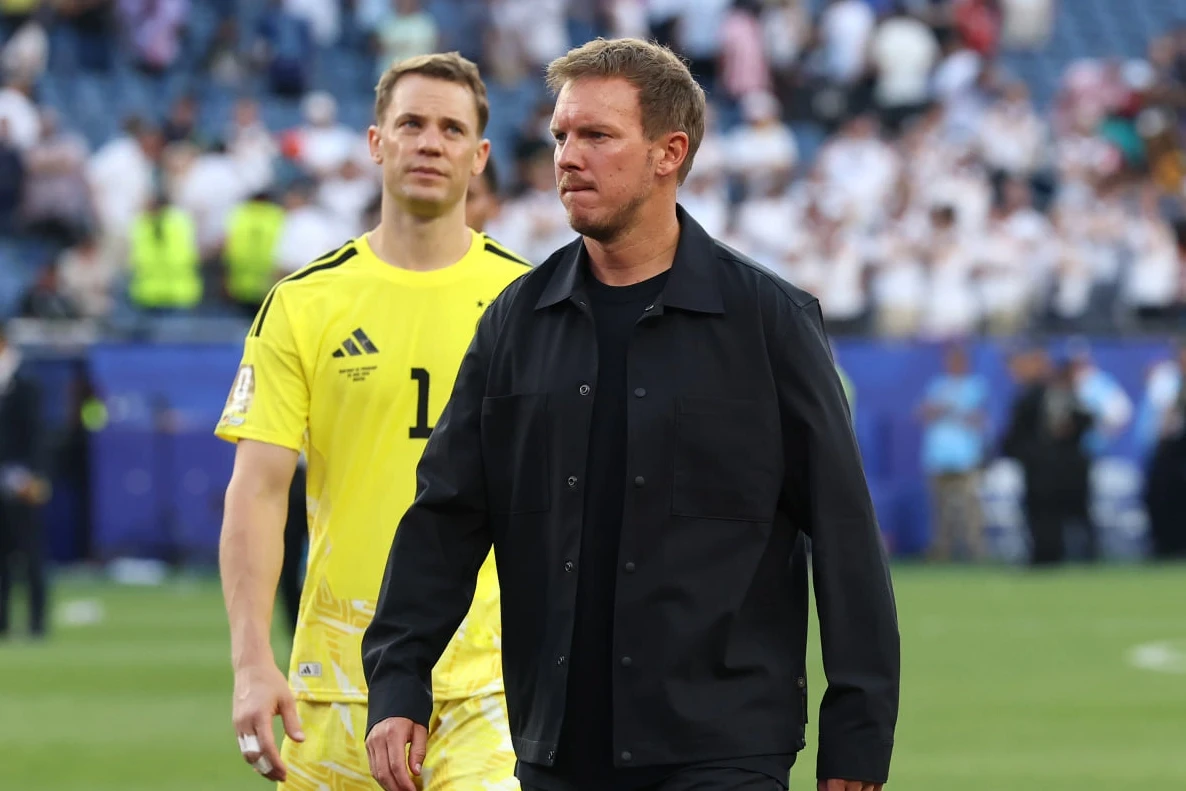
Germany head coach Julian Nagelsmann alongside goalkeeper Manuel Neuer, walks off the pitch following Germany’s dramatic elimination from the 2026 FIFA World Cup.
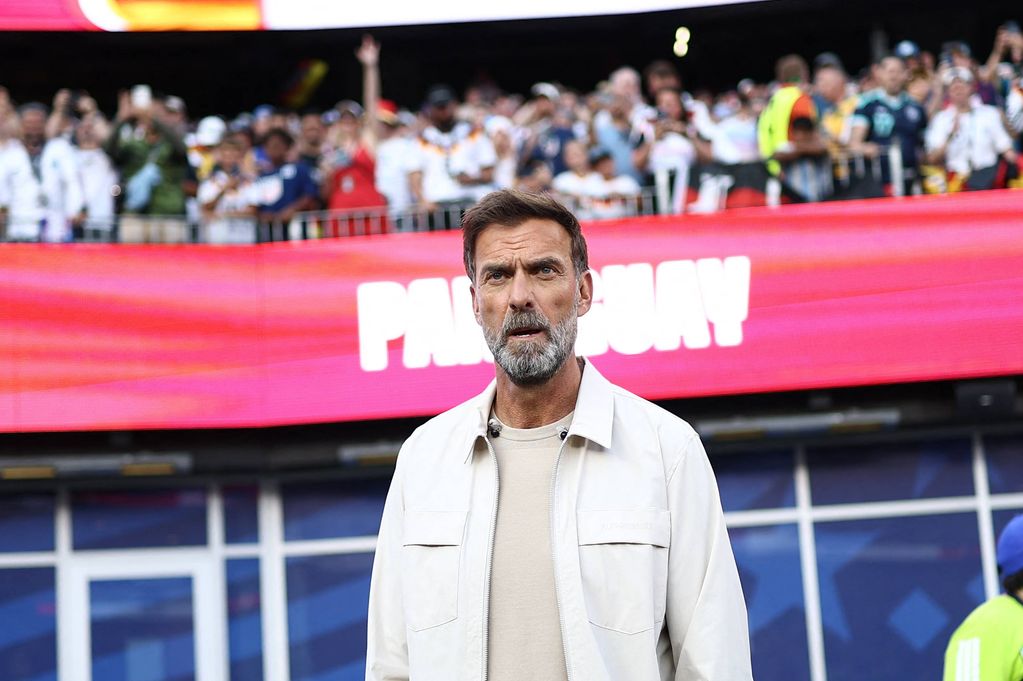
The former Liverpool manager has refused to encourage speculation, insisting now is not the right time to discuss such matters.
Yet the fact that his name immediately dominates debate whenever Germany underperforms tells its own story. It reflects not only Klopp’s standing in world football but also the belief that Germany’s problems run far deeper than tactics or team selection.
According to reports from The Telegraph, Klopp would be open to leading the four-time world champions in the future, even though he remains committed to his current role.
Speaking on MagentaTV after Germany’s elimination. Klopp said, “I have not thought about that yet. I understand that when people talk about the national team coach, my name is mentioned in some way. But this is not the moment to really talk about it, and especially not with me.”
He added that he enjoys his current job and stressed that discussing his personal future immediately after Germany’s exit would be inappropriate.
Those comments neither confirmed nor denied anything. Instead, they have only intensified a debate that refuses to disappear.
Germany’s Biggest Problem Is Identity, Not Tactics
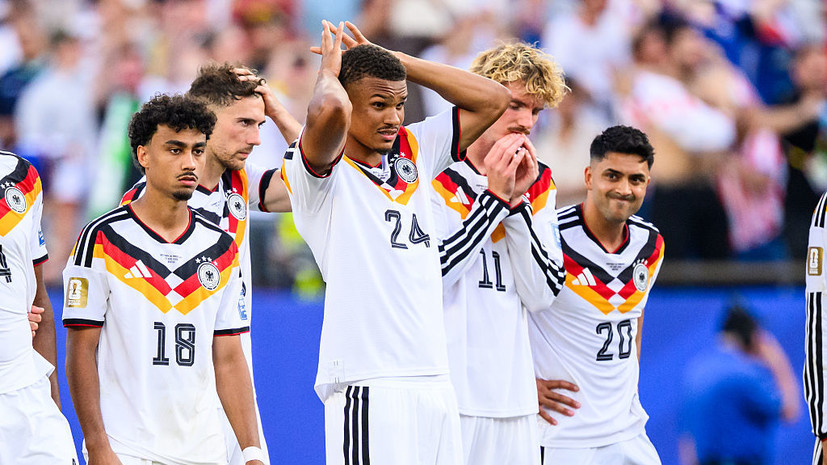
Devastating moment when the German national football team was knocked out of the 2026 FIFA World Cup.
When Germany lifted the World Cup in Brazil in 2014, they looked like a nation set to dominate international football for years.
Instead, the opposite has happened.
Since that triumph, Die Mannschaft have suffered a stunning group-stage exit in Russia 2018, another disappointing campaign in Qatar 2022. And now another painful World Cup elimination.
Different coaches have arrived with different tactical ideas. Different generations of players have emerged.
Yet one issue has remained constant. Germany no longer possesses a recognisable football identity.
For decades they were respected because every opponent knew exactly what was coming relentless pressing, physical intensity, tactical discipline, and an unwavering mentality. Even when they were not the most technically gifted team. They overwhelmed opponents through organisation, belief, and collective strength.
That identity has gradually disappeared.
The national team now appears caught between several styles without fully committing to any of them.
Possession football has replaced direct aggression in many matches. Defensive uncertainty and inconsistency have become recurring themes at major tournaments.
Changing formations alone will not solve that problem.
Germany needs someone capable of rebuilding the culture around the national team, and that is precisely why Klopp’s name keeps resurfacing.
Jürgen Klopp Has Rebuilt Every Club He Has Managed
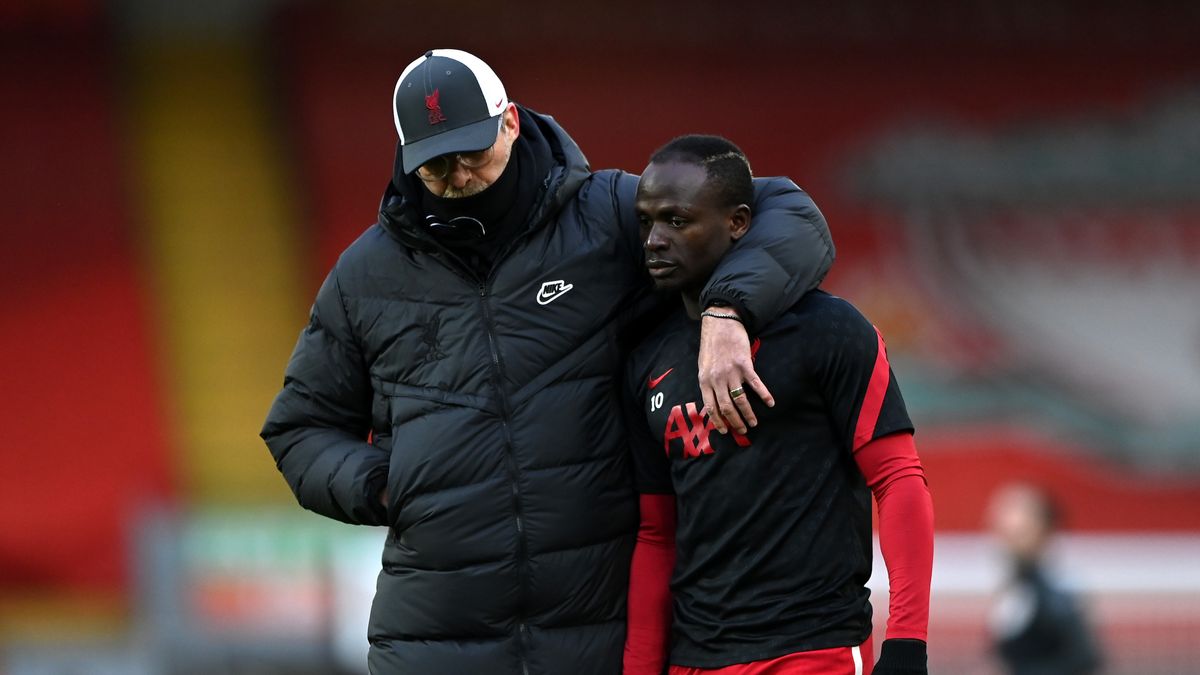
Former Liverpool F.C. manager Jürgen Klopp embracing forward Sadio Mané on the pitch at Anfield.
Throughout his managerial career, Klopp has rarely inherited finished teams.
Instead, he has built them.
At Mainz, he transformed limited resources into one of Germany’s most competitive sides, laying foundations that changed the club’s history.
He repeated the process at Borussia Dortmund, restoring the club to the top of German football and breaking Bayern Munich’s dominance through fearless, high-energy football.
His greatest rebuilding project came at Liverpool. When Klopp arrived at Anfield, Liverpool were struggling to compete consistently with Europe’s elite. Within a few years, they were Premier League champions, Champions League winners, and one of the most feared teams in world football.
The trophies were impressive. The transformation behind them was even more remarkable.
Every Jürgen Klopp side develops a clear personality. His teams attack with conviction, defend collectively, and compete relentlessly regardless of the opponent.
Those are precisely the qualities Germany appears to have lost.
Rather than introducing another tactical experiment, Klopp could restore the values that historically made German football successful.
Jürgen Klopp Greatest Strength Is Managing People
Klopp’s tactical reputation often dominates discussion, but many players believe his greatest quality lies elsewhere.
His ability to connect with people is exceptional.
Few elite managers create dressing rooms where experienced internationals and emerging youngsters feel equally important.
Former players regularly speak about the confidence Klopp gives them and the responsibility he places on every individual.
That matters enormously in tournament football. National teams spend only short periods together before major competitions. Coaches have limited training sessions and little time to implement complicated tactical systems.
Instead, creating belief, trust and unity often proves decisive.
Germany possesses no shortage of talented footballers. Jamal Musiala remains one of the world’s most exciting attacking midfielders. Florian Wirtz continues to develop into one of Europe’s elite creators.
The problem has rarely been talent.
It has been creating an environment where those talents flourish together.
Klopp has consistently shown he can develop young stars without sacrificing standards. Equally important, reputation never guarantees selection under him.
His teams operate on merit, work ethic, and commitment rather than status.
That culture could prove invaluable for a German squad searching for renewed purpose.
Jürgen Klopp: Why Gegenpressing Fits This Germany Squad
Alongside Ralf Rangnick, Klopp helped revolutionise modern football through gegenpressing.
While Rangnick developed many of the core principles, Klopp demonstrated how devastating they could become at the highest level.
His philosophy extends beyond winning the ball back quickly.
The objective is to recover possession and attack immediately before opponents can reorganise defensively.
The result is aggressive, high-tempo football that combines organisation with attacking freedom.
Modern international football increasingly rewards exactly those qualities. Germany already possesses midfielders comfortable under pressure and attackers capable of exploiting transitions.
Musiala, Wirtz, and several younger players appear naturally suited to Klopp’s approach. While experienced leaders could provide the structure needed to execute it effectively.
Of course, international management differs significantly from club football. Managers cannot spend months drilling complex pressing systems on the training ground.
However, Klopp’s communication skills have always been among his greatest strengths.
He simplifies complicated concepts, ensuring players understand not only what to do but why they are doing it.
That clarity would allow Germany to establish a recognisable playing identity much faster than many might expect.
Jürgen Klopp: Verdict
Nothing suggests Jürgen Klopp is about to become Germany’s next manager tomorrow.
His public comments were measured, respectful, and entirely appropriate following Germany’s elimination.
But the rumours persist for one simple reason. They make footballing sense.
Germany does not simply need another coach. They need a leader capable of rebuilding confidence, restoring identity, and reconnecting the national team with the qualities that once made it one of football’s dominant forces.
Few managers in world football possess a stronger record of achieving exactly that than Jürgen Klopp.
If Germany decides this is the moment to begin another rebuild, it may struggle to find a candidate better equipped for the task.
Whether it happens now or further down the line, one thing appears certain.
As long as Germany continues searching for itself, Jürgen Klopp’s name will never be far from the conversation.
Germany’s next chapter may depend less on changing formations than on finding someone capable of making Die Mannschaft feel like Die Mannschaft again.