News
Lionel Messi Buys Spanish 3rd Division Club UE Cornellà
Thursday’s football transfer market delivered a development of extraordinary significance.
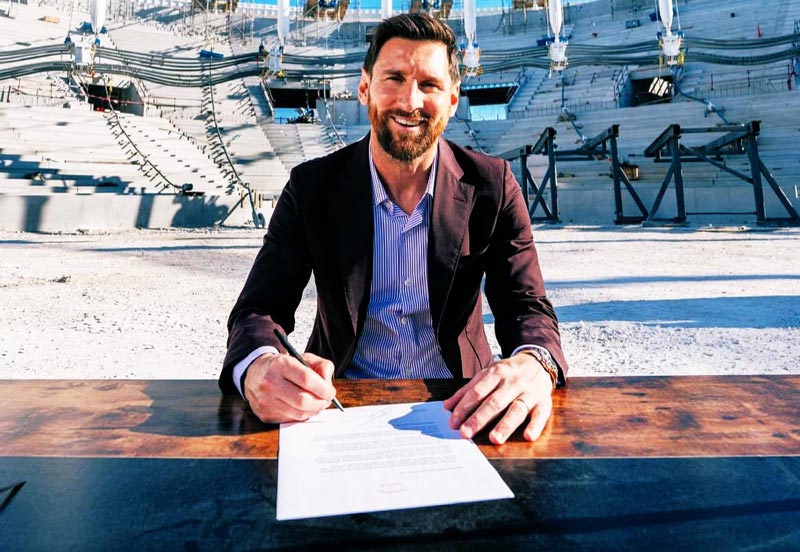
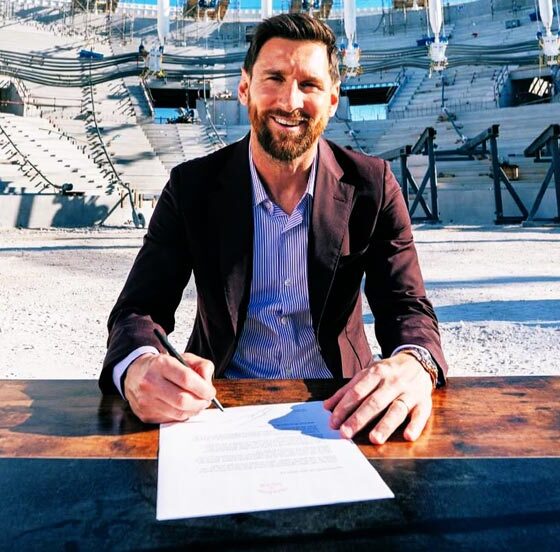
Leo Messi has officially completed the purchase of UE Cornellà, a Catalan club competing in Group V of the Tercera RFEF, Spain’s fourth tier. The announcement, confirmed through an official statement, has already generated global attention as one of the most intriguing football business moves of the year.
Messi’s acquisition marks a bold new chapter for both parties a globally iconic footballer expanding his off-pitch portfolio. And a historic Catalan club is gaining an owner with unmatched influence and ambition.
A Club with Deep Roots and Big Ambitions
Founded in 1951, UE Cornellà has built a reputation as a respected grassroots institution in Catalonia.
The club currently sits third in their Tercera División group, five points behind leaders Manresa. But with a promotion playoff place already secured. Their on-field performance this season has demonstrated consistency, tactical discipline, and upward mobility.
With Messi now assuming full ownership, the club’s ambitions have taken on an entirely new dimension. What was once a modest push for promotion has become a project with long-term vision and structural backing.
Messi’s Vision for Cornellà
Messi’s objective extends far beyond symbolic ownership. He intends to guide Cornellà towards professional status through what sources describe as a structured and well-planned investment strategy.
This includes strengthening their competitive foundations, upgrading facilities, enhancing youth development pathways, and building a long-term sporting model capable of supporting sustained success.
Cornellà has always been known for its commitment to developing young talent. Messi’s involvement is expected to elevate that reputation significantly. This will give the club a more defined identity and a clearer roadmap for growth.
Footballers as Club Owners
Messi’s move places him among a rising wave of elite players who have transitioned into club ownership.
In recent years, Cristiano Ronaldo has taken a stake in Almería, Thibaut Courtois has invested in Le Mans, and Kylian Mbappé has become associated with S.M. Caen.
Luka Modrić, Héctor Bellerín, Gerard Piqué, N’Golo Kanté, Sadio Mané, David Beckham, and César Azpilicueta have all embraced similar paths, each involving themselves with clubs across Europe and beyond.
This trend reflects a broader shift within the modern game. Where footballers are using their financial power, commercial influence, and global profiles to shape the sport from the ownership side.
Messi’s decision aligns perfectly with this movement, though his involvement naturally carries a different level of global visibility.
Why Messi Chose Cornellà
Several factors appear to have influenced Messi’s decision. His long-standing connection to Catalonia remains central; after spending nearly twenty years at Barcelona. And investing in a Catalan club represents a meaningful continuation of that bond.
Cornellà also presents an attractive starting point a manageable club size. With a clear room for growth, and a competitive environment where targeted investment can produce rapid progress.
In addition, Cornellà’s strong youth setup complements Messi’s personal commitment to football development. The club provides a platform where he can help shape future talent. While building a sustainable sporting project aligned with modern football principles.
Impact on Spanish Football
The implications of Messi’s ownership extend beyond Cornellà. His arrival introduces new visibility to the Tercera RFEF and could stimulate increased commercial interest, media attention, and competitive intensity within Spain’s lower tiers.
Clubs at this level rarely attract such a global spotlight, and Messi’s involvement will likely reshape the ecosystem around them.
Cornellà’s transformation may also influence how future investors evaluate lower-division Spanish clubs. And potentially opening the door for broader development and modernization across the pyramid.