World Cup 2026
Bafana Bafana Are Back: Why South Africa Vs Mexico Is The Perfect World Cup Opening Story
The 2026 FIFA World Cup begins with a match that feels almost scripted.
Sixteen years ago, South Africa and Mexico stood together at the centre of the football world when they opened the 2010 World Cup in Johannesburg.
It was a historic occasion for African football as Bafana Bafana became the first African nation to host football’s biggest tournament.
Now, as the expanded 48-team World Cup kicks off in Mexico City. The same two nations meet once again in the opening match.
For Mexico, it is an opportunity to launch their campaign in front of a passionate home crowd at the iconic Estadio Azteca.
For South Africa, it is something even bigger. It is a homecoming.
After missing four consecutive World Cups, Bafana Bafana are back on football’s grandest stage, and fittingly. Their return begins against the same opponent that shared one of the most memorable nights in South African football history.
Kick-off is Thursday June 11 at 8pm UK time and Nigeria time at the Estadio Azteca, Mexico City.
The Perfect Symmetry: Same Teams, 16 Years Later
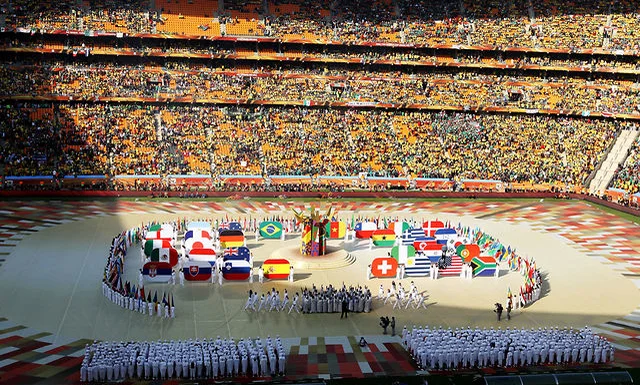
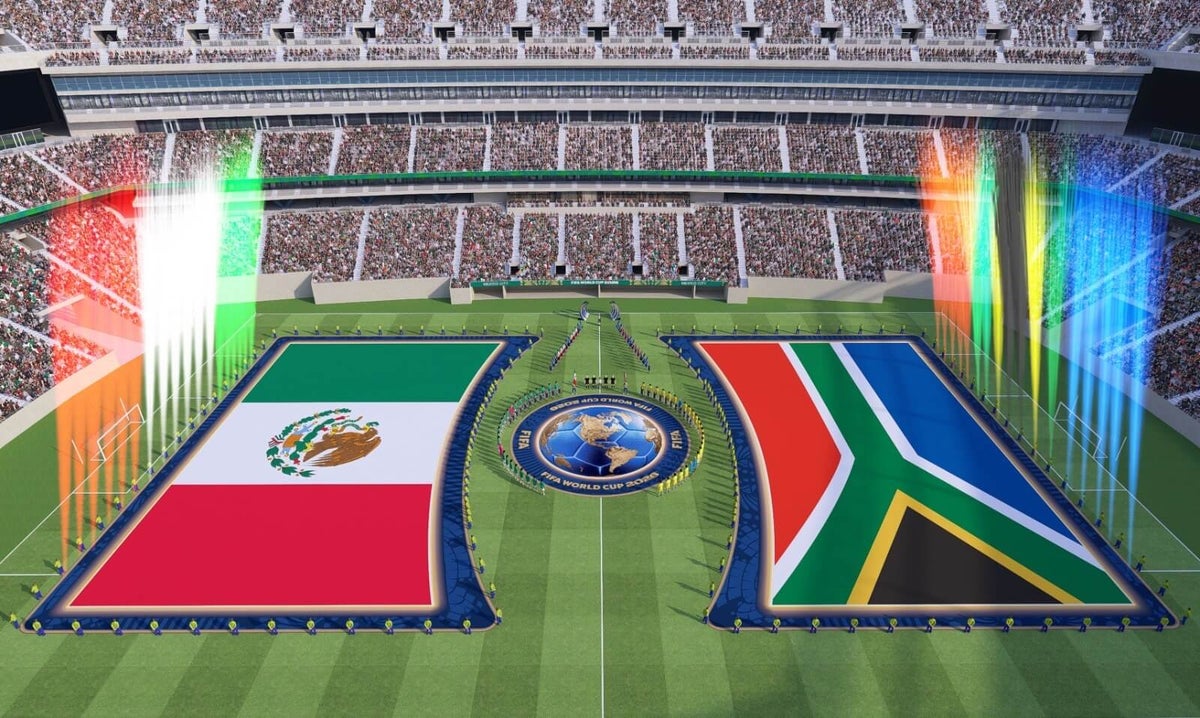
The 2010 FIFA World Cup opening ceremony, which took place on June 11, 2010, at the FNB Stadium (also known as Soccer City) in Johannesburg, South Africa.
World Cups often create stories that feel bigger than football itself. South Africa versus Mexico is one of those stories.
On June 11, 2010, the eyes of the world were fixed on Soccer City in Johannesburg as South Africa opened the tournament against Mexico.
The atmosphere was unforgettable. The sound of vuvuzelas echoed around the stadium.
Millions across Africa watched with pride as an African nation hosted the World Cup for the first time.
South Africa took the lead through Siphiwe Tshabalala’s iconic strike, one of the most celebrated goals in World Cup history.
Mexico eventually equalised through Rafael Márquez as the match ended 1-1.
While South Africa failed to progress beyond the group stage, that opening game became a defining moment for African football.
Fast forward to 2026. Mexico are now co-hosts and once again have the privilege of opening the tournament.
And standing opposite them is South Africa. The symmetry is remarkable.
The same fixture the same stage. A completely different generation of players.
For football romantics, it is the perfect way to begin another World Cup.
How Far Has Bafana Bafana Come Since 2010?
South Africa’s journey since that famous night in Johannesburg has been anything but straightforward.
After hosting the World Cup in 2010, Bafana Bafana endured a long absence from football’s biggest stage.
They failed to qualify for the 2014, 2018, and 2022 World Cups before finally securing their return under Hugo Broos.
For many African football fans, South Africa’s absence felt strange.
This is one of the continent’s strongest footballing nations in terms of infrastructure, league quality, and supporter culture.
Yet qualification repeatedly slipped through their fingers. Broos has helped change that.
The former Cameroon coach has rebuilt the national team around a younger generation that combines technical quality with tactical discipline.
Players such as Relebohile Mofokeng, Tshepang Moremi, and Lyle Foster represent the future of South African football.
Mofokeng, in particular, is viewed as one of Africa’s most exciting young attacking midfielders. His creativity, vision, and confidence have made him a central figure in South Africa’s revival.
Moremi has rapidly established himself as a dangerous wide player. While Foster brings valuable European experience and goal-scoring ability.
This squad may not possess the star power of some previous South African generations. But it arguably has something more important. Which is Identity.
Broos has built a team that understands its strengths and competes collectively.
Their return to the World Cup is not simply a South African success story. It is another positive chapter in African football’s continued growth.
Mexico’s Home Advantage: Can Azteca Make The Difference?
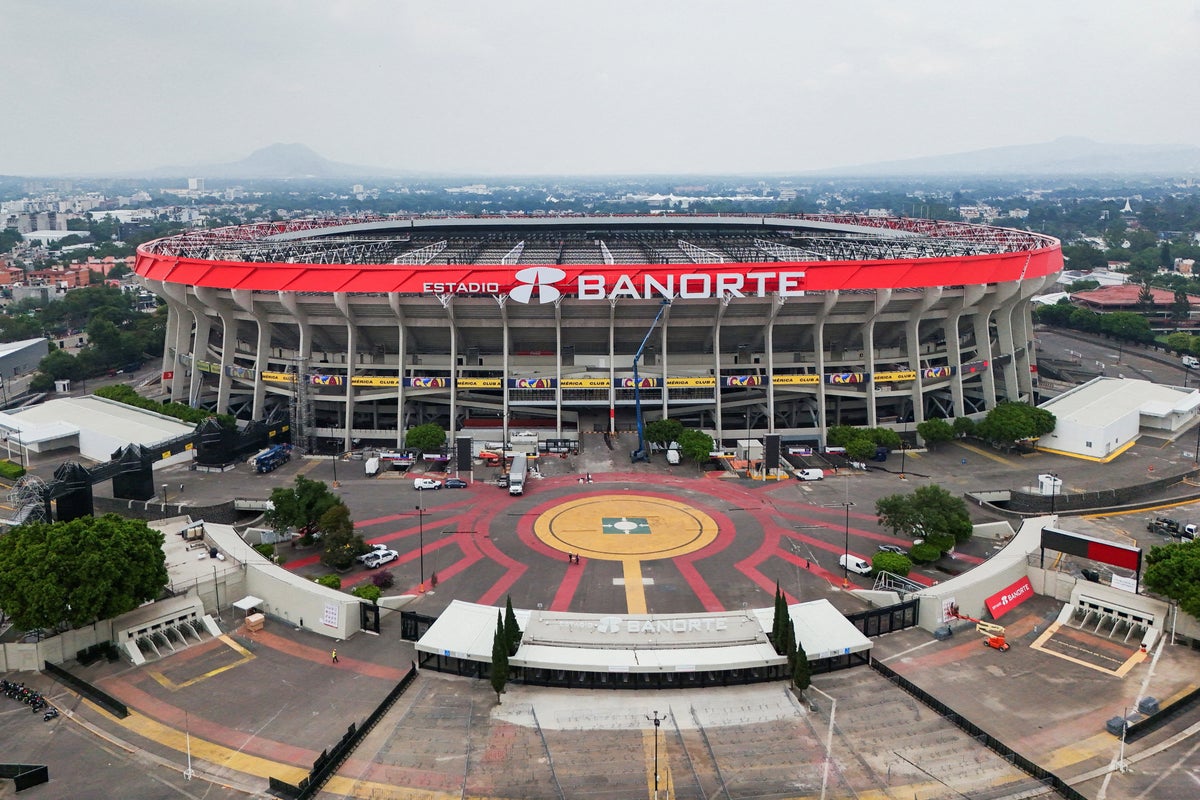
Legendary Estadio Azteca in Mexico City, officially rebranded as Estadio Banorte.
If South Africa arrive with emotion and momentum, Mexico enter the tournament carrying expectation. The Estadio Azteca is one of football’s most iconic venues.
No stadium has hosted more World Cup history.
From Pelé lifting the trophy in 1970 to Diego Maradona’s brilliance in 1986. Azteca has witnessed some of football’s greatest moments.
Now it becomes the first stadium in history to host World Cup matches across three separate tournaments.
That atmosphere could provide a huge advantage for Mexico. Javier Aguirre’s side arrive in excellent form.
Mexico are unbeaten in eight matches during 2026, recording six victories and two draws.
Recent wins against Ghana, Australia, and Serbia have boosted confidence heading into the tournament. Their 5-1 demolition of Serbia particularly caught attention.
Raúl Jiménez remains a key figure in attack, while midfielders Erik Lira and Álvaro Fidalgo have added balance and creativity.
At the back, Johan Vásquez and César Montes provide defensive stability. Perhaps most importantly, Mexico have experience.
Many members of the squad have played in high-pressure international environments. They understand the expectations that come with representing El Tri at home.
The challenge for South Africa will be handling both the occasion and the quality of the opposition.
Key Battle: Lyle Foster vs Mexico’s Centre-Backs
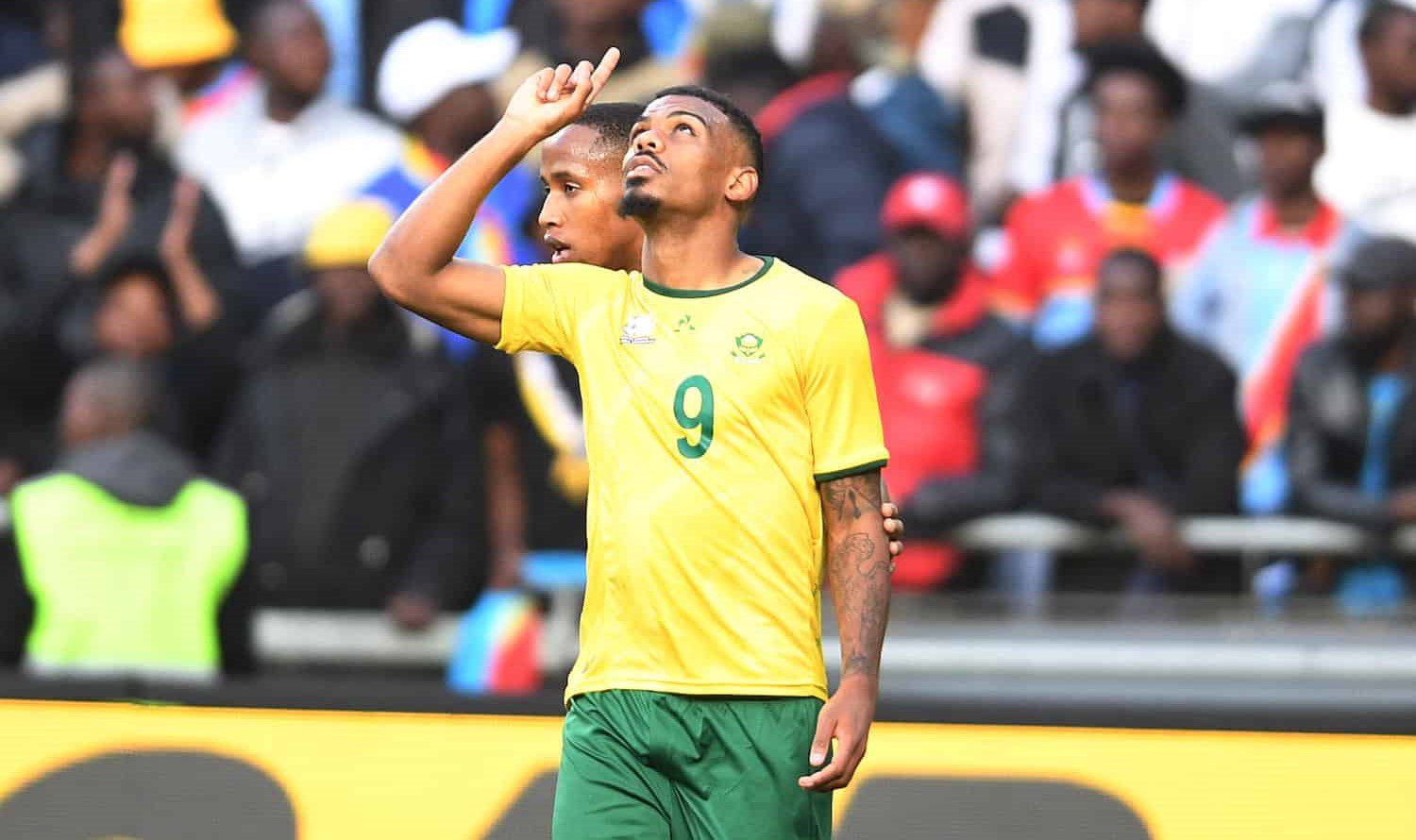
Lyle Foster celebrating a goal for South Africa’s national team, Bafana Bafana.
If South Africa are to produce a surprise result, much will depend on Lyle Foster.
The Burnley forward has become the focal point of Hugo Broos’ attack and is arguably Bafana Bafana’s most important player.
Foster’s value goes beyond goals. His ability to hold up the ball allows South Africa to move up the pitch.
His movement creates space for attacking midfielders and wingers. His physical presence can unsettle defenders.
Against Mexico, he faces a difficult test. Johan Vásquez and César Montes form a strong central defensive partnership that combines physicality with experience.
Mexico will attempt to limit Foster’s influence by cutting off service into his feet and preventing him from linking play.
If Foster can win those battles, South Africa’s attacking players become much more dangerous.
That is where Mofokeng and Moremi enter the picture. Both thrive when operating in space behind opposition midfielders.
Foster’s ability to occupy defenders could be the key that unlocks opportunities for South Africa’s most creative players.
It is the individual battle that may ultimately decide the match.
Predicted Lineups

Hugo Broos, the head coach for the South African national football team
Mexico (4-1-4-1)
Raúl Rangel; Jorge Sánchez, César Montes, Johan Vásquez, Jesús Gallardo; Erik Lira; Marcelino Gutiérrez, Roberto Alvarado, Álvaro Fidalgo, Julián Quiñones; Raúl Jiménez.
South Africa (4-2-3-1)
Ronwen Williams; Thabang Matuludi, Ime Okon, Makhanya, Samukele Kabini; Yaya Sithole, Thalente Mbatha; Kamogelo Sebelebele, Relebohile Mofokeng, Tshepang Moremi; Lyle Foster.
More Than A Match For African Football
World Cups are often remembered through stories rather than statistics.
For African football supporters, South Africa’s return carries significance beyond one result.
The continent has long produced world-class players, but qualification remains a challenge for many nations. Bafana Bafana’s return represents perseverance.
It shows that rebuilding projects can succeed. It demonstrates the value of patience and long-term planning.
Most importantly, it gives African supporters another team to rally behind on football’s biggest stage.
Whether South Africa progress from Group A or not, simply being back among the world’s elite feels like an important achievement.
And doing so against the very team they faced on that famous night in 2010 adds a layer of symbolism that few fixtures can match.
Prediction:
Mexico enter the match as deserved favourites. They are playing at home, arrive in strong form, and possess greater experience at the highest level.
The energy inside the Estadio Azteca will be immense, and that should help push El Tri forward.
However, South Africa should not be underestimated. Their performance against Mexico in the opening match of the 2010 World Cup showed they can rise to the occasion when the spotlight is brightest.
Hugo Broos has built a disciplined and resilient side capable of frustrating stronger opponents. Expect Bafana Bafana to make life difficult.
But over 90 minutes, Mexico’s attacking quality and home advantage should prove decisive.
Prediction:
Mexico 2-1 South Africa.