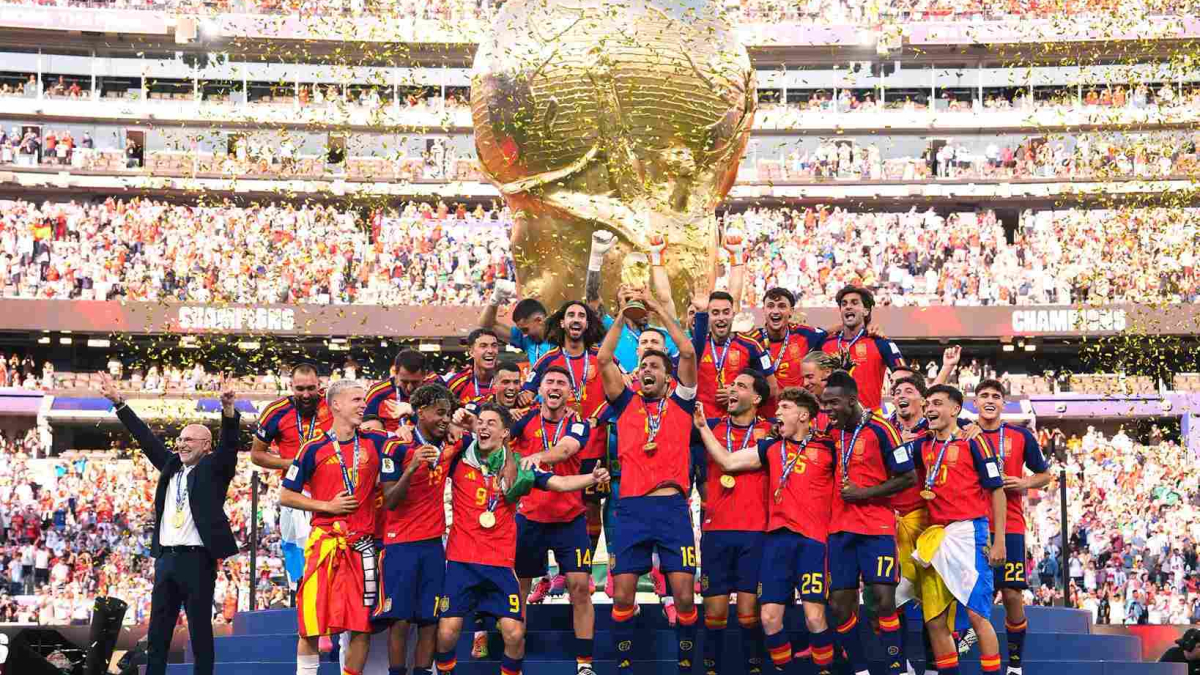
World Cup 2026
Spain Are World Champions: The Photo That Never Got Its Fairytale Ending
In September 2007, a young Lionel Messi stood inside the Camp Nou dressing room in Spain, holding a six-month-old baby in a bathtub during a UNICEF charity photoshoot.
Nineteen years later, inside MetLife Stadium in New Jersey, that same baby stood on the opposite side of the pitch as Messi in the biggest match football has to offer.
The football world expected one final magical chapter. Instead, it witnessed something very different.
Neither Lionel Messi nor Lamine Yamal became the hero of the 2026 FIFA World Cup final.
Spain became world champions because, once again, their collective proved stronger than individual brilliance.
After 105 minutes of tactical discipline, relentless pressing, and patient possession football. Ferran Torres finally found the breakthrough, sweeping home Nico Williams’ intelligent knockdown to hand Spain a 1-0 victory over Argentina.
For Argentina, it was heartbreak. For Messi, it was almost certainly the final World Cup appearance of a career that has defined an era.
For Yamal, it was the beginning of another. The baby in the famous photograph is now a World Cup winner.
The man holding him leaves the tournament with nothing except another reminder that football does not always reward even its greatest genius.
The African Story Nobody Else Will Tell
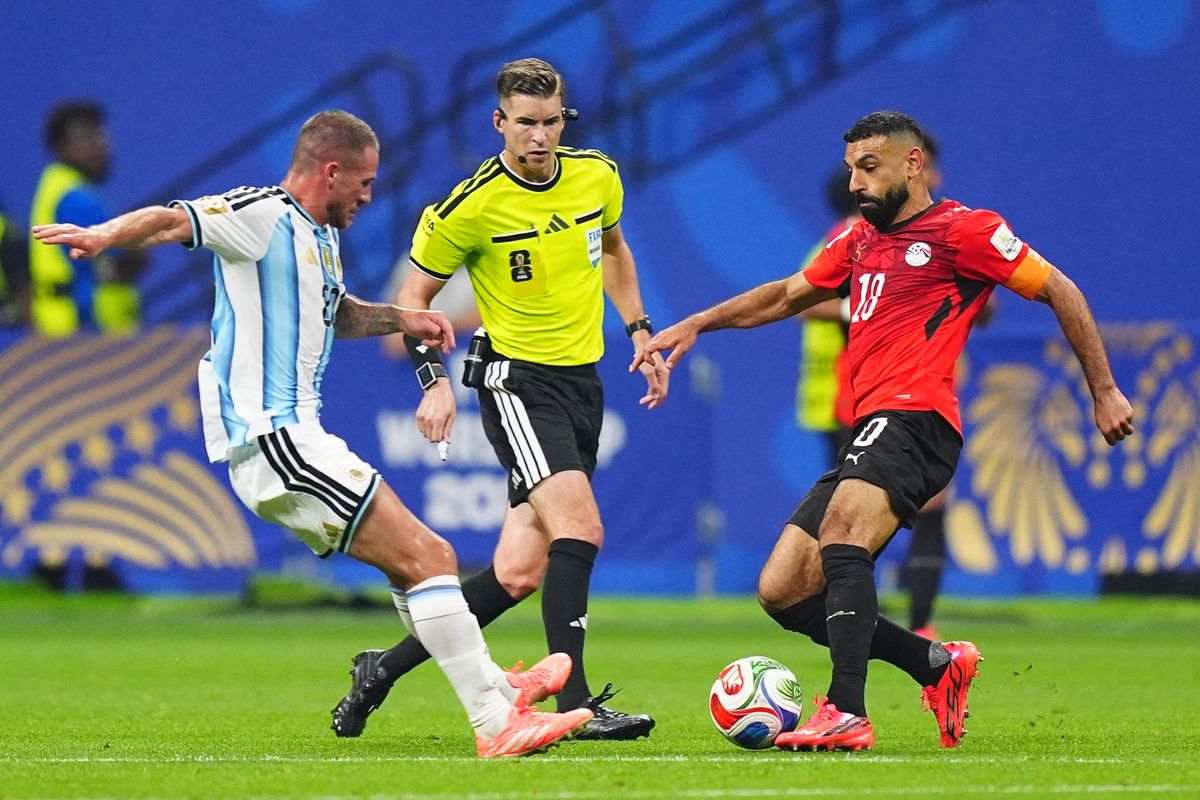
Alexis Mac Allister (#20) of Argentina battling Mohamed Salah (#10) of Egypt for possession during the 2026 FIFA World Cup Round of 16 match.
One of the biggest stories from this World Cup final has almost nothing to do with tactics or statistics.
It is about identity. Lamine Yamal represents Spain, but his roots stretch deep into Africa.
His father, Mounir Nasraoui, is of Moroccan descent. His mother, Sheila Ebana, comes from Equatorial Guinea.
Although he was born in Mataró and developed through Barcelona’s academy, Yamal carries the heritage of two African nations with him every time he steps onto a football pitch.
For Sportxparte readers across Africa and the diaspora, that matters. Mainstream football coverage will celebrate Spain’s triumph.
Few will pause to recognise what this victory represents for millions of African football supporters. A player with African heritage has just helped lift the World Cup.
That achievement belongs to Spain. But it also belongs, in part, to the continent that shaped half of Yamal’s identity.
Morocco inspired the football world in Qatar four years earlier by becoming the first African nation to reach a World Cup semi-final.
Their historic run changed perceptions forever.
In 2026, they once again proved they belonged among football’s elite, reaching the quarter-finals and pushing Europe’s finest until the very end.
Egypt pushed Argentina to the absolute limit in the Round of 16. DR Congo demonstrated that African football’s technical quality continues to improve with every tournament.
Cape Verde became one of the greatest underdog stories in World Cup history.
Then, on the final night of the competition, a player whose family story stretched from Morocco to Equatorial Guinea walked away with the biggest prize in football.
African football did not win the World Cup. But Africa was still represented on football’s biggest stage.
For Sportxparte readers, that connection deserves recognition.
It shows how deeply African football continues to influence the modern game, even when the final itself features two European and South American giants.
The continent’s fingerprints remain everywhere. And that is something worth celebrating.
Spain Argentina: A Final Decided by One Moment of Madness
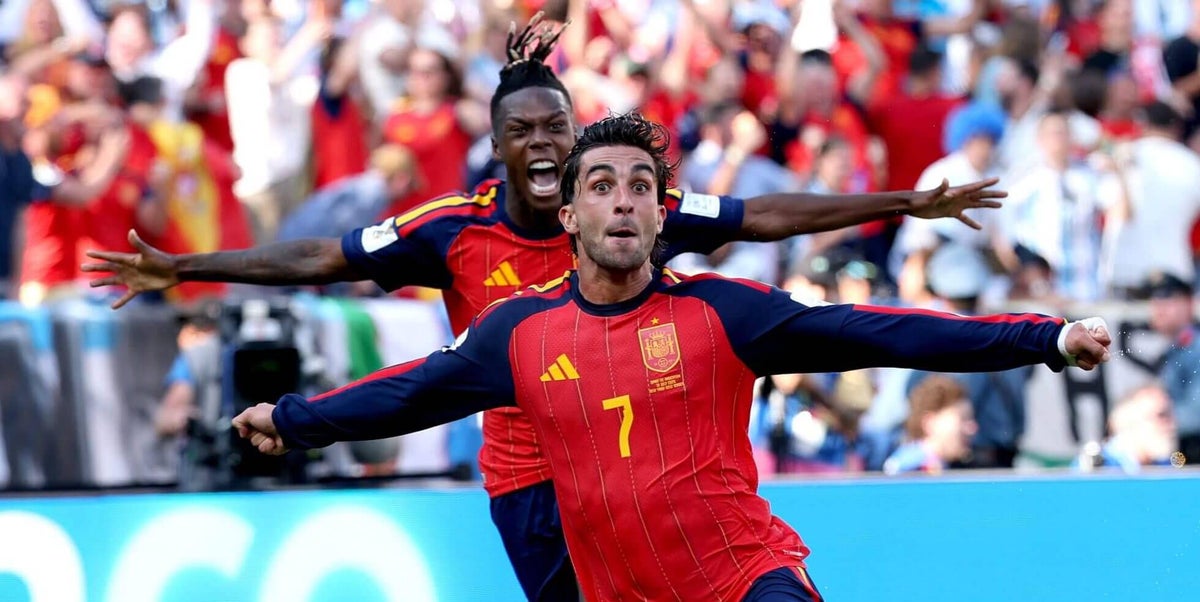
Ferran Torres and Nico Williams celebrate Spain’s 2026 World Cup final victory.
The World Cup final rarely lives up to expectations. This one almost seemed destined for penalties.
Spain controlled possession from the opening whistle, patiently circulating the ball through Rodri, Fabian Ruiz, and Dani Olmo while Argentina remained compact, disciplined, and determined to frustrate the European champions.
Lionel Scaloni’s side had survived similar battles throughout the knockout rounds.
They had come back against Egypt. They had found late winners against England. And they had repeatedly shown that suffering was part of their identity.
Against Spain, however, suffering eventually became too much. The first half produced very few clear-cut opportunities.
Spain monopolised possession but struggled to create genuine openings against Argentina’s disciplined defensive block.
Messi occasionally dropped deep to orchestrate attacks, but Spain’s midfield refused to allow him sustained influence.
Yamal showed flashes of brilliance down the right wing. Yet Argentina doubled up on the teenager whenever he received possession.
It was chess rather than chaos. Exactly the type of match everyone expected between two of the tournament’s most intelligent teams.
As the second half progressed, Spain slowly increased the pressure. Argentina became increasingly reliant on defensive organisation rather than attacking ambition.
The match still appeared to be drifting towards penalties. Then came the moment everything changed.
In second-half stoppage time, Enzo Fernández mistimed a challenge on Pau Cubarsí.
Already carrying a yellow card, the Argentine midfielder lunged in recklessly.
The referee had little choice. Second yellow. Red card. Argentina was reduced to ten men.
The defending champions suddenly faced another thirty minutes against the most technically complete side in world football while playing with a numerical disadvantage.
It proved to be an impossible task.
Spain Argentina: The Match That Was Decided by Ten Men
If the story before kickoff was about destiny, the story after the final whistle was about discipline.
Spain had arrived in New Jersey with the reputation of being the most balanced side in the tournament. They had dismantled France in the semi-finals through patient possession, relentless pressing, and collective movement.
Argentina, meanwhile, had reached the final by surviving four consecutive knockout battles, twice coming from behind and relying on resilience as much as quality.
For much of the normal time, neither side gave an inch.
Spain dominated possession exactly as expected, patiently circulating the ball through Rodri and Fabián Ruiz while stretching Argentina’s compact defensive shape. Lionel Scaloni’s side, however, refused to panic.
Cristian Romero marshalled the defence superbly, Emiliano Martínez dealt confidently with crosses, and every Spanish attack was met by a wall of blue-and-white shirts.
At the other end, Argentina looked dangerous only in moments. Lionel Messi drifted into deeper positions searching for space, Julián Álvarez pressed tirelessly from the front.
Alexis Mac Allister attempted to connect midfield with attack whenever possession was won.
It was a tactical battle rather than a spectacle.
Spain completed far more passes, but Argentina prevented almost every meaningful chance. The European champions looked comfortable with the ball, yet they rarely found the decisive final pass that had destroyed France days earlier.
As the minutes ticked away, penalties increasingly appeared inevitable. Then came the moment that changed the World Cup.
Deep into second-half stoppage time, Enzo Fernández arrived late into a challenge on Pau Cubarsí. Already carrying a yellow card, the Argentine midfielder mistimed his tackle completely.
The referee had little choice. Second yellow. Red card. Argentina was reduced to ten men with extra time still to play.
It was the cruelest possible scenario for the defending champions.
Playing against Spain with eleven men was already demanding enough. Playing against Luis de la Fuente’s possession machine with ten players became almost impossible.
The dismissal immediately altered the tactical picture.
Scaloni was forced to sacrifice attacking ambition simply to survive. Messi found himself isolated further forward, while every Argentine player behind him was dragged deeper and deeper into their own half.
Spain sensed the opportunity instantly. Their passing became quicker. The movement is sharper.
The pressure relentless. It was only a matter of time before the breakthrough arrived.
Ferran Torres: The Unlikely Hero Who Won the World Cup for Spain
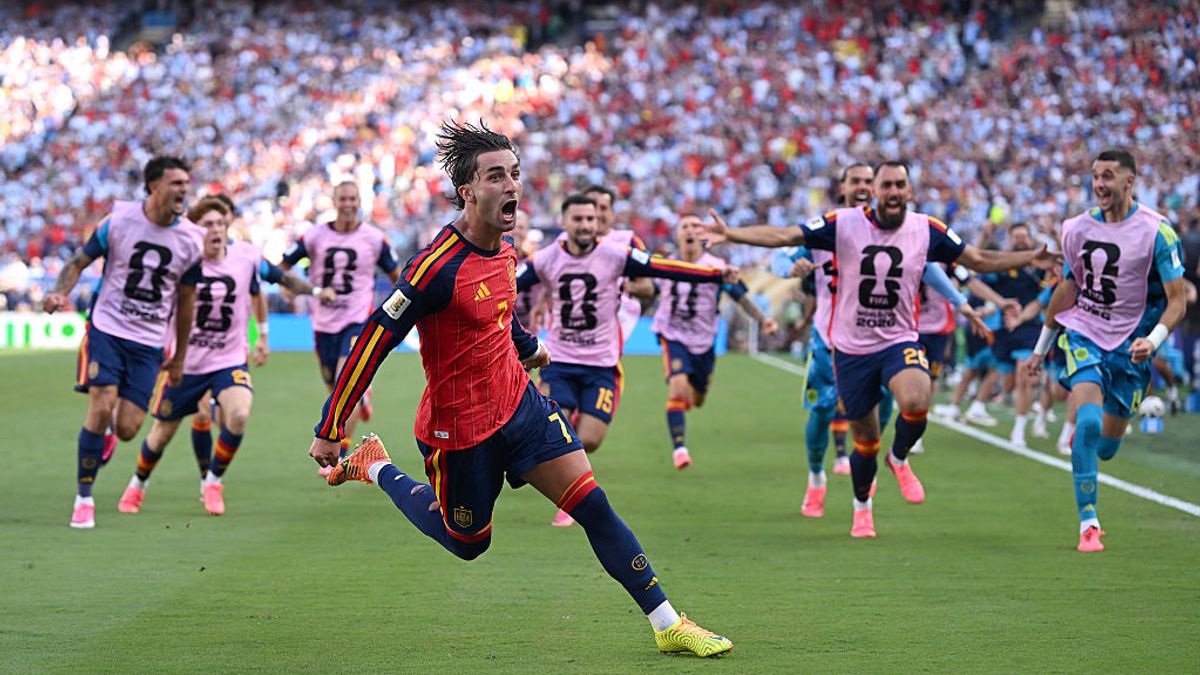
Ferran Torres of Spain celebrating after scoring the winning goal in the 2026 FIFA World Cup final against Argentina.
Football rarely follows the script people expect. Before the final, attention centred almost entirely on Lionel Messi and Lamine Yamal.
Would Messi write the perfect ending to his extraordinary World Cup career?
Would Yamal complete football’s greatest full-circle story by defeating the man who held him as a baby?
Instead, another Spaniard quietly became immortal. Ferran Torres.
The Barcelona forward had worked tirelessly throughout the tournament without dominating headlines. Spain’s success had been built on collective football rather than individual stardom, meaning goals had come from every area of the pitch.
That pattern continued in the biggest match of all. With Argentina exhausted and reduced to ten men, Spain finally found the opening they had been searching for.
Nico Williams accelerated down the left flank, beating his marker before delivering a dangerous ball into the area. The pass wasn’t spectacular, but it created uncertainty inside Argentina’s defence.
Torres reacted first. The striker timed his run perfectly before calmly sweeping the ball beyond Emiliano Martínez.
MetLife Stadium erupted. Spain 1-0 Argentina. World champions.
The goal perfectly summed up Spain’s philosophy throughout the tournament.
It wasn’t created by individual magic, and it wasn’t a 40-yard screamer. It wasn’t even produced by the player everyone expected.
Instead, it came from coordinated movement, intelligent positioning, and another example of eleven players functioning as one perfectly synchronised machine.
That collective identity has been Spain’s greatest strength throughout the World Cup 2026. Against France, they controlled every phase of the game.
Against Argentina, they remained patient until their numerical advantage finally produced the decisive opening.
Torres will forever be remembered as the scorer of the goal that delivered Spain’s second World Cup title.
Yet he will probably be the first to admit that the goal belonged to the entire team. That is exactly what made this Spanish side so special.
Every player understood their role, and every player trusted the system. Every player contributed.
In an era increasingly obsessed with superstars, Spain reminded the football world that tournaments are still won by teams rather than individuals. That lesson may ultimately define World Cup 2026 even more than the final score itself.
The Baby Photo Story And the Ending Nobody Expected
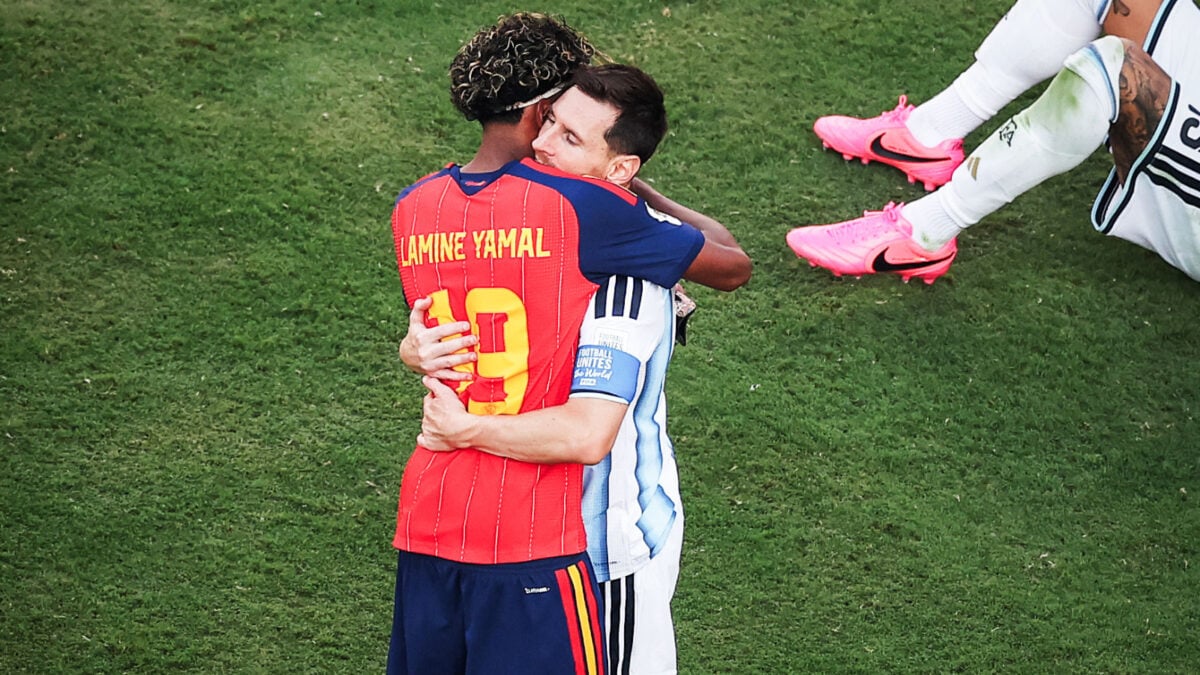
Spain’s Lamine Yamal and Argentina’s captain Lionel Messi following the 2026 FIFA World Cup Final.
Few football stories have captured global attention quite like the photograph taken inside Barcelona’s dressing room in 2007.
Nineteen years later, the baby became one of football’s brightest stars.
Lamine Yamal. The image became symbolic before kickoff. Social media exploded with comparisons.
Television broadcasts replayed it endlessly.
Fans across the world hoped the World Cup final would produce one last magical chapter in what already felt like football’s greatest fairytale. Reality chose a different ending.
Neither Messi nor Yamal dominated proceedings. And neither produced the decisive moment. Neither scored.
Instead, Spain won because their collective remained stronger than Argentina’s individual brilliance.
That outcome may actually make the story even more remarkable. Yamal did not need to score the winner to become a world champion.
At just 19 years old, he already owns football’s greatest prize. The baby in the photograph now has a World Cup winner’s medal.
Messi, meanwhile, leaves behind something far greater than trophies. He inspired an entire generation of footballers, including the teenager who has now succeeded him on football’s biggest stage.
The symbolism is impossible to ignore. The photograph that once represented innocence now represents succession.
Not because Messi was defeated by Yamal individually.
But because football itself always moves forward. One generation inspires another.
One legend eventually hands the game to the next.
Sunday night did not end with the fairytale many imagined. It ended with something perhaps even more powerful.
The greatest player of one era shaking hands with one of the brightest talents of the next.
The photograph from 2007 will now live forever. Not simply because Messi held a baby. But because that baby grew up to become a world champion.
What This World Cup Means for African Football
This is where Sportxparte’s perspective matters most.
Spain may have lifted the trophy, but African football has every reason to leave the 2026 FIFA World Cup with renewed belief about what lies ahead.
Morocco once again proved that their remarkable run to the 2022 semi-finals was no miracle. They reached the quarter-finals, competing with the same organisation, confidence, and tactical maturity that has become their identity under Walid Regragui.
Egypt pushed eventual runners-up Argentina to the brink, leading 2-0 before eventually falling 3-2 after one of the tournament’s greatest comebacks. DR Congo announced themselves to the football world by reaching the knockout rounds and refusing to be intimidated by Europe’s elite.
Cape Verde continued one of the greatest underdog stories in World Cup history by advancing beyond the group stage.
Those achievements should not disappear simply because no African nation reached the final.
Instead, the final itself offered another reminder of Africa’s growing influence on world football.
Lamine Yamal, whose father is Moroccan and whose mother is from Equatorial Guinea, became a World Cup winner at just 19 years old. While he represents Spain internationally, his African heritage remains an important part of his identity and serves as inspiration for millions of young footballers across Africa and the diaspora.
His success is another example of the enormous talent the continent continues to produce, whether for African national teams or countries elsewhere.
The 2026 tournament also showed that African football is no longer viewed as merely competitive; it is respected. European and South American giants no longer expect easy victories against African opposition. Tactical discipline, technical quality, and mental resilience have become defining characteristics of African teams.
The challenge now is turning promising performances into genuine title challenges.
For that to happen, African federations must continue investing in coaching, youth academies, sports science, infrastructure, and domestic leagues. Morocco has already demonstrated what long-term planning can achieve. Their success should serve as a blueprint for the rest of the continent.
The gap is closing. Perhaps not completely. But it is closing faster than ever before.
Spain Argentina: Verdict
Spain is deserved world champions.
They did not rely on one superstar to carry them through the tournament. Instead, they trusted a collective built on intelligent movement, relentless pressing, technical excellence, and tactical discipline. That same formula dismantled France in the semi-finals and eventually overcame Argentina in the final.
Ferran Torres will forever be remembered as the man who scored the winning goal, but Spain’s triumph belongs to every player who embraced Luis de la Fuente’s system throughout the tournament.
For Argentina, the pain will linger. Enzo Fernández’s late red card left the world champions with an impossible task against the tournament’s most complete side. Lionel Messi fought until the final whistle, but football rarely grants perfect endings.
His final World Cup appearance ends in defeat. His legacy does not.
He leaves as a World Cup winner, multiple-time Ballon d’Or recipient, Argentina’s greatest-ever player and, for many, the greatest footballer the sport has ever seen.
Then there is Lamine Yamal. Nineteen years after being photographed in a bathtub alongside a young Lionel Messi, he lifted the FIFA World Cup.
Not because he dominated the final. Not because he scored the winning goal.
But because he was part of a team that understood football’s greatest lesson.
Individual brilliance can win matches. Collective brilliance wins World Cups.
The baby in the photograph is now a world champion.
The legend who held him leaves the World Cup stage forever. Football could not have written a more emotional ending.