World Cup 2026
In 2007 Lionel Messi Bathed A Baby. On Sunday That Baby Faces Him In A World Cup Final
There are football stories that feel too unbelievable to be true, and then there is the story of Lionel Messi and Lamine Yamal.
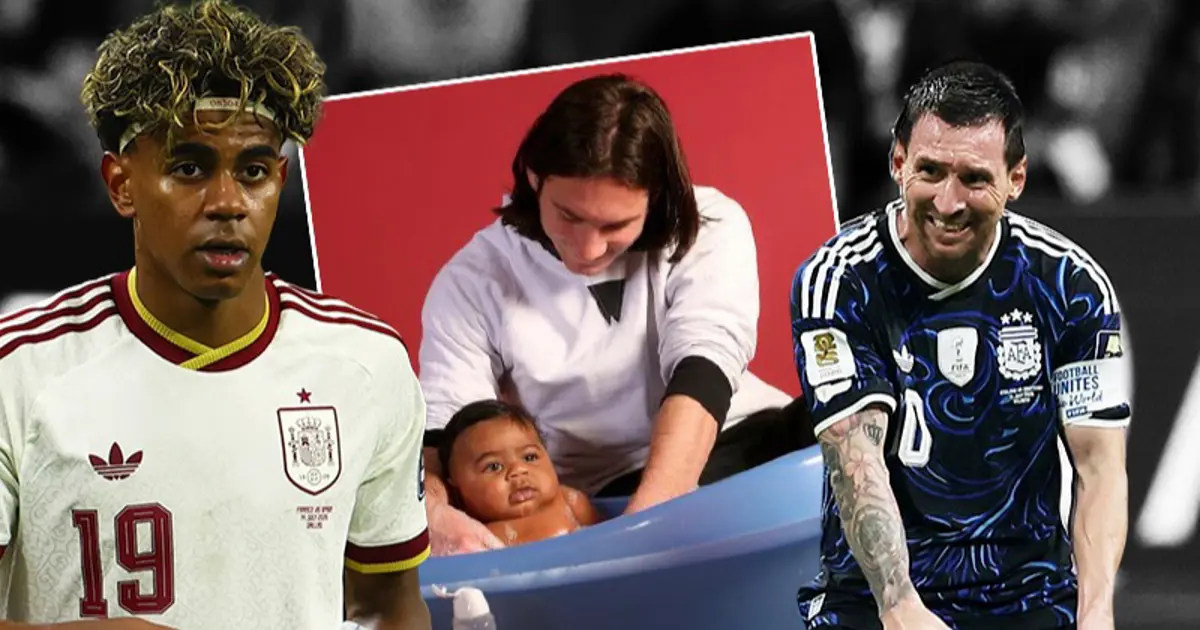
The Messi Yamal baby photo World Cup final 2026 narrative is not a myth, an AI creation, or a cleverly edited image. It is one of the rare moments where football, fate, and history collide in a way no scriptwriter would dare imagine.
In September 2007, a 20-year-old Lionel Messi was still an emerging Barcelona star. He had not yet won the Ballon d’Or. He had not conquered Europe.
He had not lifted the World Cup. He was simply one of the brightest young talents in football.
As part of a UNICEF charity calendar organised with Barcelona, Messi was asked to pose with a baby whose family had won a raffle. Photographer Joan Monfort suggested something unusual a bathtub photoshoot.
The six-month-old baby was Lamine Yamal.
Nineteen years later, Messi will walk onto the pitch in New Jersey wearing Argentina’s famous blue and white stripes. Standing on the opposite side for Spain will be the same child he gently held in his arms almost two decades ago.
Football has produced countless rivalries, unforgettable finals, and iconic images.
None is quite like this.
Lionel Messi: The Photo That Nobody Believed Was Real

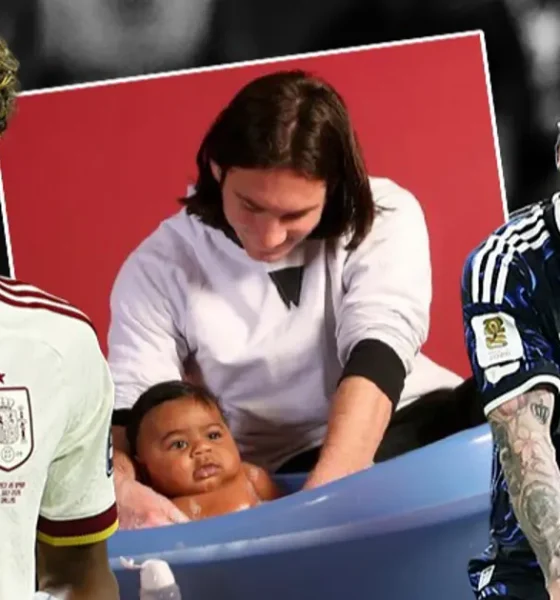
This resurfaced 2007 photograph depicts a young Lionel Messi helping to bathe a six-month-old baby who is now football star Lamine Yamal.
When the photograph resurfaced before the World Cup final, social media exploded.
Many supporters genuinely believed it had been generated by artificial intelligence.
How could the greatest footballer of his generation be pictured bathing the player many now consider his natural successor?
Yet every detail of the photograph is authentic.
The images were taken during a UNICEF charity campaign in Barcelona in 2007. Families entered a lottery to have their children photographed with first-team players for a fundraising calendar.
Lamine Yamal’s family won that opportunity.
Photographer Joan Monfort arranged the session inside Camp Nou’s dressing room.
Lionel Messi, then only 20 years old, carefully held the smiling baby as cameras clicked around him.
Nobody present imagined that both subjects of the photograph would one day become global football superstars.
At that moment, Messi was only beginning his incredible journey. Yamal had not even learned to walk.
Today, one is regarded as the greatest player football has ever seen.
The other is widely viewed as the brightest teenage talent the sport has produced since Messi himself.
That single image has become one of football’s greatest historical photographs, not because of what happened in 2007, but because of everything that happened afterwards.
Lionel Messi’s Extraordinary Journey Meets His Possible Successor
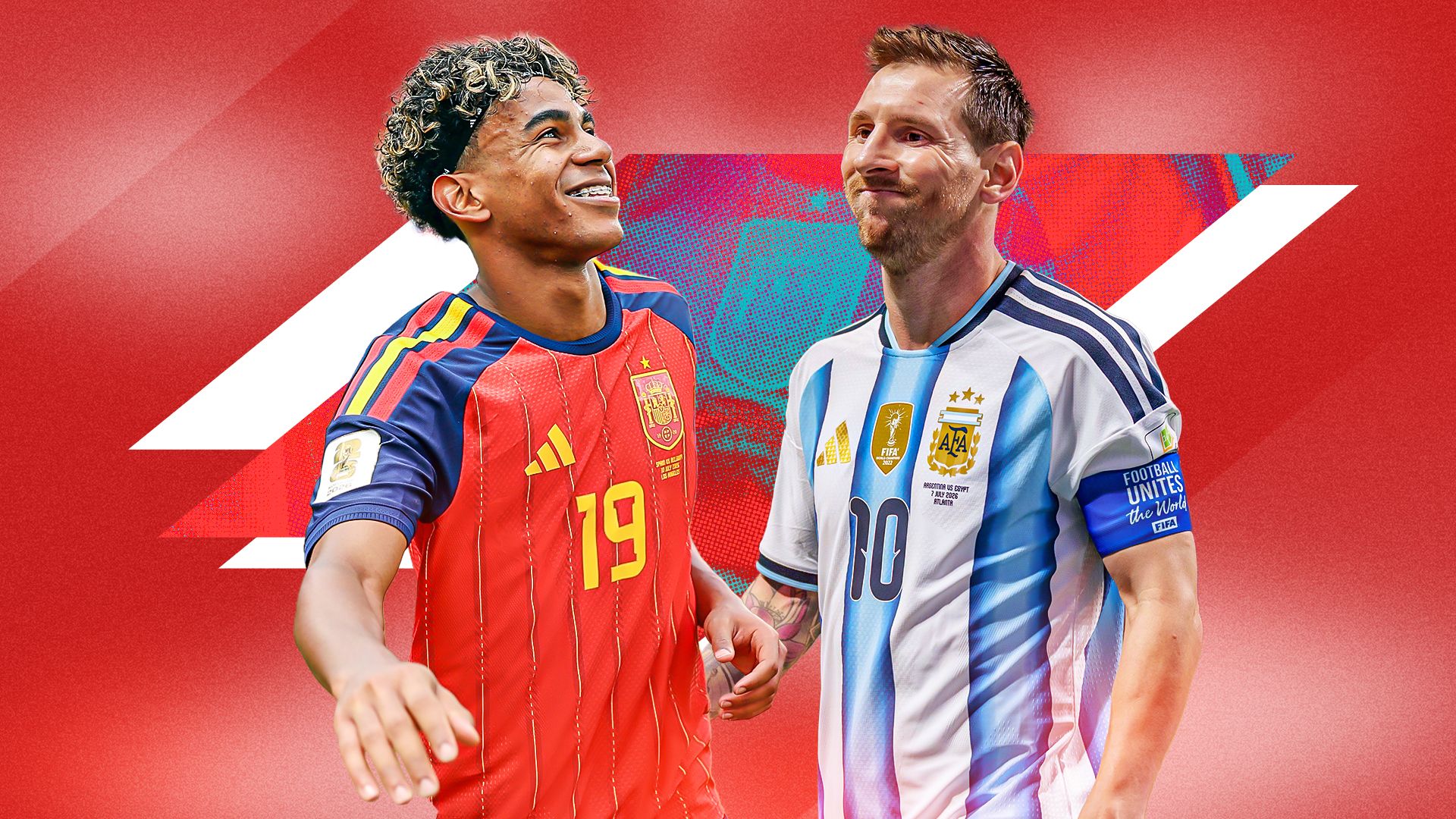
Lamine Yamal and Lionel Messi are posing together, highlighting their potential matchup in the 2026 World Cup Final.
Football rarely allows one generation to meet another at precisely the right moment.
Usually, legends retire before their successors truly emerge. This time, the timing feels almost impossible.
Messi enters the 2026 World Cup final at 39 years old, still carrying Argentina despite many believing his best years ended when he moved to Major League Soccer.
Against England in the semi-final, he once again proved those critics wrong. Although Anthony Gordon gave England the lead, Messi refused to let Argentina’s dream disappear.
He created Enzo Fernández’s stunning equaliser before delivering a perfect cross for Lautaro Martínez’s dramatic winner in stoppage time.
It was another reminder that football intelligence ages differently from pace.
Messi finished the match with two assists, nine successful dribbles, four key passes, two big chances created, seven touches inside England’s penalty area, and an expected assists (xA) figure higher than England’s entire team combined.
Even more remarkably, Opta confirmed that no player since detailed World Cup records began in 1966 had ever combined nine successful dribbles with two assists in a single knockout match.
His influence extended far beyond statistics.
He dictated Argentina’s attacks, dragged defenders out of position, and became the heartbeat of Lionel Scaloni’s side once England retreated into a defensive shape.
For a player approaching 40, it was another astonishing masterclass.
And now, standing between Lionel Messi and another World Cup title is the same child he once carried in his arms.
The Photographer Who Is Beginning to Believe in Destiny
Joan Monfort has captured some of football’s most iconic moments over the past three decades. Yet no assignment has ever followed him quite like the one he completed in September 2007.
At the time, it was just another charity project.
UNICEF and FC Barcelona had organised a fundraising calendar featuring first-team players alongside children from local families. Each month paired one player with a child whose family had won a raffle.
Monfort’s job was simple: create memorable images that would help raise money for a good cause.
One of those players was a 20-year-old Lionel Messi. One of those children was six-month-old Lamine Yamal.
Monfort decided that instead of a traditional portrait, Messi would gently bathe the baby in a small bathtub inside Camp Nou’s dressing room. Messi, naturally shy away from the camera in those days, followed the photographer’s instructions without any idea that history was quietly unfolding.
For almost two decades, the photographs remained little more than a heartwarming charity memory.
Then football produced one of its greatest coincidences.
When Argentina defeated England to reach the 2026 World Cup final, Spain’s victory over France ensured that the baby from those photographs would now face the man who once held him in his arms.
Even Monfort struggled to comprehend it.
”I have never been a believer or thought that anything was destined to occur,” he admitted. “But I am beginning to have my doubts. This is beyond all reasonable explanation. It is better than any film script.”
His words capture what millions of football supporters have been thinking since the images resurfaced. Sport regularly produces incredible stories, but very few span almost twenty years before reaching their conclusion. This one somehow did.
Lionel Messi’s Numbers Against England Show He Is Still Defining Greatness
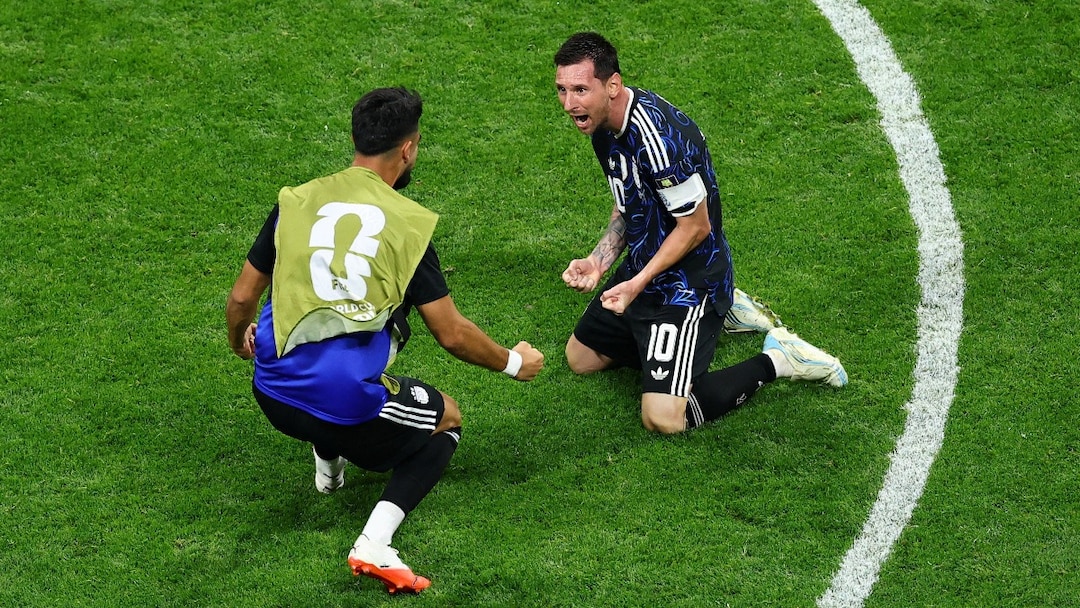
Lionel Messi is celebrating on his knees after Argentina’s dramatic 2–1 comeback victory over England in the 2026 FIFA World Cup Semifinal at Mercedes-Benz Stadium in Atlanta.
The fairy-tale photograph would mean little if Messi had reached the final as a passenger.
Instead, he dragged Argentina there. For much of the semi-final against England, it appeared the veteran captain might finally be showing his age.
Anthony Gordon’s goal put England in front, Messi struggled to dictate possession, and Argentina looked dangerously close to seeing their title defence end.
Then everything changed. Rather than forcing impossible shots or trying to win the game alone, Lionel Messi did what the greatest playmakers always do. He waited for the right moments.
His perfectly weighted pass allowed Enzo Fernández to curl home the equaliser before, moments later, another inch-perfect delivery found Lautaro Martínez for the winning header.
Those assists added yet another extraordinary chapter to his World Cup legacy.
According to the match statistics, Messi completed nine successful dribbles against England. While producing two assists in the same match, a combination never previously recorded since Opta began collecting World Cup data in 1966.
His influence stretched far beyond the final score.
He won 12 ground duels, created two big chances, delivered four key passes, recorded seven touches inside England’s penalty area, and produced 0.86 expected assists (xA) more than England’s entire team combined.
Those figures underline something many observers continue to underestimate.
Messi no longer needs to dominate every minute of a match.
At 39, he understands timing better than ever. He can spend an hour conserving energy before suddenly deciding the biggest game on earth in less than ten minutes.
That is exactly what happened against England. His latest performance also extended another remarkable sequence.
Messi has now produced a goal contribution in each of his last 11 World Cup matches, registering 13 goals and five assists during that run.
He also moved to 12 World Cup assists, with 10 coming in knockout matches, another record that highlights his ability to perform when football’s biggest prizes are on the line.
For a player many believed had entered Major League Soccer to enjoy a slower ending to his career, these numbers tell an entirely different story.
They suggest that even in his final World Cup, Messi remains one of football’s defining players.
“For Leo’s Last One” The Mission Driving Argentina
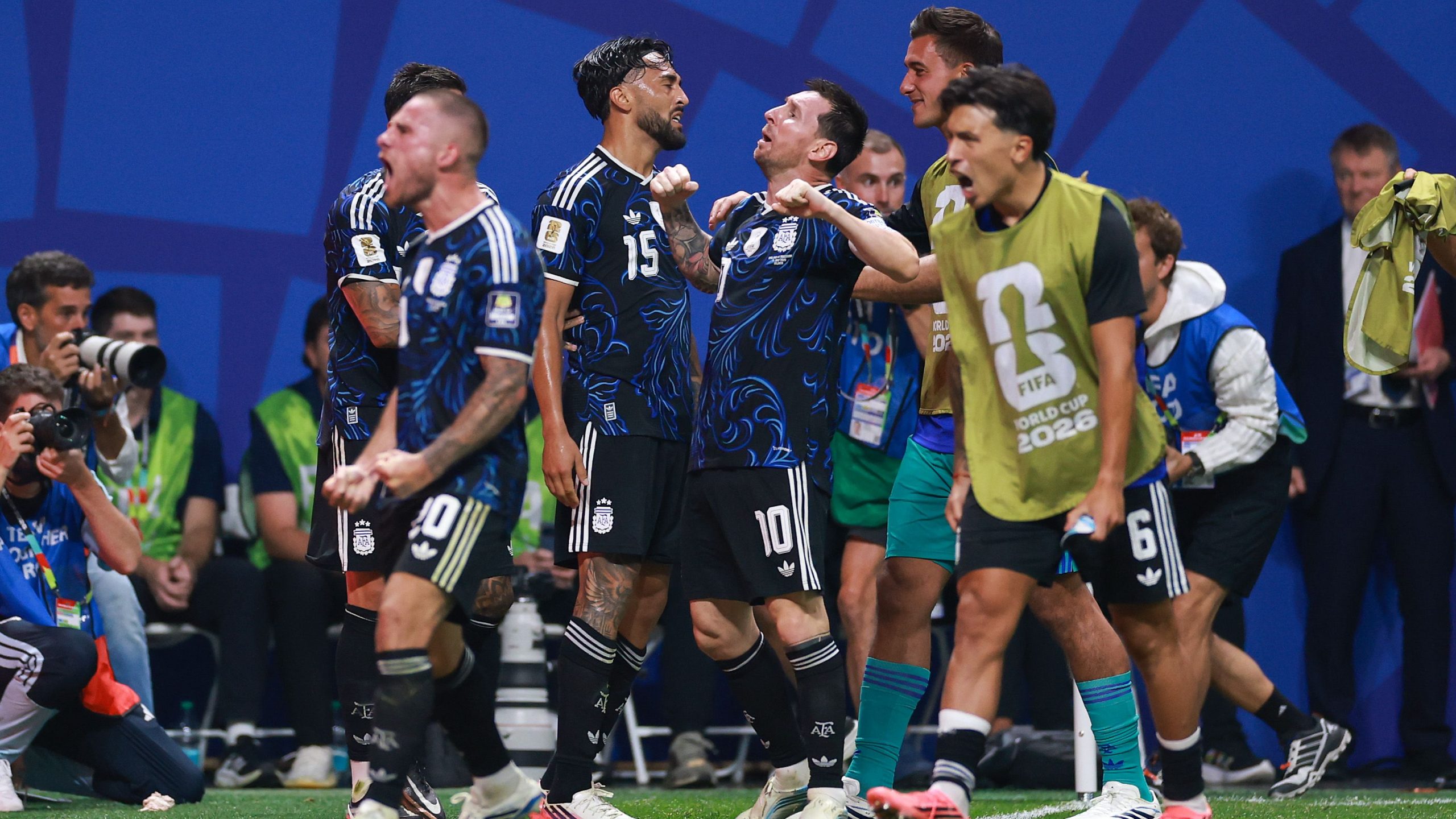
Lionel Messi and his Argentina teammates celebrate passionately on the field in their dark blue kits after a dramatic 2-1 victory over England in the 2026 FIFA World Cup semi-finals.
Statistics explain what Lionel Messi does. They do not explain why Argentina continues to find ways to survive impossible situations.
That answer lies inside the dressing room.
From the opening day of the tournament, Argentina’s squad has spoken openly about one shared objective.
This World Cup is for Lionel Messi. Players have repeatedly referred to their captain as their guide, their balance, and their leader. Lautaro Martínez described him as the team’s reference point after Argentina’s dramatic comeback against Egypt in the Round of 16.
Supporters have echoed the same feeling.
Throughout the tournament, Argentine fans have modified the famous Muchachos anthem with a new line dedicated to their captain, singing that they want to win the World Cup “for the Malvinas, for Diego, and for Leo’s last one.”
It is more than a slogan. It reflects the emotional responsibility the squad feels toward the player who has carried Argentine football for almost two decades.
Messi himself has never demanded that level of devotion. His leadership has always been quiet rather than theatrical.
Yet every comeback seems to strengthen the belief inside the squad that, as long as he remains on the pitch, the match is never truly over.
England became the latest victim of that belief. Earlier in the tournament, it was Egypt.
Before that, other opponents had also discovered that Argentina refuses to accept defeat while Messi remains capable of producing moments of genius.
That mentality has become their greatest weapon. It is why Argentina now stands just one victory away from retaining the World Cup and giving their greatest player one final gift before his international career reaches its emotional conclusion.
Lionel Messi’s World Cup Is About Legacy, Not Nostalgia
From the moment Argentina arrived at the 2026 FIFA World Cup, there was one message repeated by supporters, players, and coaching staff alike, this tournament was for Lionel Messi.
It was never framed as a farewell tour or a ceremonial last dance. Instead, it became a collective mission. Every player in Lionel Scaloni’s squad understood that they were trying to deliver something unprecedented, a second consecutive World Cup title for the captain who had already fulfilled every footballing dream by lifting the trophy in Qatar in 2022.
That purpose has shaped Argentina throughout the tournament.
There have been moments when the defending champions looked vulnerable. Egypt pushed them to the brink in the Round of 16, taking a stunning 2-0 lead before Argentina staged one of the greatest comebacks in World Cup history to win 3-2.
Switzerland frustrated them for long spells, while England appeared only minutes away from ending their title defence in the semi-finals.
Yet every time Argentina has needed inspiration, Messi has answered. Against England, his influence perfectly captured why statistics alone can never fully explain his greatness.
For over an hour, he struggled to impose himself. England’s aggressive pressing denied him time between the lines, forcing him into mistakes rarely associated with the eight-time Ballon d’Or winner.
But when Thomas Tuchel instructed his players to retreat into a defensive block after Anthony Gordon’s opener, everything changed.
Messi suddenly had the freedom to dictate the tempo.
His perfectly weighted pass released Enzo Fernández for Argentina’s equaliser before another inch-perfect delivery found Lautaro Martínez for the dramatic stoppage-time winner.
It was another reminder that football matches involving Lionel Messi are never truly finished until the final whistle.
Argentina’s Unity Has Become Its Greatest Strength
Talent alone does not explain Argentina’s remarkable resilience.
Many World Cup-winning teams have possessed outstanding footballers. Few, however, have displayed the collective spirit shown by Scaloni’s squad throughout this tournament.
Following the dramatic comeback against England, Messi was quick to praise the group rather than focus on his own performance.
”What the group has been doing is incredible, and this again shows our character, our grit, our collective, and the way we play together. It was really, truly amazing.”
Those words reflect the culture Scaloni has carefully built over the past several years.
Unlike previous Argentine generations that often appeared divided by club rivalries and individual expectations, this squad operates with complete trust in one another.
Lautaro Martínez has repeatedly described Messi as the team’s guide, leader, and balance, while younger players such as Enzo Fernández, Julián Álvarez, and Alexis Mac Allister have embraced supporting roles without hesitation.
Their chemistry has become one of the defining stories of the World Cup 2026.
Supporters have embraced the slogan “For the Malvinas, for Diego and for Leo’s last one,” adapting the famous “Muchachos” anthem that carried Argentina throughout their victorious campaign in Qatar.
Whether sung inside stadiums or by travelling supporters across North America, the message has remained the same this tournament is about giving everything for their captain.
That unity has also become one of Argentina’s greatest tactical advantages.
When opponents focus heavily on stopping Messi, teammates consistently rise to the occasion. Lautaro Martínez continues to deliver decisive goals.
Enzo Fernández controls midfield battles. Mac Allister provides relentless energy and creativity.
Together, they have transformed Argentina into more than simply “Messi’s team.”
They have become a complete footballing machine.
An African Perspective: Why Yamal’s Story Resonates Across the Continent
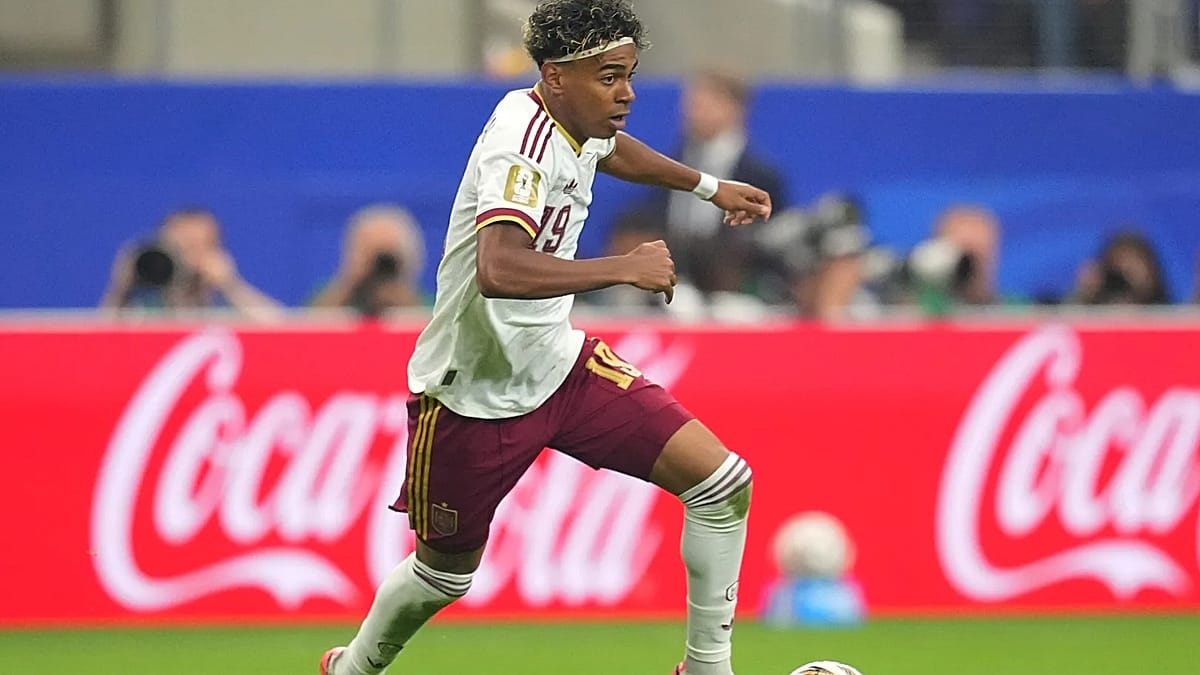
Spanish professional footballer Lamine Yamal is playing for the Spain National Football Team during the 2026 FIFA World Cup.
One aspect of Sunday’s World Cup final deserves far more attention than it has received.
Lamine Yamal’s story is also an African story. The Spanish teenager was born to a Moroccan father, Mounir Nasraoui, and an Equatorial Guinean mother, Sheila Ebana. While he proudly represents Spain internationally, his family roots stretch deep into Africa, making him one of several elite footballers whose heritage reflects the growing influence of the African diaspora on world football.
For African supporters, Sunday’s final carries unique emotional significance.
On one side stands Lionel Messi, the player who has inspired an entire generation across the continent through two decades of extraordinary consistency.
On the other hand is Yamal, a teenager whose journey demonstrates the enormous impact African families continue to have on European football.
The symbolic photograph taken in Barcelona nearly two decades ago, therefore, represents much more than two footballers meeting again.
It also represents football’s remarkable ability to connect generations, cultures, and continents.
For Sportxparte readers, that makes this final even more compelling. Africa may not have a national team competing for the trophy.
But its influence will still be visible on the world’s biggest football stage.
Lamine Yamal’s success is another reminder that African heritage continues shaping football’s future, just as legends like George Weah, Samuel Eto’o, Didier Drogba, and Yaya Touré shaped its recent past.
What Happens on Sunday: A Final That Feels Destined
When Argentina and Spain walk onto the pitch at MetLife Stadium on Sunday, the headlines will naturally focus on the tactical battle between Lionel Scaloni and Spain’s possession-based approach. Others will frame it as the defending world champions against the reigning European champions.
Yet beneath the tactical diagrams, statistics, and predictions lies a far more compelling narrative.
Lionel Messi will play what is expected to be the final World Cup match of his extraordinary career. Across almost two decades, he has transformed from Barcelona’s brightest young prospect into arguably the greatest footballer the sport has ever seen.
Now, standing opposite him is the player many believe could define football’s next generation. Lamine Yamal.
Nineteen years after a charity photoshoot unexpectedly brought them together, they now meet with the biggest prize in football at stake.
It is not simply a battle between Argentina and Spain. It is a meeting between two eras.
Lionel Messi arrives in the final in magnificent form. Against England, when Argentina needed inspiration most, he provided it.
Two assists, relentless creativity, and another reminder that age has not diminished his ability to decide the biggest matches.
Yamal, meanwhile, represents everything exciting about football’s future. Fearless, technically gifted, and capable of producing moments of brilliance, the Spain winger has already become one of the world’s elite attackers despite still being in his teens.
For football fans across Africa, there is another reason to watch closely. Yamal’s Equatorial Guinean and Moroccan heritage ensures the continent will have a unique emotional investment in Sunday’s final.
His journey reflects the growing influence of African heritage within European football and offers inspiration to countless young players across Africa and the diaspora.
Whether Messi lifts the trophy again or Yamal announces himself as football’s new global superstar, history will be written.
Verdict: A Story That Football Could Never Script
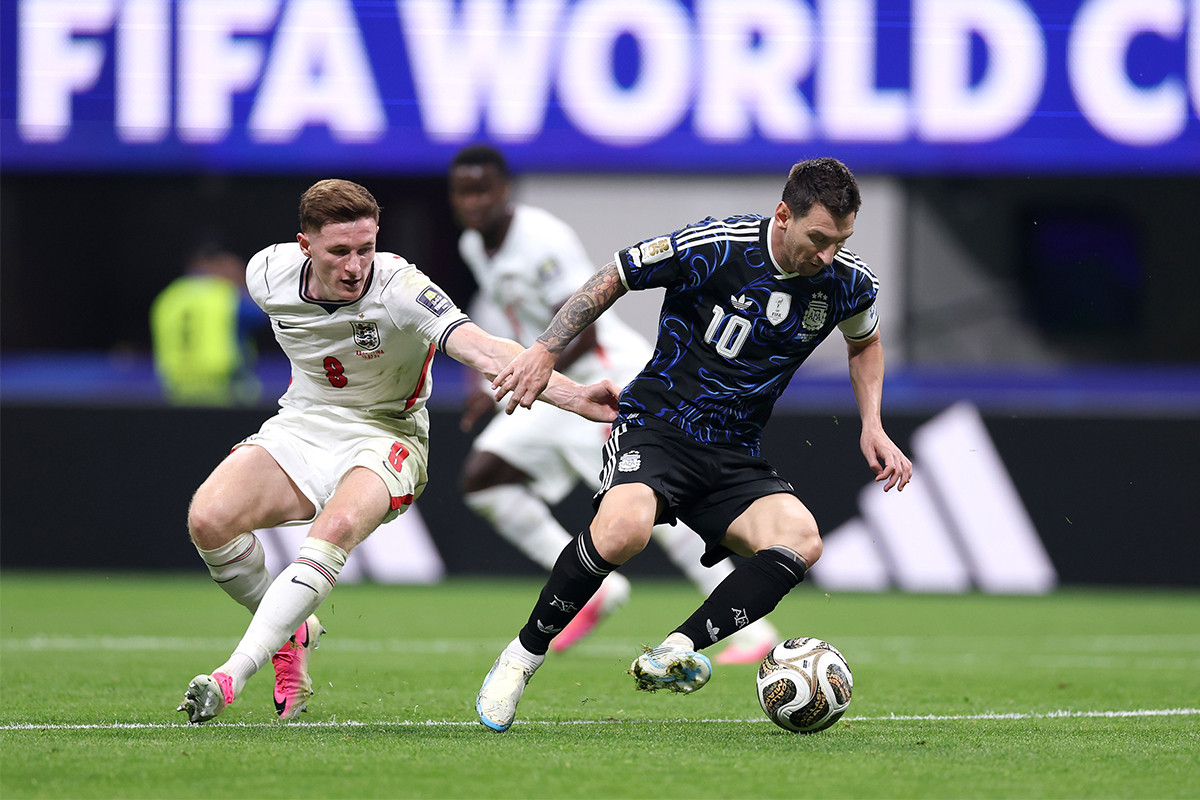
Argentina’s Lionel Messi dribbling a soccer ball past England’s Elliot Anderson on a green pitch. Messi wears a dark blue Argentina jersey with the number 10, while Anderson wears a white England jersey with the number 8.
Football has produced countless unforgettable stories. Leicester City’s Premier League triumph. Greece winning Euro 2004. Morocco is becoming Africa’s first World Cup semi-finalists.
But few stories possess the emotional symmetry of this one.
In September 2007, Lionel Messi gently held a six-month-old baby during a UNICEF charity photoshoot inside Barcelona’s dressing room.
Neither knew what the future held. Lionel Messi would become an eight-time Ballon d’Or winner, a World Cup champion, and one of the greatest athletes in sporting history.
The baby would grow into Lamine Yamal Barcelona’s newest superstar and Spain’s brightest hope.
Now they meet on football’s biggest stage.
The image that once seemed like nothing more than a heartwarming charity photograph has become one of the sport’s most remarkable symbols.
For Messi, Sunday represents one final opportunity to complete the perfect farewell by winning consecutive World Cups.
For Yamal, it is the chance to prove that the future has already arrived.
And for football supporters, it is a reminder that the game’s greatest stories cannot be manufactured.
They simply happen. From a bathtub inside Camp Nou in 2007… to the World Cup final in New Jersey in 2026.
Joan Monfort was right. It really is better than any film script.