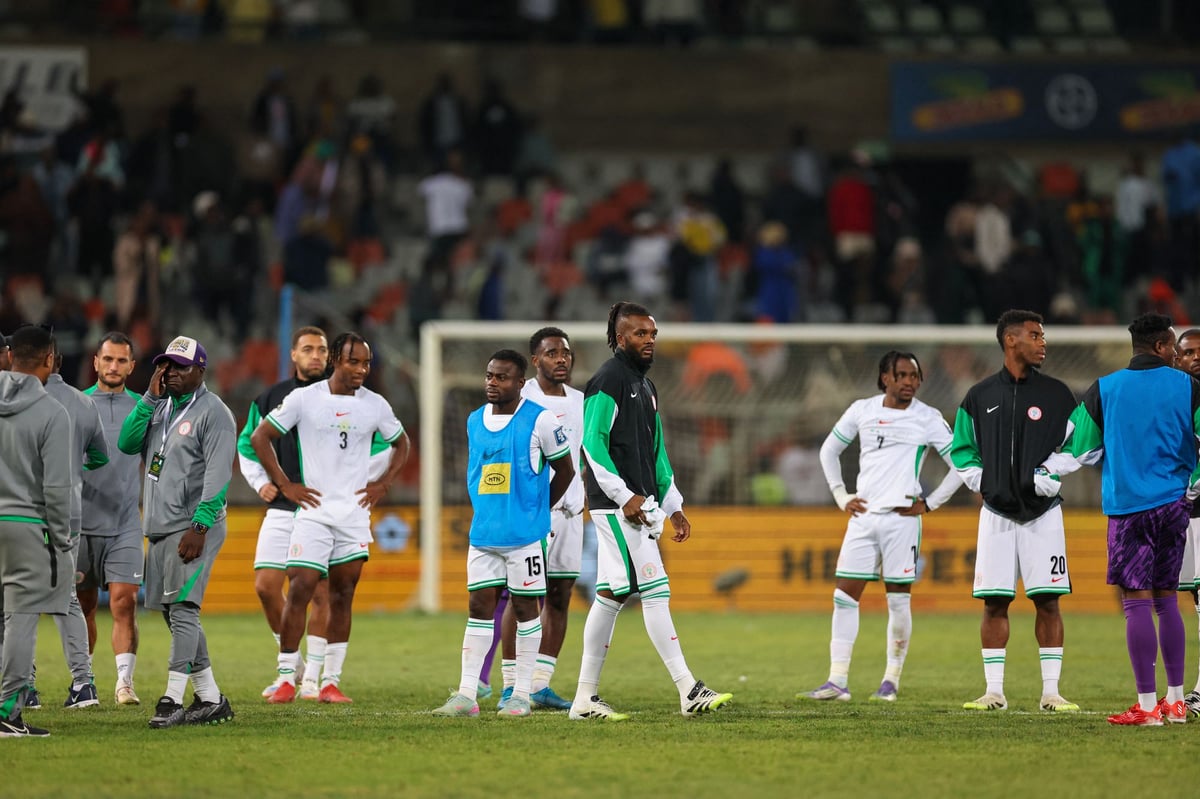
African Football
Nigeria’s 2026 World Cup Failure: How The Super Eagles Missed Out
The 2026 FIFA World Cup is almost here, but one of Africa’s most recognisable football nations will be watching from afar.
Nigeria, a country synonymous with World Cup drama, unforgettable moments and elite footballing talent, will not be travelling to North America. For a nation that has become a regular feature on football’s biggest stage. The absence of the Super Eagles feels both shocking and unnatural.
Since making their World Cup debut in 1994. Nigeria have established themselves as one of Africa’s most successful international teams.
They have qualified for six of the last eight tournaments and have consistently represented the continent with distinction.
Only Germany 2006 and Qatar 2022 stand as previous failures to qualify during that period.
Now, 2026 joins that list.
For millions of Nigerians, this is more than a disappointing sporting result. It is a national setback that raises serious questions about the direction of one of Africa’s footballing powerhouses.
A Campaign That Never Found Its Identity
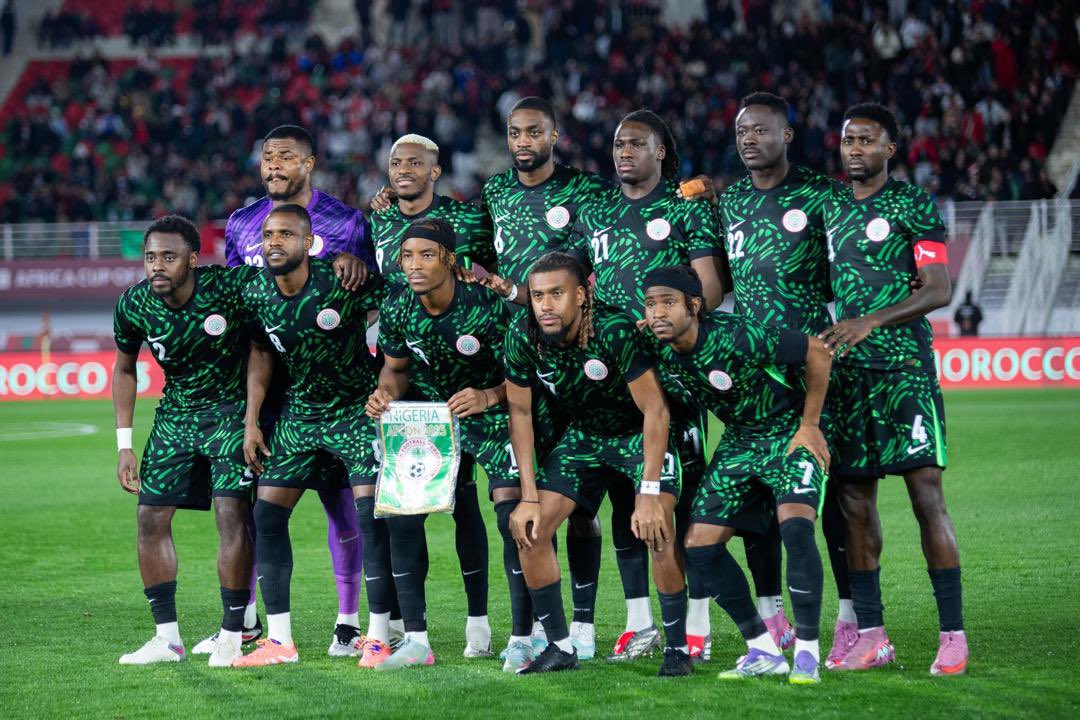
Nigeria’s national football team, the Super Eagles starting lineup posing in green jerseys at the AFCON tournament.
From the opening stages of qualification, something felt different about Nigeria.
The Super Eagles possessed one of the strongest squads on the continent. They were packed with players performing at the highest levels of European football.
On paper, qualification appeared straightforward. Reality proved very different.
Rather than imposing themselves on opponents, Nigeria often looked uncertain and reactive. Victories were difficult to come by. While matches that should have been routine became tense and unpredictable affairs.
The team struggled to establish any real rhythm throughout the campaign. Consistency became elusive, confidence fluctuated from match to match, and a clear tactical identity never fully emerged.
Instead of controlling their destiny, Nigeria found themselves chasing momentum.
By the time the decisive fixtures arrived, the Super Eagles were no longer behaving like favourites. They were a team desperately trying to keep their World Cup hopes alive.
The collapse was not sudden. It was gradual.
The Group Stage That Cost Nigeria
Nigeria’s qualification journey began in Group C.
Across ten matches, the Super Eagles suffered just one defeat. On the surface, that record appears respectable.
However, five draws ultimately proved damaging. Nigeria finished with four wins, five draws and one loss, accumulating 17 points.
South Africa topped the group with 18 points despite losing more matches than Nigeria during the campaign.
The dropped points against teams Nigeria would normally be expected to defeat proved decisive. Draws became the story of the campaign, and by the end of the group stage. The Super Eagles had surrendered control of their own destiny.
Their inability to turn dominance into victories left them facing a far more difficult route to the World Cup.
The Playoff Heartbreak Against DR Congo
After defeating Gabon 4-1 following extra time in the previous playoff round. Nigeria set up a decisive encounter with DR Congo.
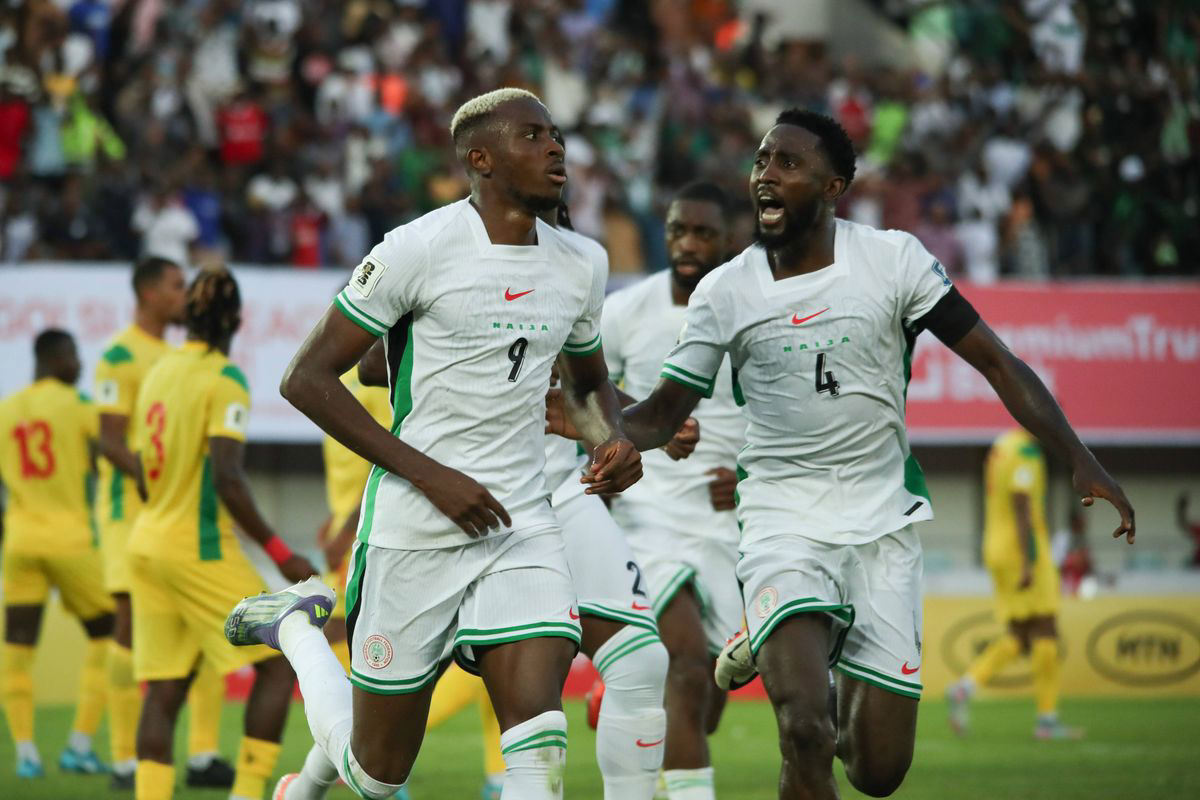
Victor Osimhen (left) and Wilfred Ndidi (right) celebrating a goal for the Nigeria national football team.
The winner would move one step closer to a place at the World Cup. Played in Morocco, the match carried enormous pressure for both nations.
Nigeria could not have asked for a better start.
Just three minutes into the contest, Frank Onyeka, fresh from securing a move to Coventry City, gave the Super Eagles an early lead and settled nerves inside the stadium.
The advantage, however, did not last.
Meschack Elia Lina equalised for DR Congo during the first half. And despite opportunities for both sides, neither team could find a winning goal during regulation or extra time.
The match headed to penalties. For Nigerian supporters, it was a familiar and uncomfortable feeling.
Penalties Deliver Another Crushing Blow
Penalty shootouts are football’s cruelest examination. In those moments, years of preparation, tactical planning and expectation are reduced to a few kicks from twelve yards.
Nigeria once again found themselves on the wrong side of that reality.
Calvin Bassey, Moses Simon and Semi Ajayi all missed from the spot as DR Congo emerged victorious by a 4-3 scoreline.
That left veteran captain Chancel Mbemba with the opportunity to seal qualification hopes for the Leopards. He made no mistake.
In an instant, Nigeria’s World Cup dream was over.
For the second consecutive qualification cycle, the Super Eagles had seen their campaign end heartbreakingly.
This time, the pain felt even greater because of the talent available within the squad.
Why Nigeria’s Absence Matters
Nigeria is not just another football nation. With a population exceeding 200 million people and millions more supporters across the globe.
The Super Eagles occupy a unique place within international football.
Their matches attract huge audiences. Their players feature at Europe’s biggest clubs. Their supporters create some of the most vibrant atmospheres in world football.
When Nigeria misses a World Cup, the tournament loses something.
The green and white colours, the passionate fanbase, the flair, unpredictability. And excitement that has become synonymous with Nigerian football will all be absent from stadiums across North America.
For neutral supporters, it represents one of the biggest disappointments of the qualification campaign.
A World Cup Without Osimhen and Lookman
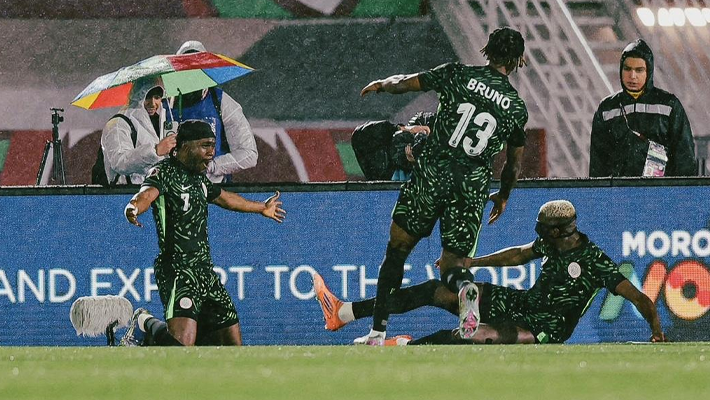
A masterclass performance from Ademola Lookman and a brilliant brace from Victor Osimhen sealed an emphatic 4-0 victory over Mozambique.
Perhaps the most frustrating aspect of Nigeria’s failure is the quality of players who will not be participating.
Victor Osimhen remains one of the world’s most feared strikers. Ademola Lookman has developed into one of Europe’s most dangerous attacking players.
Victor Boniface possesses the physicality and technical quality to trouble any defence.
Yet none of them will be present at football’s biggest tournament.
The absence of these stars serves as a reminder that talent alone does not guarantee success.
Nigeria had the individuals.
What they lacked was the collective structure required to maximise that talent.
Following elimination, controversy emerged. When head coach Eric Chelle suggested that “Congolese voodoo” had played a role in derailing Nigeria’s qualification hopes.
The comments generated widespread discussion. But they also distracted from the more fundamental issues facing Nigerian football.
The reality is that Nigeria did not fail because of superstition. They failed because of instability.
Coaching changes, tactical inconsistency, administrative distractions and a lack of long-term planning combined to undermine the campaign.
Modern international football rewards organisation, clarity and continuity.
Nigeria often relied on moments of individual brilliance rather than a clearly defined system. When pressure intensified, those weaknesses became increasingly visible.
The penalty shootout against DR Congo was merely the final symptom of a deeper problem.
The FIFA Appeal and Further Controversy
Following their elimination. Nigeria launched an appeal to FIFA regarding DR Congo’s use of dual-nationality players.
Reports suggested that between six and nine Congolese players may not have fully completed the legal process of renouncing their European citizenship before representing DR Congo, as required under Congolese law.
However, FIFA regulations primarily require players to possess the nationality of the country they represent.
Nigeria’s complaint was reviewed by FIFA’s Disciplinary Committee and subsequently rejected.
The Super Eagles have since continued their appeal process. Although hopes of reversing the outcome appear limited.
Regardless of the appeal’s outcome, many observers believe it would merely address a symptom rather than the root cause of Nigeria’s failure.
Where Does Nigeria Go From Here?
The disappointment of missing another World Cup will linger for years.
Yet football history is filled with examples of great nations rebuilding after painful setbacks.
Nigeria still possesses every ingredient required to return stronger. The player pool remains among the strongest in Africa.
The domestic passion for football remains unmatched. The expectations remain high because the potential remains enormous.
What the Super Eagles need now is not another quick fix. They need stability.
They need a long-term footballing vision, consistent leadership. And a clear identity that survives beyond individual managers and qualification campaigns.
The foundations must be rebuilt carefully and deliberately.
For now, however, the reality remains painful. The 2026 FIFA World Cup will take place without the Super Eagles.